IṢẸ́ ỌNÀ
ẸWÀ ÀTI ÌLERA
IṢẸ́ ỌWỌ́
ÀṢÀ ÀTI ÌTÀN
ÌṢERÉ
ÀYÍKÁ
OÚNJẸ ÀTI OHUN MÍMU
REVERSE ENGINEERING
SÁYẸ́ǸSÌ
ERÉ ÌDÁRAYÁ
ÌMỌ̀-Ẹ̀RỌ
ÀWỌN OHUN WÍWỌ̀
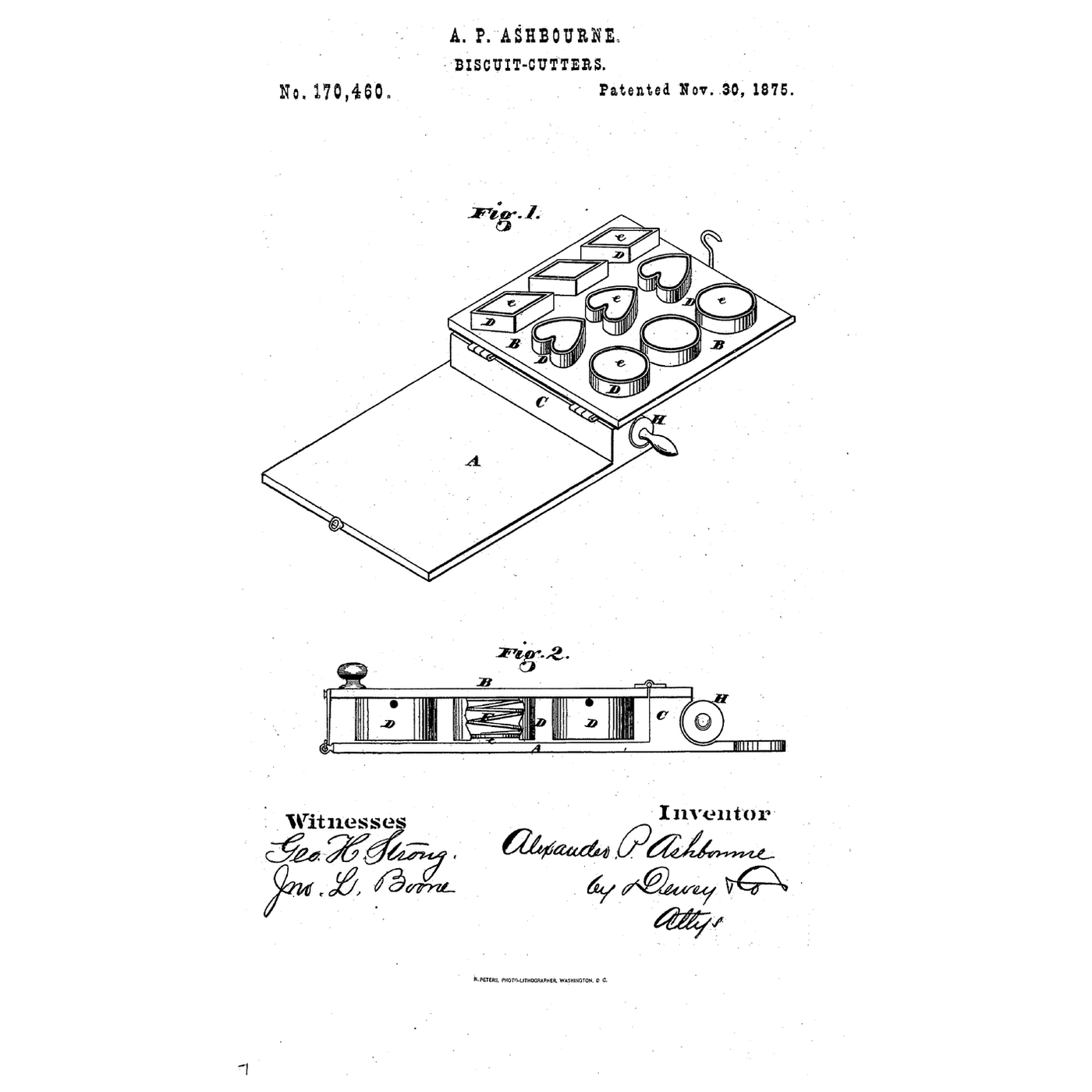


The Biscuit-Cutter Board: A Hinged Lid of Cutters, One Press for All
Biscuits cut one at a time are slow and uneven, and the scraps between them are rolled out again and again.
Alexander P. Ashbourne of Oakland, California, received US 170,460, dated 30 November 1875 (filed 11 May 1875), for a biscuit-cutter: "a molding-board, having hinged to one side or end a cover, which is provided with the desired shaped cutters upon its lower side", each with a plate on a spring, so that "as many cakes or biscuits will be formed instantaneously as there are cutters".
This rung computes how much of a sheet round cutters can use and how re-rolling adds up, then cuts and weighs a batch.
Olùbẹ̀rẹ̀
About 1 hour
Ìlànà
1
1
Packing and re-rolling
Packing and re-rolling
Ń ṣí ìwé Jupyter…
2
2
Where the dough is made
Where the dough is made
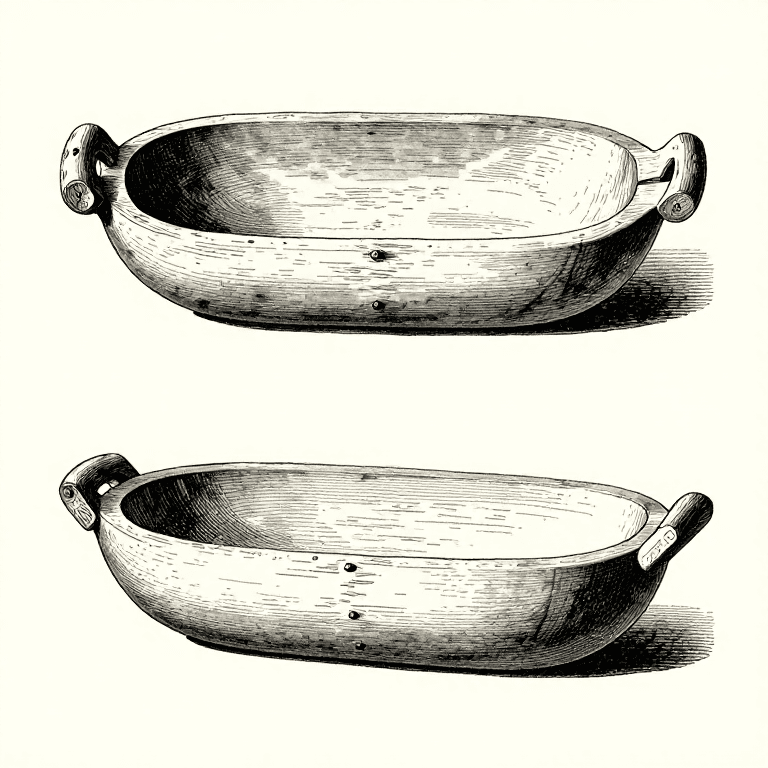
The embedded blueprint carves a trough for mixing dough; Ashbourne's board is where it is rolled and cut.
3
3
Read US 170,460
Read US 170,460
"My invention relates to a novel domestic utensil, which I term a biscuit or cake cutter; and it consists of a molding-board, having hinged to one side or end a cover, which is provided with the desired shaped cutters upon its lower side. These cutters have plates inside and springs, which allow the plates to recede when the cutters are pressed down upon the material, but which forces them out when the cover is lifted."
The cutters "may be made of metal, and in any fancy shape desired." "When the cover is shut down upon the paste upon the molding-board it will be seen that as many cakes or biscuits will be formed instantaneously as there are cutters."
The back of the cross-bar and the board are made concave "so that the rolling-pin H will fit into the concavities sufficiently to be held in place when not in use."
4
4
Cut, re-roll and weigh
Cut, re-roll and weigh
Make a biscuit dough, weigh it, and roll it to an even sheet. Cut rounds in a square grid, lift them out, and weigh them. Gather the scraps, re-roll, cut again and weigh; repeat once more.
Work out the share of dough used after each roll and compare it with the notebook's square-grid line. Then try cutting in offset rows, each row shifted half a cutter, and see how close you get to the hexagonal line.
Àwọn ohun èlò fún ìgbésẹ̀ yìí:
 Ìyẹ̀fun500 g
 Omi1 ẹyọ
 Òróró ìdáná1 ẹyọ
Àwọn irinṣẹ́ tí a nílò:
 Ohun ìgé bisikíìtì
 Ọ̀pá ìtẹ̀ ìyẹ̀fun
 Òṣùwọ̀n Díjítà Ilé Ìdáná
 Ìdíwọ̀n
5
5
Biscuits that stick, tear or come out tough
Biscuits that stick, tear or come out tough
Biscuit cutting troubleshooting.
Flow
Loading...
6
6
History and honest limits
History and honest limits
**Alexander P. Ashbourne** of Oakland, Alameda County, California, filed US 170,460 on 11 May 1875; it is dated 30 November 1875.
**Honest limits.** The packing figures are exact for circles on an endless sheet; a real sheet has edges, and re-rolled dough is never quite the same dough. The loose share is an example. Your weights are the measurement.
Àwọn irinṣẹ́ tó nílò
4- Àyè
Blueprint tó jọra
Àwọn blueprint wọ̀nyí pín ìmọ̀ — ọ̀nà, ohun-èlò tàbí ìlànà


CC0 Àgbègbè Gbogbogbò
Blueprint yìí ti jáde lábẹ́ CC0. O lè ṣe àdàkọ, yí padà, pín, àti lò láìsí ìyọ̀ǹda.
Ṣàtìlẹ́yìn Olùṣẹ́dá nípa rírà àwọn ọjà nipasẹ̀ Blueprint wọn Ẹ̀san Olùṣẹ́dá tí àwọn Olùtajà gbé kalẹ̀, tàbí ṣẹ̀dá àtúnṣe tuntun ti Blueprint yìí kí o sì fi sínú Blueprint rẹ gẹ́gẹ́ bí ìsopọ̀ láti pín owó-wíwọlé.