IṢẸ́ ỌNÀ
ẸWÀ ÀTI ÌLERA
IṢẸ́ ỌWỌ́
ÀṢÀ ÀTI ÌTÀN
ÌṢERÉ
ÀYÍKÁ
OÚNJẸ ÀTI OHUN MÍMU
REVERSE ENGINEERING
SÁYẸ́ǸSÌ
ERÉ ÌDÁRAYÁ
ÌMỌ̀-Ẹ̀RỌ
ÀWỌN OHUN WÍWỌ̀
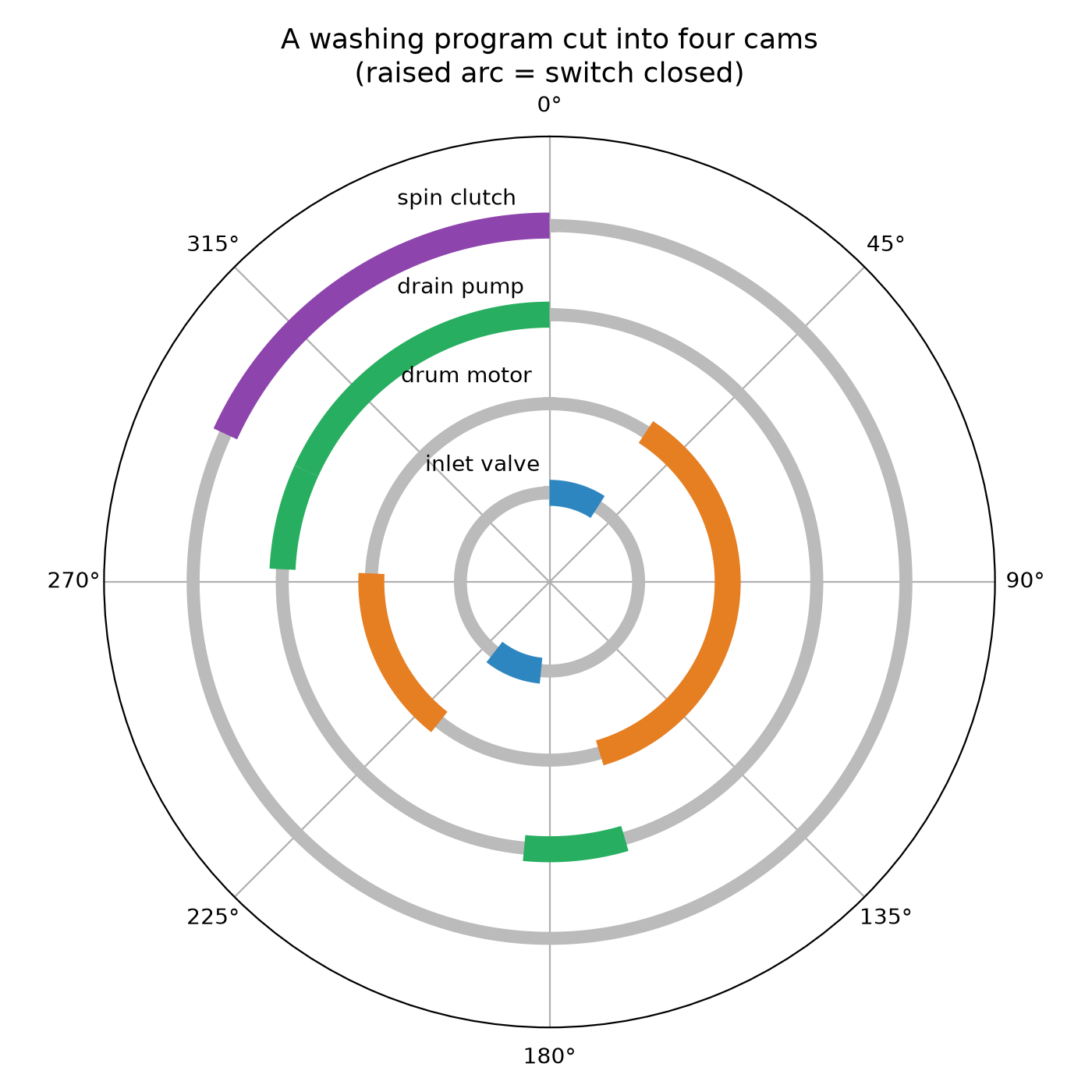
Youblob (generated from this blueprint's notebook) · CC0


The Cam Timer: A Program Cut Into Discs
Before microcontrollers, a washing machine, a dishwasher, a traffic light or an industrial process followed its sequence by turning a shaft of cam discs past a row of switches. A slow synchronous motor turns the stack once per program; each disc switches one function on while its raised arc passes; the dial on the front is simply the end of the shaft, and turning it by hand skips the program forward.
Everything about the program lives in the geometry: time is angle, and each function is an arc.
This rung turns a washing program into cam arcs, draws the cams, and builds a four-cam timer from printed discs and microswitches that switches four lamps in sequence.
Olùbẹ̀rẹ̀
About 4 hours
Ìlànà
1
1
From program to cam arcs
From program to cam arcs
Ń ṣí ìwé Jupyter…
2
2
One turn of the cam shaft
One turn of the cam shaft
Ààyè Iṣẹ́ Blockly
Loading Blockly workspace...
3
3
How a cam moves its follower
How a cam moves its follower
Each disc of a cam timer is a plate cam lifting a switch lever. The embedded blueprint shows how the cam's profile sets the follower's motion.
4
4
Build a four-cam timer
Build a four-cam timer
From the notebook's arcs, draw four discs 50 mm across with raised arcs 3 mm high where each function is on. Print them in PETG with a flat on their bore and stack them on an 8 mm steel shaft, with the zero marks lined up.
Turn the shaft with a slow geared DC motor — for a quick demonstration, one turn every minute or two instead of a real program's hour. Mount four lever microswitches on a plywood rail so each lever rides on one disc, and wire each through an LED and resistor from the supply.
Run it: the LEDs play the program in order. Turn the shaft by hand to jump to any step, as the dial of a washing machine does. Change one disc and the program changes.
Àwọn ohun èlò fún ìgbésẹ̀ yìí:
 Ọ̀pá irin aise1 ẹyọ
 Ẹ̀rọ DC oníhàmọ́1 ẹyọ
 Ohun ìkúnlẹ̀ kékeré (tí ọ̀pá ń darí)4 ẹyọ
 LED 5 mm4 ẹyọ
 Rẹ́sístà 330 ohm4 ẹyọ
 Àwo igi tí a lẹ̀ pọ̀1 ẹyọ
 Okùn Ìsopọ̀1 ẹyọ
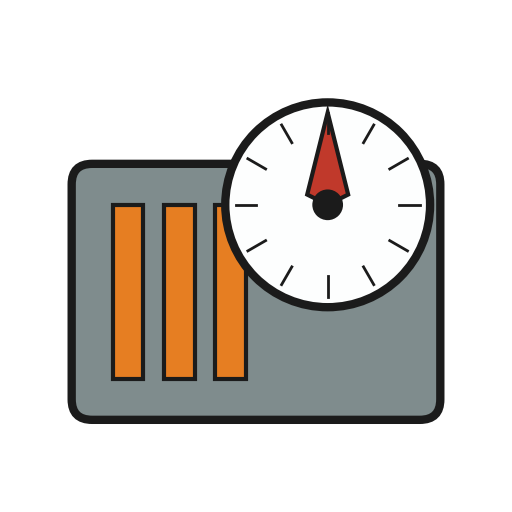 Aago ìtòlẹ́sẹẹsẹ oníkámù1 ẹyọ
Àwọn irinṣẹ́ tí a nílò:
 Ẹ̀rọ ìtẹ̀ 3D oníwàyà (FDM)
 Okùn PETG
 Orísun iná DC
 Ẹ̀rọ Ìlùkòkò Aláìlókùn
 Irin ìsúdì
 Òṣùwọ̀n Kálípà Díjítà Ìnṣì 6
5
5
A cam timer stuck on one step
A cam timer stuck on one step
Program timer faults.
Flow
Loading...
6
6
Context and honest limits
Context and honest limits
Motor-driven cam timers ran washing machines, dishwashers, traffic signals and process plants for most of the twentieth century, until microcontrollers replaced them from the 1980s onward — keeping the same sequences.
**Honest limits.** A pure cam timer knows only time: a real washing machine timer also waits for the tub to fill or drain before it moves on, using the level switch to stop the timer motor. The printed demonstration runs fast; a real timer makes one turn per program.
Àwọn ohun-èlò
8- 1 ẹyọÀyè
- Àyè
- Àyè
- 4 ẹyọÀyè
- 1 ẹyọÀyè
- Àyè
- Àyè
Àwọn irinṣẹ́ tó nílò
6- Àyè
- 1 vendor sell this, none ship to you yetÀyè
- 2 vendors sell this, none ship to you yetÀyè
Blueprint tó jọra
Àwọn blueprint wọ̀nyí pín ìmọ̀ — ọ̀nà, ohun-èlò tàbí ìlànà


CC0 Àgbègbè Gbogbogbò
Blueprint yìí ti jáde lábẹ́ CC0. O lè ṣe àdàkọ, yí padà, pín, àti lò láìsí ìyọ̀ǹda.
Ṣàtìlẹ́yìn Olùṣẹ́dá nípa rírà àwọn ọjà nipasẹ̀ Blueprint wọn Ẹ̀san Olùṣẹ́dá tí àwọn Olùtajà gbé kalẹ̀, tàbí ṣẹ̀dá àtúnṣe tuntun ti Blueprint yìí kí o sì fi sínú Blueprint rẹ gẹ́gẹ́ bí ìsopọ̀ láti pín owó-wíwọlé.