IṢẸ́ ỌNÀ
ẸWÀ ÀTI ÌLERA
IṢẸ́ ỌWỌ́
ÀṢÀ ÀTI ÌTÀN
ÌṢERÉ
ÀYÍKÁ
OÚNJẸ ÀTI OHUN MÍMU
REVERSE ENGINEERING
SÁYẸ́ǸSÌ
ERÉ ÌDÁRAYÁ
ÌMỌ̀-Ẹ̀RỌ
ÀWỌN OHUN WÍWỌ̀
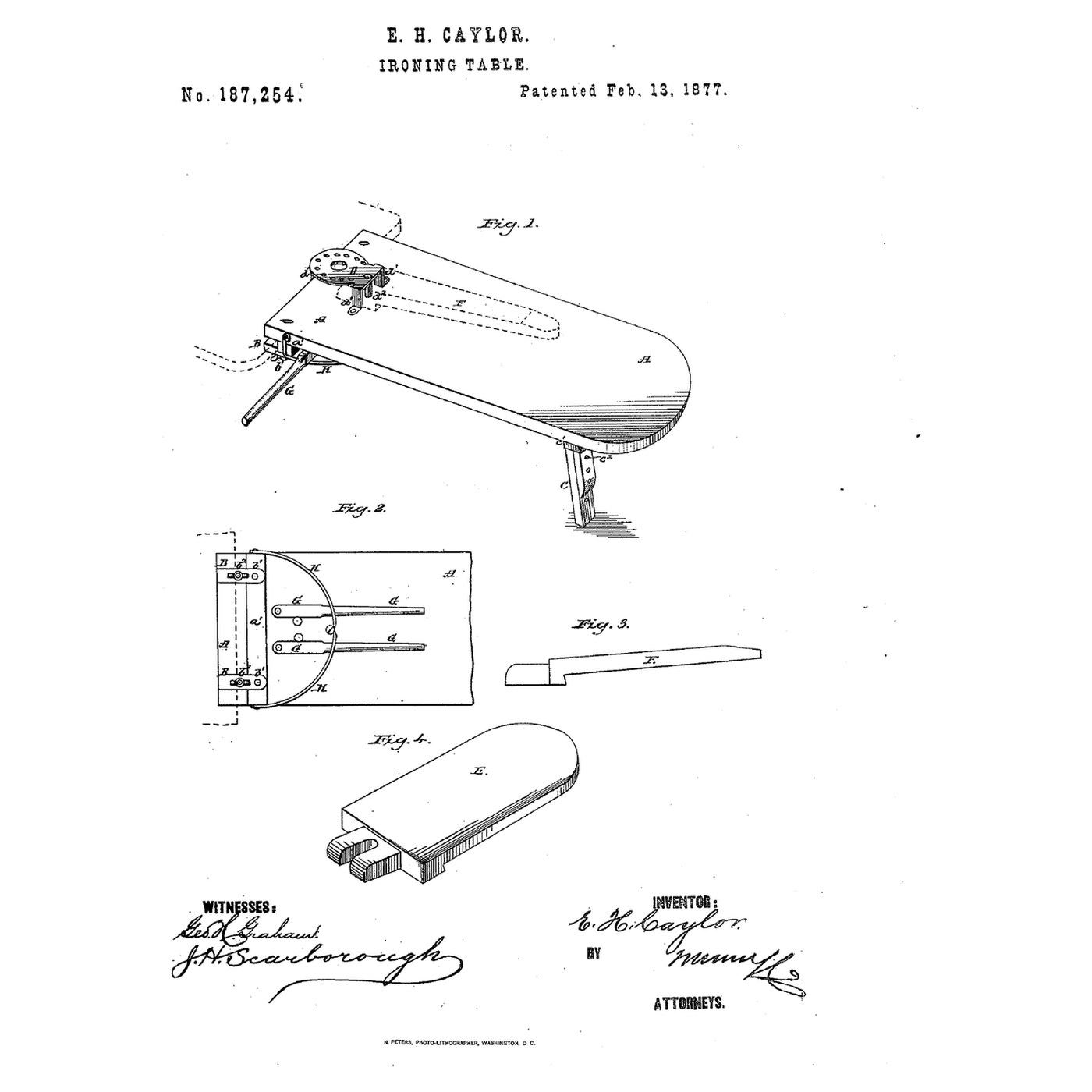


The Clamp-On Ironing Table: A Board, a Leg and a Sleeve Board
An ironing board needs to be firm, the right height, and narrow enough at one end for a sleeve. Many houses had no room to leave one standing.
The Rev. Edward H. Caylor of West Elkton, Ohio, received US 187,254, dated 13 February 1877 (filed 18 November 1876), for an ironing-table that "may be attached to a table or other convenient support, may be supported at any desired height, may have a shirt-board and a sleeve-board attached to it, and shall be provided with a clothes-rack and a stand for the sad-irons."
This rung computes what the clamp must hold with and without the leg, then builds a clamp-on board with a slip-on sleeve board and irons a sleeve on it.
Olùbẹ̀rẹ̀
About 3 hours
Ìlànà
1
1
Clamp, leg and load
Clamp, leg and load
Ń ṣí ìwé Jupyter…
2
2
The iron the table was built for
The iron the table was built for
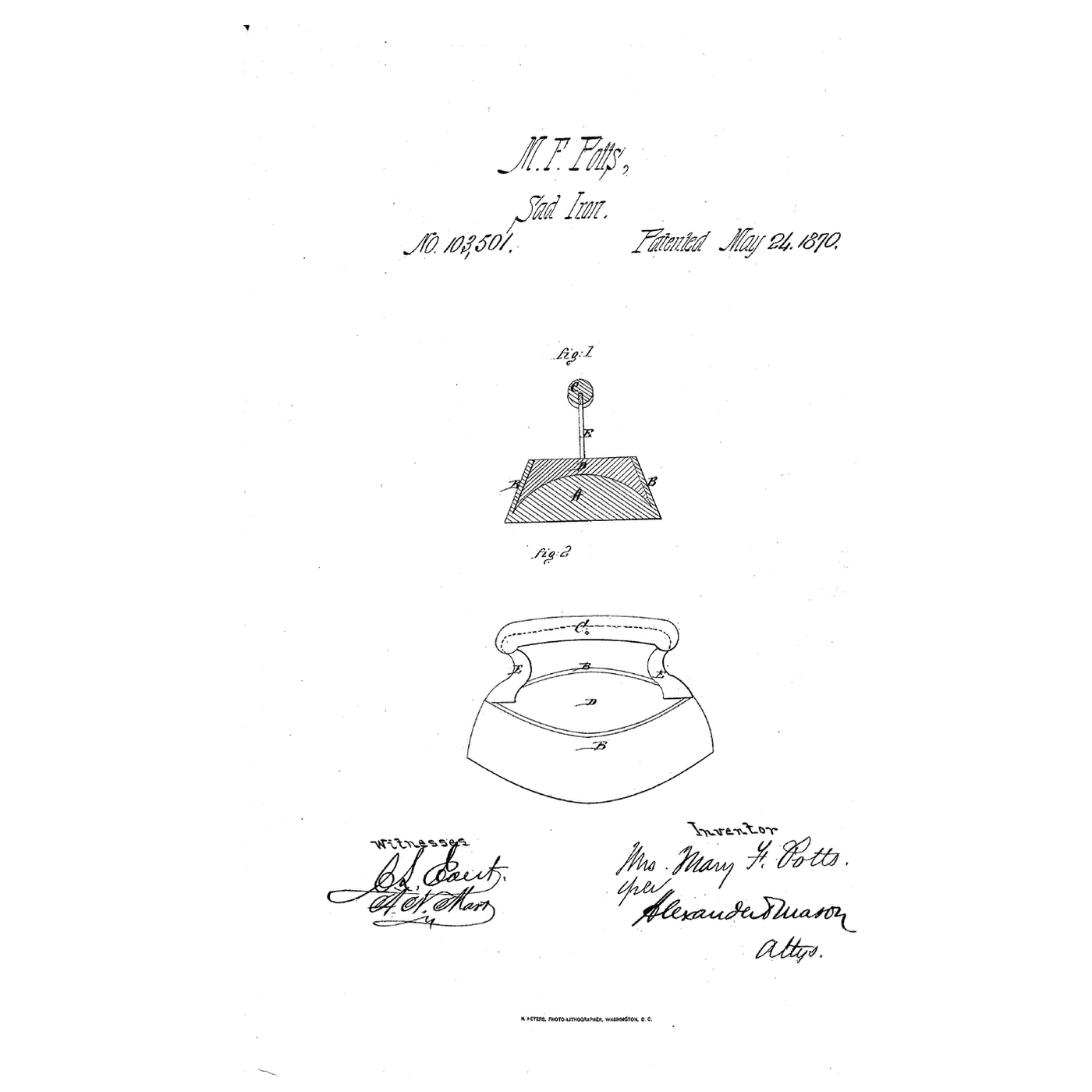
The embedded blueprint is an 1870 sad iron; Caylor's table has a stand for it at the front.
3
3
Read US 187,254
Read US 187,254
"The object of this invention is to furnish an improved ironing-table, which shall be so constructed that it may be attached to a table or other convenient support, may be supported at any desired height, may have a shirt-board and a sleeve-board attached to it, and shall be provided with a clothes-rack and a stand for the sad-irons."
Hand-nuts on two bolts clamp the front end "to the edge of a table, a stand, a sewing-machine table, a chair-board, a window-ledge, or other convenient support." The rear end is supported by a leg "hinged to the said table A, so that it may be turned up against the under side of the table, when not required for use", made in two sliding parts to adjust its length.
"The forward ends of the shirt-board E and of the sleeve-board F are made thicker, and are beveled off upon the lower side, so that the rear parts of the said boards may stand up a little from the table A, to allow shirts and sleeves to be placed upon them readily."
4
4
Build it and iron a sleeve
Build it and iron a sleeve
Cut a board about a metre long and a narrow sleeve board with one end rounded. Fix two bolts with wing nuts and a batten under the front end so it clamps to a table edge, and hinge a leg near the far end with a peg to set its length. Pad both boards with cloth.
Clamp it to a table, first without the leg: press down near the far end with the force meter and feel it flex. Put the leg down and press again. Then slip a shirt sleeve over the sleeve board and iron it without a crease along its edge.
Àwọn ohun èlò fún ìgbésẹ̀ yìí:
 Àwo igi tí a lẹ̀ pọ̀1 ẹyọ
 Skurú ẹ̀rọ2 ẹyọ
 Aṣọ òwú (fúyẹ́)1 ẹyọ
Àwọn irinṣẹ́ tí a nílò:
 Pákó ìlọṣọ apá
 Ẹ̀rọ Ìfaṣọ Òógùn
 Ẹ̀rọ Ìlùkòkò Aláìlókùn
 Ẹ̀rọ Ìwọ̀n Agbára (Òṣùwọ̀n Ìsúnkì)
 Ìdíwọ̀n
5
5
A board that wobbles, tips or creases sleeves
A board that wobbles, tips or creases sleeves
Ironing table troubleshooting.
Flow
Loading...
6
6
History and honest limits
History and honest limits
The **Rev. Edward H. Caylor** of West Elkton, Ohio, filed US 187,254 on 18 November 1876; it is dated 13 February 1877. His table also swings out pivoted arms as a clothes-airing rack.
**Honest limits.** The notebook treats the board as a rigid beam with point supports; a real clamp and board flex. Forces and lengths are examples. What you feel with the force meter is the measurement.
Àwọn ohun-èlò
3- 1 ẹyọÀyè
- 2 ẹyọÀyè
- 1 ẹyọÀyè
Àwọn irinṣẹ́ tó nílò
5- 1 vendor sell this, none ship to you yetÀyè
- Àyè
Ìtọ́nisọ́nà yìí ń ṣe
Blueprint tó jọra
Àwọn blueprint wọ̀nyí pín ìmọ̀ — ọ̀nà, ohun-èlò tàbí ìlànà


CC0 Àgbègbè Gbogbogbò
Blueprint yìí ti jáde lábẹ́ CC0. O lè ṣe àdàkọ, yí padà, pín, àti lò láìsí ìyọ̀ǹda.
Ṣàtìlẹ́yìn Olùṣẹ́dá nípa rírà àwọn ọjà nipasẹ̀ Blueprint wọn Ẹ̀san Olùṣẹ́dá tí àwọn Olùtajà gbé kalẹ̀, tàbí ṣẹ̀dá àtúnṣe tuntun ti Blueprint yìí kí o sì fi sínú Blueprint rẹ gẹ́gẹ́ bí ìsopọ̀ láti pín owó-wíwọlé.