IṢẸ́ ỌNÀ
ẸWÀ ÀTI ÌLERA
IṢẸ́ ỌWỌ́
ÀṢÀ ÀTI ÌTÀN
ÌṢERÉ
ÀYÍKÁ
OÚNJẸ ÀTI OHUN MÍMU
REVERSE ENGINEERING
SÁYẸ́ǸSÌ
ERÉ ÌDÁRAYÁ
ÌMỌ̀-Ẹ̀RỌ
ÀWỌN OHUN WÍWỌ̀
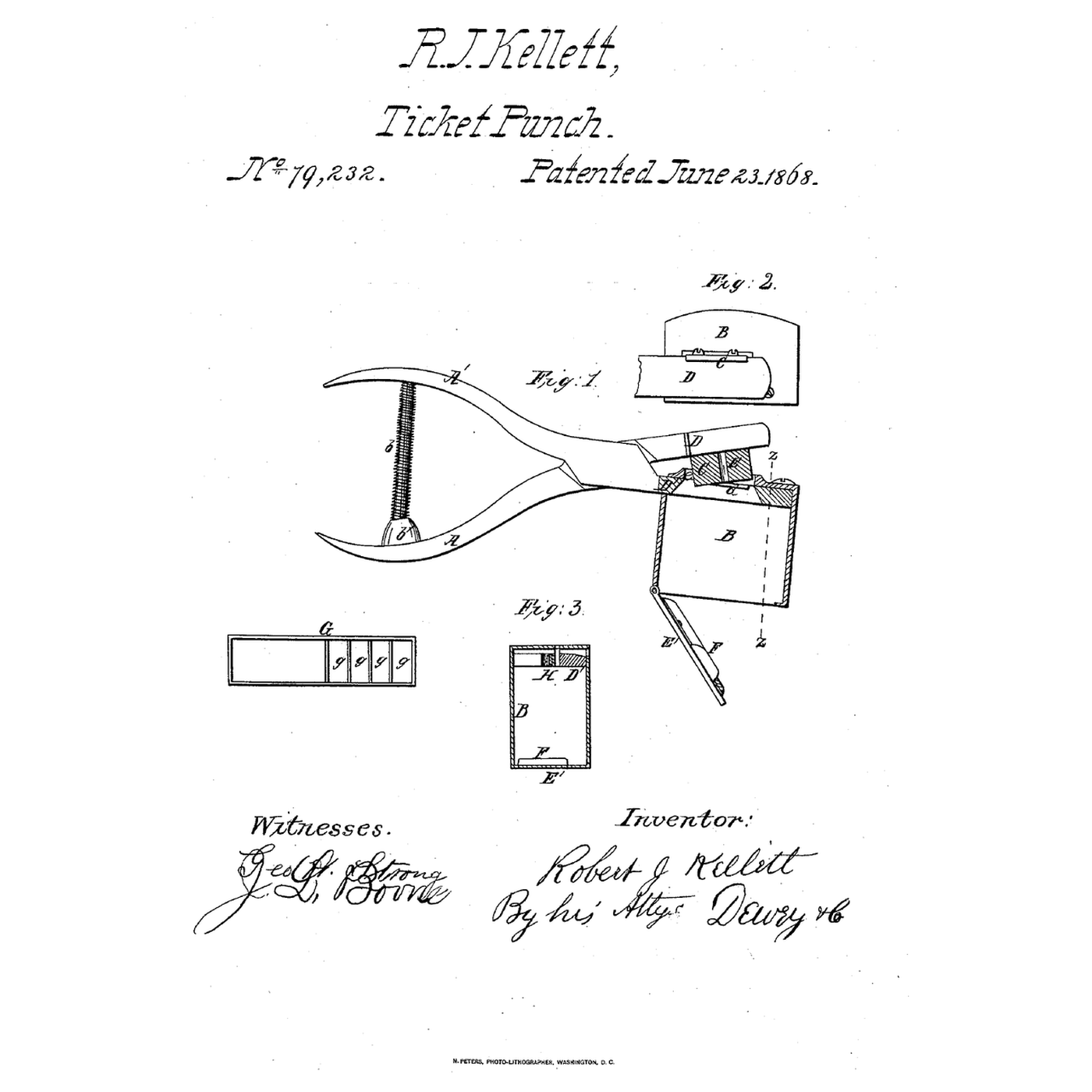


The Coupon-Stringing Ticket Punch: Every Coupon Holed for the Counting Wire
Street railways that carried each other's passengers had to settle up, and a heap of loose punched-out paper could not be counted by road.
Robert James Kellett of San Francisco received US 79,232, dated 23 June 1868, improving his punch of 1867 that caught the punched pieces in a locked box. The new punch cuts off "a piece of the ticket or coupon large enough to be conveniently handled and counted, and to punch a hole in it at the same time, so that it can be readily strung on a wire for exchanging and settlement between the several roads that run in connection with one another."
This rung works out a settlement between three roads, then makes coloured tickets, catches their coupons in a screwed box, strings them by colour and settles a class run.
Olùbẹ̀rẹ̀
About 2 hours
Ìlànà
1
1
Settlement between three roads
Settlement between three roads
Ń ṣí ìwé Jupyter…
2
2
Keeping count
Keeping count
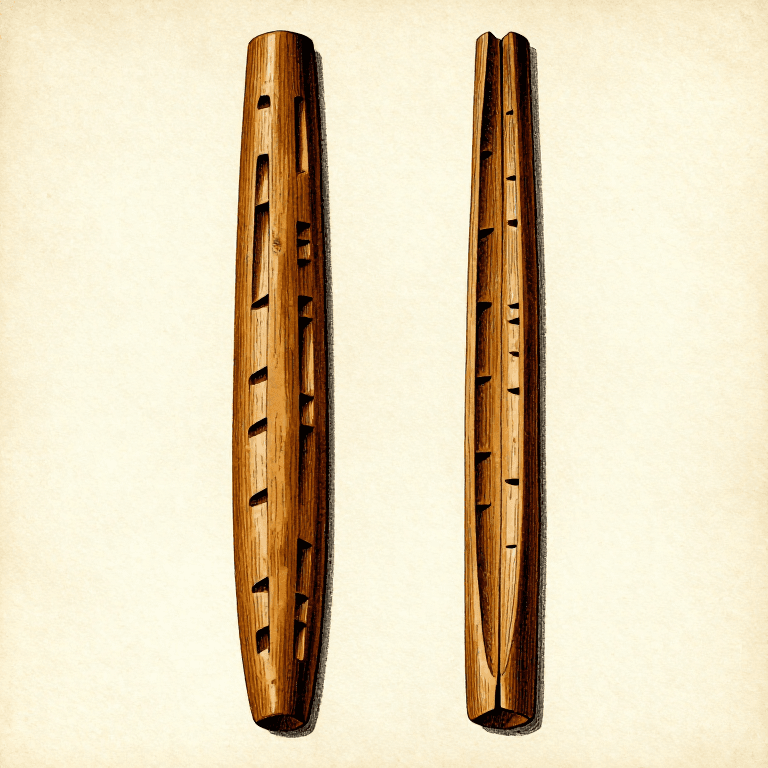
The embedded blueprint keeps accounts by notches on a stick. Kellett's strung coupons keep the same kind of count, by road and colour.
3
3
Read US 79,232
Read US 79,232
"C is a knife or punch, as illustrated in my former patent, fastened to the jaw D, and working down into a slot, d, in the jaw D′, to punch or shear off a coupon or the end of a ticket when it is placed in the jaws."
"The jaws D and D′ are perforated opposite the knife or punch C, and a punch, E, is fastened in the jaw D, so as to pass down through the coupon, the same time the knife cuts it off, into the hole H in the jaw D′, thus punching the coupon at the same time that it is cut off."
4
4
Make the tickets, catch the coupons and settle up
Make the tickets, catch the coupons and settle up
**Tickets.** Cut tickets 6 × 3 cm from card stock in three colours, one colour per "road", and draw a coupon 1.5 cm wide across one end of each.
**Box.** Make a small box from plywood with a lid held by one wood screw, as the conductor could not open Kellett's locked box. Cut a slot in its top wide enough for a coupon.
**Run.** Three "conductors" each take tickets of all colours from passengers. For each ticket, cut the coupon off with scissors over the slot, punch a hole in it with the hole punch, and drop it in the box.
**Settle.** Unscrew each box, thread each colour's coupons onto its own thread with the needle, count them, and work out the nets as the notebook does. Check they sum to zero.
Àwọn ohun èlò fún ìgbésẹ̀ yìí:
 Bébà Líle3 ẹyọ
 Àwo igi tí a lẹ̀ pọ̀1 ẹyọ
 Ìṣó igi1 ẹyọ
 Ìdìpọ̀ Igi5 ml
 Òwú3 mítà
Àwọn irinṣẹ́ tí a nílò:
 Ìṣẹ́ná
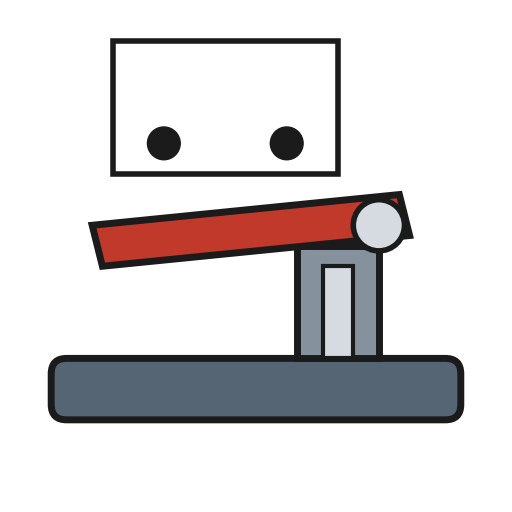 Ohun èlò ìlu ihò ìwé
 Abẹ́rẹ́ ìránṣọ
 Ayùn Kópìngì
 Ìṣù àwọn ohun ìyí skurú
 Ìdíwọ̀n
 Gègé
Gègé5
5
A count that will not balance
A count that will not balance
Coupon settlement troubleshooting.
Flow
Loading...
6
6
History and honest limits
History and honest limits
**Robert James Kellett** of San Francisco received US 79,232, dated 23 June 1868. His earlier punch, US 65,090 of 28 May 1867, had put a lock box on the jaw to hold the punched pieces until the accounting clerk removed them; the new one cut a larger coupon and holed it in the same stroke, and a scored slot in the jaw guided the ticket's coupon end.
**Honest limits.** Scissors and a separate hole punch stand in for his combined knife and auxiliary punch, and a screwed lid for his lock. The notebook's counts and fare are examples. Your class run is the result.
Àwọn ohun-èlò
5- 3 ẹyọÀyè
- 1 ẹyọÀyè
- 1 ẹyọÀyè
- 5 mlÀyè
- 3 mítàÀyè
Blueprint tó jọra
Àwọn blueprint wọ̀nyí pín ìmọ̀ — ọ̀nà, ohun-èlò tàbí ìlànà


CC0 Àgbègbè Gbogbogbò
Blueprint yìí ti jáde lábẹ́ CC0. O lè ṣe àdàkọ, yí padà, pín, àti lò láìsí ìyọ̀ǹda.
Ṣàtìlẹ́yìn Olùṣẹ́dá nípa rírà àwọn ọjà nipasẹ̀ Blueprint wọn Ẹ̀san Olùṣẹ́dá tí àwọn Olùtajà gbé kalẹ̀, tàbí ṣẹ̀dá àtúnṣe tuntun ti Blueprint yìí kí o sì fi sínú Blueprint rẹ gẹ́gẹ́ bí ìsopọ̀ láti pín owó-wíwọlé.