IṢẸ́ ỌNÀ
ẸWÀ ÀTI ÌLERA
IṢẸ́ ỌWỌ́
ÀṢÀ ÀTI ÌTÀN
ÌṢERÉ
ÀYÍKÁ
OÚNJẸ ÀTI OHUN MÍMU
REVERSE ENGINEERING
SÁYẸ́ǸSÌ
ERÉ ÌDÁRAYÁ
ÌMỌ̀-Ẹ̀RỌ
ÀWỌN OHUN WÍWỌ̀

The Door Holder: A Notched Bar the Knob Unlocks
A glazed door propped open for air will be caught by a draught and slammed, and the glass breaks. A wedge holds it only at one angle and has to be kicked out by hand.
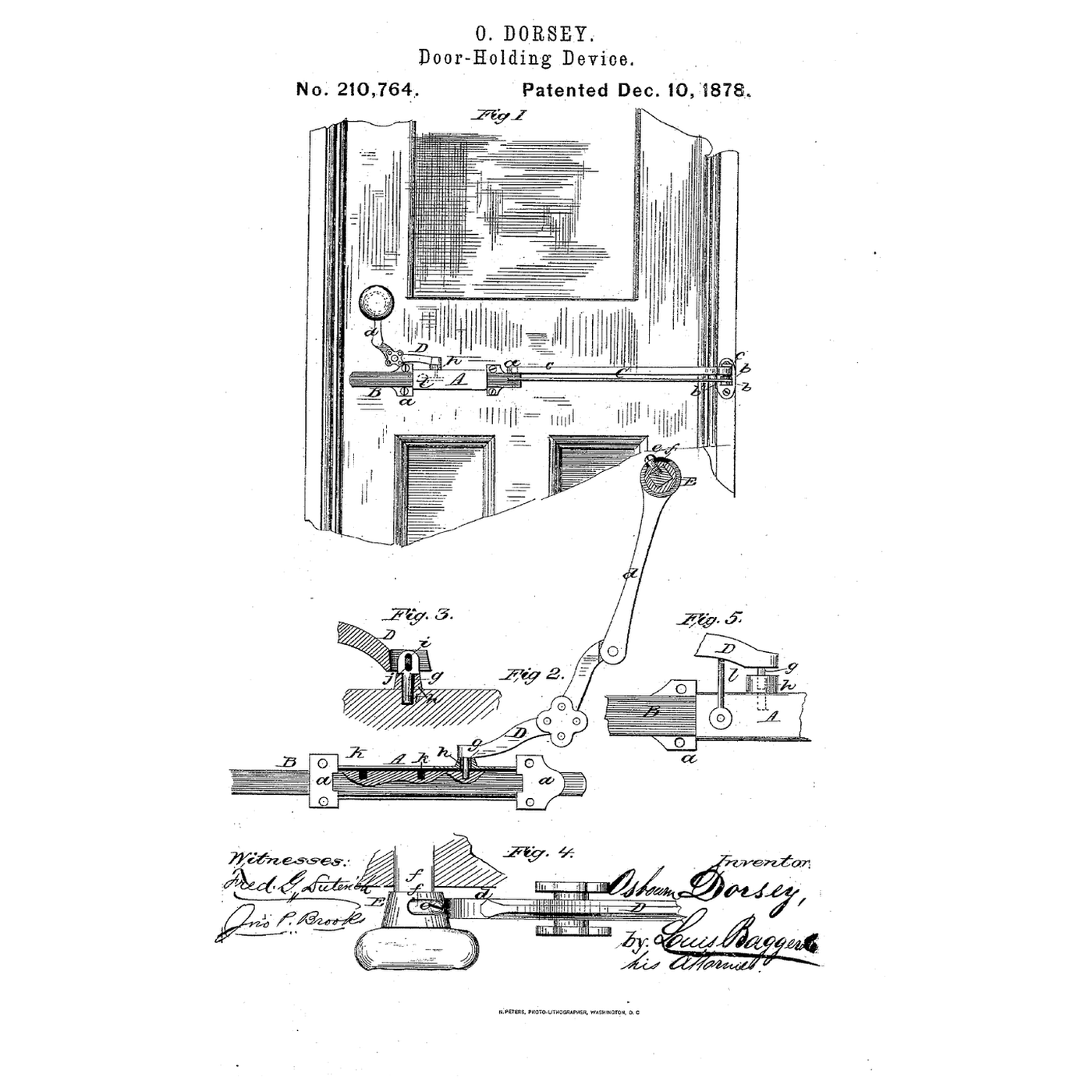
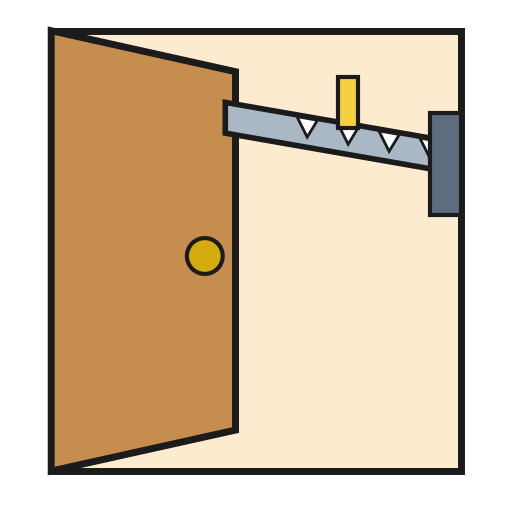
Osbourn Dorsey of Washington, D.C., filed US 210,764 on 8 June 1878; it is dated 10 December 1878. His door-holding device holds a door "open at any desired angle": a rod pivoted to the frame slides a notched bar in a case on the door; a pin on a bell-crank lever drops by gravity into a notch; and turning the knob to shut the door lifts the pin, because the lever is linked to the knob spindle. A spring on the rod's pivot then closes the door. Popular accounts often credit Dorsey with inventing the doorknob; his patent is for this holding device worked through the knob.
This rung works out the holding positions and the load on the pin, and builds a holder.
Àárín
About 3 hours
Ìlànà
1
1
Holding positions and wind load
Holding positions and wind load
Ń ṣí ìwé Jupyter…
2
2
A notched bar and a dropping pin
A notched bar and a dropping pin
Dorsey's slide and pin are a straight ratchet whose pawl is lifted by the knob. The embedded blueprint explains the mechanism.
3
3
Read US 210,764
Read US 210,764
Dorsey's device is for "securing it (the door) open at any desired angle, and by which there is no possible chance of its being forced to by the draft or other cause, to prevent its accidental slapping and risking the breaking of the glass therein", as in "inner hallway-doors and store and office doors."
A case A on the door guides a bar B. The bar's rear end is pinned to a rod C whose axis turns in plates on a base on the frame, with a spring c coiled round it, "by which, when the bar B is free to slide, upon opening the door, the latter will be automatically closed." A bell-crank lever D is linked by an arm d to a collar E on the knob spindle; its other end carries a pin g that can "fall by gravity into its notch" k in the bar. A slot f in the collar lets the knob draw back the latch without disturbing the holder.
"Upon turning the knob to open the door, it will elevate and disengage the pin g"; on releasing it, the pin falls into the coincident notch and holds the door. "A reverse movement of the knob by the hand is the only means by which the retaining or holding pin g can be retracted". A prop l holds the lever up "when the holding device is not needed or the weather may be too cool for the holding of the door open."
4
4
Build a holder on a cupboard door
Build a holder on a cupboard door
On a cupboard door hung on butt hinges, screw a short length of aluminium bar as the slide, running in two small brackets on the door's top edge; file notches along it every 15 mm. Link its end to the frame with a stiff wire rod pivoted on a screw. Hinge a small lever on the door with a pin that drops into the notches by its own weight.
Open the door and let the pin fall: count the positions it holds in, and measure their angle with the protractor against the notebook. Push the door with the spring scale at its edge to see how much it takes to force it. Then replace one hinge with a spring hinge so the door closes itself when the pin is lifted.
Àwọn ohun èlò fún ìgbésẹ̀ yìí:
 Ọ̀pá pẹlẹbẹ ti aluminium1 ẹyọ
 Okun waya irin1 ẹyọ
 Ìṣó igi8 ẹyọ
 Ìdìmú ẹnu-ọ̀nà2 ẹyọ
 Ìsopọ̀ Ìsúnkì1 ẹyọ
 Ohun èlò ìdìmú ilẹ̀kùn1 ẹyọ
Àwọn irinṣẹ́ tí a nílò:
 Ayùn Irin
 Ìdìmú Tábìlì
 Ẹ̀rọ Ìlùkòkò Aláìlókùn
 Àkójọ Orí Ìlùkòkò
 Ẹ̀rọ Ìwọ̀n Igun
 Ẹ̀rọ Ìwọ̀n Agbára (Òṣùwọ̀n Ìsúnkì)
5
5
A door holder that will not hold
A door holder that will not hold
Door holder troubleshooting.
Flow
Loading...
6
6
History and honest limits
History and honest limits
**Osbourn Dorsey** of Washington, D.C., filed US 210,764 on 8 June 1878; it is dated 10 December 1878. Its claims cover the rod, notched slide and pinned lever, the slotted knob-spindle collar that works the lever, and the prop.
**Honest limits.** The distances, pressures and pin size in the notebook are examples. Doorknobs existed long before 1878.
Àwọn ohun-èlò
6- Àyè
- 1 ẹyọÀyè
- Ìṣó igiìdá 10%8 ẹyọÀyè
- 2 ẹyọÀyè
- Ìsopọ̀ Ìsúnkììdá 10%1 ẹyọÀyè
- Àyè
Àwọn irinṣẹ́ tó nílò
6- Àyè
- Àyè
- 1 vendor sell this, none ship to you yetÀyè
Blueprint tó jọra
Àwọn blueprint wọ̀nyí pín ìmọ̀ — ọ̀nà, ohun-èlò tàbí ìlànà
Building a Plank Door — A Battened Door from Riven Timber and Iron Nails
láti ọwọ́ Woody
Iṣẹ́ Igi
56
0
0
0
0
0
Forging a Strap Iron Door Hinge — Medieval Hardware
láti ọwọ́ Forge
Iṣẹ́ Irin
70
0
0
0
0
0
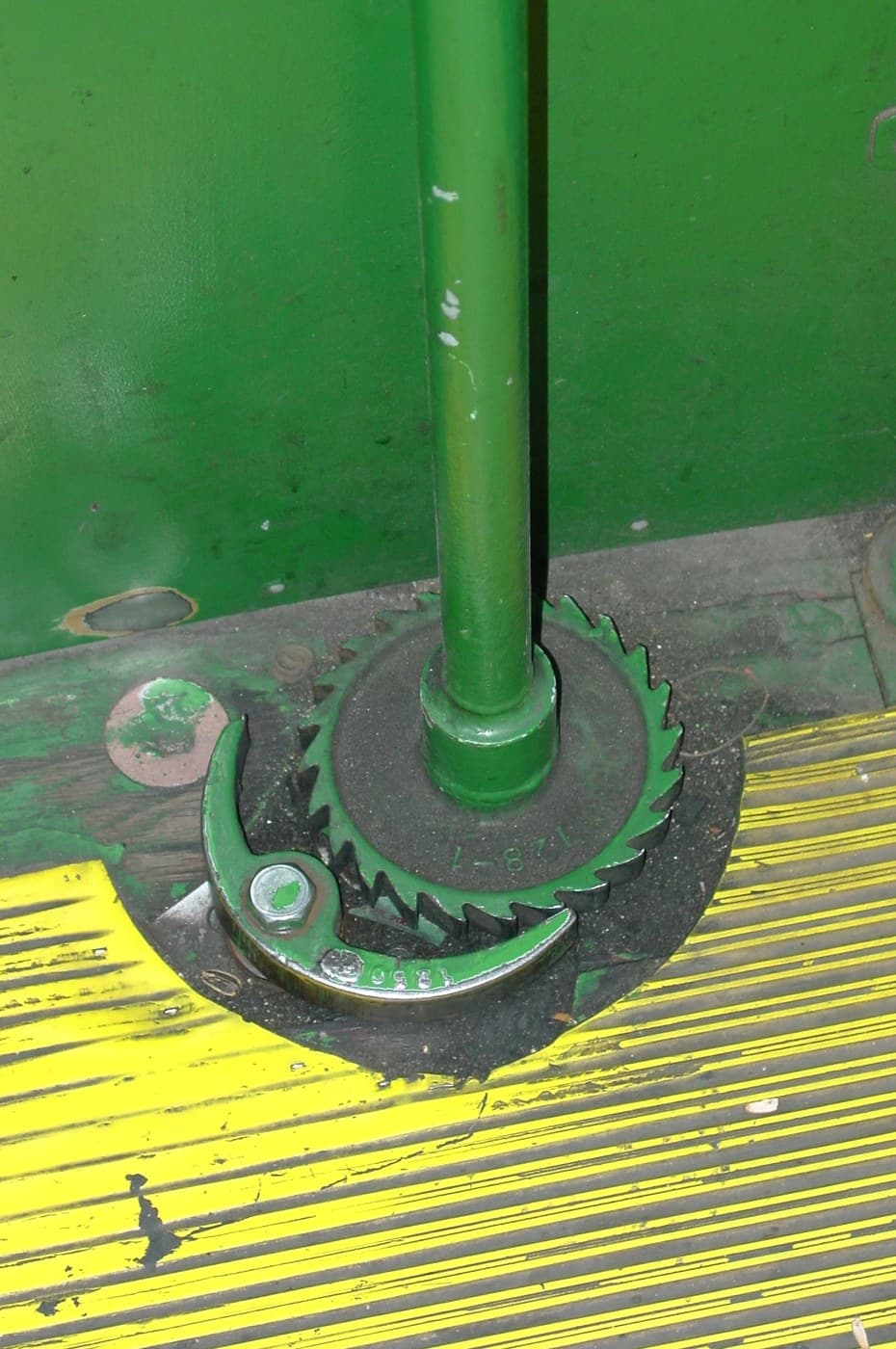
Ratchet and Pawl
láti ọwọ́ Forge
IṢẸ́ ỌWỌ́
39
0
0
0
0
0
Yale Cylinder Lock
láti ọwọ́ Forge
Iṣẹ́ Irin
37
0
0
0
0
0
Extension and Torsion Springs: Initial Tension, Hooks and Handedness
láti ọwọ́ Emma
Ìmọ̀ Ẹ̀rọ
6
0
0
0
0
0
CC0 Àgbègbè Gbogbogbò
Blueprint yìí ti jáde lábẹ́ CC0. O lè ṣe àdàkọ, yí padà, pín, àti lò láìsí ìyọ̀ǹda.
Ṣàtìlẹ́yìn Olùṣẹ́dá nípa rírà àwọn ọjà nipasẹ̀ Blueprint wọn Ẹ̀san Olùṣẹ́dá tí àwọn Olùtajà gbé kalẹ̀, tàbí ṣẹ̀dá àtúnṣe tuntun ti Blueprint yìí kí o sì fi sínú Blueprint rẹ gẹ́gẹ́ bí ìsopọ̀ láti pín owó-wíwọlé.