IṢẸ́ ỌNÀ
ẸWÀ ÀTI ÌLERA
IṢẸ́ ỌWỌ́
ÀṢÀ ÀTI ÌTÀN
ÌṢERÉ
ÀYÍKÁ
OÚNJẸ ÀTI OHUN MÍMU
REVERSE ENGINEERING
SÁYẸ́ǸSÌ
ERÉ ÌDÁRAYÁ
ÌMỌ̀-Ẹ̀RỌ
ÀWỌN OHUN WÍWỌ̀
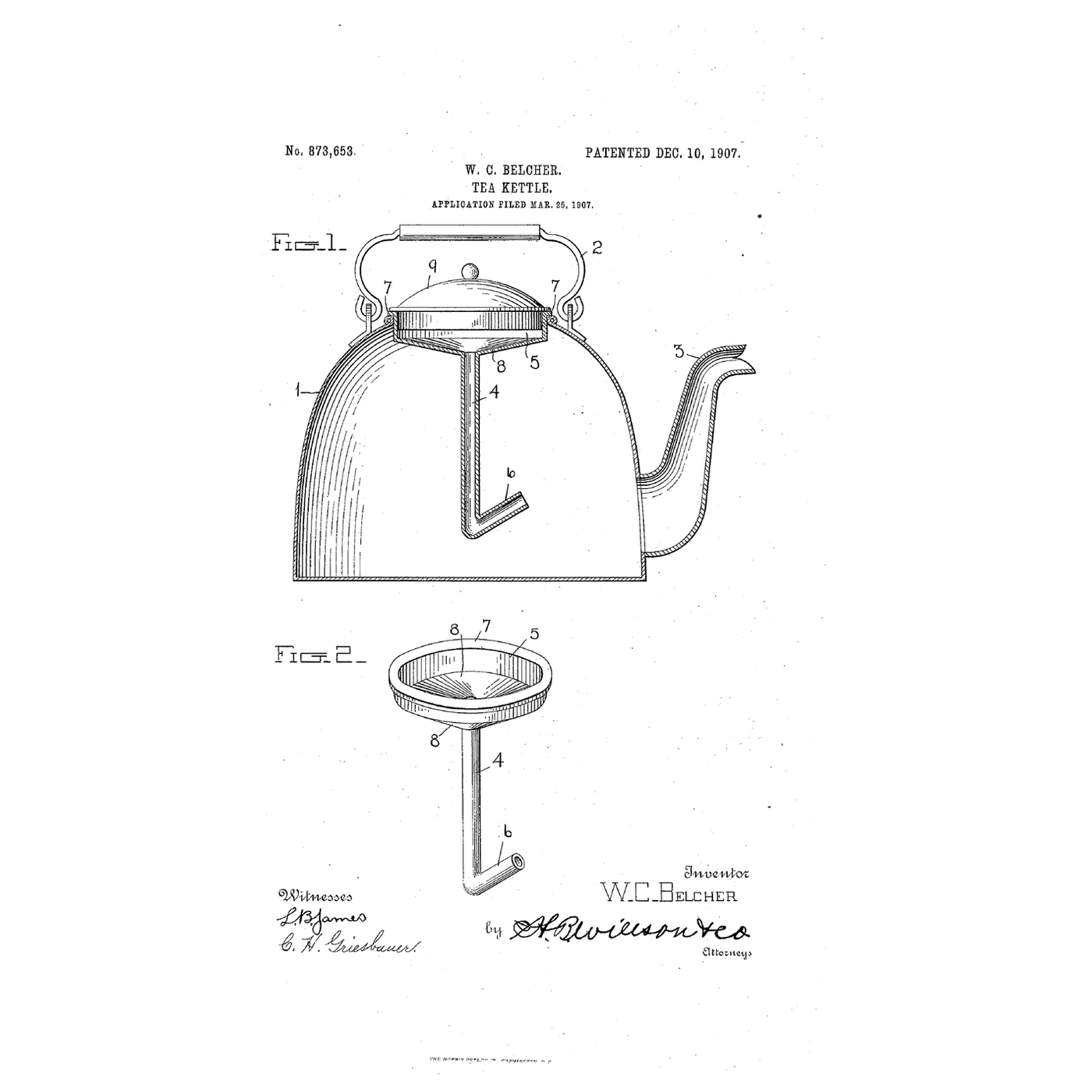


The Elbow-Sealed Kettle Funnel: A Filling Pipe That Keeps Its Own Water Seal
Steam escaping from a kettle's lid rises under the hand on the handle and scalds it.
Winner C. Belcher of Colfax, California, received US 873,653, patented 10 December 1907, for a funnel seated in the kettle's mouth by an outturned flange, with a lid, and a pipe reaching near the bottom whose outlet turns up toward the spout at about 45 degrees; the elbow "will at all times hold sufficient water to seal the lower end of the filling pipe and prevent the steam escaping upwardly therethrough", while the kettle still fills through it unhindered.
This rung works out the seal the elbow keeps as the kettle tips, then solders a flanged funnel head to a copper pipe with a 45-degree outlet and looks for steam at the top.
Àárín
About 4 hours
Ìlànà
1
1
Seal in the elbow
Seal in the elbow
Ń ṣí ìwé Jupyter…
2
2
A water seal in a bent pipe before it
A water seal in a bent pipe before it
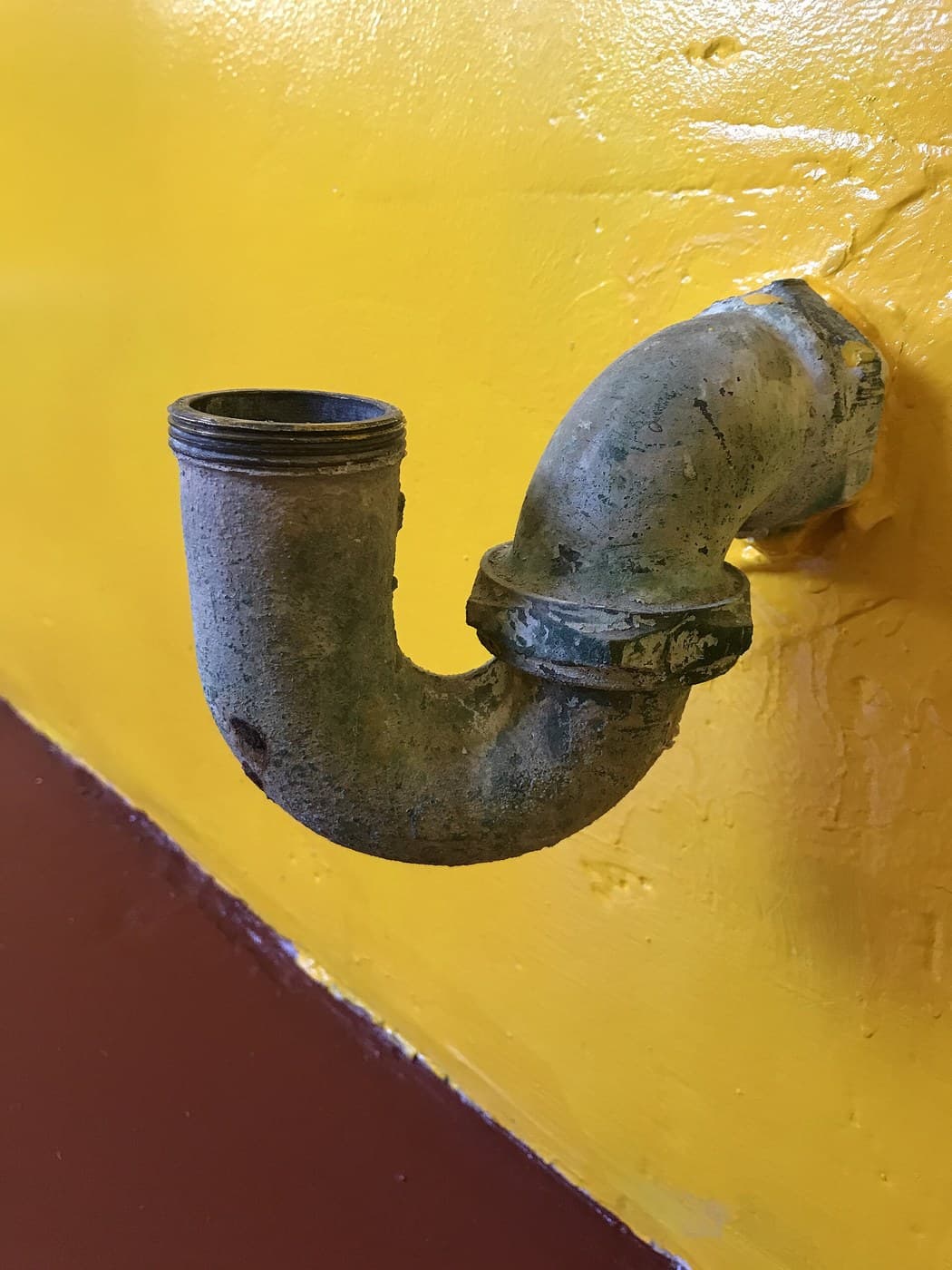
The embedded blueprint seals a drain against sewer gas with water held in a bend of the pipe. Belcher bends a kettle's filling pipe the same way, so water held in its elbow keeps the steam in.
3
3
Read US 873,653
Read US 873,653
"A funnel, comprising a vertical funnel pipe 4 which terminates at its upper end in a funnel head 5, and has an elbow in its lower part to provide an oblique, forwardly extending outlet pipe 6, which extends upwardly and forwardly toward the spout of the tea kettle at an angle of about forty-five degrees with respect to said pipe 4, fits in said kettle."
"Owing to the pipe 6 being upwardly inclined there is formed at the lower end of the pipe 4 an elbow, which will at all times hold sufficient water to seal the lower end of the filling pipe and prevent the steam escaping upwardly therethrough."
4
4
Solder the funnel and look for steam
Solder the funnel and look for steam
**Head.** Cut a clean tin can down to a cup 4 cm deep that drops into the kettle's mouth. Cut a ring from a second can's lid, 1 cm wider all round than the mouth, and solder it round the cup's top as the flange that rests on the mouth. Drill a hole in the cup's floor to take 10 mm copper tube.
**Pipe.** Cut copper tube long enough to reach from the cup to 2 cm above the kettle's floor, plus 4 cm. Bend the last 4 cm up by hand, slowly, round a jar, to 45 degrees from the pipe. Clean the pipe's top and the hole with steel wool, flux them, push the pipe through the cup's floor, and solder it with the torch and lead-free plumbing solder. Wash off the flux.
**Lid.** Cut a disc from a can lid that sits inside the cup's rim.
**Test.** Seat the funnel in the kettle's mouth with the outlet toward the spout. Fill through the funnel, noting how fast it runs, put the lid on, and bring the kettle to the boil with only a little water in it. Hold a cold spoon over the funnel's lid and another over the spout and see which one mists.
Àwọn ohun èlò fún ìgbésẹ̀ yìí:
 Ìgò irin2 ẹyọ
 Ọ̀pá bàbà1 ẹyọ
 Flux iṣẹ́ páìpù1 ẹyọ
 Ohun ìdì paipu láìní òjé1 ẹyọ
 Irun irin1 ẹyọ
Àwọn irinṣẹ́ tí a nílò:
 Kẹ́tùlù orí iná
 Ìlàǹkàn irin
 Ohun èlò ìgé òpó
 Ẹ̀rọ Ìlùkòkò Aláìlókùn
 Àkójọ Orí Ìlùkòkò
 Ọ̀pá Iná Pùróféènì
 Àwọn Ìfá (Ìfá Ọwọ́)
 Ìdíwọ̀n
 Ìbọ̀wọ́ Tí Ń Fara Da Ooru
 Gílásì Ààbò Tí Ó Mọ́
5
5
A funnel that lets steam through, leaks or kinks
A funnel that lets steam through, leaks or kinks
Elbow-sealed kettle funnel troubleshooting.
Flow
Loading...
6
6
History and honest limits
History and honest limits
**Winner C. Belcher** of Colfax, Placer County, California, filed US 873,653 on 25 March 1907; it was patented 10 December 1907. The funnel head 5 is preferably a basin with an outward annular flange 7 and a slanting bottom 8, and its mouth is closed by a lid 9 fitted in it. The funnel need only be taken out to clean the kettle. His claim covers a kettle with a mouth and spout, a funnel removably seated in the mouth by an outturned flange, a vertical tube ending near the bottom in an upwardly inclined outlet opening toward the spout, wholly open and unobstructed, and a cover for the funnel's mouth.
**Honest limits.** A tin-can head with a flat floor stands in for his basin with a slanting bottom. The notebook treats the seal as the rise of a straight outlet; its lengths and angles are examples. What your spoons show is the result.
Àwọn ohun-èlò
5- 2 ẹyọÀyè
- 1 ẹyọÀyè
- 1 ẹyọÀyè
- Àyè
- 1 ẹyọÀyè
Àwọn irinṣẹ́ tó nílò
10- Àyè
- 1 vendor sell this, none ship to you yetÀyè
- Àyè
Blueprint tó jọra
Àwọn blueprint wọ̀nyí pín ìmọ̀ — ọ̀nà, ohun-èlò tàbí ìlànà



CC0 Àgbègbè Gbogbogbò
Blueprint yìí ti jáde lábẹ́ CC0. O lè ṣe àdàkọ, yí padà, pín, àti lò láìsí ìyọ̀ǹda.
Ṣàtìlẹ́yìn Olùṣẹ́dá nípa rírà àwọn ọjà nipasẹ̀ Blueprint wọn Ẹ̀san Olùṣẹ́dá tí àwọn Olùtajà gbé kalẹ̀, tàbí ṣẹ̀dá àtúnṣe tuntun ti Blueprint yìí kí o sì fi sínú Blueprint rẹ gẹ́gẹ́ bí ìsopọ̀ láti pín owó-wíwọlé.