IṢẸ́ ỌNÀ
ẸWÀ ÀTI ÌLERA
IṢẸ́ ỌWỌ́
ÀṢÀ ÀTI ÌTÀN
ÌṢERÉ
ÀYÍKÁ
OÚNJẸ ÀTI OHUN MÍMU
REVERSE ENGINEERING
SÁYẸ́ǸSÌ
ERÉ ÌDÁRAYÁ
ÌMỌ̀-Ẹ̀RỌ
ÀWỌN OHUN WÍWỌ̀

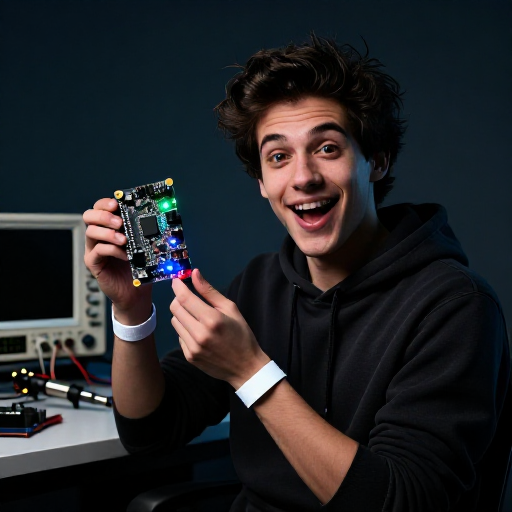

The Fire-Alarm Telegraph: A Box That Sends Its Own Address
In a growing city a fire was reported by someone running to the nearest station house, and the alarm was spread by shouting and church bells. By the time the engines knew where to go, the fire had spread.
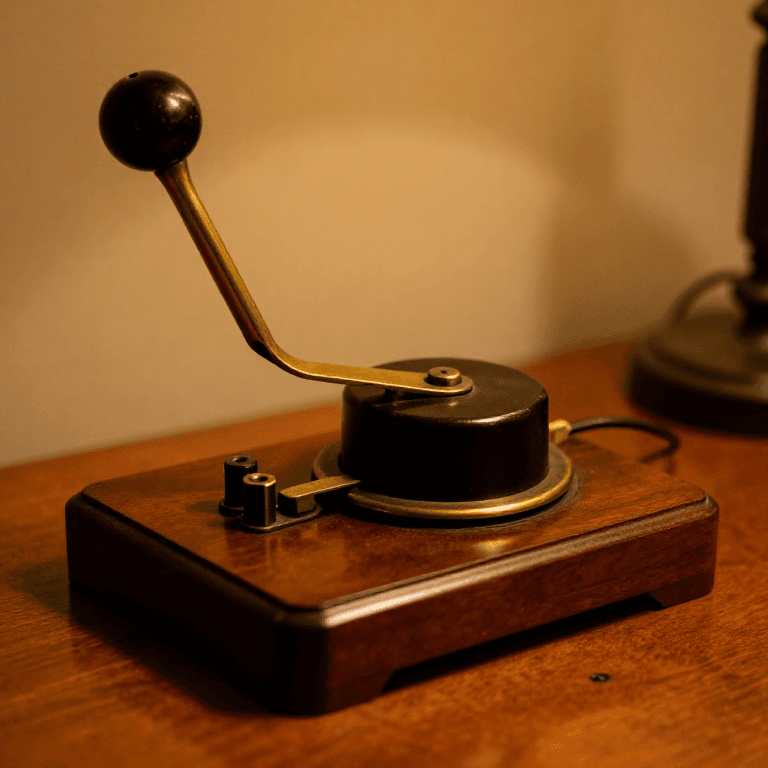
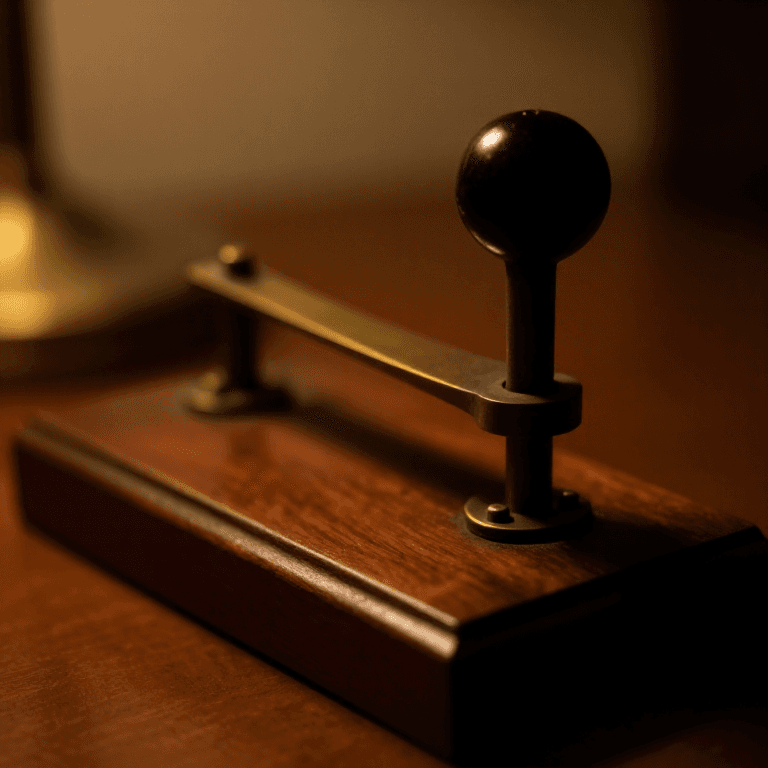
William F. Channing of Boston and Moses G. Farmer of Salem, Massachusetts, received US 17,355, dated 19 May 1857, for "The American Fire-Alarm Telegraph". Signal boxes are placed within a short distance of every house. Turning a box's crank rotates a wheel whose two groups of teeth break the circuit to the central station in a pattern — the district number, then the box number — which the station reads as dots and dashes; the station then strikes the alarm bells in the towers by telegraph.
This rung works out how many boxes such a code can name and why it is sent three times, and builds a signal box with an Arduino.
Àárín
About 3 hours
Ìlànà
1
1
Codes, timing and repetition
Codes, timing and repetition
Ń ṣí ìwé Jupyter…
2
2
The line the alarm runs on
The line the alarm runs on
The fire alarm used the electric telegraph's circuit and magnet. The embedded blueprint builds Morse's telegraph.
3
3
Read US 17,355
Read US 17,355
"The object of the American fire-alarm telegraph is to give an instantaneous and definite alarm, either general or local, in a city or town, in case of fire." The system has signal-stations, a central station, alarm-stations, a signal-circuit and an alarm-circuit. Signal-stations are to be multiplied "in order to place one within a suitable distance of every house."
In a signal-station a small bell h is struck by a hammer on the armature-lever of an electro-magnet, and c c′ is "a break-circuit key", worked by a knob or by a circuit-wheel b turned by a crank a. "On the periphery of the circuit-wheel are two groups of teeth": one of short teeth giving "dots", the other of teeth giving a combination of dots and dashes. "The first of these groups may, by the number of its teeth, represent the number of the fire-district in which the signal-station is located. The second group may ... represent the number of the signal-station itself in that district." The crank is weighted so the wheel rests with the circuit closed.
Several signal-circuits may radiate "like the petals of a flower from the central station", and threefold or manifold wires lessen "the probability of interruption from accident or design."
4
4
The signal-box sketch
The signal-box sketch
Press the button and the box sends its district and station numbers as groups of beeps, three rounds, like one turn of the crank. Compiled and run against a simulator: one press gives exactly 24 pulses (3 + 5, three times).
signal_box.inoarduino
Àwọn ohun èlò fún ìgbésẹ̀ yìí:
 Arduino Uno R31 ẹyọ
 Bọ́tìnì ìtẹ̀1 ẹyọ
 Agogo piezo1 ẹyọ
 Okùn Ìsopọ̀1 ẹyọ
 Pátákó Àdánwò1 ẹyọ
Àwọn irinṣẹ́ tí a nílò:
 Kọ̀ǹpútà Tí Ó Ní Arduino IDE
5
5
Crank, send, count
Crank, send, count
Ààyè Iṣẹ́ Blockly
Loading Blockly workspace...
6
6
A signal box that is not heard
A signal box that is not heard
Signal-box troubleshooting.
Flow
Loading...
7
7
History and honest limits
History and honest limits
**William F. Channing** of Boston and **Moses G. Farmer** of Salem, assignors to Channing, received US 17,355, dated 19 May 1857, for the American Fire-Alarm Telegraph.
**Honest limits.** The pulse timings and drop rates in the notebook are examples; the sketch is a model of the code, not a certified alarm.
Àwọn ohun-èlò
5- láti$26.65
- láti$0.51
- 1 ẹyọÀyè
- láti$1.59
- láti$9.36
Àwọn irinṣẹ́ tó nílò
1Blueprint tó jọra
Àwọn blueprint wọ̀nyí pín ìmọ̀ — ọ̀nà, ohun-èlò tàbí ìlànà



CC0 Àgbègbè Gbogbogbò
Blueprint yìí ti jáde lábẹ́ CC0. O lè ṣe àdàkọ, yí padà, pín, àti lò láìsí ìyọ̀ǹda.
Ṣàtìlẹ́yìn Olùṣẹ́dá nípa rírà àwọn ọjà nipasẹ̀ Blueprint wọn Ẹ̀san Olùṣẹ́dá tí àwọn Olùtajà gbé kalẹ̀, tàbí ṣẹ̀dá àtúnṣe tuntun ti Blueprint yìí kí o sì fi sínú Blueprint rẹ gẹ́gẹ́ bí ìsopọ̀ láti pín owó-wíwọlé.