IṢẸ́ ỌNÀ
ẸWÀ ÀTI ÌLERA
IṢẸ́ ỌWỌ́
ÀṢÀ ÀTI ÌTÀN
ÌṢERÉ
ÀYÍKÁ
OÚNJẸ ÀTI OHUN MÍMU
REVERSE ENGINEERING
SÁYẸ́ǸSÌ
ERÉ ÌDÁRAYÁ
ÌMỌ̀-Ẹ̀RỌ
ÀWỌN OHUN WÍWỌ̀
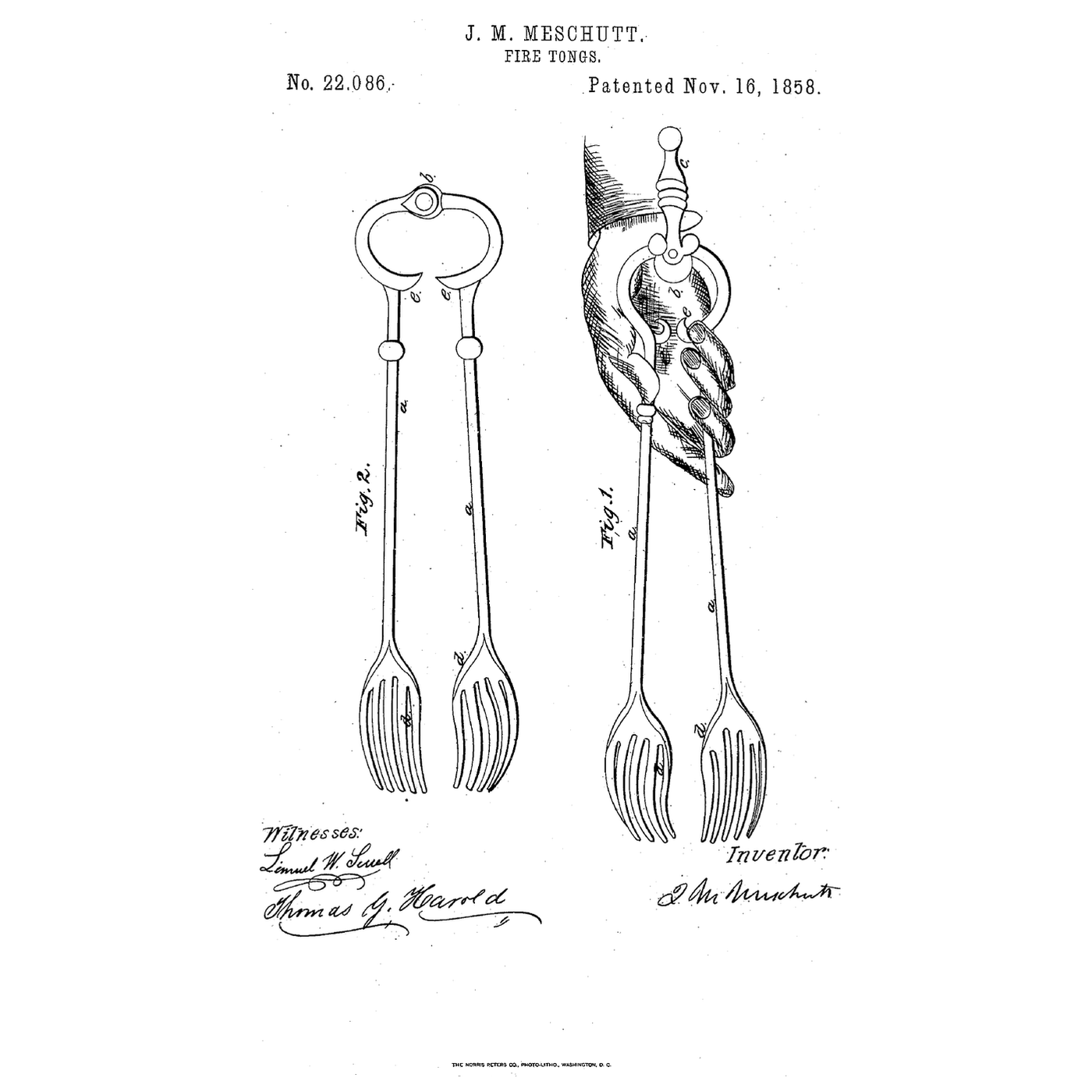

The Forked Fire Tongs: Curved Prongs for Coal, and Stops That Keep Them From Crossing
Flat-ended fire tongs made for wood fires slip off lumps of coal and clinker, and cannot let the ashes fall away.
James M. Meschutt of New York received US 22,086, dated 16 November 1858, for tongs for coal fires in which, "In place of the ordinary flat ends to the legs, I make use of fingers or curved prongs d, d, which setting opposite to each other enable the party using the same to take hold of coals, clinkers, cinders and similar articles with great facility", with projections e, e close to where the hand holds them, "to prevent pressure by the hand, forcing the prongs or fingers d, d, past each other so as to overlap and stick or bind together".
This rung works out how the stops set the prongs' closest approach and how much of the squeeze reaches them, then forges the tongs from steel rod with forked prongs and stops, and sorts cold clinker and coal with them.
Àárín
About 4 hours
Ìlànà
1
1
Stops and squeeze
Stops and squeeze
Ń ṣí ìwé Jupyter…
2
2
Tongs before it
Tongs before it
The embedded blueprint forges a blacksmith's tongs. Meschutt's are for the household coal fire, with forked prongs and stops that keep them from crossing.
3
3
Read US 22,086
Read US 22,086
"a, a, are the legs of my tongs jointed together at b, and a handle c, (Fig. 1,) may be provided at this point if desired. In place of the ordinary flat ends to the legs, I make use of fingers or curved prongs d, d, which setting opposite to each other enable the party using the same to take hold of coals, clinkers, cinders and similar articles with great facility; my tongs however would not be perfect without the projections e, e, close to that part of the legs at which the hand of the operator seizes the tongs"
"said tongs are applicable under a variety of circumstances in household affairs such as removing the burning coals from a fire no longer needed to be burning, cleaning out cinders, clinkers &c. from grates instead of using the hands, at the same time permitting the ashes to fall away"
4
4
Forge the tongs and sort a grate
Forge the tongs and sort a grate
**Legs.** Cut two 55 cm lengths of 8 mm mild steel rod. Heat one end of each and bend it into a half loop, so the two loops together make the bow at the top, and flatten their ends where they overlap for the joint.
**Prongs.** Flatten the other end of each leg for 8 cm to about 25 mm wide, saw it into four fingers with the hacksaw, round them, and bend them into a curve so the two sets face each other.
**Joint and stops.** Drill the overlapping ends and rivet them loosely as the joint b. Silver-solder a short stud of rod to each leg just below the bow, where the hand holds them, so the studs meet when the prongs are about 5 mm apart; file the studs to adjust.
**Test.** From a cold grate or barbecue, pick out lumps of charcoal and clinker and lift them into a bucket, shaking the ashes off. Squeeze hard and check that the prongs never cross.
Àwọn ohun èlò fún ìgbésẹ̀ yìí:
 Ọ̀pá Róbótó Irin Rírọ̀1.2 mítà
 Ìdìpọ̀ wẹ́là fadaka (rírọ̀/àárín/líle)1 ẹyọ
 Ohun ìyọ́1 ẹyọ
 Èédú Fífọ́1 ẹyọ
Àwọn irinṣẹ́ tí a nílò:
 Ayùn Irin
 Ọ̀pá Iná Pùróféènì
 Ìdí Alágbẹ̀dẹ
 Òòlù
Òòlù Ìdìmú Tábìlì
 Àwọn Ìfá (Ìfá Ọwọ́)
 Ẹ̀rọ Ìlùkòkò Aláìlókùn
 Àkójọ Orí Ìlùkòkò
 Bàkẹ́ẹ̀tì
 Ìbọ̀wọ́ Tí Ń Fara Da Ooru
 Gílásì Ààbò Tí Ó Mọ́
5
5
Tongs that cross, slip or bend
Tongs that cross, slip or bend
Forked fire tongs troubleshooting.
Flow
Loading...
6
6
History and honest limits
History and honest limits
**James M. Meschutt** of New York, New York, received US 22,086, dated 16 November 1858. He noted that oyster rakes and sugar tongs had been made with fingers before, but held his tongs to be a new article for coal fires, and that ordinary tongs for wood were useless with coal. His claim is metallic tongs for coal fires with fingers or curved prongs and the projections that keep the fingers from coming too close together.
**Honest limits.** Hand-forged rod and soldered studs stand in for his made tongs, and the test uses a cold grate. The notebook treats the legs as rigid and turning about one joint; its lengths and forces are examples. Your sorted grate is the result.
Àwọn ohun-èlò
4- 1.2 mítàÀyè
- 1 ẹyọÀyè
- 1 ẹyọÀyè
Àwọn irinṣẹ́ tó nílò
11- Àyè
- Àyè
- Àyè
- 1 vendor sell this, none ship to you yetÀyè
- Àyè
Blueprint tó jọra
Àwọn blueprint wọ̀nyí pín ìmọ̀ — ọ̀nà, ohun-èlò tàbí ìlànà
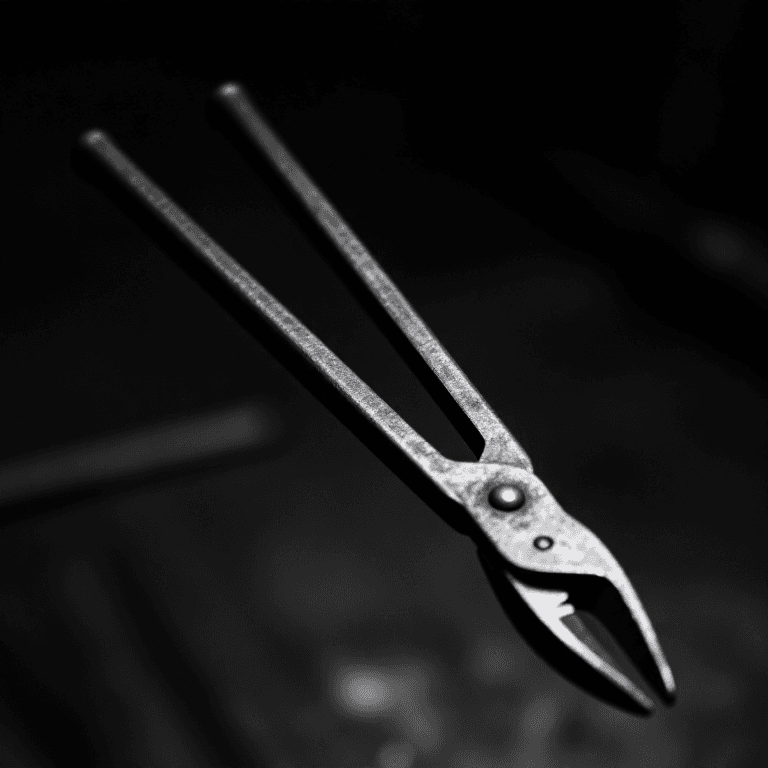
Forging a Pair of Iron Tongs — The Blacksmith's Essential Gripping Tool
láti ọwọ́ Forge
Iṣẹ́ Irin
26
0
0
0
1
0
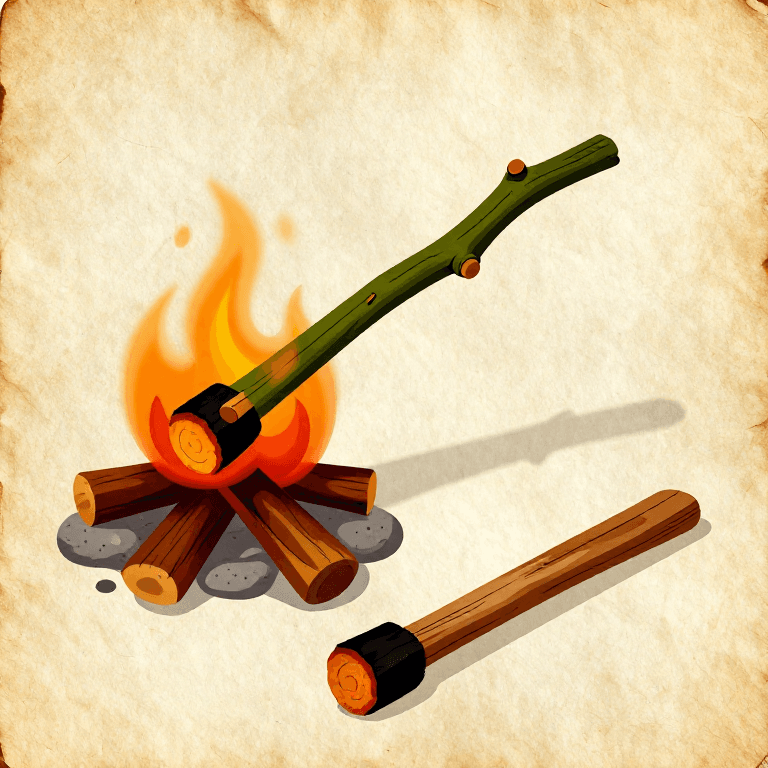
Making Wooden Fire Tongs — Split-Stick Spring Tongs for Handling Hot Stones and Coals
láti ọwọ́ Woody
Iṣẹ́ Igi
45
0
0
0
0
0

The Law of the Lever — Archimedes' Balance of Weight and Distance
láti ọwọ́ Martin
Físíkì
55
0
0
0
1
0
CC0 Àgbègbè Gbogbogbò
Blueprint yìí ti jáde lábẹ́ CC0. O lè ṣe àdàkọ, yí padà, pín, àti lò láìsí ìyọ̀ǹda.
Ṣàtìlẹ́yìn Olùṣẹ́dá nípa rírà àwọn ọjà nipasẹ̀ Blueprint wọn Ẹ̀san Olùṣẹ́dá tí àwọn Olùtajà gbé kalẹ̀, tàbí ṣẹ̀dá àtúnṣe tuntun ti Blueprint yìí kí o sì fi sínú Blueprint rẹ gẹ́gẹ́ bí ìsopọ̀ láti pín owó-wíwọlé.