IṢẸ́ ỌNÀ
ẸWÀ ÀTI ÌLERA
IṢẸ́ ỌWỌ́
ÀṢÀ ÀTI ÌTÀN
ÌṢERÉ
ÀYÍKÁ
OÚNJẸ ÀTI OHUN MÍMU
REVERSE ENGINEERING
SÁYẸ́ǸSÌ
ERÉ ÌDÁRAYÁ
ÌMỌ̀-Ẹ̀RỌ
ÀWỌN OHUN WÍWỌ̀
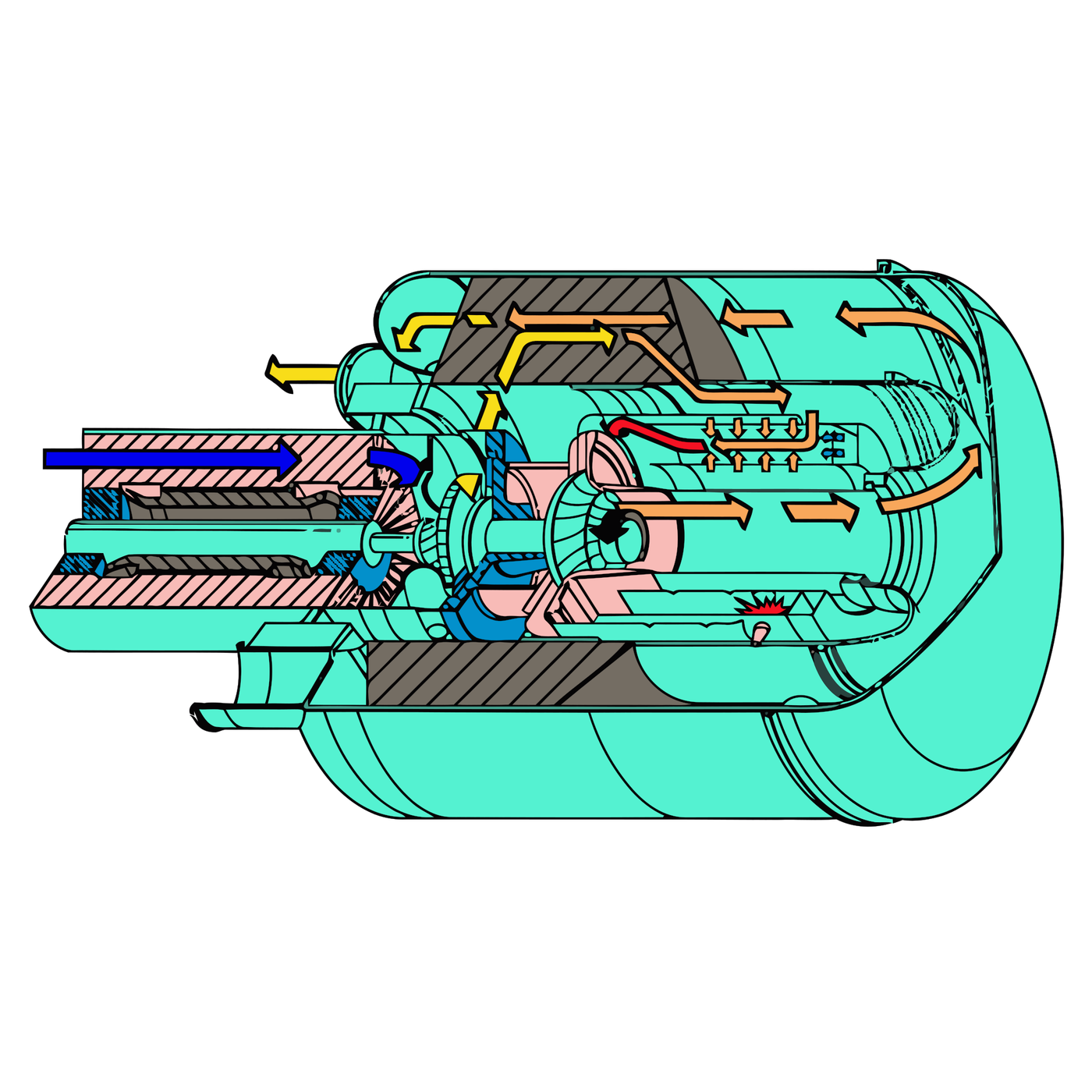

The Gas Turbine: When the Turbine Finally Beat Its Own Compressor
Compress air, burn fuel in it, and expand the hot gas through a turbine that also turns the compressor. The idea is simple and old. Making it work took until 1903, when the Norwegian engineer Ægidius Elling ran the first gas turbine that delivered more power than its own compressor consumed.
The difficulty is arithmetic. The compressor takes most of what the turbine makes, so small losses in either machine wipe out the net output entirely. It needed efficient compressors and turbine metal that could stand red heat — and the Whittle turbojet in this catalogue is the result.
This rung works out the arithmetic, then demonstrates it safely with an air turbine and a compressor on the bench.
Àárín
About 3 hours
Ìlànà
1
1
Net work: turbine minus compressor
Net work: turbine minus compressor
Ń ṣí ìwé Jupyter…
2
2
Demonstrate the energy bill with compressed air
Demonstrate the energy bill with compressed air
No combustion here. Print a small impulse air turbine — a 60 mm wheel with 20 cupped buckets — on the shaft of a hobby motor used as a generator, with a 330 Ω load and the multimeter across it. Blow it with the air compressor through the regulator and a nozzle made from a short piece of tube.
Measure the electrical power out (V² ÷ R). Then measure the power the compressor draws from the wall while it runs — the clamp meter on the live conductor, times the mains voltage.
The turbine returns a tiny fraction of what the compressor took. That is the gas turbine's problem without the fuel: compression is expensive, and only by adding heat between compressor and turbine does the turbine get back more than it cost.
Àwọn ohun èlò fún ìgbésẹ̀ yìí:
 Okùn PETG30 g
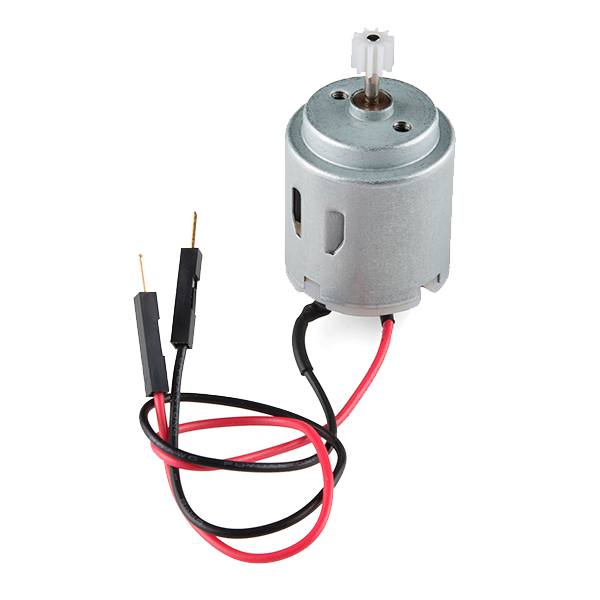 Hobby Motor - Gear1 ẹyọ
 Rẹ́sístà 330 ohm1 ẹyọ
 Ọ̀pá vinyl tí ó mọ́0.5 mítà
Àwọn irinṣẹ́ tí a nílò:
 Ẹ̀rọ ìtẹ̀ afẹ́fẹ́ (onírísí pancake)
 Ẹ̀rọ ìdínkù ìtẹ̀
 Òǹwọ̀n iná mànàmáná onírúurú
 Mítà ìdìmú AC/DC 600 A
 Ẹ̀rọ ìtẹ̀ 3D oníwàyà (FDM)
 Gílásì Ààbò Tí Ó Mọ́
 Ààbò etí
3
3
History and context
History and context
**Ægidius Elling, Norway, 1903** — the first gas turbine to deliver net power — more than its own compressor consumed. No patent number is asserted here, and the details of his machine are left to the sources; the principle is the payload. Earlier attempts had failed exactly as the notebook predicts: the compressor ate all the turbine's output.
The line runs through Büchi's turbocharger (the next rung) — a gas turbine driving a compressor, fed by an engine's exhaust — to the Whittle turbojet and the power-station gas turbine.
**Honest limits.** Efficiency depends on turbine inlet temperature, which is limited by materials and cooling; small gas turbines are inefficient; and part-load efficiency falls away. **Do not build a combustion gas turbine**: the parts spin at speeds where a failure is a shrapnel event, and the combustor is a blowtorch.
Àwọn ohun-èlò
4- 30 gÀyè
- Hobby Motor - Gearìdá 10%1 ẹyọ$2.51
- 1 ẹyọÀyè
- 0.5 mítàÀyè
Àwọn irinṣẹ́ tó nílò
7- Ààbò etíìdá 10%Àyè
Àpapọ̀ Ìfojúsùn
Ohun tí ẹni tó ṣe é rà. Àwọn ohun èlò tí kò ní iye owó ni o máa rà níbi tí o bá ti rà á.
Blueprint tó jọra
Àwọn blueprint wọ̀nyí pín ìmọ̀ — ọ̀nà, ohun-èlò tàbí ìlànà
Parsons Steam Turbine
láti ọwọ́ Martin
Físíkì
40
0
0
0
0
0
The Heat of Compression: Why Compressed Air Is Hot and Wet
láti ọwọ́ Martin
Ìmọ̀ Ẹ̀rọ
11
0
0
0
0
0
The Screw Compressor: A Built-In Ratio, and the Cost of the Wrong One
láti ọwọ́ Martin
Ìmọ̀ Ẹ̀rọ
10
0
0
0
0
0

The Rotary Regenerator: Store Heat in a Wheel and Carry It Across
láti ọwọ́ Martin
Ìmọ̀ Ẹ̀rọ
14
0
0
0
0
0

The Sirocco Fan: Many Shallow Forward-Curved Blades
láti ọwọ́ Emma
Ìmọ̀ Ẹ̀rọ
11
0
0
0
0
0
CC0 Àgbègbè Gbogbogbò
Blueprint yìí ti jáde lábẹ́ CC0. O lè ṣe àdàkọ, yí padà, pín, àti lò láìsí ìyọ̀ǹda.
Ṣàtìlẹ́yìn Olùṣẹ́dá nípa rírà àwọn ọjà nipasẹ̀ Blueprint wọn Ẹ̀san Olùṣẹ́dá tí àwọn Olùtajà gbé kalẹ̀, tàbí ṣẹ̀dá àtúnṣe tuntun ti Blueprint yìí kí o sì fi sínú Blueprint rẹ gẹ́gẹ́ bí ìsopọ̀ láti pín owó-wíwọlé.