IṢẸ́ ỌNÀ
ẸWÀ ÀTI ÌLERA
IṢẸ́ ỌWỌ́
ÀṢÀ ÀTI ÌTÀN
ÌṢERÉ
ÀYÍKÁ
OÚNJẸ ÀTI OHUN MÍMU
REVERSE ENGINEERING
SÁYẸ́ǸSÌ
ERÉ ÌDÁRAYÁ
ÌMỌ̀-Ẹ̀RỌ
ÀWỌN OHUN WÍWỌ̀



The Hex-Socket Screw: A Head That Sinks Out of Harm's Way
A set screw locks a pulley or a collar to a turning shaft. With an ordinary head it stands proud of the hub and turns with it — close enough to catch a sleeve.
William G. Allen of West Hartford, Connecticut, patented a way to make "flush head set screws" cheaply: US 960,244, filed 9 January 1909 and granted 7 June 1910. A headed blank is driven by a punch, "preferably hexagonal in cross section", through a die, so the head is drawn back down to the wire's diameter around the punch and keeps its hexagonal socket. The screw can be sunk below the surface and turned by "a strong key or crank".
This rung follows the metal through Allen's die, estimates what a set screw holds, and measures it on a pulley and shaft.
Olùbẹ̀rẹ̀
About 2 hours
Ìlànà
1
1
Where the head goes, and what it holds
Where the head goes, and what it holds
Ń ṣí ìwé Jupyter…
2
2
Pulling metal through a hole smaller than itself
Pulling metal through a hole smaller than itself
Allen's die works like a drawplate: the metal gets thinner and longer. The embedded blueprint shows the older process.
3
3
Read US 960,244
Read US 960,244
Allen writes that it is "now generally recognized as very desirable, and numerous governments, State and national, make it obligatory" to guard or sink the heads of set screws on rotating parts. His object is screws "cheaper than the common headed set screws, which can be entirely sunk below the surface".
Fig. 1: a blank 1 of round wire is cut, one end upset "in the ordinary way" to form an expanded head 2, and the blank is driven through a die 3 by a punch 4. The head is "drawn up to the original diameter of the wire, leaving a socket 5 in the end". Other figures start from a drilled or punched round socket and turn it hexagonal the same way, or make a headed machine screw (Fig. 4).
The sockets are "shown as hexagonal" but "can be formed square, octagonal or any other angular or non-circular shape, depending on the shape of the punch". The claims are for the process: an enlarged end forced by an angular punch through a die smaller than that end, "compressing that end onto the punch".
4
4
Measure a socket screw and a set screw's grip
Measure a socket screw and a set screw's grip
Measure a socket head cap screw with the caliper: head diameter, the socket across the flats, and its depth. Find the hex key that fits and note the size.
Slide a 16-tooth timing pulley onto a 6 mm steel shaft clamped in the bench vise. Tighten its set screw with the hex key — first lightly, then firmly. Each time, wind a string round the pulley's teeth, hook the spring scale to it, and pull until the pulley slips. Slip torque = scale reading × the pulley's pitch radius (about 5.1 mm for 16 teeth of 2 mm pitch). Compare with the notebook.
File a small flat on the shaft under the set screw and repeat: the grip rises sharply.
Àwọn ohun èlò fún ìgbésẹ̀ yìí:
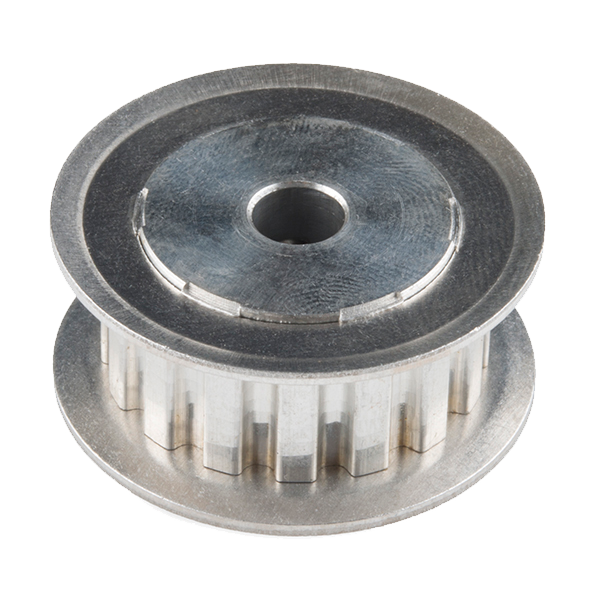 Timing Pulley - Shaft Mount (16T; 6mm Bore)1 ẹyọ
 Ọ̀pá irin aise1 ẹyọ
 Ìṣọ Onípọ̀n Orí Sokẹ́ẹ̀tì2 ẹyọ
 Ìsúrú Ìdìmú2 ẹyọ
 Okùn Òwú Ilé-ìdáná1 ẹyọ
Àwọn irinṣẹ́ tí a nílò:
 Ìdìpọ̀ kọ́kọ́rọ́ igun mẹ́fà
 Òṣùwọ̀n Kálípà Díjítà Ìnṣì 6
 Ìdìmú Tábìlì
 Ẹ̀rọ Ìwọ̀n Agbára (Òṣùwọ̀n Ìsúnkì)
 Ẹ̀rọ ìgé ihá ìdábùú
5
5
A hex-socket screw that will not behave
A hex-socket screw that will not behave
Hex socket troubleshooting.
Flow
Loading...
6
6
History and honest limits
History and honest limits
**William G. Allen** of West Hartford, Connecticut, assignor of one-half to Ira Dimock, filed US 960,244 on 9 January 1909; it was granted on 7 June 1910. It claims a process of making socketed screws by forcing an enlarged end through a smaller die onto an angular punch.
**Honest limits.** The head sizes, nut factor and friction in the notebook are examples; real set-screw holding depends on the point form, hardness and shaft finish.
Àwọn ohun-èlò
5- 1 ẹyọ$8.19
- 1 ẹyọÀyè
- Àyè
- Ìsúrú Ìdìmúìdá 10%2 ẹyọÀyè
- 1 ẹyọÀyè
Àwọn irinṣẹ́ tó nílò
5- Àyè
Àpapọ̀ Ìfojúsùn
Ohun tí ẹni tó ṣe é rà. Àwọn ohun èlò tí kò ní iye owó ni o máa rà níbi tí o bá ti rà á.
Blueprint tó jọra
Àwọn blueprint wọ̀nyí pín ìmọ̀ — ọ̀nà, ohun-èlò tàbí ìlànà
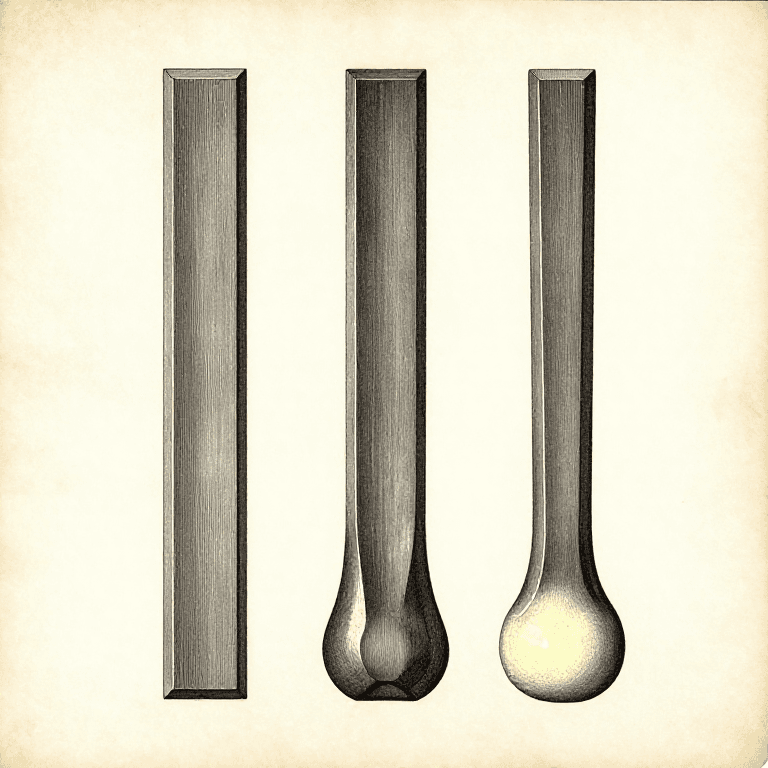
Upsetting: Making It Thicker by Making It Shorter
láti ọwọ́ Forge
Iṣẹ́ Irin
25
0
0
0
0
0
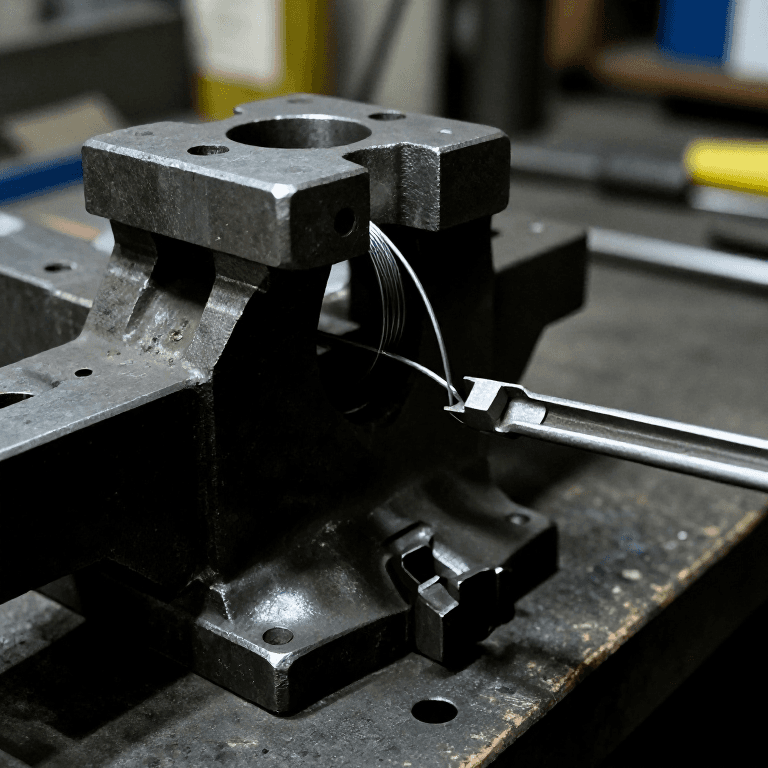
Drawing Wire Through a Drawplate — Reducing Iron Rod to Fine Wire
láti ọwọ́ Forge
Iṣẹ́ Irin
48
0
0
0
3
0
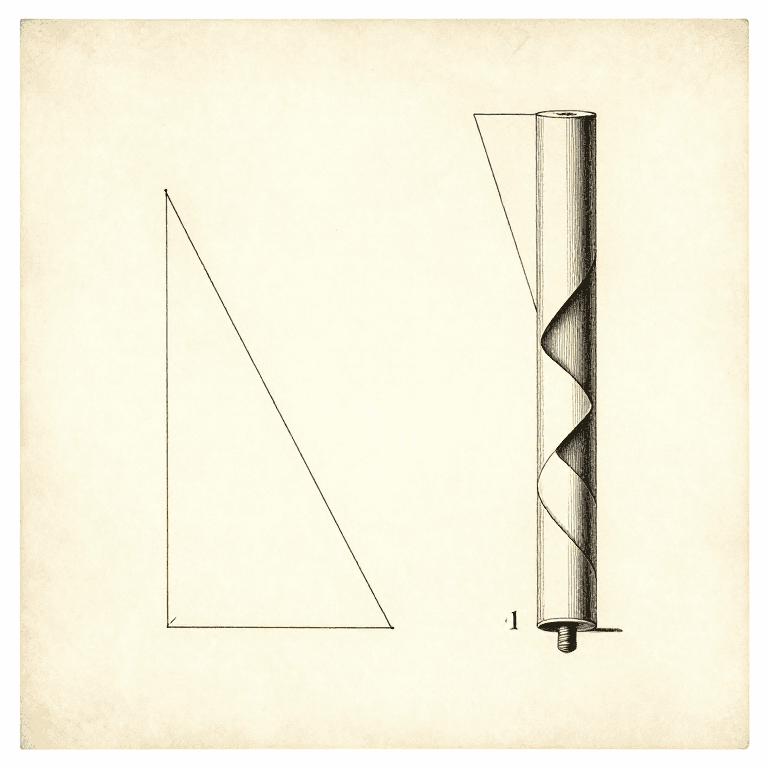
What a Screw Thread Is: A Ramp Wrapped Round a Cylinder
láti ọwọ́ Forge
Iṣẹ́ Irin
28
0
0
0
0
0
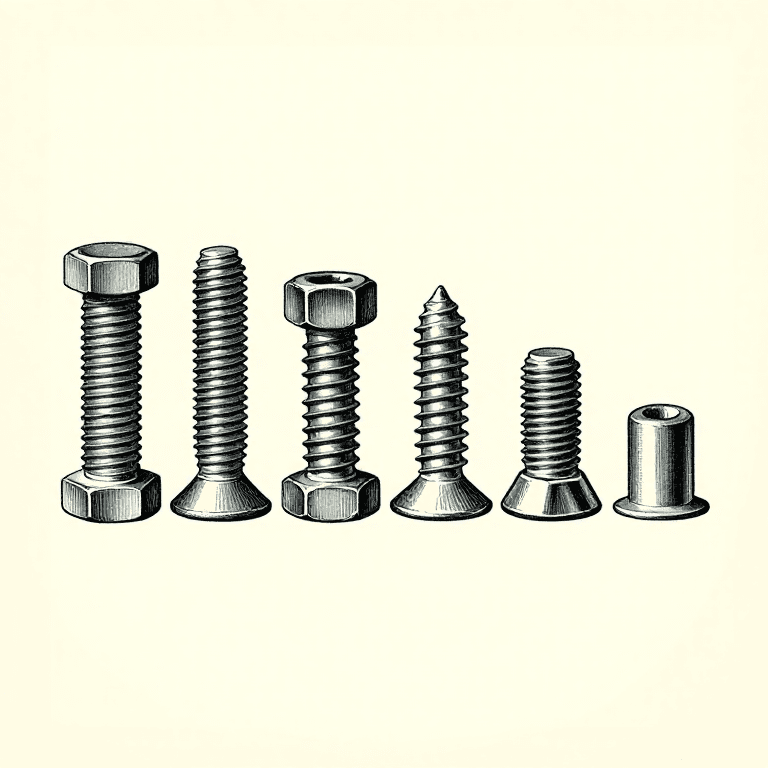
Choosing the Fastener: Screw, Bolt, Stud, Rivet
láti ọwọ́ Martin
Àwọn Irinṣẹ́ Iṣẹ́ Igi
23
0
0
0
0
0
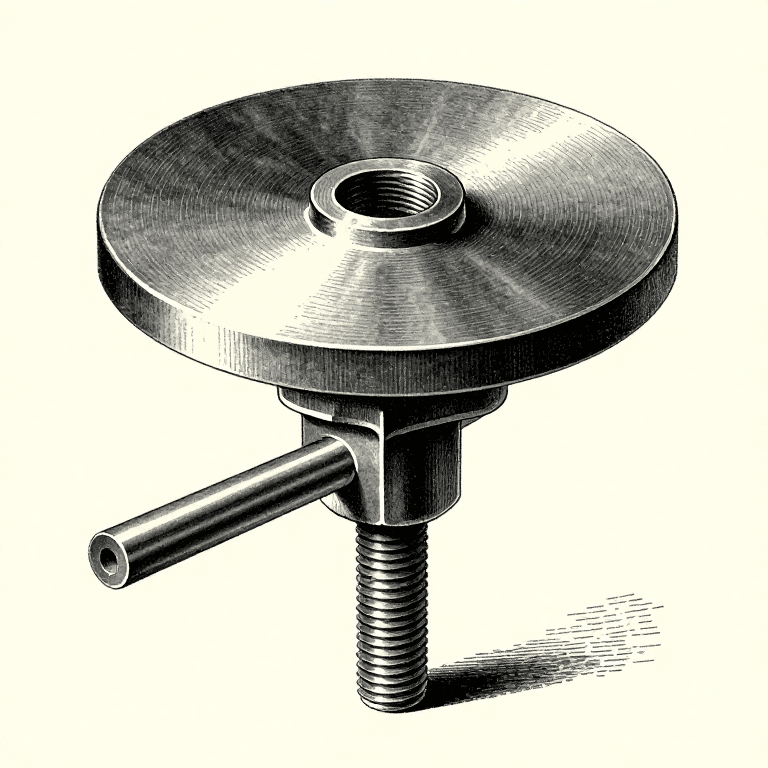
Cutting a Thread with a Die: Making Your Own Bolt
láti ọwọ́ Forge
Iṣẹ́ Irin
27
0
0
0
0
0
CC0 Àgbègbè Gbogbogbò
Blueprint yìí ti jáde lábẹ́ CC0. O lè ṣe àdàkọ, yí padà, pín, àti lò láìsí ìyọ̀ǹda.
Ṣàtìlẹ́yìn Olùṣẹ́dá nípa rírà àwọn ọjà nipasẹ̀ Blueprint wọn Ẹ̀san Olùṣẹ́dá tí àwọn Olùtajà gbé kalẹ̀, tàbí ṣẹ̀dá àtúnṣe tuntun ti Blueprint yìí kí o sì fi sínú Blueprint rẹ gẹ́gẹ́ bí ìsopọ̀ láti pín owó-wíwọlé.