IṢẸ́ ỌNÀ
ẸWÀ ÀTI ÌLERA
IṢẸ́ ỌWỌ́
ÀṢÀ ÀTI ÌTÀN
ÌṢERÉ
ÀYÍKÁ
OÚNJẸ ÀTI OHUN MÍMU
REVERSE ENGINEERING
SÁYẸ́ǸSÌ
ERÉ ÌDÁRAYÁ
ÌMỌ̀-Ẹ̀RỌ
ÀWỌN OHUN WÍWỌ̀
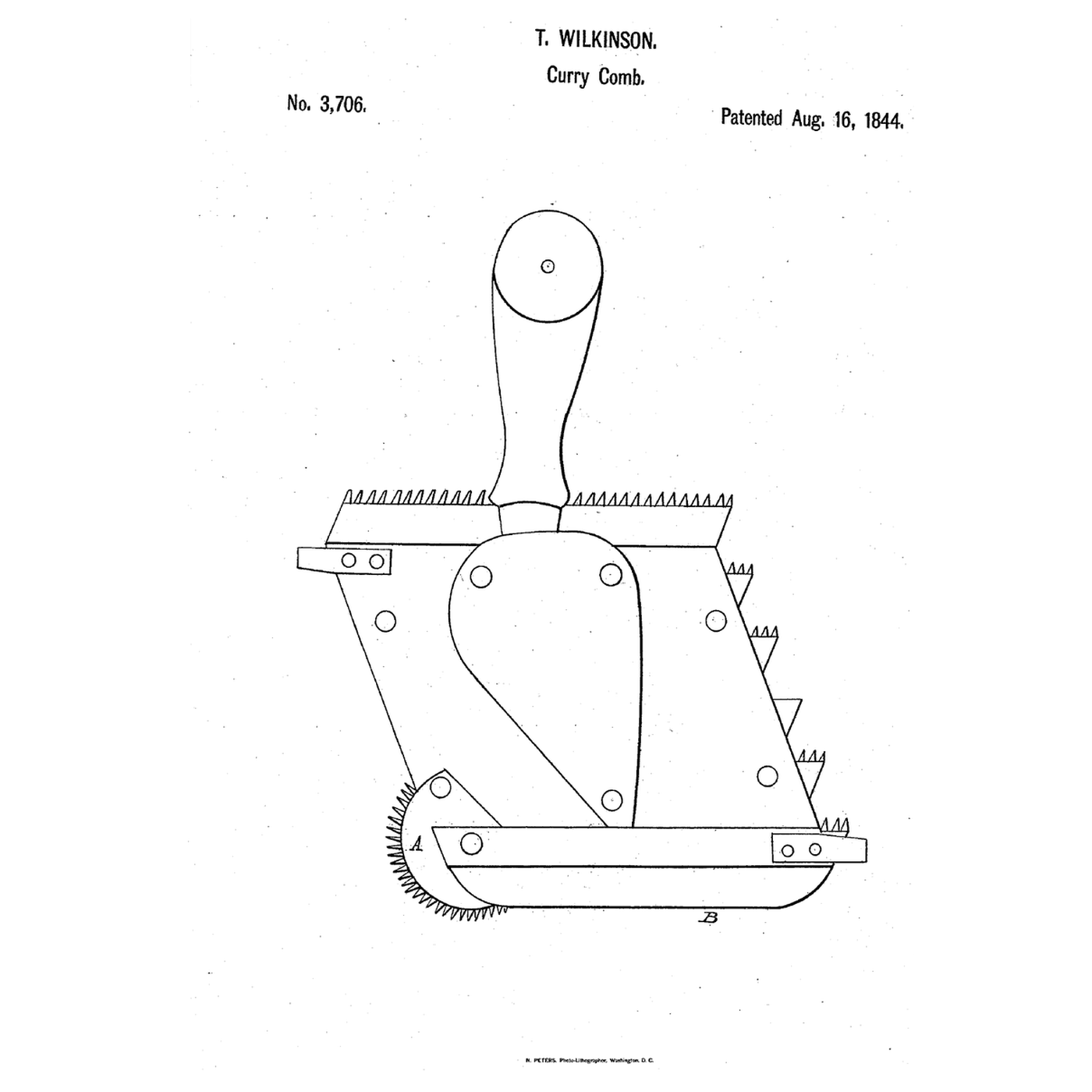


The Hock Curry Comb: A Toothed Half-Circle for the Hollows
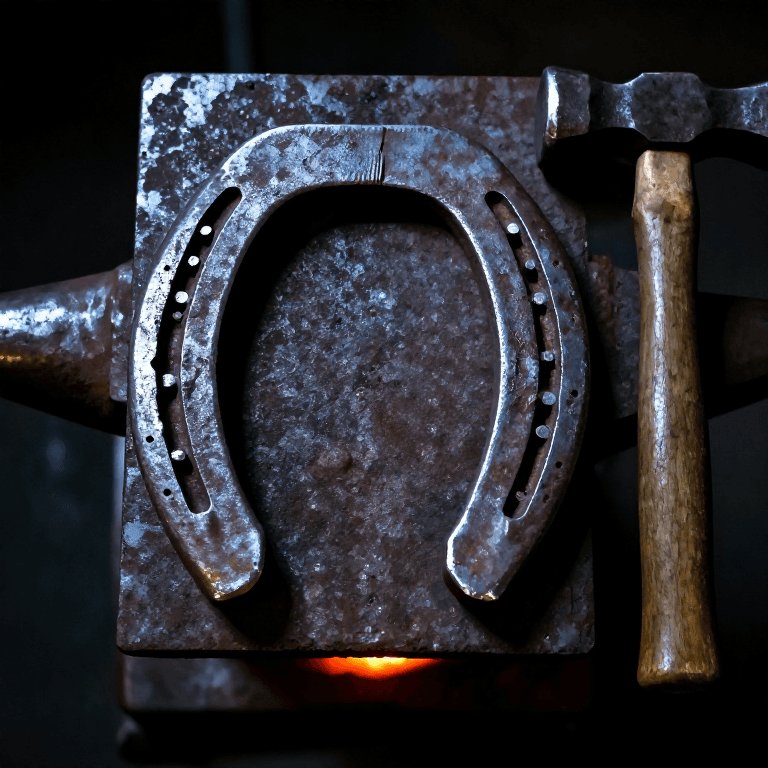
A curry comb is rows of toothed metal strips on a back with a handle. Its rows are straight, and a horse is not: the hollows about its joints are where straight teeth cannot reach.
Thomas Wilkinson of Cambridge, New York, received US 3,706, dated 16 August 1844, for a curry comb "by which the operation of cleaning the concavities of the gambrel and posterior joints and of various other situations about horses is greatly facilitated": a serrated semicircular plate added at one corner, and a blade three fourths of an inch wide on the back as a scraper.
This rung works out how far a straight row stands off a hollow, then makes a sheet-metal curry comb with a toothed half-circle and a scraper, and measures the gap on curved forms.
Àárín
About 4 hours
Ìlànà
1
1
Straight teeth in a hollow
Straight teeth in a hollow
Ń ṣí ìwé Jupyter…
2
2
Teeth cut into a flat blade
Teeth cut into a flat blade
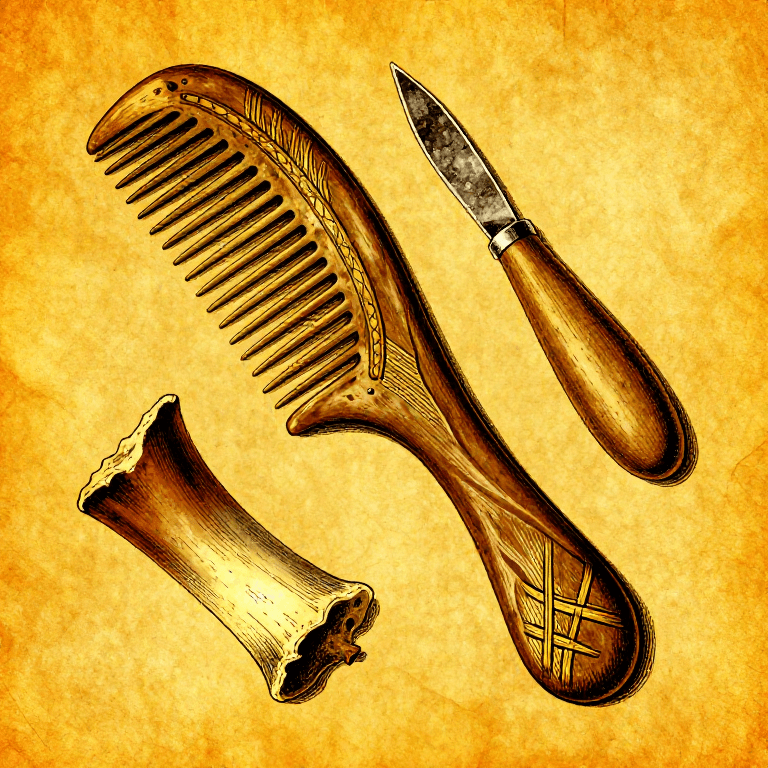
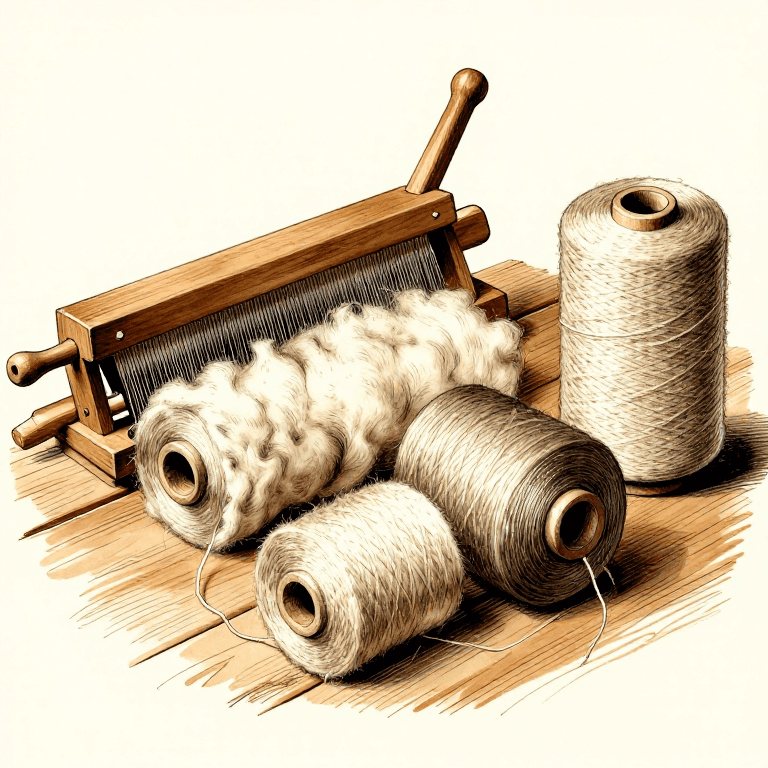
The embedded blueprint cuts teeth into a flat antler blade. Wilkinson's comb uses rows of such teeth in metal, and curves one of them.
3
3
Read US 3,706
Read US 3,706
"The nature of my invention consists in the addition of a serrated semi-circular plate to the corner formed by the intersection of the top and the right-hand margin", "and also of a blade, B three fourths of an inch in width, erected upon the back, extending from the aforesaid corner, on a line with the top, to its intersection with the left-hand margin, designed as a scraper, to remove any uncleanness; both to be made of the same metal of which the body is constructed."
"What I claim, is—Combining with the common curry-comb, the serrated semi-circular plate, and the scraper, in the manner described."
4
4
Make the comb and measure the gap
Make the comb and measure the gap
Wear gloves and glasses: cut sheet edges are sharp. From 1 mm aluminium sheet cut a back 10 × 12 cm and four strips 10 × 2.5 cm. On each strip mark teeth 3 mm apart along one long edge and file them with a triangular needle file. Bend a 5 mm foot along the other edge in the vice.
Rivet the strips by their feet across the back, 2.5 cm apart, teeth outward. Cut a half-circle of 3 cm radius, file teeth round its curve, bend a foot on its straight side and rivet it upright at one corner. Rivet a plain blade 2 cm tall along the top edge as the scraper. Screw a hardwood handle across the back.
Lay a straight row across the inside of a cut PVC pipe and read the gap under its middle with the feeler gauges; then try the half-circle in the same pipe. Measure the pipe's inside radius with the caliper and compare with the notebook.
Àwọn ohun èlò fún ìgbésẹ̀ yìí:
 Àwo aluminiọ̀mù1 ẹyọ
 Àwọn pop rivet16 ẹyọ
 Pátákó Igi Líle1 ẹyọ
 Ìṣó igi2 ẹyọ
Àwọn irinṣẹ́ tí a nílò:
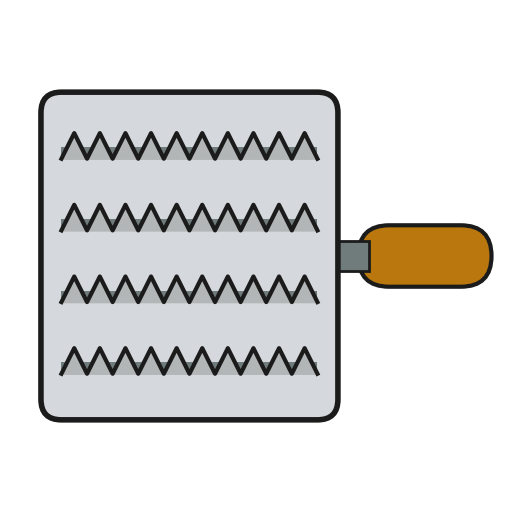 Ìyarun ẹṣin
 Ìlàǹkàn irin
 Àkójọ Ìfá Kékeré
 Ìdìmú Tábìlì
 Ìdìpọ̀ ẹ̀rọ ìso pop rivet
 Ẹ̀rọ Ìlùkòkò Aláìlókùn
 Àkójọ Orí Ìlùkòkò
 Páìpù PVC
 Ìdìpọ̀ òǹwọ̀n àyè
 Òṣùwọ̀n Kálípà Díjítà Ìnṣì 6
 Ìbọ̀wọ́ Iṣẹ́ Awọ
 Gílásì Ààbò Tí Ó Mọ́
5
5
A comb that snags or will not reach
A comb that snags or will not reach
Hock curry comb troubleshooting.
Flow
Loading...
6
6
History and honest limits
History and honest limits
**Thomas Wilkinson** of Cambridge, Washington County, New York, received US 3,706, dated 16 August 1844. His claim is the combination only: the curry comb itself was already "the common curry-comb".
**Honest limits.** The notebook treats the hollow as part of a circle. Aluminium and rivets stand in for the metal of the period. Radii are examples; your gap readings are the result.
Àwọn ohun-èlò
4- 1 ẹyọÀyè
- 16 ẹyọÀyè
- 1 ẹyọÀyè
- 2 ẹyọÀyè
Àwọn irinṣẹ́ tó nílò
12- Àyè
- Àyè
- Àyè
- 1 vendor sell this, none ship to you yetÀyè
- Àyè
Blueprint tó jọra
Àwọn blueprint wọ̀nyí pín ìmọ̀ — ọ̀nà, ohun-èlò tàbí ìlànà

CC0 Àgbègbè Gbogbogbò
Blueprint yìí ti jáde lábẹ́ CC0. O lè ṣe àdàkọ, yí padà, pín, àti lò láìsí ìyọ̀ǹda.
Ṣàtìlẹ́yìn Olùṣẹ́dá nípa rírà àwọn ọjà nipasẹ̀ Blueprint wọn Ẹ̀san Olùṣẹ́dá tí àwọn Olùtajà gbé kalẹ̀, tàbí ṣẹ̀dá àtúnṣe tuntun ti Blueprint yìí kí o sì fi sínú Blueprint rẹ gẹ́gẹ́ bí ìsopọ̀ láti pín owó-wíwọlé.