IṢẸ́ ỌNÀ
ẸWÀ ÀTI ÌLERA
IṢẸ́ ỌWỌ́
ÀṢÀ ÀTI ÌTÀN
ÌṢERÉ
ÀYÍKÁ
OÚNJẸ ÀTI OHUN MÍMU
REVERSE ENGINEERING
SÁYẸ́ǸSÌ
ERÉ ÌDÁRAYÁ
ÌMỌ̀-Ẹ̀RỌ
ÀWỌN OHUN WÍWỌ̀
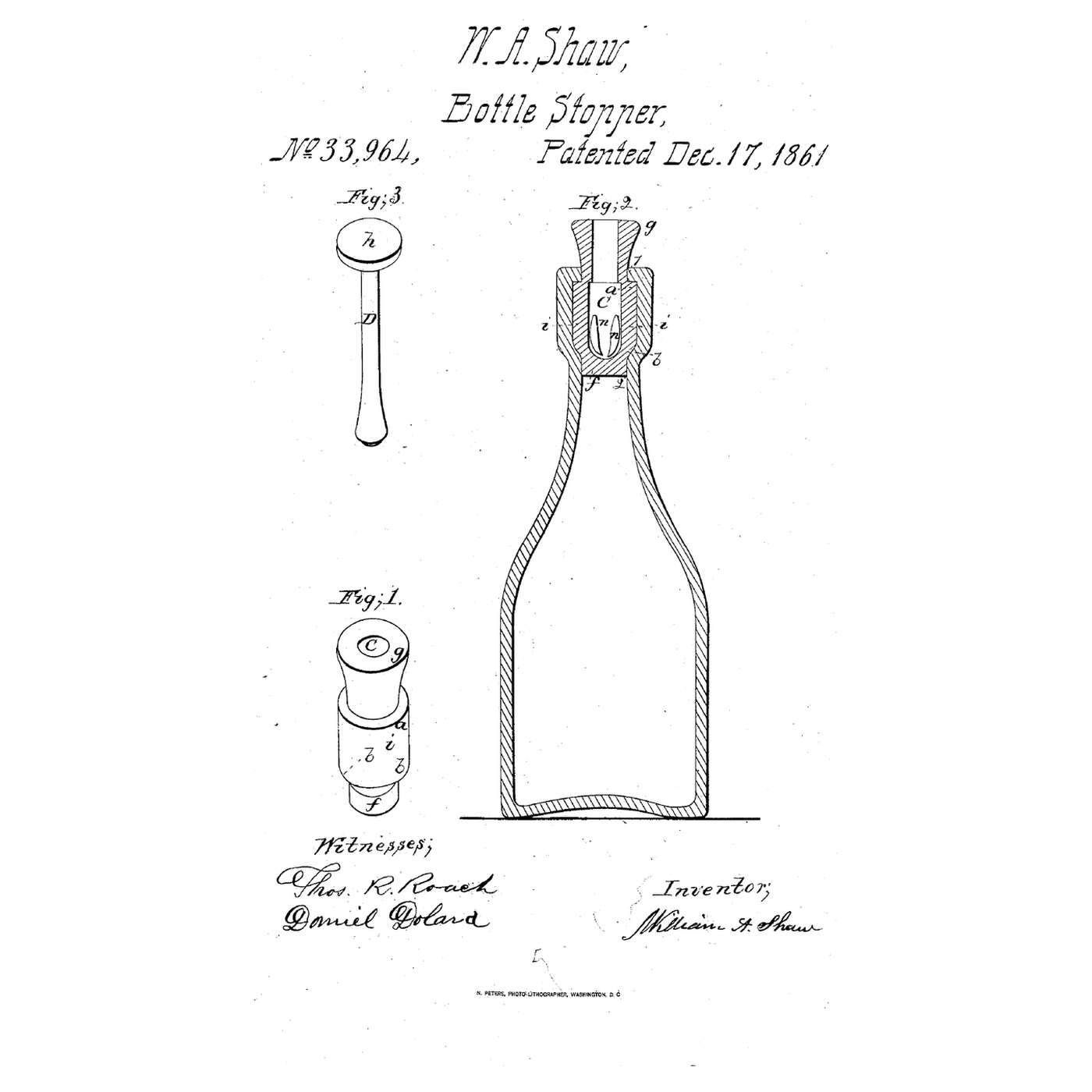

The Hollow Rubber Stopper: Stretch It Thin to Put It In, and the Gas Seats It Tighter
A cork-wood stopper perishes, needs a mallet to drive it and a corkscrew to draw it, and must be wired down against the gas.
William A. Shaw of Boston received US 33,964, dated 17 December 1861, for "a hollow stopper of elastic gum having shoulders adapted to corresponding shoulders in the neck of the bottle, as will now be more fully described, so that pressure from within the bottle shall not drive out the stopper, but only force it more tightly against the sides of the neck." A rod pushed into the stopper's hollow stretches it thin enough to enter; drawn out, it lets the stopper swell into the neck; the stopper is taken out again by pulling its flared top by hand.
This rung works out how far the stopper must stretch, then casts one in silicone rubber, prints a neck with shoulders to match, and puts it under pressure.
Ilọsíwájú
About 2 days, with curing
Ìlànà
1
1
Stretch to pass the mouth
Stretch to pass the mouth
Ń ṣí ìwé Jupyter…
2
2
Where the stopper comes from
Where the stopper comes from
The embedded blueprint vulcanizes rubber. Shaw's stopper is made of vulcanized rubber, elastic enough to stretch through the mouth and spring back.
3
3
Read US 33,964
Read US 33,964
"When the stopper is to be inserted in the bottle, it is first to be moistened by dipping it into water. An instrument, D, Fig. 3, made of wood, metal, or other suitable material is then inserted into the hole C, Fig. 2, in the stopper, which is placed over the mouth of the bottle, and on pressure being applied to the handle h of the instrument D the stopper is so elongated and consequently reduced in diameter that it enters the bottle freely."
"To withdraw the stopper it is simply necessary to pull the portion g by the hand, by which the body i is elongated, and is easily withdrawn through the mouth of the bottle."
4
4
Cast the stopper and seat it under pressure
Cast the stopper and seat it under pressure
**Neck.** Model a block 40 × 40 × 50 mm with a bore shaped like Shaw's neck: an 18 mm mouth, widening below to 22 mm as an upper shoulder, and narrowing again to 16 mm as a lower shoulder above a 10 mm hole into the bottle. Print it in PETG and epoxy a drilled carbonated-drink bottle cap under it, holes lined up.
**Mould.** Print a two-part mould for a stopper of the same shape as the bore, with a flared top above the mouth, a solid bottom and a hollow down its middle, formed by a 6 mm dowel core. Grease the mould and core with petroleum jelly.
**Cast.** Mix the silicone rubber in a mixing cup as its maker directs, pour it into the mould, and leave it to cure. Cut slits into the hollow's lower wall to make it bend more easily, as Shaw's depressions n did.
**Rod.** Round the end of a 6 mm dowel and glue a hardwood knob on the other end as the handle.
**Test.** Fit a snap-in tyre valve in the bottle's base. Wet the stopper, set it on the mouth, push the rod into its hollow until it slips in, and draw the rod out. Wearing safety glasses, pump the bottle in steps of 0.5 bar to 2 bar and watch the stopper. Let the air out and pull the stopper out by its top.
Àwọn ohun èlò fún ìgbésẹ̀ yìí:
 Ìgò PET (ohun mímu olóhùn)1 ẹyọ
 Okùn PETG1 ẹyọ
 Ẹpọ́ksì Ẹ̀yà Méjì1 ẹyọ
 Rọ́bà silicone fún ìmọ̀1 ẹyọ
 Vaseline1 ẹyọ
 Èèkàn igi0.3 mítà
 Ìṣù Igi Líle1 ẹyọ
 Ìdìpọ̀ Igi1 ẹyọ
 Fáfù táyà1 ẹyọ
Àwọn irinṣẹ́ tí a nílò:
 Ẹ̀rọ ìtẹ̀ 3D oníwàyà (FDM)
 Àwọn kọ́ọ̀bù ìdàpọ̀ onípín
 Ẹ̀rọ Ìlùkòkò Aláìlókùn
 Àkójọ Orí Ìlùkòkò
 Ọ̀bẹ ilé ìdáná
 Ẹ̀rọ ìfẹ́fẹ́ ilẹ̀ fún kẹ̀kẹ́
 Òṣùwọ̀n Kálípà Díjítà Ìnṣì 6
 Ìbọ̀wọ́ Iṣẹ́ Awọ
 Gílásì Ààbò Tí Ó Mọ́
5
5
A stopper that will not go in, leaks or blows out
A stopper that will not go in, leaks or blows out
Hollow rubber stopper troubleshooting.
Flow
Loading...
6
6
History and honest limits
History and honest limits
**William A. Shaw** of Boston, Massachusetts, received US 33,964, dated 17 December 1861. His stopper had an upper shoulder a and a lower shoulder b that rested under shoulders 1 and 2 in the neck, a solid bottom f, and depressions n near its lower end to make it flexible. He listed its advantages: tight against gas, used again and again, put in by hand without mallet or breaker, and drawn by hand without a corkscrew. His claim is the hollow elastic stopper.
**Honest limits.** Cast silicone rubber stands in for his vulcanized rubber, and a printed PETG neck on a plastic bottle's cap for a glass neck with shoulders. The notebook treats the rubber as keeping its volume exactly; its diameters are examples. Your seated stopper is the result.
Àwọn ohun-èlò
9- Àyè
- 1 ẹyọÀyè
- 1 ẹyọÀyè
- Àyè
- 1 ẹyọÀyè
- 0.3 mítàÀyè
- 1 ẹyọÀyè
- 1 ẹyọÀyè
- 1 ẹyọÀyè
Àwọn irinṣẹ́ tó nílò
9- 1 vendor sell this, none ship to you yetÀyè
Ìtọ́nisọ́nà yìí ń ṣe

Blueprint tó jọra
Àwọn blueprint wọ̀nyí pín ìmọ̀ — ọ̀nà, ohun-èlò tàbí ìlànà
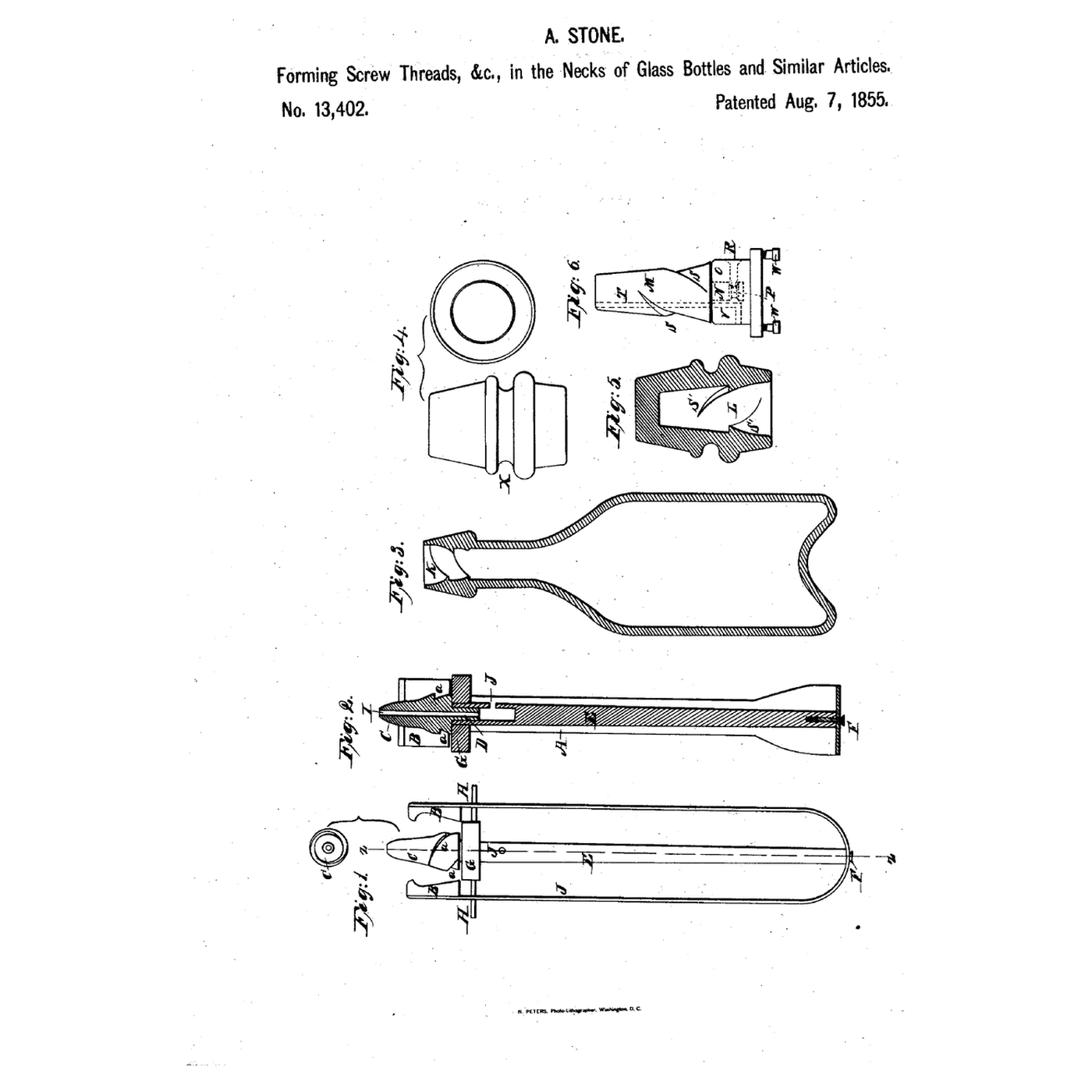
The Turning-Plug Thread Former: A Plug That Turns With the Bottle and Leaves a Screw in the Neck
láti ọwọ́ Mary
Iṣẹ́ Amọ̀
25
0
0
0
0
0
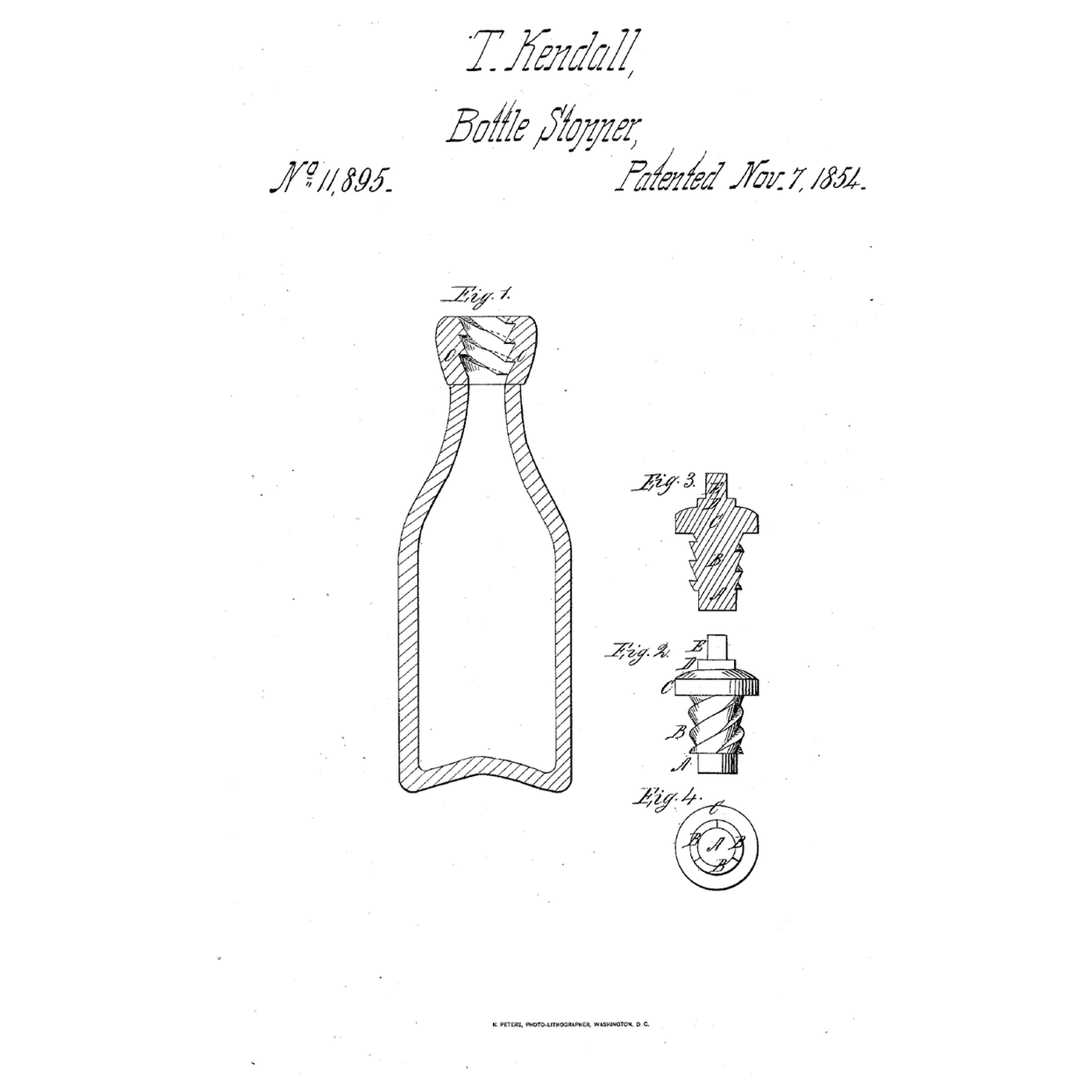
The Groove-Necked Bottle: Three Threads in the Neck That Hold the Cork
láti ọwọ́ Emma
Àwọn Ohun Mímu
15
0
0
0
0
0
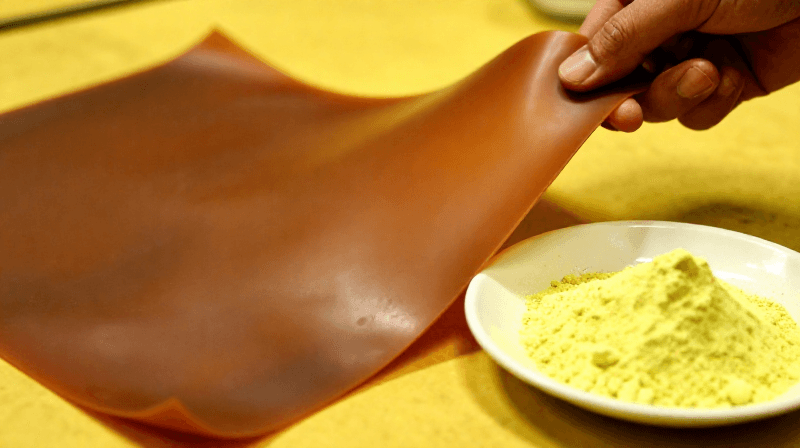
Vulcanizing Rubber with Sulfur — The Accidental Discovery That Put Tyres on the Road
láti ọwọ́ Charlie
Ti Ilé-iṣẹ́
96
0
0
0
3
0
CC0 Àgbègbè Gbogbogbò
Blueprint yìí ti jáde lábẹ́ CC0. O lè ṣe àdàkọ, yí padà, pín, àti lò láìsí ìyọ̀ǹda.
Ṣàtìlẹ́yìn Olùṣẹ́dá nípa rírà àwọn ọjà nipasẹ̀ Blueprint wọn Ẹ̀san Olùṣẹ́dá tí àwọn Olùtajà gbé kalẹ̀, tàbí ṣẹ̀dá àtúnṣe tuntun ti Blueprint yìí kí o sì fi sínú Blueprint rẹ gẹ́gẹ́ bí ìsopọ̀ láti pín owó-wíwọlé.