IṢẸ́ ỌNÀ
ẸWÀ ÀTI ÌLERA
IṢẸ́ ỌWỌ́
ÀṢÀ ÀTI ÌTÀN
ÌṢERÉ
ÀYÍKÁ
OÚNJẸ ÀTI OHUN MÍMU
REVERSE ENGINEERING
SÁYẸ́ǸSÌ
ERÉ ÌDÁRAYÁ
ÌMỌ̀-Ẹ̀RỌ
ÀWỌN OHUN WÍWỌ̀

The Ice Tongs: Links That Close the Grip as You Lift
A block of ice is heavy, wet and slippery. Tongs that must be squeezed by hand tire the carrier and drop the block; tongs that grip harder as they lift do the work themselves.
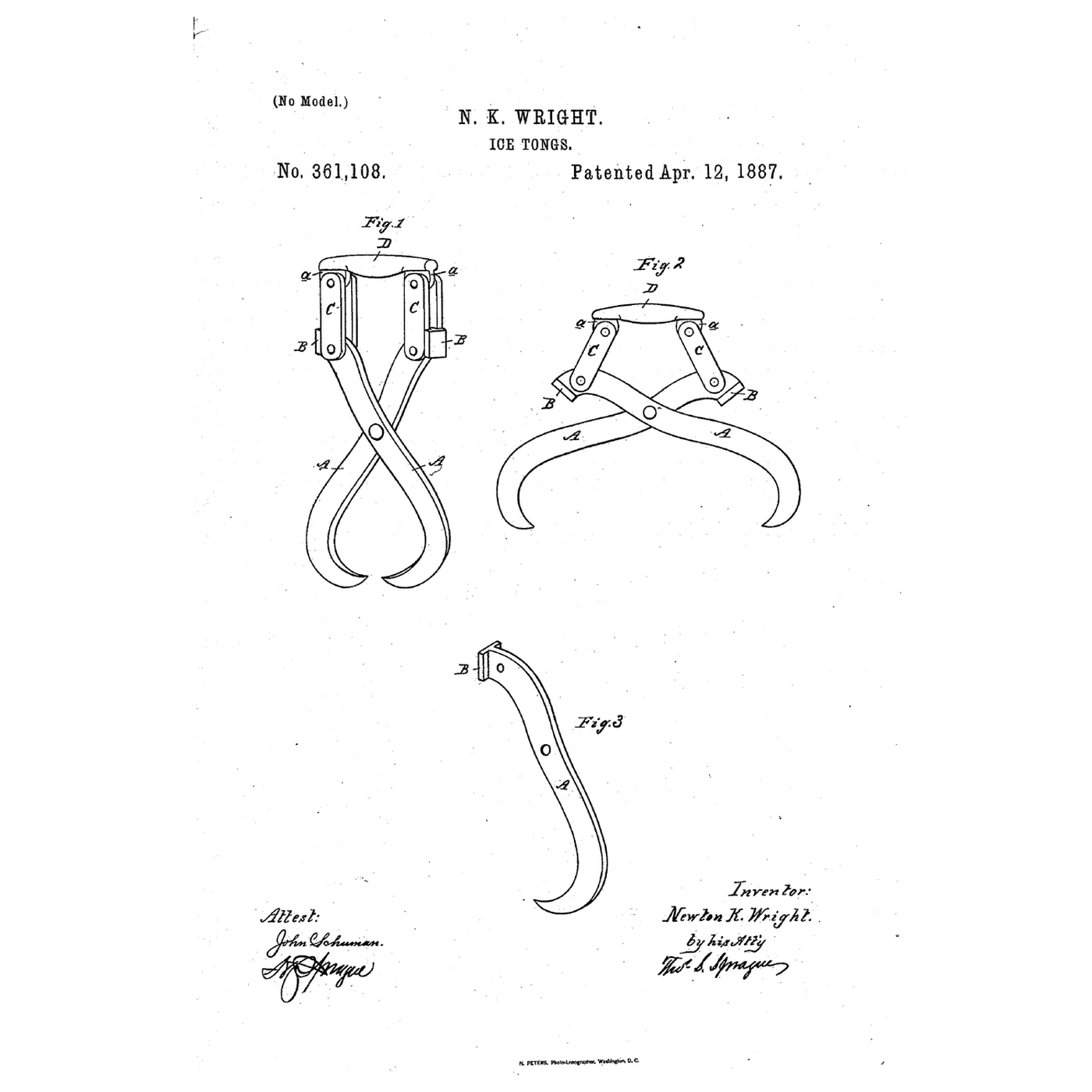
Newton K. Wright of Pewamo, Michigan, received US 361,108, dated 12 April 1887 (filed 17 February 1887), for ice-tongs whose legs are joined to the handle by links: "By the pressing down upon the handle the points are forced apart until they embrace the ice, when, by pulling up on the handle, the points are embedded in the ice, and the latter is then easily carried." Flanged heads stop the tongs closing too far, so "the liability of pinching the hand is avoided."
This rung works out why the grip grows with the load, then lifts blocks of different weights.
Olùbẹ̀rẹ̀
About 1 hour
Ìlànà
1
1
Grip that grows with load
Grip that grows with load
Ń ṣí ìwé Jupyter…
2
2
Tongs at the forge
Tongs at the forge
A smith's tongs are the oldest pivoted grippers. The embedded blueprint forges a pair.
3
3
Read US 361,108
Read US 361,108
"The invention consists in the peculiar construction, arrangement, and combination of parts, whereby the legs of the tongs can readily be spread apart to grasp the ice". The two legs are "pivotally secured together, as in the usual manner." Their upper ends "are provided with flanged heads B, and in the rear of these heads the lower ends of the links C are pivotally secured to the legs A, the upper ends of such links being likewise pivotally secured to the ears a of a handle, D."
"If it is desired to lift a piece of ice, the operator grasps the handle and rests the points of the legs upon the ice. By the pressing down upon the handle the points are forced apart until they embrace the ice, when, by pulling up on the handle, the points are embedded in the ice, and the latter is then easily carried. By again pushing down upon the handle the points are released."
"The flanged heads coming in contact with the lower edges of the links C prevent the tongs from closing past a certain point, and the liability of pinching the hand is avoided."
4
4
Lift light and heavy blocks
Lift light and heavy blocks
Freeze blocks of different sizes in loaf pans and a storage box. Weigh each on a scale.
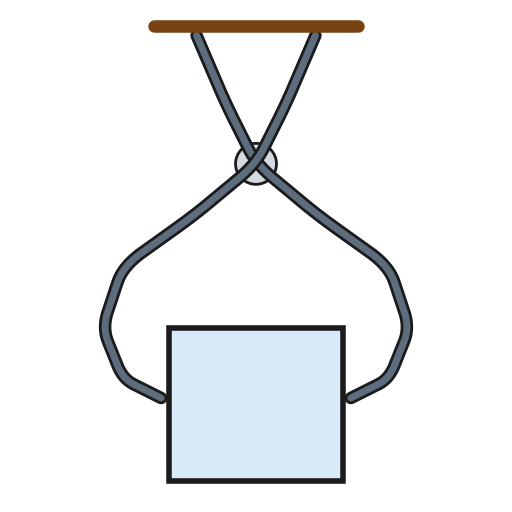
Lift each with the tongs and a spring scale hooked through the handle, raising slowly. Watch how deep the points sink as the load rises. Measure the angle of the links with a protractor while lifting. Lift only a few centimetres over a towel, and wear gloves: a dropped block breaks toes.
Àwọn ohun èlò fún ìgbésẹ̀ yìí:
 Omi5 lítà
Àwọn irinṣẹ́ tí a nílò:
 Ẹ̀mú yìnyín
 Àwo ìdìn búrẹ́dì
 Àpótí Ìpamọ́
 Òṣùwọ̀n Díjítà
 Ìwọ̀n Sipirinngi
 Ẹ̀rọ Ìwọ̀n Igun
 Ìbọ̀wọ́ Iṣẹ́ Awọ
5
5
Tongs that slip or will not open
Tongs that slip or will not open
Ice tongs troubleshooting.
Flow
Loading...
6
6
History and honest limits
History and honest limits
**Newton K. Wright** of Pewamo, Michigan, filed US 361,108 on 17 February 1887; it is dated 12 April 1887. He notes one link at each end of the handle would also serve.
**Honest limits.** The patent gives no sizes. The link angles and leg lengths in the notebook are examples, and the model ignores the points' friction and penetration.
Àwọn irinṣẹ́ tó nílò
7- Àyè
- Àwo ìdìn búrẹ́dììdá 10%Àyè
- Àyè
Blueprint tó jọra
Àwọn blueprint wọ̀nyí pín ìmọ̀ — ọ̀nà, ohun-èlò tàbí ìlànà
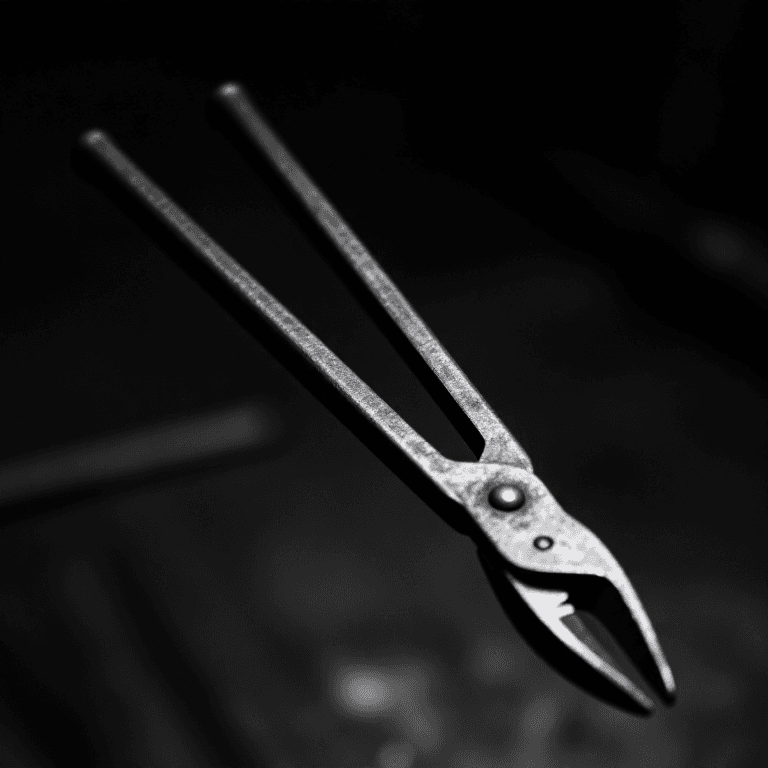
Forging a Pair of Iron Tongs — The Blacksmith's Essential Gripping Tool
láti ọwọ́ Forge
Iṣẹ́ Irin
26
0
0
0
1
0
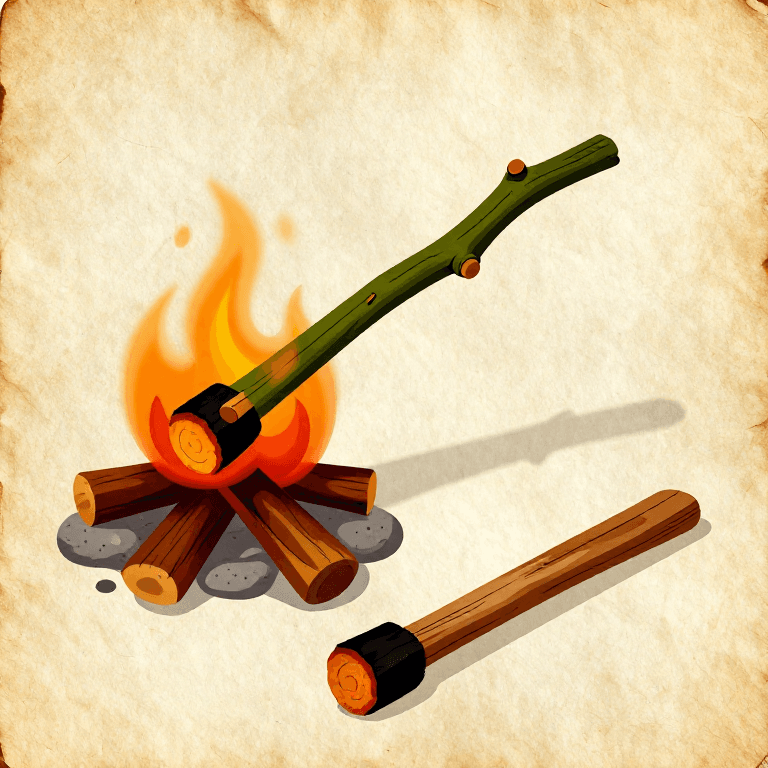
Making Wooden Fire Tongs — Split-Stick Spring Tongs for Handling Hot Stones and Coals
láti ọwọ́ Woody
Iṣẹ́ Igi
45
0
0
0
0
0
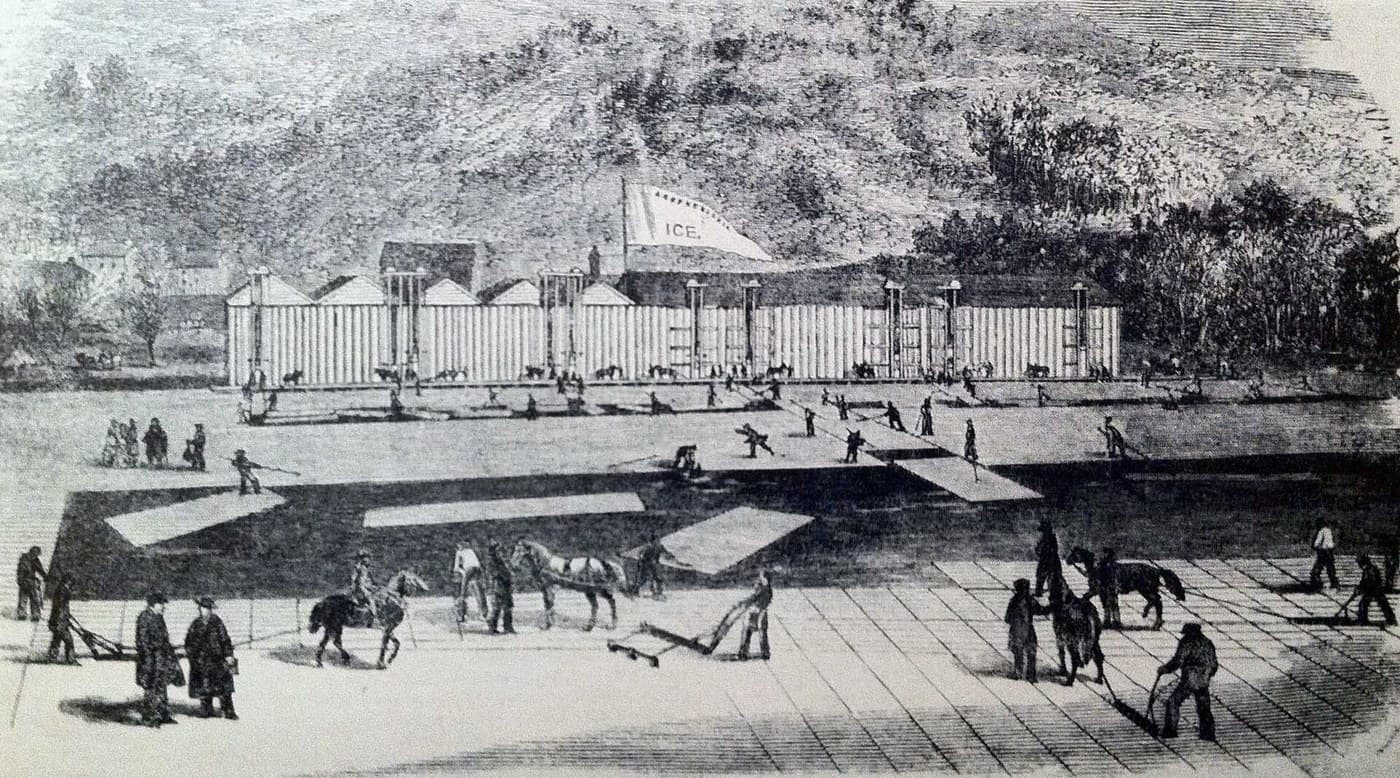
Ice Harvesting
láti ọwọ́ Martin
Ìmọ̀ Ẹ̀rọ
33
0
0
0
0
0

The Law of the Lever — Archimedes' Balance of Weight and Distance
láti ọwọ́ Martin
Físíkì
54
0
0
0
1
0
CC0 Àgbègbè Gbogbogbò
Blueprint yìí ti jáde lábẹ́ CC0. O lè ṣe àdàkọ, yí padà, pín, àti lò láìsí ìyọ̀ǹda.
Ṣàtìlẹ́yìn Olùṣẹ́dá nípa rírà àwọn ọjà nipasẹ̀ Blueprint wọn Ẹ̀san Olùṣẹ́dá tí àwọn Olùtajà gbé kalẹ̀, tàbí ṣẹ̀dá àtúnṣe tuntun ti Blueprint yìí kí o sì fi sínú Blueprint rẹ gẹ́gẹ́ bí ìsopọ̀ láti pín owó-wíwọlé.