IṢẸ́ ỌNÀ
ẸWÀ ÀTI ÌLERA
IṢẸ́ ỌWỌ́
ÀṢÀ ÀTI ÌTÀN
ÌṢERÉ
ÀYÍKÁ
OÚNJẸ ÀTI OHUN MÍMU
REVERSE ENGINEERING
SÁYẸ́ǸSÌ
ERÉ ÌDÁRAYÁ
ÌMỌ̀-Ẹ̀RỌ
ÀWỌN OHUN WÍWỌ̀



The Kazoo: A Paper Membrane That Buzzes With Your Voice
Hum against a comb wrapped in paper and your voice comes out buzzing. The kazoo turns the trick into an instrument you hum straight into.
Warren Herbert Frost of Worcester, Massachusetts, filed on 28 August 1882 for a "Toy or Musical Instrument"; US 270,543 is dated 9 January 1883, half assigned to S. E. Henderson of Cleveland. A wooden body has a bore from end to end and a side hole covered by a "diaphragm" of paper or membrane; humming into the mouthpiece sets it vibrating and adds "a reedy tone" to the voice. A turning metal sleeve covers the diaphragm in the pocket. "This instrument or toy, to which I propose to give the name 'kazoo'" — the patent names it.
This rung works out the membrane's resonance and makes kazoos with different holes.
Olùbẹ̀rẹ̀
About 1 hour
Ìlànà
1
1
Membrane resonance
Membrane resonance
Ń ṣí ìwé Jupyter…
2
2
An older buzzing membrane
An older buzzing membrane
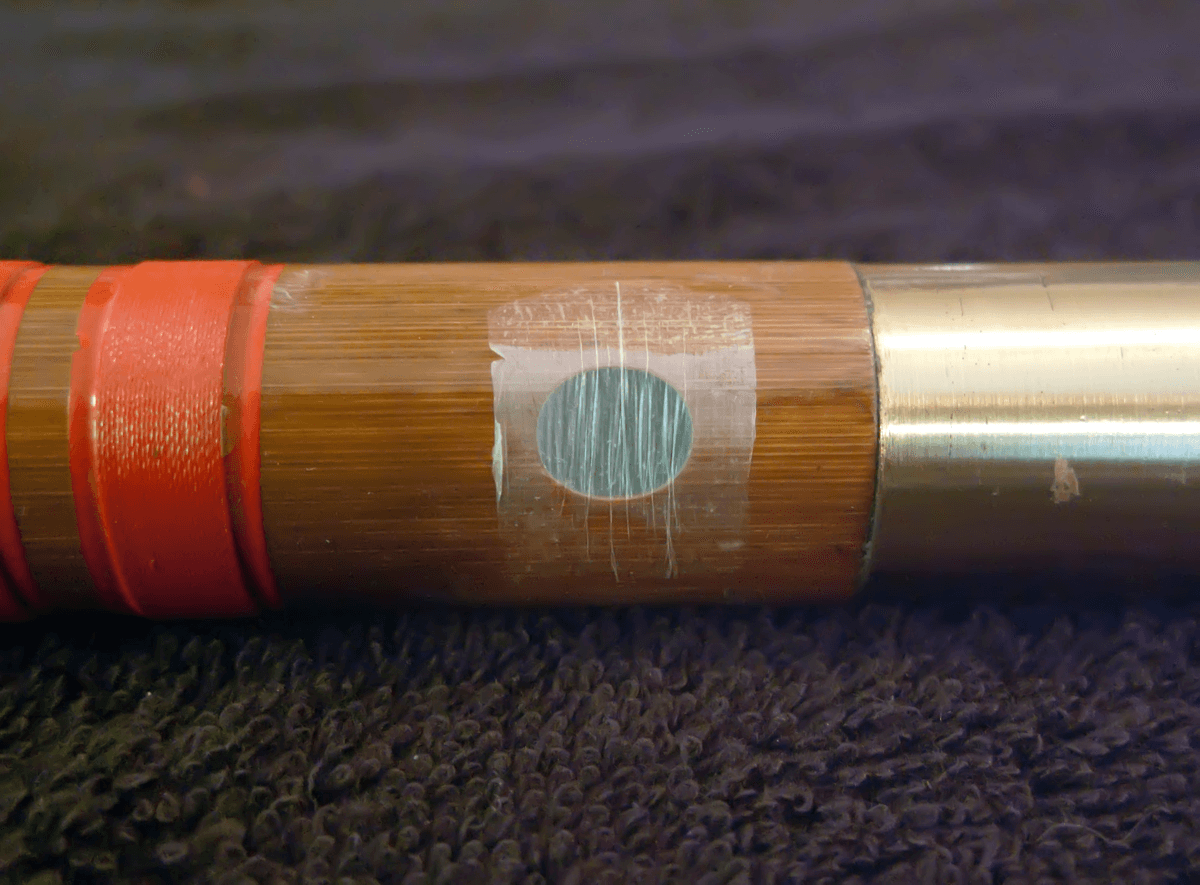
The Chinese dizi flute has a membrane over a side hole that buzzes in the same way. The embedded blueprint makes one.
3
3
Read US 270,543
Read US 270,543
Frost's objects are "first, to provide, in a compact and convenient form, an instrument or toy which will impart a vibratory or reedy sound to the voice when the voice is sent into such musical instrument or toy; second, to provide a means of protecting the diaphragm".
The body A, "preferably wood", has a hole B through its length and a hole C from the outside to B. Over C is fastened "a piece of thin material, E, preferably of paper or membrane, which I term the 'diaphragm'", seated in a wider counterbore D. "The sound is similar to that produced by covering a comb with paper and humming with the lips against it." A sheet-metal tube F with a hole G turns on the body: over the diaphragm it lets it play; turned, it covers and protects it.
He contrasts earlier membrane instruments held "in the position of a fife or flute": in his, "the sound comes in a straight line from the mouth through the instrument". "If the diaphragm E is entirely shut off from contact with the outside air, it will not vibrate".
4
4
Make three kazoos
Make three kazoos
Drill a 12 mm bore through three short lengths of dowel. Drill a side hole into the bore in each: 8, 12 and 18 mm across. Glue wax paper over each side hole, taut on one and slacker on the others.
Hum the same note into each and listen for which buzzes most readily at low and at high pitch; compare with the notebook's resonances. Cover the paper with a fingertip and hear it stop, as Frost said it would.
Àwọn ohun èlò fún ìgbésẹ̀ yìí:
 Àwọn dowel igi líle1 ẹyọ
 Bébà oníìdà1 ẹyọ
 Kasú1 ẹyọ
Àwọn irinṣẹ́ tí a nílò:
 Ẹ̀rọ Ìlùkòkò Aláìlókùn
 Àkójọ Orí Ìlùkòkò
 Ìbọn ìlẹ̀mọ́ gbígbóná
 Òṣùwọ̀n Kálípà Díjítà Ìnṣì 6
 Àkójọpọ̀ bébà ìpọ́n
5
5
A kazoo that will not buzz
A kazoo that will not buzz
Kazoo troubleshooting.
Flow
Loading...
6
6
History and honest limits
History and honest limits
**Warren Herbert Frost** of Worcester, Massachusetts, filed on 28 August 1882; US 270,543 is dated 9 January 1883. He claims the bored body with a side hole covered by a diaphragm, and the protective turning tube.
**Honest limits.** The paper's mass and the tensions in the notebook are examples; the membrane formula ignores the air behind it.
Àwọn ohun-èlò
3- 1 ẹyọÀyè
- 1 ẹyọÀyè
- 1 ẹyọÀyè
Àwọn irinṣẹ́ tó nílò
5- 1 vendor sell this, none ship to you yetÀyè
Blueprint tó jọra
Àwọn blueprint wọ̀nyí pín ìmọ̀ — ọ̀nà, ohun-èlò tàbí ìlànà


CC0 Àgbègbè Gbogbogbò
Blueprint yìí ti jáde lábẹ́ CC0. O lè ṣe àdàkọ, yí padà, pín, àti lò láìsí ìyọ̀ǹda.
Ṣàtìlẹ́yìn Olùṣẹ́dá nípa rírà àwọn ọjà nipasẹ̀ Blueprint wọn Ẹ̀san Olùṣẹ́dá tí àwọn Olùtajà gbé kalẹ̀, tàbí ṣẹ̀dá àtúnṣe tuntun ti Blueprint yìí kí o sì fi sínú Blueprint rẹ gẹ́gẹ́ bí ìsopọ̀ láti pín owó-wíwọlé.