IṢẸ́ ỌNÀ
ẸWÀ ÀTI ÌLERA
IṢẸ́ ỌWỌ́
ÀṢÀ ÀTI ÌTÀN
ÌṢERÉ
ÀYÍKÁ
OÚNJẸ ÀTI OHUN MÍMU
REVERSE ENGINEERING
SÁYẸ́ǸSÌ
ERÉ ÌDÁRAYÁ
ÌMỌ̀-Ẹ̀RỌ
ÀWỌN OHUN WÍWỌ̀
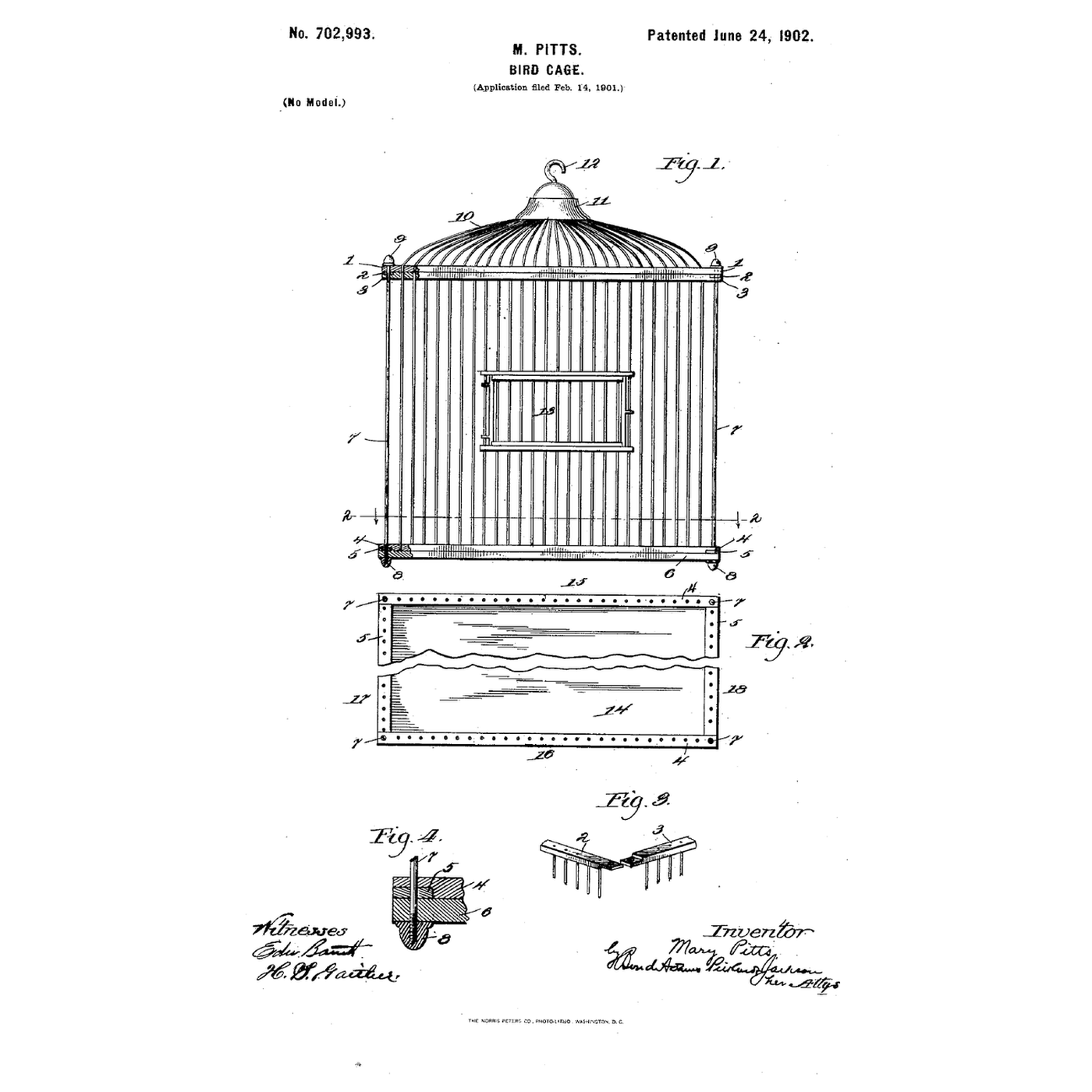


The Knock-Down Bird Cage: Four Rods, Six Parts, Nuts for Feet
A bird cage is hard to clean in its corners and awkward to carry, because it is one rigid box.
Mary Pitts of Chicago received US 702,993, dated 24 June 1902, for a bird-cage "separable in its parts": four panels, a bottom and a top, held together by four metal rods passed down through the overlapping corners, with nuts screwed on the rods' lower ends that also serve as the cage's feet.
This rung works out how much less space the cage takes apart, then builds a small knock-down cage from hardwood bars, dowels and threaded rod.
Àárín
About 5 hours
Ìlànà
1
1
Built against flat
Built against flat
Ń ṣí ìwé Jupyter…
2
2
A house for a bird
A house for a bird
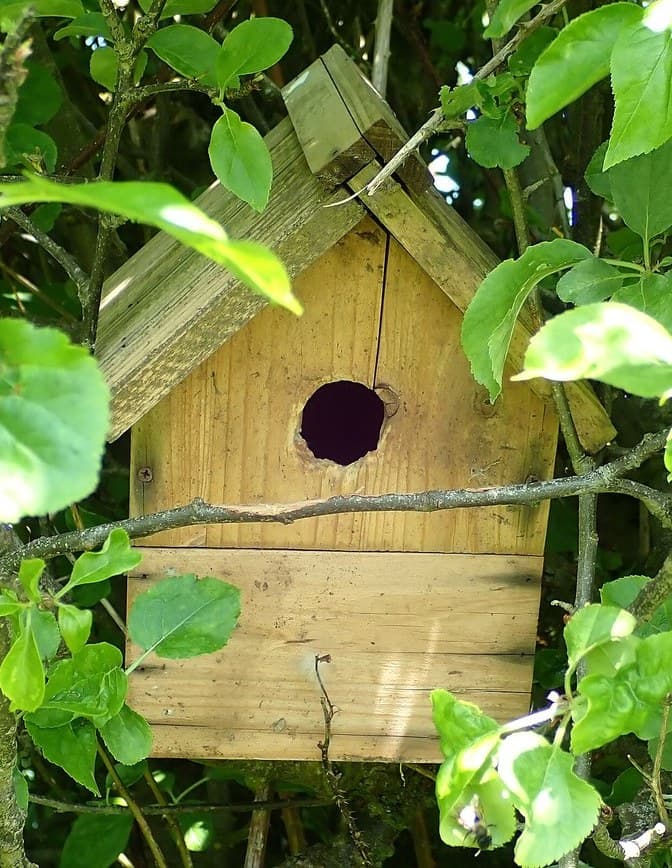
The embedded blueprint builds a nest box for wild birds. Pitts's cage houses a kept bird, and comes apart to be cleaned.
3
3
Read US 702,993
Read US 702,993
"The nature of my invention consists in making a bird-cage separable in its parts by the devices and arrangements herein set forth".
"These nuts 8 also form the feet or supports for the cage when resting upon the floor or on a table."
"It will be seen from the drawings that when the bolts or rods 7 are withdrawn the cage is detached into six separate and distinct parts—to wit, the four panels, the bottom, and the top—and by this arrangement the cage can be readily taken apart for cleaning or for transportation-packing."
4
4
Build the six parts and bolt them together
Build the six parts and bolt them together
Cut eight hardwood bars for the panels' tops and bottoms: four 30 cm long for the sides and four 20 cm long for the ends. Halve both ends of every bar with a saw and chisel, so that at each corner a side bar and an end bar overlap to the thickness of one bar. Clamp each pair of bars together and drill matching holes 2 cm apart, then glue dowel rods between them as the bars of the panel.
Stand the four panels in a rectangle with their halved corners overlapping, and drill a hole down through every corner, top and bottom, for the threaded rod. Cut a plywood bottom and a plywood top and drill them at the corners to match.
Push a threaded rod down through each corner, through the top, both panels' bars and the bottom, and screw a nut onto each end. Stand the cage on its four lower nuts and check it stands level. Time how long it takes to take apart into six parts and put back together.
Àwọn ohun èlò fún ìgbésẹ̀ yìí:
 Pátákó Igi Líle1 ẹyọ
 Òpó Igi Dòwẹ̀lì1 ẹyọ
 Àwo igi tí a lẹ̀ pọ̀1 ẹyọ
 Ọ̀pá oníṣọ̀kan4 ẹyọ
 Nọ́ọ̀tì Onígun Mẹ́fà8 ẹyọ
 Ìdìpọ̀ Igi1 ẹyọ
 Bébà Ìfá1 ẹyọ
Àwọn irinṣẹ́ tí a nílò:
 Àgò ẹyẹ
 Ayùn Ọwọ́
 Ìdìpọ̀ àyà
 Ẹ̀rọ Ìlùkòkò Aláìlókùn
 Àkójọ Orí Ìlùkòkò
 Ìdíwọ̀n
 Ààmì Tí Kò Ní Parẹ́
 Aago Ìdúró
5
5
A knock-down cage that wobbles, jams or will not line up
A knock-down cage that wobbles, jams or will not line up
Knock-down cage troubleshooting.
Flow
Loading...
6
6
History and honest limits
History and honest limits
**Mary Pitts** of Chicago filed US 702,993 on 14 February 1901; it was patented 24 June 1902. Her connecting rods were metal, "larger in cross section than the wires forming the panels", and the bars under the bottom plate left it "in a condition to be easily cleaned when it is detached".
**Honest limits.** The notebook treats the parts as flat slabs and ignores the rods and nuts. Sizes are examples. Your timings are the measurement.
Àwọn ohun-èlò
7- 1 ẹyọÀyè
- 1 ẹyọÀyè
- 1 ẹyọÀyè
- 4 ẹyọÀyè
- 8 ẹyọÀyè
- 1 ẹyọÀyè
- 1 ẹyọÀyè
Àwọn irinṣẹ́ tó nílò
8- Àyè
- Àyè
- Àyè
- 1 vendor sell this, none ship to you yetÀyè
- Àyè
- Àyè
Blueprint tó jọra
Àwọn blueprint wọ̀nyí pín ìmọ̀ — ọ̀nà, ohun-èlò tàbí ìlànà
CC0 Àgbègbè Gbogbogbò
Blueprint yìí ti jáde lábẹ́ CC0. O lè ṣe àdàkọ, yí padà, pín, àti lò láìsí ìyọ̀ǹda.
Ṣàtìlẹ́yìn Olùṣẹ́dá nípa rírà àwọn ọjà nipasẹ̀ Blueprint wọn Ẹ̀san Olùṣẹ́dá tí àwọn Olùtajà gbé kalẹ̀, tàbí ṣẹ̀dá àtúnṣe tuntun ti Blueprint yìí kí o sì fi sínú Blueprint rẹ gẹ́gẹ́ bí ìsopọ̀ láti pín owó-wíwọlé.