IṢẸ́ ỌNÀ
ẸWÀ ÀTI ÌLERA
IṢẸ́ ỌWỌ́
ÀṢÀ ÀTI ÌTÀN
ÌṢERÉ
ÀYÍKÁ
OÚNJẸ ÀTI OHUN MÍMU
REVERSE ENGINEERING
SÁYẸ́ǸSÌ
ERÉ ÌDÁRAYÁ
ÌMỌ̀-Ẹ̀RỌ
ÀWỌN OHUN WÍWỌ̀
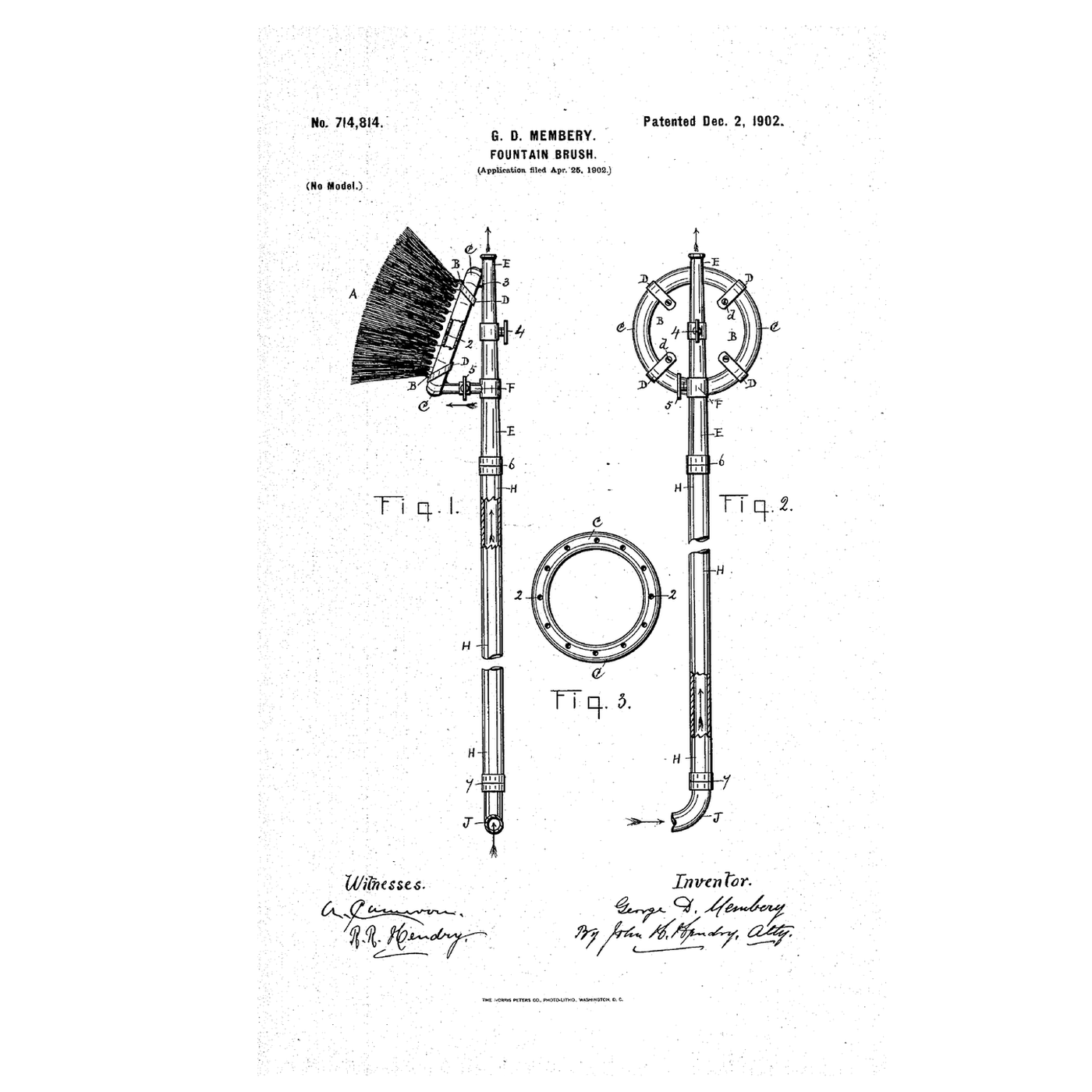


The Long-Handled Fountain Brush: A Ring of Holes Wets the Bristles From the Ground
Washing an upper window or a railway car means a ladder, a bucket and a brush that dries out.
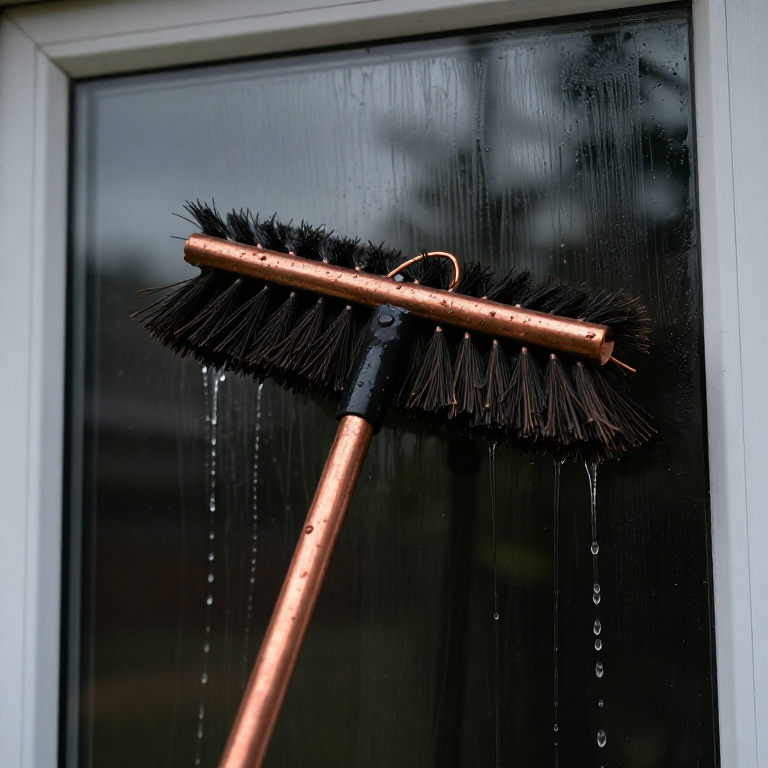
George D. Membery of Hamilton, Ontario, received US 714,814, dated 2 December 1902, for a fountain brush "with handle adapted for the outside of windows, railway-cars, buggies, and the like": a circular brush fixed to a perforated circular tube, set oblique on a nozzle at the top of a hollow handle fed by a hose, with one tap for the ring and one for the nozzle's end.
This rung works out how much pressure the handle's height costs, then bends a copper ring, fixes a brush to it on a copper handle and measures the flow at the bristles.
Àárín
About 4 hours
Ìlànà
1
1
Pressure lost up the handle
Pressure lost up the handle
Ń ṣí ìwé Jupyter…
2
2
Water through a ring of holes before it
Water through a ring of holes before it
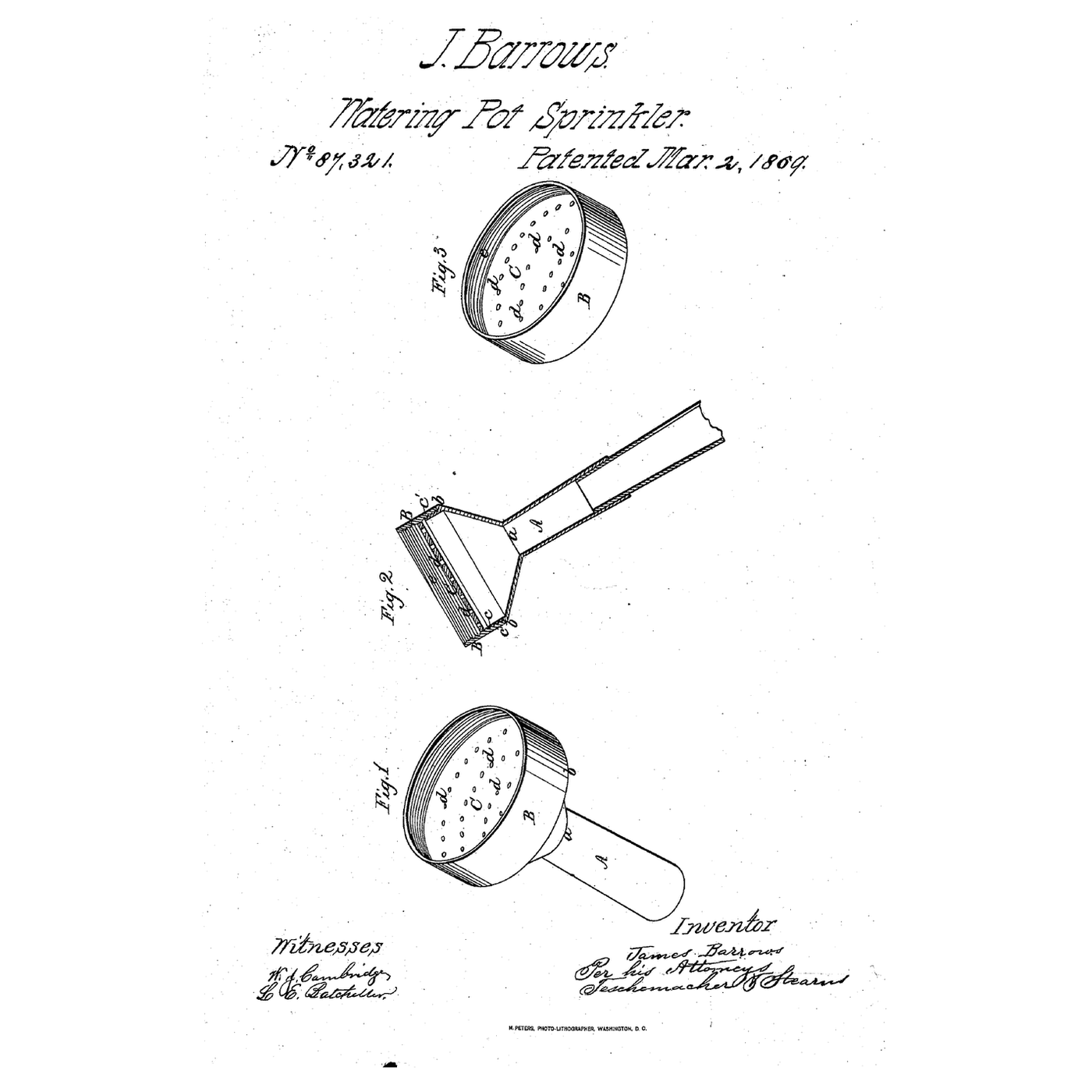
The embedded blueprint sprinkles through a perforated rose. Membery bends the perforations into a ring behind a brush and feeds it up a hollow handle.
3
3
Read US 714,814
Read US 714,814
"The brush is preferably in oblique position to the handle H in order to allow the operator to stand a desirable distance from the object being washed and sprayed. The length of the handle H may be from six to twelve feet, more or less, as desired to suit the purpose set forth."
"The water flows through the hose J, thence through the handle H and into the nozzle E, thence through the pipe connection F and into the circular tube C and out through the apertures 2 of the tube C, and thence on and between the hairs of the brush A, thus saturating the brush with water, which is regulated by means of the tap 5."
4
4
Bend the ring
Bend the ring
Uncoil 500 mm of soft copper tubing and bend it by hand round a 140 mm paint tin into a ring, the two ends side by side. Cut them square with the tube cutter.
Àwọn ohun èlò fún ìgbésẹ̀ yìí:
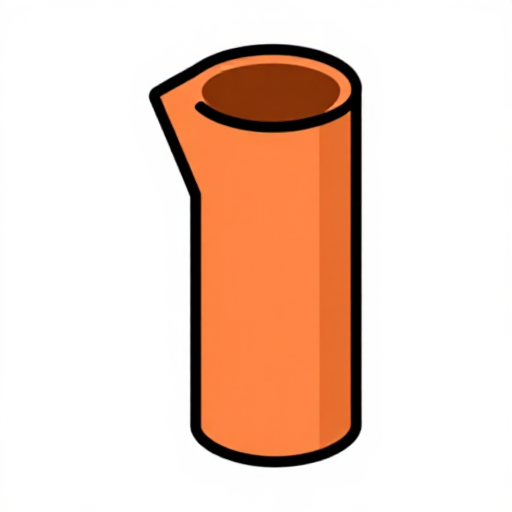 Ọ̀pá bàbà1 ẹyọ
Àwọn irinṣẹ́ tí a nílò:
 Ohun èlò ìgé òpó
 Okùn Ìdíwọ̀n
5
5
Drill the ring
Drill the ring
Mark 12 points evenly round the ring's front and drill each 1.5 mm. Deburr inside with a blown-through rinse.
Àwọn irinṣẹ́ tí a nílò:
 Ààmì Tí Kò Ní Parẹ́
 Ẹ̀rọ Ìlùkòkò Aláìlókùn
 Àkójọ Orí Ìlùkòkò
 Gílásì Ààbò Tí Ó Mọ́
6
6
Join the ring to the feed
Join the ring to the feed
Push both ring ends into a tee from the brass fittings and tighten. Fit 60 mm of 10 mm copper tube in the tee's third port and bend it 60° so the ring sits oblique to the handle.
Àwọn ohun èlò fún ìgbésẹ̀ yìí:
 Ohun ìsopọ̀ idẹ1 ẹyọỌ̀pá bàbà1 ẹyọ
Àwọn irinṣẹ́ tí a nílò:
 Kọ́kọ́rọ́ tí a lè ṣàtúnṣeOhun èlò ìgé òpó
7
7
Tie on the brush
Tie on the brush
Lay the scrub brush's back across the ring, bristles away, and bind it on with four cable ties.
Àwọn ohun èlò fún ìgbésẹ̀ yìí:
 Búrọ́ọ̀ṣì ìfọ̀1 ẹyọ
 Ìdì okùn1 ẹyọ
8
8
Fit the handle and tap
Fit the handle and tap
Cut 1.8 m of 15 mm copper tube for the handle. Join the feed to its top through a reducer and the ball valve, and fit a hose connector at its foot. Seal threads with PTFE tape.
Àwọn ohun èlò fún ìgbésẹ̀ yìí:
Ọ̀pá bàbà1 ẹyọ Fáàlù bọ́ọ̀lù1 ẹyọOhun ìsopọ̀ idẹ1 ẹyọ
 Okùn PTFE ìdí ìṣàn1 ẹyọ
Àwọn irinṣẹ́ tí a nílò:
Ohun èlò ìgé òpóKọ́kọ́rọ́ tí a lè ṣàtúnṣe9
9
The build in 3D
The build in 3D
FreeCAD model of this build, not of the patent: a 140 mm ring of 10 mm tube with 12 holes of 1.5 mm, a tee and 60° feed, a 150 × 50 mm brush, and a 15 mm handle shown 450 mm long with its ball valve.
10
10
Measure the flow
Measure the flow
Connect the garden hose and open the ball valve fully. Hold the brush over the jug for 30 s and read the litres; repeat with the handle held upright and with it level, and compare.
Àwọn ohun èlò fún ìgbésẹ̀ yìí:
 Òpó omi ọgbà1 ẹyọ
 Omi1 ẹyọ
Àwọn irinṣẹ́ tí a nílò:
 Ìgò ìwọ̀n
 Aago Ìdúró
11
11
A brush that drips, leaks or stays dry
A brush that drips, leaks or stays dry
Long-handled fountain brush troubleshooting.
Flow
Loading...
12
12
History and honest limits
History and honest limits
**George D. Membery** of Hamilton, Ontario, filed US 714,814 on 25 April 1902; it is dated 2 December 1902. The brush's base is held to the tube by bands screwed to its rear side. The nozzle has its own tap 4, so water may also leave the nozzle's end; either tap may be opened or closed alone.
**Honest limits.** Our build has no separate nozzle and uses a rectangular scrub brush where his is circular. The notebook ignores friction in the hose and handle. Your measured flows are the result.
Àwọn ohun-èlò
8- 1 ẹyọÀyè
- 1 ẹyọÀyè
- 1 ẹyọÀyè
- 1 ẹyọÀyè
- 1 ẹyọÀyè
- 1 ẹyọÀyè
- Òpó omi ọgbàìdá 10%1 ẹyọÀyè
- 1 ẹyọÀyè
Àwọn irinṣẹ́ tó nílò
9- 1 vendor sell this, none ship to you yetÀyè
- 1 vendor sell this, none ship to you yetÀyè
- Àyè
- Àyè
Àwọn fáìlì àpẹrẹ
1Blueprint tó jọra
Àwọn blueprint wọ̀nyí pín ìmọ̀ — ọ̀nà, ohun-èlò tàbí ìlànà

CC0 Àgbègbè Gbogbogbò
Blueprint yìí ti jáde lábẹ́ CC0. O lè ṣe àdàkọ, yí padà, pín, àti lò láìsí ìyọ̀ǹda.
Ṣàtìlẹ́yìn Olùṣẹ́dá nípa rírà àwọn ọjà nipasẹ̀ Blueprint wọn Ẹ̀san Olùṣẹ́dá tí àwọn Olùtajà gbé kalẹ̀, tàbí ṣẹ̀dá àtúnṣe tuntun ti Blueprint yìí kí o sì fi sínú Blueprint rẹ gẹ́gẹ́ bí ìsopọ̀ láti pín owó-wíwọlé.