IṢẸ́ ỌNÀ
ẸWÀ ÀTI ÌLERA
IṢẸ́ ỌWỌ́
ÀṢÀ ÀTI ÌTÀN
ÌṢERÉ
ÀYÍKÁ
OÚNJẸ ÀTI OHUN MÍMU
REVERSE ENGINEERING
SÁYẸ́ǸSÌ
ERÉ ÌDÁRAYÁ
ÌMỌ̀-Ẹ̀RỌ
ÀWỌN OHUN WÍWỌ̀
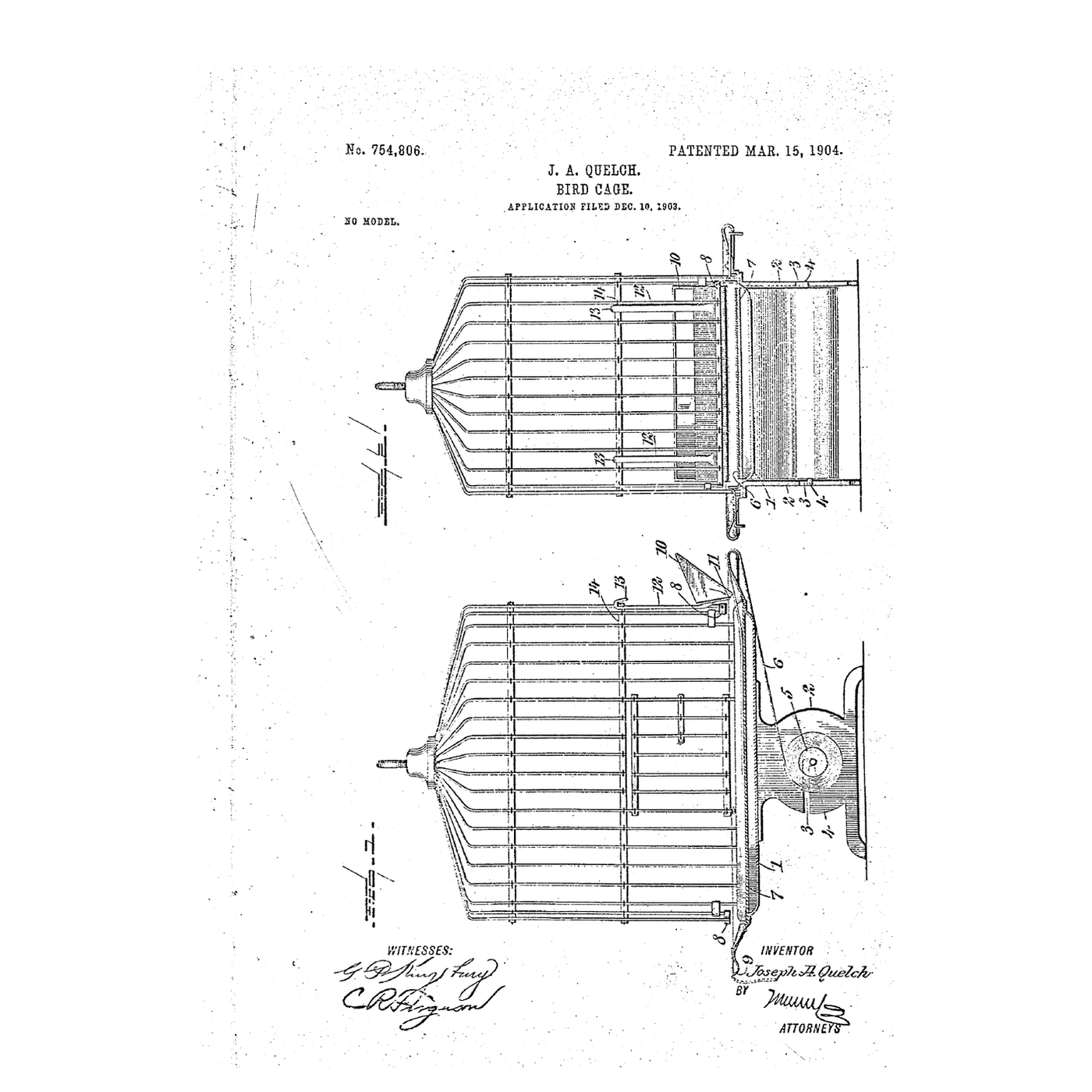


The Paper-Roll Cage Floor: Pull a Clean Length Through, Tear Off the Old
The paper on a cage floor needs changing often, and that usually means taking the cage down, lifting the tray out and cutting a new sheet.
Joseph A. Quelch of Brooklyn, New York, received US 754,806, dated 15 March 1904, for a bird-cage with "a paper-roll holder, whereby the paper covering for the cage-bottom may be conveniently and quickly changed or renewed": a roll held in slotted hangers under the cage, drawn over the floor and torn off against a sharpened edge, with a hopper that sprinkles gravel on the new length.
This rung works out how long a roll lasts, then fits a paper roll under a cage floor and times a change.
Olùbẹ̀rẹ̀
About 2 hours
Ìlànà
1
1
Changes per roll
Changes per roll
Ń ṣí ìwé Jupyter…
2
2
Paper from a roll
Paper from a roll
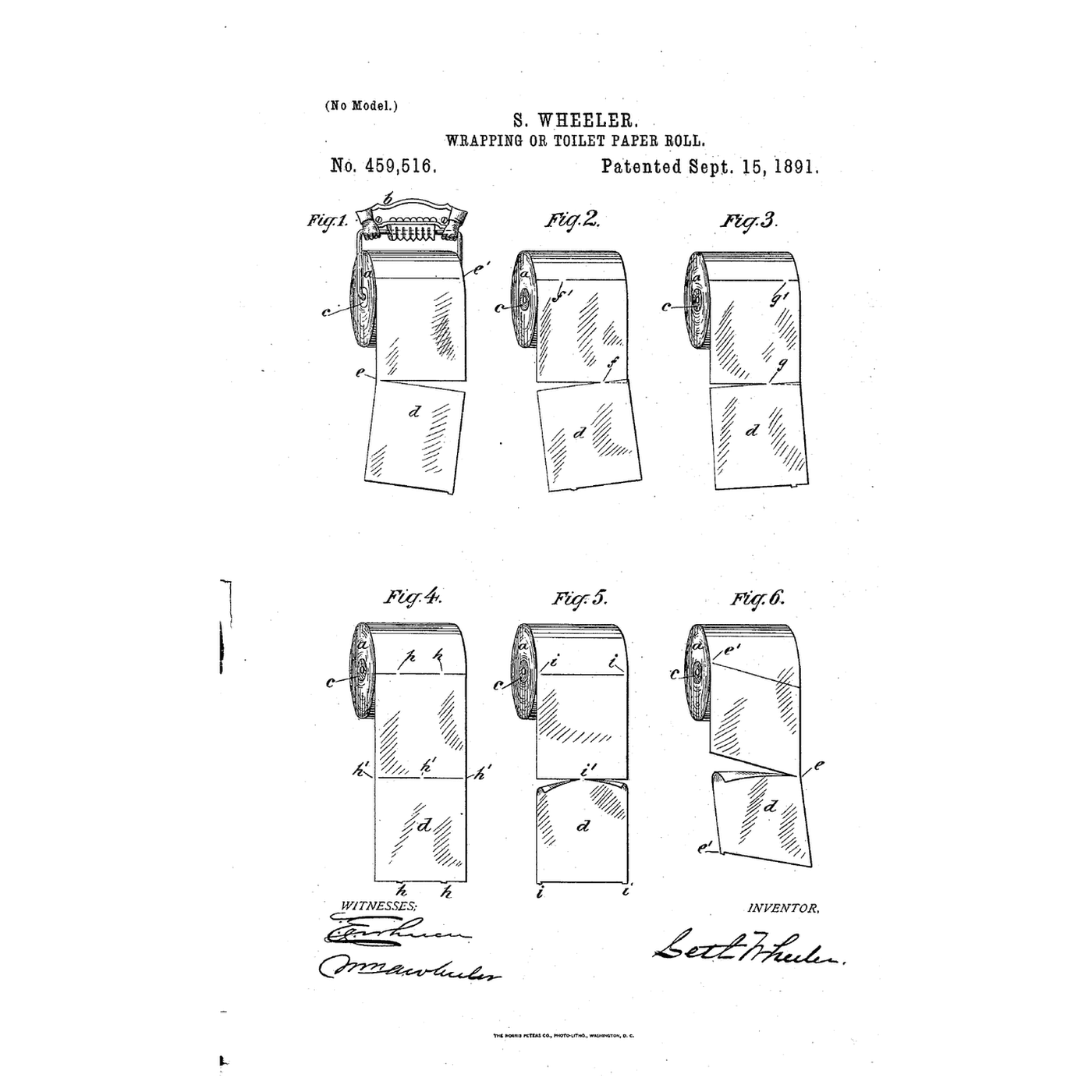
The embedded blueprint perforates a roll so one sheet tears off at a time. Quelch tears the cage's paper off against a sharpened edge instead.
3
3
Read US 754,806
Read US 754,806
"This invention relates to improvements in bird-cages, the object being to provide, in connection with a cage, a paper-roll holder, whereby the paper covering for the cage-bottom may be conveniently and quickly changed or renewed; and another object is to provide a novel means for distributing gravel on the paper as it is drawn through the cage."
The far end of the bottom "is turned upward and somewhat sharpened, as indicated at 9, so that the paper may be readily torn off at this point when a new length is drawn into the cage."
"By this arrangement it is obvious that the paper may be changed in the cage without removing the cage from a suspending-hook or the like".
4
4
Fit a paper roll under the floor and time a change
Fit a paper roll under the floor and time a change
Cut two hangers from aluminium sheet, each with a slot open at the top near its lower end, and file them smooth. Screw them under one end of the cage's floor tray so their slots line up. Slide a dowel rod through a roll of kraft paper and drop its ends into the slots.
Cut a strip of aluminium as wide as the floor, file one long edge to a blunt ridge, and screw it across the far end of the floor with the ridge standing up. Draw the paper from the roll, over the floor, and down over the ridge.
Time a change: pull a clean length through and tear the used length off against the ridge. Then time the old way, lifting the tray out and cutting and laying a new sheet.
Àwọn ohun èlò fún ìgbésẹ̀ yìí:
 Ìdì ìwé kraft (aláwọ̀ dúdú-pupa)1 ẹyọ
 Òpó Igi Dòwẹ̀lì1 ẹyọ
 Àwo aluminiọ̀mù1 ẹyọ
 Ìṣó igi6 ẹyọ
Àwọn irinṣẹ́ tí a nílò:
 Àgò ẹyẹ
 Ìlàǹkàn irin
 Ìfá Irin
 Ẹ̀rọ Ìlùkòkò Aláìlókùn
 Àkójọ Orí Ìlùkòkò
 Ìṣù àwọn ohun ìyí skurú
 Ìdíwọ̀n
 Aago Ìdúró
5
5
A roll that jams, tears early or bunches
A roll that jams, tears early or bunches
Paper-roll floor troubleshooting.
Flow
Loading...
6
6
History and honest limits
History and honest limits
**Joseph A. Quelch** of Brooklyn, New York, filed US 754,806 on 10 December 1903; it was patented 15 March 1904. His hangers also served as the cage's legs, and a hopper hooked above the floor let gravel fall onto each new length as it was drawn through.
**Honest limits.** The notebook assumes one full length per change and no waste. Roll and cage sizes are examples. Your two timings are the measurement.
Àwọn ohun-èlò
4- Àyè
- 1 ẹyọÀyè
- 1 ẹyọÀyè
- 6 ẹyọÀyè
Àwọn irinṣẹ́ tó nílò
8- Àyè
- Àyè
- Àyè
- 1 vendor sell this, none ship to you yetÀyè
- Àyè
- Àyè
Blueprint tó jọra
Àwọn blueprint wọ̀nyí pín ìmọ̀ — ọ̀nà, ohun-èlò tàbí ìlànà



CC0 Àgbègbè Gbogbogbò
Blueprint yìí ti jáde lábẹ́ CC0. O lè ṣe àdàkọ, yí padà, pín, àti lò láìsí ìyọ̀ǹda.
Ṣàtìlẹ́yìn Olùṣẹ́dá nípa rírà àwọn ọjà nipasẹ̀ Blueprint wọn Ẹ̀san Olùṣẹ́dá tí àwọn Olùtajà gbé kalẹ̀, tàbí ṣẹ̀dá àtúnṣe tuntun ti Blueprint yìí kí o sì fi sínú Blueprint rẹ gẹ́gẹ́ bí ìsopọ̀ láti pín owó-wíwọlé.