IṢẸ́ ỌNÀ
ẸWÀ ÀTI ÌLERA
IṢẸ́ ỌWỌ́
ÀṢÀ ÀTI ÌTÀN
ÌṢERÉ
ÀYÍKÁ
OÚNJẸ ÀTI OHUN MÍMU
REVERSE ENGINEERING
SÁYẸ́ǸSÌ
ERÉ ÌDÁRAYÁ
ÌMỌ̀-Ẹ̀RỌ
ÀWỌN OHUN WÍWỌ̀
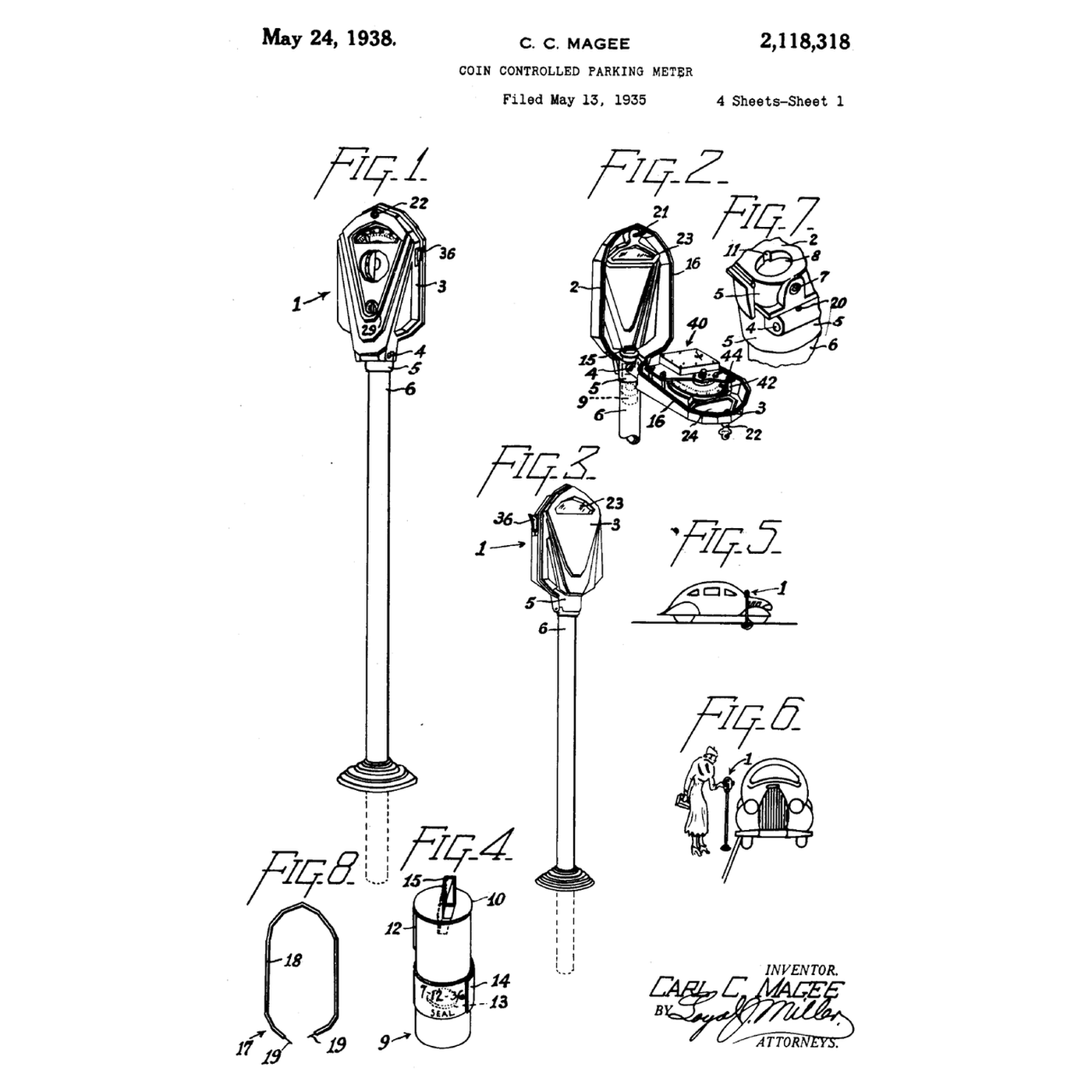


The Parking Meter: A Coin That Unlocks a Clock
By the 1930s city streets were lined with cars parked all day, and shops lost the customers who could not stop. A parking meter rations the kerb: a coin buys a set time, and a signal shows anyone passing when it has run out.
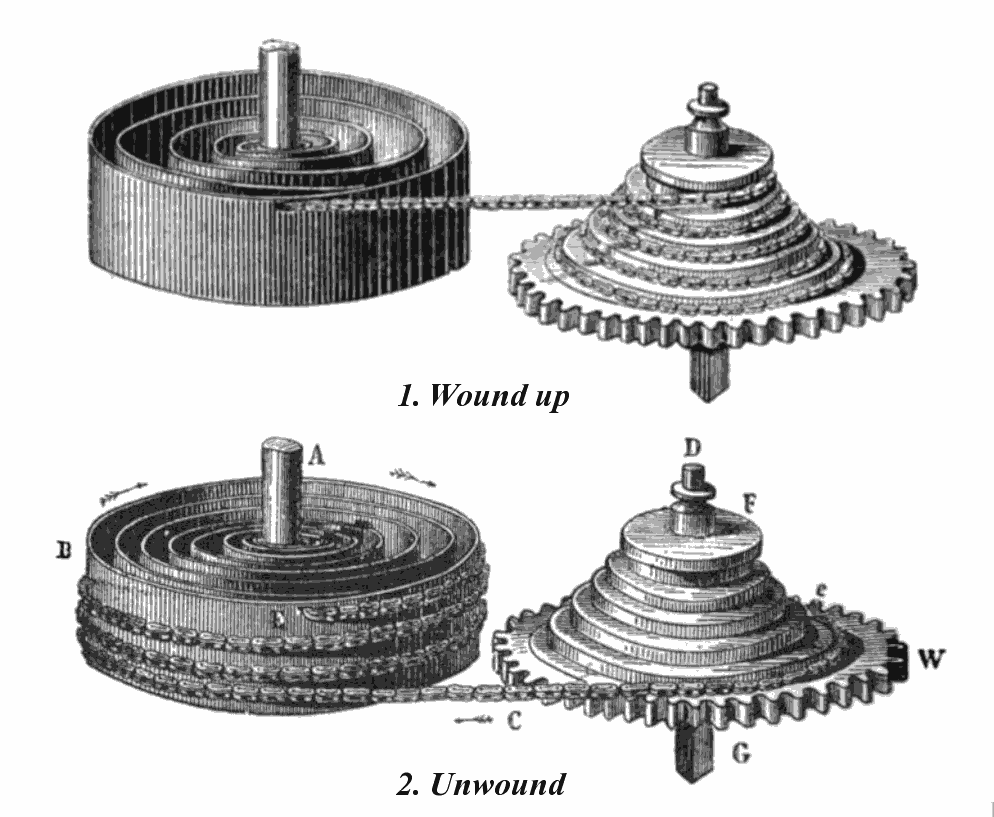
Carl C. Magee of Oklahoma City, assignor to the Dual Parking Meter Company, filed US 2,118,318, *Coin Controlled Parking Meter*, on 13 May 1935; it was granted 24 May 1938. Inside a lockable head on a post, a coin completes the winding mechanism; turning the handle winds a spring; an escapement-governed train runs it down; a signal shows while the time lasts and vanishes when it has elapsed. The last coin shows in a window, and the coins fall into a sealed container so the collections can be checked. Oklahoma City installed Magee's meters in July 1935.
This rung designs the gear train and the spring for a one-hour meter and builds a coin-interlocked timer from a wind-up motor.
Àárín
About 5 hours
Ìlànà
1
1
Gear ratio and spring energy
Gear ratio and spring energy
Ń ṣí ìwé Jupyter…
2
2
One parking, as the patent describes it
One parking, as the patent describes it
Ààyè Iṣẹ́ Blockly
Loading Blockly workspace...
3
3
What keeps the time
What keeps the time
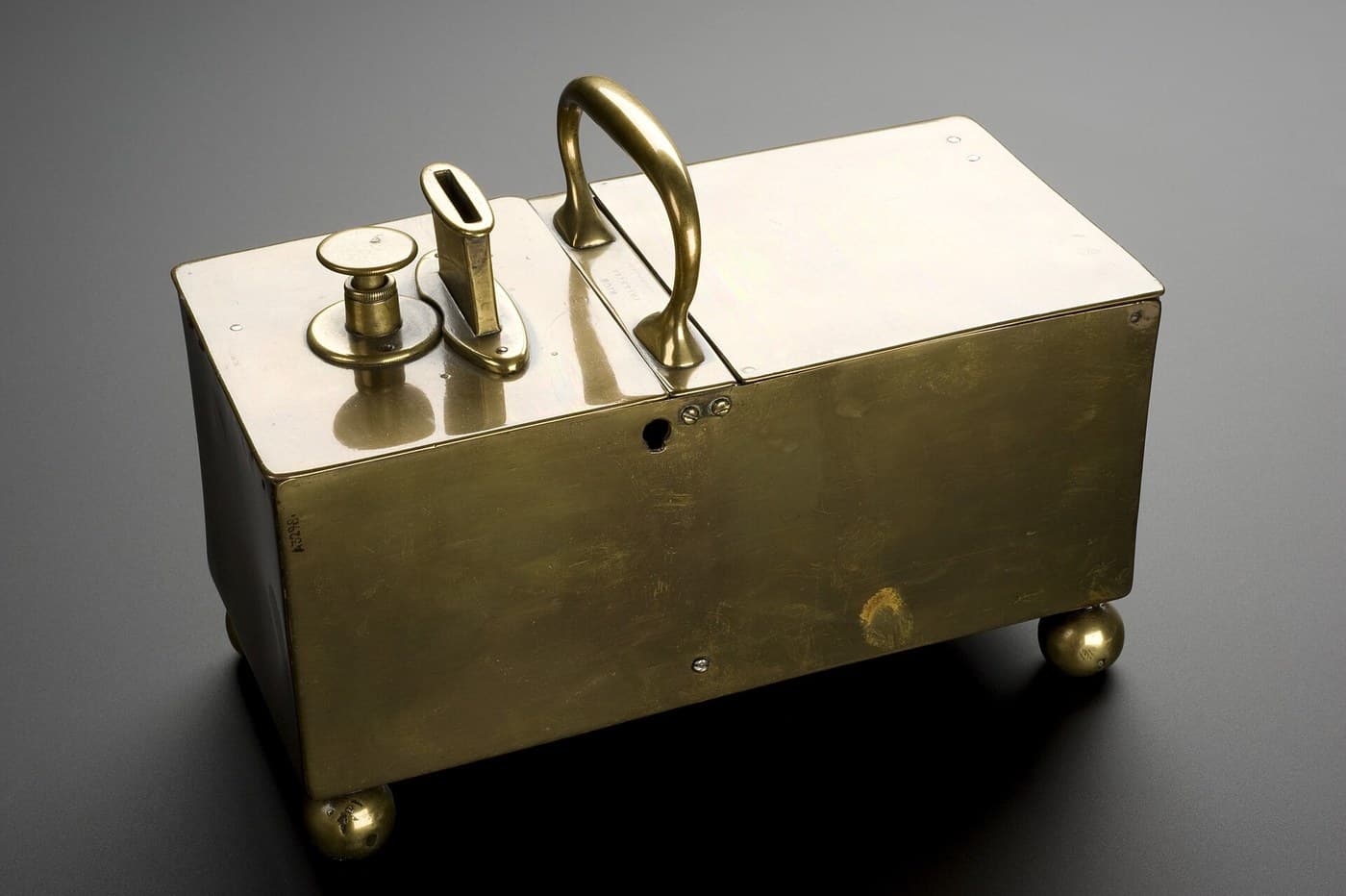
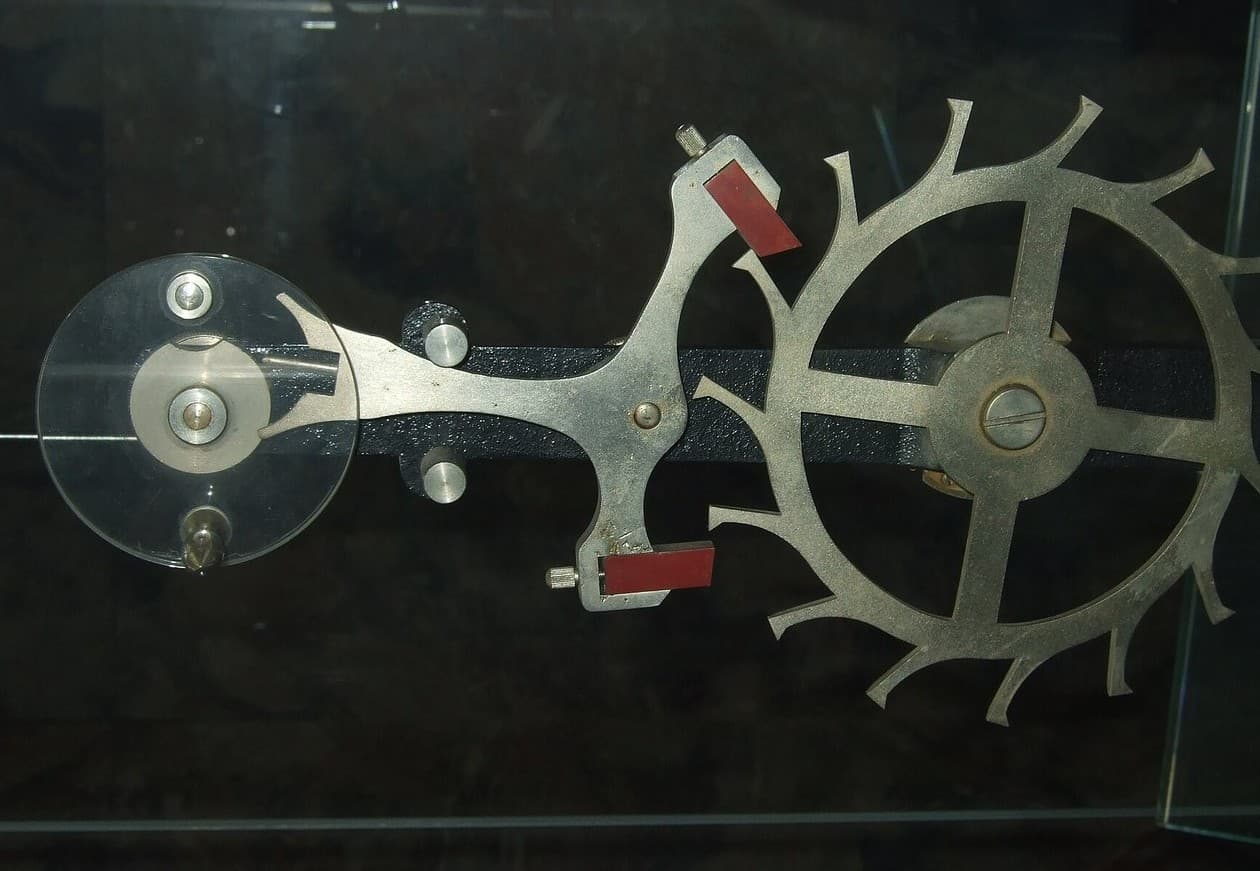
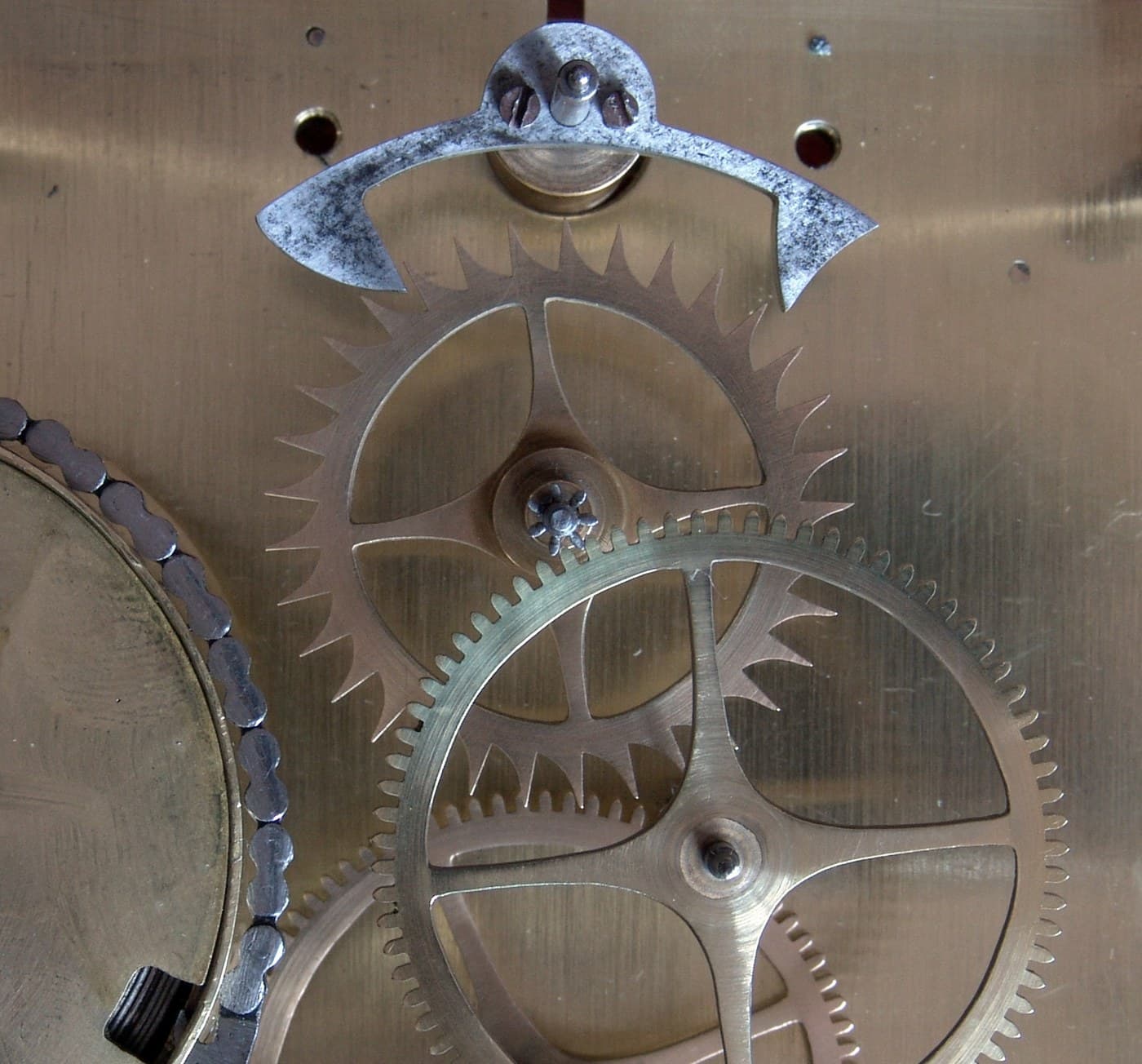
The meter's clockwork is governed by an escapement. The embedded blueprint shows how an escapement releases a gear train one tooth at a time.
4
4
Build a coin-interlocked timer
Build a coin-interlocked timer
Take a wind-up motor mechanism and fit a pointer to its slowest output shaft; mark the run-down time of a full wind on a card dial behind it.
Make the winding key the interlock, as Magee's coin was. 3D-print a crank that drives the winding shaft through a sliding coupling: two halves with a slot between them exactly as wide as the coin. Without a coin the outer half turns freely; drop a coin into the slot and it locks the halves together, so the crank winds the spring. Put a ramp below so that when the crank has turned half a revolution the coin falls out of the slot into a box.
Try it without a coin: the crank spins, nothing winds. With a coin: one wind, the pointer runs down across its dial. Time a full run and compare with the card.
Àwọn ohun èlò fún ìgbésẹ̀ yìí:
 Ẹ̀rọ mọ́tò ìtọ́kọ̀1 ẹyọ
 Owó bàbà3 ẹyọ
 Àwo igi tí a lẹ̀ pọ̀1 ẹyọ
 Skurú ẹ̀rọ6 ẹyọ
 Àwọn dowel igi líle1 ẹyọ
Àwọn irinṣẹ́ tí a nílò:
 Ẹ̀rọ ìtẹ̀ 3D oníwàyà (FDM)
 Okùn PETG
 Ẹ̀rọ Ìlùkòkò Aláìlókùn
 Àkójọ Orí Ìlùkòkò
 Òṣùwọ̀n Kálípà Díjítà Ìnṣì 6
 Aago Ìdúró
5
5
A meter that takes the coin but gives no time
A meter that takes the coin but gives no time
Coin-operated timer faults.
Flow
Loading...
6
6
History and honest limits
History and honest limits
**Carl C. Magee** of Oklahoma City filed **US 2,118,318** on 13 May 1935, assigned to the Dual Parking Meter Company; granted 24 May 1938. Oklahoma City installed 150 of his meters along 14 blocks downtown in July 1935, charging five cents an hour; within a few years they spread to cities across the United States and abroad.
**Honest limits.** The notebook's beat rate, train losses and spring figures are illustrative, not Magee's. The printed interlock accepts anything the size of the coin — real meters gauge a coin's diameter, thickness and sometimes its metal.
Àwọn ohun-èlò
5- Ẹ̀rọ mọ́tò ìtọ́kọ̀ìdá 10%1 ẹyọÀyè
- 3 ẹyọÀyè
- 1 ẹyọÀyè
- 6 ẹyọÀyè
- 1 ẹyọÀyè
Àwọn irinṣẹ́ tó nílò
6- Àyè
- 1 vendor sell this, none ship to you yetÀyè
- Àyè
Blueprint tó jọra
Àwọn blueprint wọ̀nyí pín ìmọ̀ — ọ̀nà, ohun-èlò tàbí ìlànà


CC0 Àgbègbè Gbogbogbò
Blueprint yìí ti jáde lábẹ́ CC0. O lè ṣe àdàkọ, yí padà, pín, àti lò láìsí ìyọ̀ǹda.
Ṣàtìlẹ́yìn Olùṣẹ́dá nípa rírà àwọn ọjà nipasẹ̀ Blueprint wọn Ẹ̀san Olùṣẹ́dá tí àwọn Olùtajà gbé kalẹ̀, tàbí ṣẹ̀dá àtúnṣe tuntun ti Blueprint yìí kí o sì fi sínú Blueprint rẹ gẹ́gẹ́ bí ìsopọ̀ láti pín owó-wíwọlé.