IṢẸ́ ỌNÀ
ẸWÀ ÀTI ÌLERA
IṢẸ́ ỌWỌ́
ÀṢÀ ÀTI ÌTÀN
ÌṢERÉ
ÀYÍKÁ
OÚNJẸ ÀTI OHUN MÍMU
REVERSE ENGINEERING
SÁYẸ́ǸSÌ
ERÉ ÌDÁRAYÁ
ÌMỌ̀-Ẹ̀RỌ
ÀWỌN OHUN WÍWỌ̀
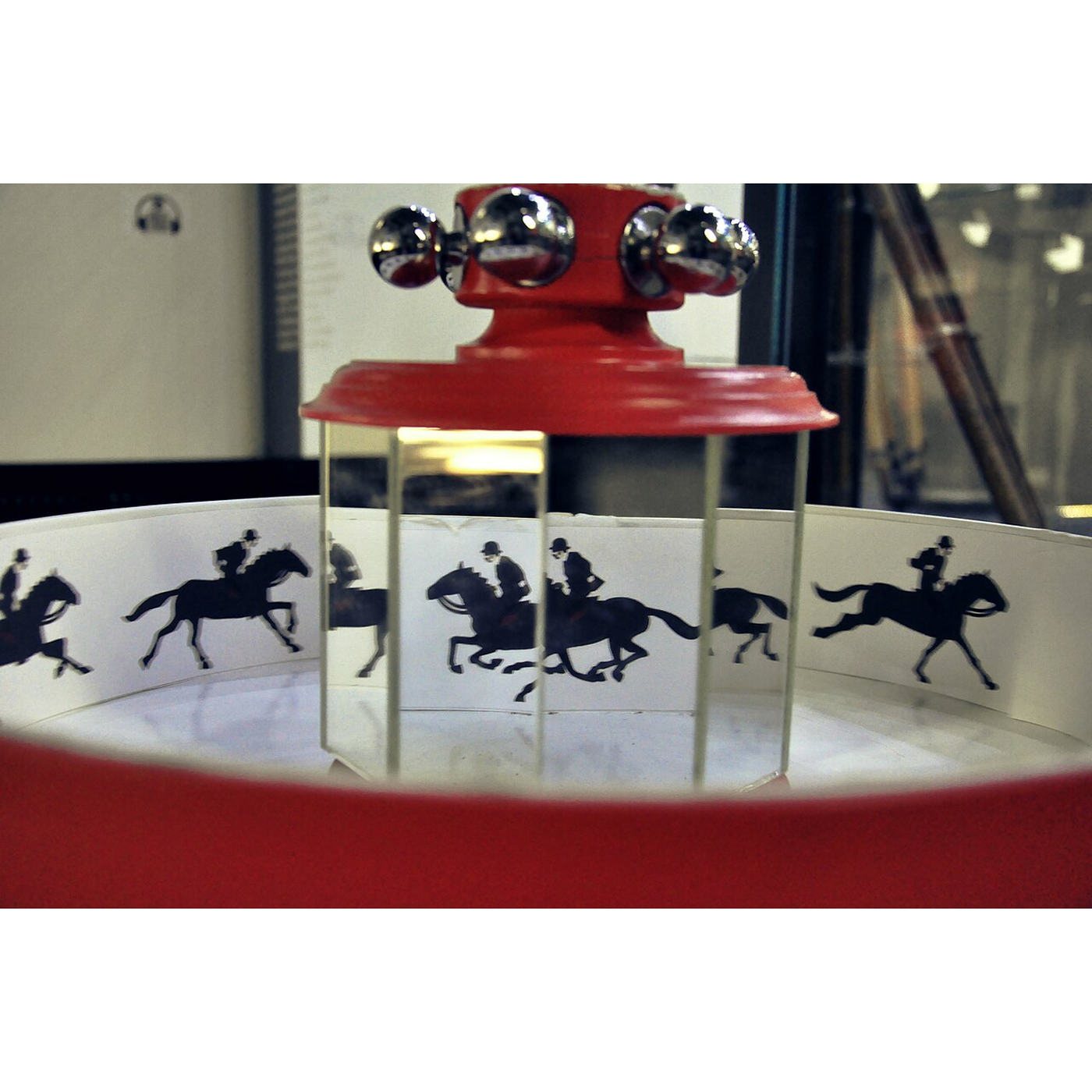

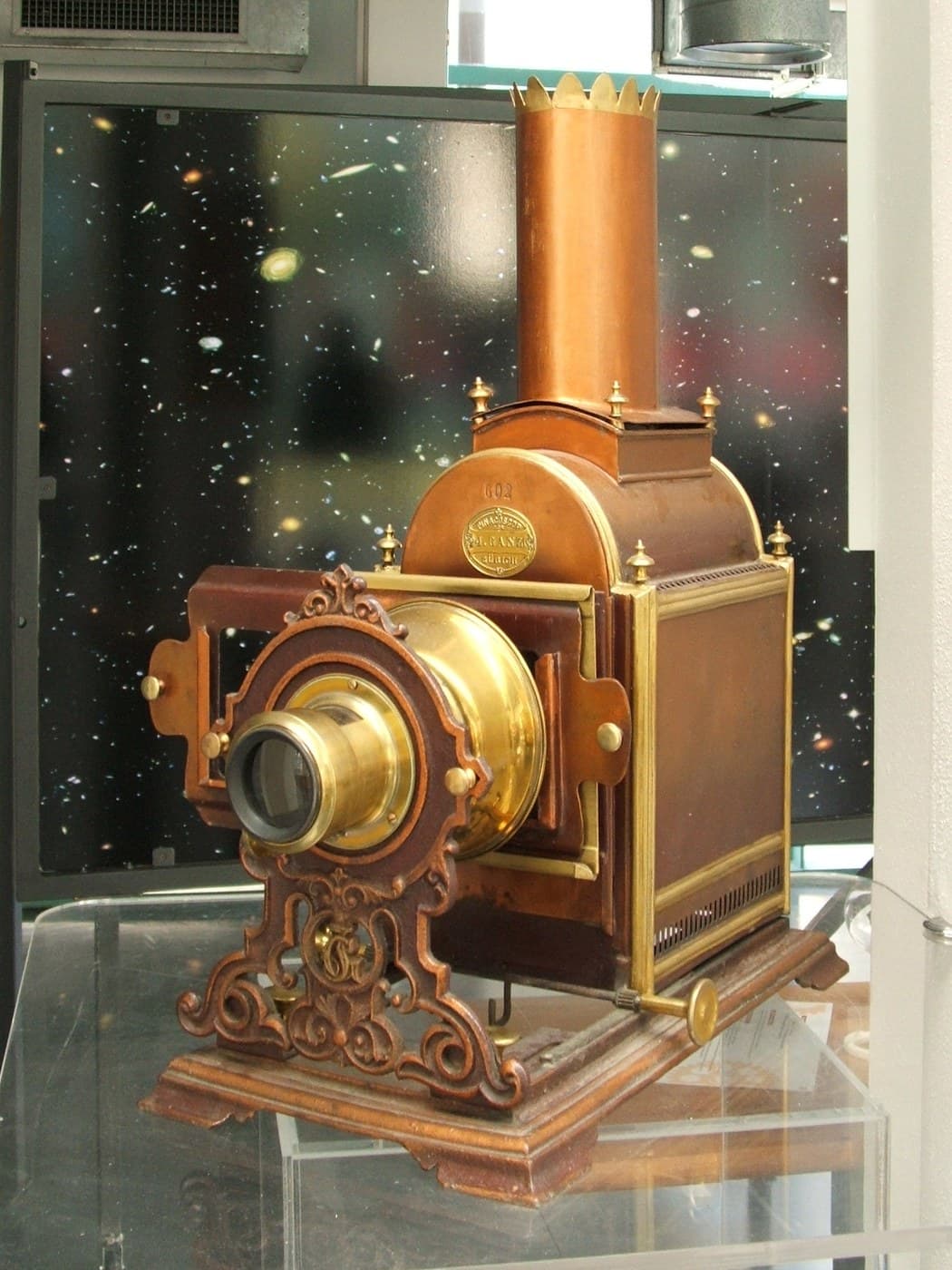
The Praxinoscope: Moving Pictures in a Ring of Mirrors
Before cinema, moving pictures were toys. The zoetrope spun a strip of drawings inside a slotted drum; looking through the slots, you saw each drawing only for an instant, and the series ran together into motion — dimly, because the slots let in so little.
Émile Reynaud of Paris patented the praxinoscope in France on 30 August 1877 (patent 120484). He replaced the slots with a ring of flat mirrors at the centre of the drum, one for each picture, set at half the drum's radius. The reflected pictures appear one after another in the same place, bright and steady. Reynaud went on to project them for audiences in his Théâtre Optique.
This rung shows why the mirrors must stand at half the radius, and builds a praxinoscope.
Olùbẹ̀rẹ̀
About 3 hours
Ìlànà
1
1
Where the images land
Where the images land
Ń ṣí ìwé Jupyter…
2
2
Mirrors making images
Mirrors making images
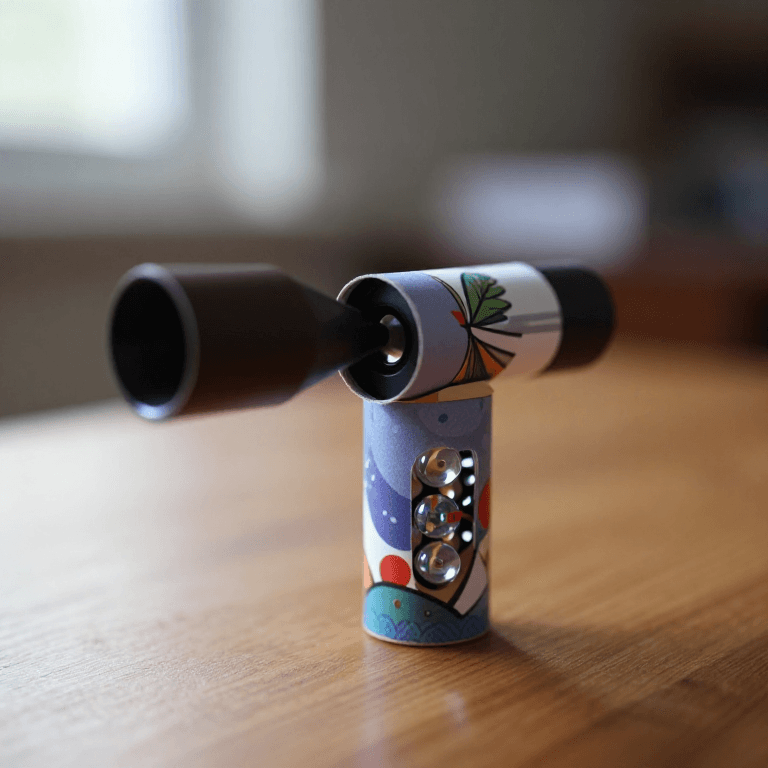
The praxinoscope's trick is plane-mirror imaging, as in the kaleidoscope. The embedded blueprint shows how facing mirrors multiply a picture.
3
3
Build a praxinoscope
Build a praxinoscope
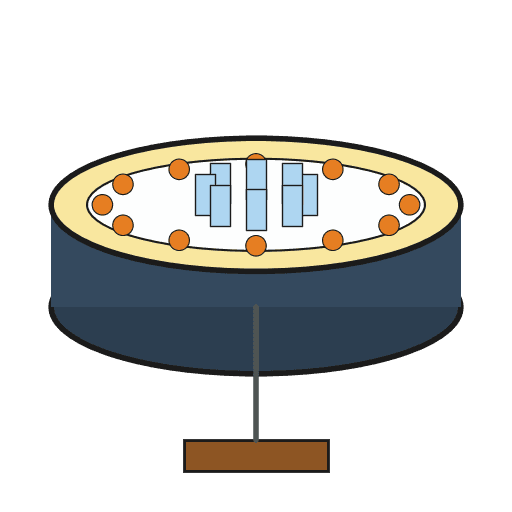
Cut a cardboard disc 220 mm across and glue a 60 mm-high cardboard wall round it: the drum, radius 110 mm. Mount it on a pencil or dowel through a bead so it spins freely on a base.
Cut twelve pieces of acrylic mirror sheet, each 28 mm wide and 50 mm high, and stand them round a twelve-sided cardboard prism glued at the centre, so the mirror faces are 55 mm from the axis — half the drum's radius.
Draw twelve pictures of a simple motion — a ball bouncing, a figure jumping — on a paper strip that fits inside the drum wall, one picture opposite each mirror. Spin the drum and look into the mirrors: the drawings move. Move the mirrors to 45 mm and to 65 mm from the axis and see the image jump and blur.
Àwọn ohun èlò fún ìgbésẹ̀ yìí:
 Àwọn Pẹlẹbẹ Káàdíbóòdù Onílọ́nà1 ẹyọ
 Pẹpẹ Akiriliki Dígí1 ẹyọ
 Àwọn dowel igi líle1 ẹyọ
Àwọn irinṣẹ́ tí a nílò:
 Ìbọn ìlẹ̀mọ́ gbígbóná
 Ìdíwọ̀n
 Òṣùwọ̀n Kálípà Díjítà Ìnṣì 6
 Ẹ̀rọ Ìwọ̀n Igun
4
4
A praxinoscope whose pictures jump or blur
A praxinoscope whose pictures jump or blur
Praxinoscope problems.
Flow
Loading...
5
5
History and honest limits
History and honest limits
**Émile Reynaud** patented the praxinoscope in France on 30 August 1877 (patent 120484), and later built the projecting Théâtre Optique, showing hand-drawn animated films to audiences in Paris from 1892 — before cinema.
**Honest limits.** The notebook treats the mirrors as ideal planes and the strip as a perfect circle. The persistence-of-vision explanation of why the pictures blend is simplified; how the brain perceives apparent motion is more subtle.
Àwọn ohun-èlò
3- Àyè
- 1 ẹyọÀyè
- 1 ẹyọÀyè
Àwọn irinṣẹ́ tó nílò
4- Àyè
Ìtọ́nisọ́nà yìí ń ṣe
Blueprint tó jọra
Àwọn blueprint wọ̀nyí pín ìmọ̀ — ọ̀nà, ohun-èlò tàbí ìlànà

CC0 Àgbègbè Gbogbogbò
Blueprint yìí ti jáde lábẹ́ CC0. O lè ṣe àdàkọ, yí padà, pín, àti lò láìsí ìyọ̀ǹda.
Ṣàtìlẹ́yìn Olùṣẹ́dá nípa rírà àwọn ọjà nipasẹ̀ Blueprint wọn Ẹ̀san Olùṣẹ́dá tí àwọn Olùtajà gbé kalẹ̀, tàbí ṣẹ̀dá àtúnṣe tuntun ti Blueprint yìí kí o sì fi sínú Blueprint rẹ gẹ́gẹ́ bí ìsopọ̀ láti pín owó-wíwọlé.