IṢẸ́ ỌNÀ
ẸWÀ ÀTI ÌLERA
IṢẸ́ ỌWỌ́
ÀṢÀ ÀTI ÌTÀN
ÌṢERÉ
ÀYÍKÁ
OÚNJẸ ÀTI OHUN MÍMU
REVERSE ENGINEERING
SÁYẸ́ǸSÌ
ERÉ ÌDÁRAYÁ
ÌMỌ̀-Ẹ̀RỌ
ÀWỌN OHUN WÍWỌ̀
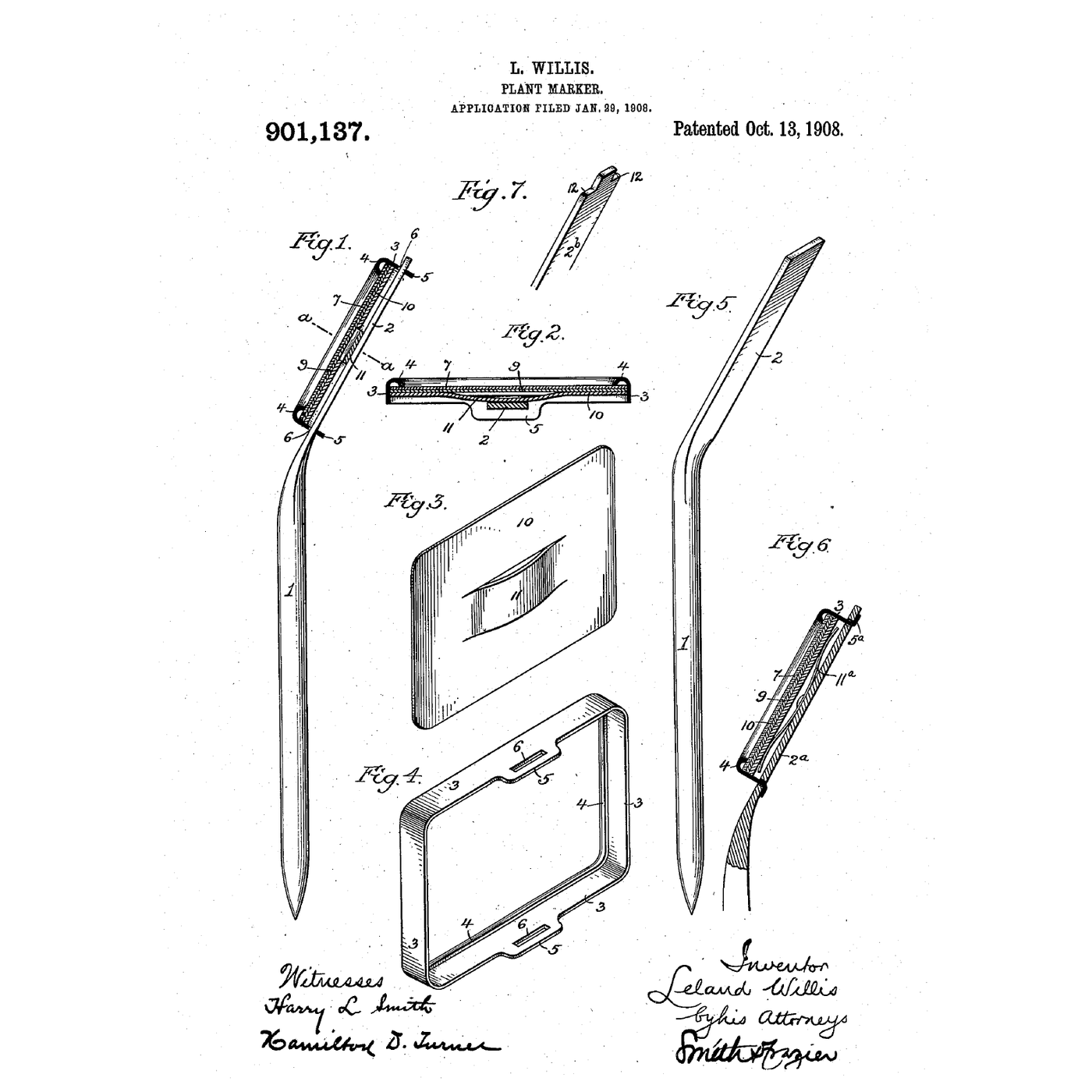


The Sheet-Steel Plant Marker: A Spring Strip Instead of a Key
A cast-iron plant marker is heavy, breaks when dropped, and its loose key goes missing in the soil.
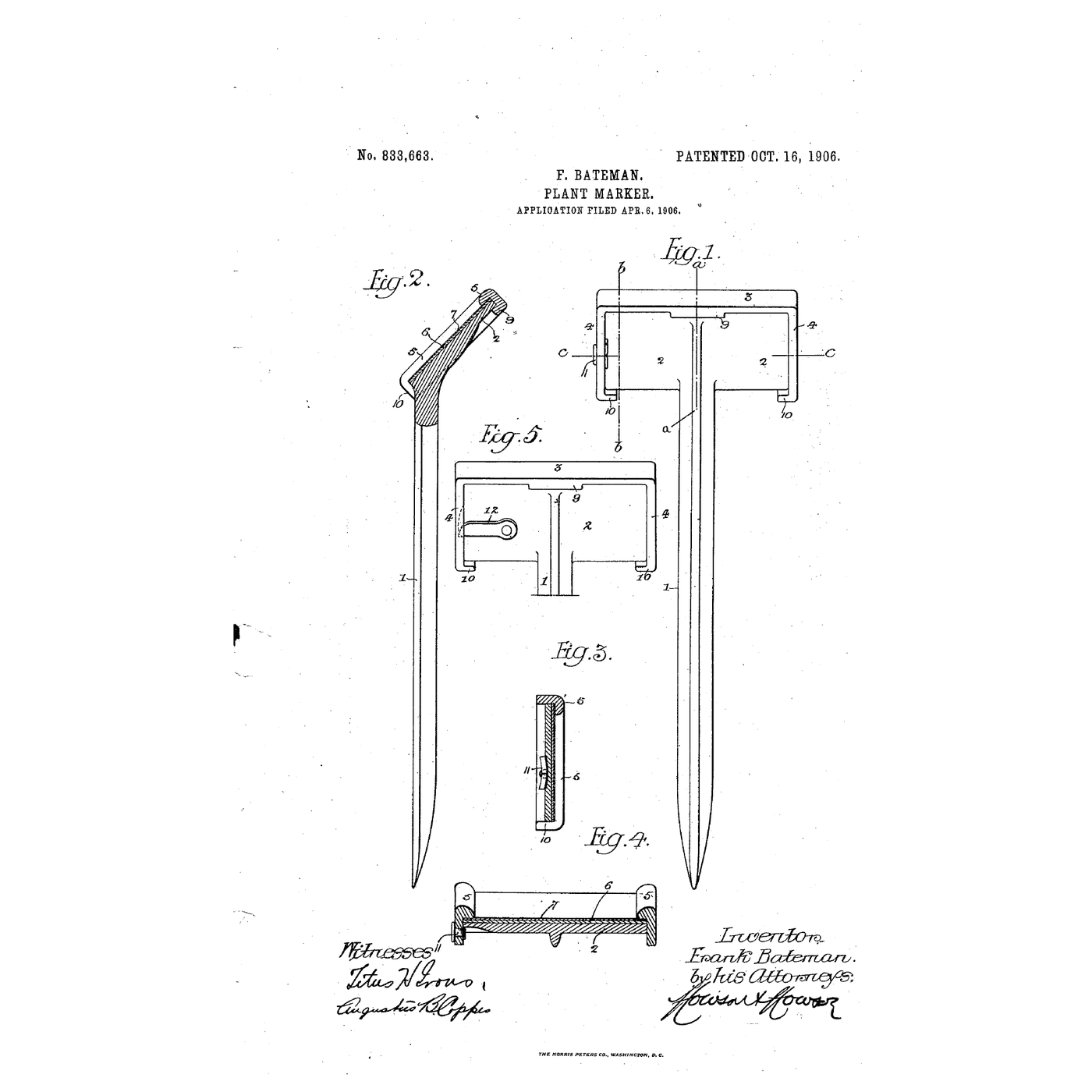
Leland Willis of Grenloch, New Jersey, assignor to the Bateman Manufacturing Company, received US 901,137, dated 13 October 1908, improving Frank Bateman's marker of 1906: "the object of my invention being to simplify and cheapen the construction of said device and to provide a marker whose parts are light, strong and easily assembled or taken apart." A sheet-steel frame with an inturned flange holds the card and cover; a backing plate carries a struck-up spring strip; the stake's flattened end passes through slotted ears on the frame and presses the spring.
This rung works out how hard the strip presses and how much the sheet metal saves, then builds the marker and compares it with the 1906 one.
Àárín
About 3 hours
Ìlànà
1
1
Spring pressure and weight
Spring pressure and weight
Ń ṣí ìwé Jupyter…
2
2
The marker it simplifies
The marker it simplifies
The embedded blueprint builds Bateman's 1906 marker with a split-pin key. Willis's version drops the key and holds everything with the stake and one spring strip.
3
3
Read US 901,137
Read US 901,137
"The cover plate 7 of the marking card is pressed against the inturned flange 4 of the frame with such force as to maintain a substantially watertight joint between the two, and thus prevent the staining of the marking card or other injury thereto by reason of its becoming wet."
"The device, moreover, does not necessitate the employment of keys or other small parts which are likely to be lost or mislaid."
4
4
Build the marker and compare it
Build the marker and compare it
**Stake.** Cut 35 cm of 25 × 3 mm mild steel flat bar, file one end to a point, and bend the top 7 cm back to about 45° in the vice, checking with the protractor.
**Frame.** Cut a strip of aluminium sheet 15 mm wide and 32 cm long. Fold 4 mm of one long edge inward along its length: the bearing flange. Bend the strip round a 90 × 60 mm card into a rectangle, flange to the front, and pop-rivet the overlapping ends. Rivet a tab across the back at the top and one at the bottom, each with a 26 × 4 mm slot for the stake's end.
**Backing plate.** Cut a plate 90 × 60 mm. Drill a starting hole and snip a tongue 10 mm wide and 30 mm long in its middle, then bend the tongue out into a gentle curve: the spring.
**Assemble.** Put the card, a clear plastic cover and the backing plate, tongue outward, into the frame. Slide the stake's bent end through both slots so it presses the tongue flat.
**Test.** Time the build and weigh the marker. Give it 30 sprays from 30 cm, wait an hour and check the card. Compare time, weight and card with a marker built to the embedded 1906 blueprint.
Àwọn ohun èlò fún ìgbésẹ̀ yìí:
 Ọ̀pá Pẹrẹsẹ Irin Pẹ́lẹ́0.35 mítà
 Àwo aluminiọ̀mù1 ẹyọ
 Àwọn pop rivet6 ẹyọ
 Bébà Líle1 ẹyọ
 Pẹpẹ pilasítíìkì tí ó mọ́1 ẹyọ
 Omi0.2 lítà
Àwọn irinṣẹ́ tí a nílò:
 Ayùn Irin
 Àwọn Ìfá (Ìfá Ọwọ́)
 Ìdìmú Tábìlì
 Òòlù
Òòlù Ẹ̀rọ Ìwọ̀n Igun
 Ìlàǹkàn irin
 Ẹ̀rọ Ìlùkòkò Aláìlókùn
 Àkójọ Orí Ìlùkòkò
 Ìdìpọ̀ ẹ̀rọ ìso pop rivet
 Ẹmú Ẹnu Pẹrẹsẹ
 Ìdíwọ̀n
 Gègé
Gègé Ìkòkò òdòdó
 Ìgò ìfọn omi
 Òṣùwọ̀n Díjítà Ilé Ìdáná
 Aago Ìdúró
 Ìbọ̀wọ́ Iṣẹ́ Awọ
 Gílásì Ààbò Tí Ó Mọ́
5
5
A marker that leaks, rattles or will not go together
A marker that leaks, rattles or will not go together
Sheet-steel plant marker troubleshooting.
Flow
Loading...
6
6
History and honest limits
History and honest limits
**Leland Willis** of Grenloch, New Jersey, assignor to the Bateman Manufacturing Company, filed US 901,137 on 29 January 1908; it is dated 13 October 1908. He also showed the ears carried on the stake and passing through slots in the frame, and the stake narrowed at the top to form shoulders that limit how far the frame slides down.
**Honest limits.** Aluminium sheet and pop rivets stand in for Willis's sheet steel, and a snipped tongue for his struck-up strip. The notebook treats the strip as a straight spring arm; its sizes and presses are examples. Your spray check, weights and build times are the result.
Àwọn ohun-èlò
6- 0.35 mítàÀyè
- 1 ẹyọÀyè
- 6 ẹyọÀyè
- 1 ẹyọÀyè
- Àyè
- 0.2 lítàÀyè
Àwọn irinṣẹ́ tó nílò
18- Àyè
- Àyè
- Àyè
- Àyè
- 1 vendor sell this, none ship to you yetÀyè
- Àyè
- 1 vendor sell this, none ship to you yetÀyè
- Àyè
- Àyè
- Àyè
Ìtọ́nisọ́nà yìí ń ṣe

Blueprint tó jọra
Àwọn blueprint wọ̀nyí pín ìmọ̀ — ọ̀nà, ohun-èlò tàbí ìlànà


CC0 Àgbègbè Gbogbogbò
Blueprint yìí ti jáde lábẹ́ CC0. O lè ṣe àdàkọ, yí padà, pín, àti lò láìsí ìyọ̀ǹda.
Ṣàtìlẹ́yìn Olùṣẹ́dá nípa rírà àwọn ọjà nipasẹ̀ Blueprint wọn Ẹ̀san Olùṣẹ́dá tí àwọn Olùtajà gbé kalẹ̀, tàbí ṣẹ̀dá àtúnṣe tuntun ti Blueprint yìí kí o sì fi sínú Blueprint rẹ gẹ́gẹ́ bí ìsopọ̀ láti pín owó-wíwọlé.