IṢẸ́ ỌNÀ
ẸWÀ ÀTI ÌLERA
IṢẸ́ ỌWỌ́
ÀṢÀ ÀTI ÌTÀN
ÌṢERÉ
ÀYÍKÁ
OÚNJẸ ÀTI OHUN MÍMU
REVERSE ENGINEERING
SÁYẸ́ǸSÌ
ERÉ ÌDÁRAYÁ
ÌMỌ̀-Ẹ̀RỌ
ÀWỌN OHUN WÍWỌ̀

The Shielded Double Crochet Hook: Two Sizes That Slide Out of One Tube
A bare crochet hook catches on everything in a bag, and two sizes mean two loose tools.
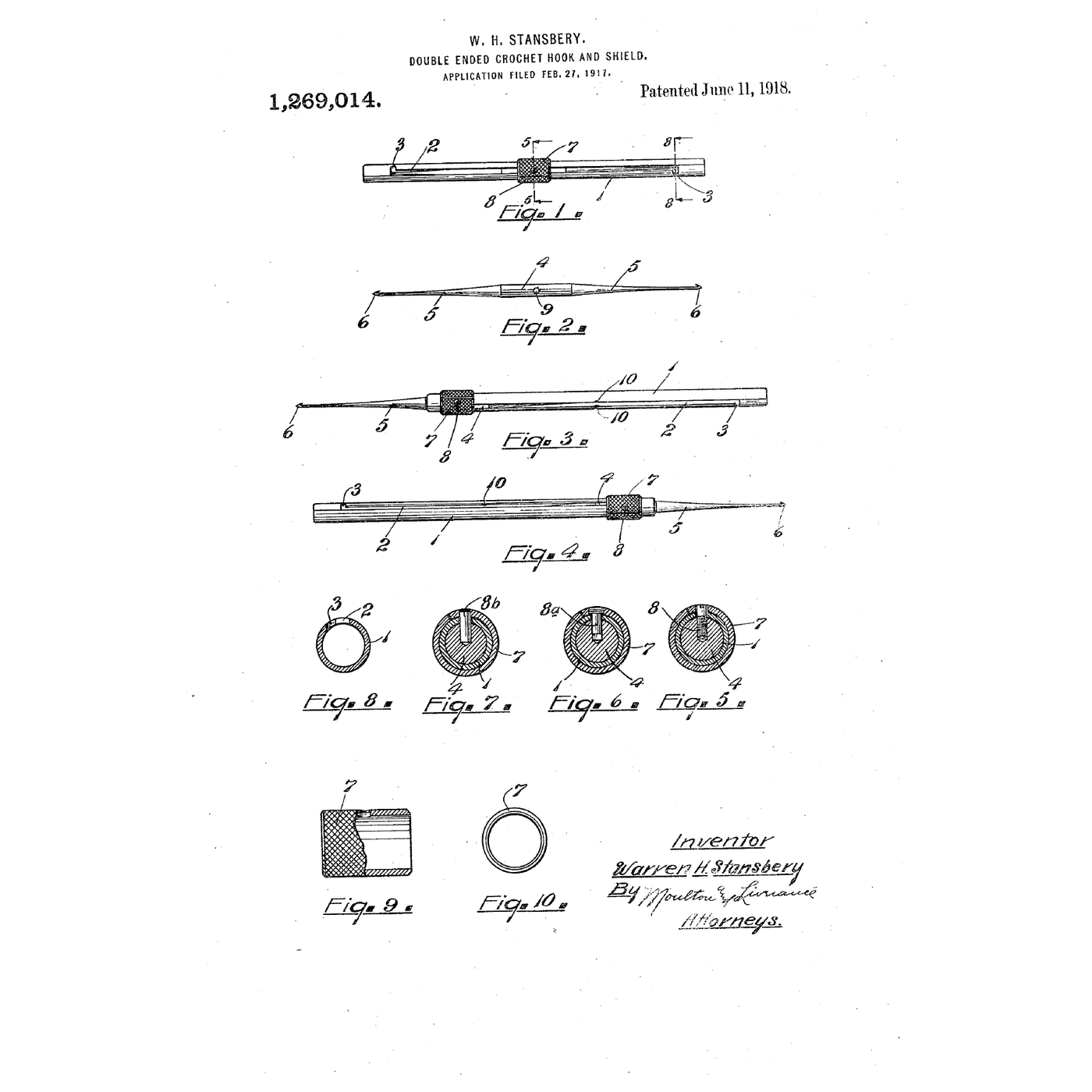
Warren H. Stansbery of Grand Haven, Michigan, received US 1,269,014, patented 11 June 1918, for a double-ended hook in a shield: a tube with a slot along one side holds a hook member with a hook at each end, preferably of different sizes; a sleeve with a pin through the slot pushes either hook out and locks it in the slot's right-angled end, and inward bends at mid-length hold the member when it is stowed.
This rung works out the slot length, then builds the shield from brass tube and two bought hooks, and tests how firmly it stows and locks.
Àárín
About 3 hours
Ìlànà
1
1
Slot length
Slot length
Ń ṣí ìwé Jupyter…
2
2
Several sizes carried in one case before it
Several sizes carried in one case before it
The embedded blueprint keeps hooks of several sizes in a case. Stansbery puts two sizes on one member that slides out of its own shield.
3
3
Read US 1,269,014
Read US 1,269,014
"When the device is not in use the double ended hook member is entirely within the shield and the cylindrical section 4 thereof is frictionally engaged by said projections 10 whereby the hook member is held against any accidental movement with respect to the shield. By grasping sleeve 7 either end of the hook member may be projected beyond the shield as shown in Figs. 3 and 4, pin 8, or 8a or 8b moving through the slot 2 until it reaches one end thereof after which the combined sleeve pin and hook may be turned to seat the pin in the extension 3 of the slot, this holding the hook member in position with respect to the shield."
4
4
Cut the shield and slot
Cut the shield and slot
Cut 150 mm of 3/8" brass tube. Mark a line along it and cut a 2 mm slot on it with the rotary tool's cut-off disc from 15 mm to 135 mm, with a 5 mm turn at right angles at each end. Deburr with needle files.
Àwọn ohun èlò fún ìgbésẹ̀ yìí:
 Ọ̀pá idẹ tí ìwọ̀n àyíká òde rẹ̀ jẹ́ 9,5 mm1 ẹyọ
Àwọn irinṣẹ́ tí a nílò:
 Ayùn Irin
 Ìdìmú Tábìlì
 Ohun èlò oníyípo (irú Dremel)
 Àkójọ Ìfá Kékeré
 Ààmì Tí Kò Ní Parẹ́
 Ìdíwọ̀n
 Gílásì Ààbò Tí Ó Mọ́
5
5
Make the hook member
Make the hook member
Sand 40 mm of hardwood dowel until it slides freely in the tube. Drill each end on the axis for a hook's shank. Cut two hooks of different sizes from the set to leave 50 mm each, and epoxy one into each end.
Àwọn ohun èlò fún ìgbésẹ̀ yìí:
 Àwọn dowel igi líle1 ẹyọ
 Ìṣù ẹ̀ṣọ́ crochet2 ẹyọ
 Ẹpọ́ksì Ẹ̀yà Méjì1 ẹyọ
Àwọn irinṣẹ́ tí a nílò:
 Bébà Ìfá
 Òṣùwọ̀n Kálípà Díjítà Ìnṣì 6
 Ẹ̀rọ Ìlùkòkò Aláìlókùn
 Àkójọ Orí ÌlùkòkòAyùn Irin
6
6
Fit the sleeve and pin
Fit the sleeve and pin
Cut 20 mm of 1/2" brass tube for the sleeve and drill a 1.5 mm hole through one side. Slide the member into the shield, the sleeve over it, and push a 1.5 mm steel pin through the sleeve and slot into a 1.5 mm hole drilled in the dowel's middle.
Àwọn ohun èlò fún ìgbésẹ̀ yìí:
 Tọ́bù bàbà 1/2 inch ìwọ̀n-ìyípo òde1 ẹyọ
 Ìṣó irin ìsopọ̀1 ẹyọ
Àwọn irinṣẹ́ tí a nílò:
Ayùn IrinẸ̀rọ Ìlùkòkò AláìlókùnÀkójọ Orí Ìlùkòkò Òòlù
Òòlù7
7
Dent the stops
Dent the stops
With the member centred, tap a light dent inward with the centre punch on each side of the slot at mid-length, until the dowel is gripped but still slides.
Àwọn irinṣẹ́ tí a nílò:
 Igi Àmì ÀárínÒòlù
8
8
Or print it: one shield, a member per yarn weight
Or print it: one shield, a member per yarn weight
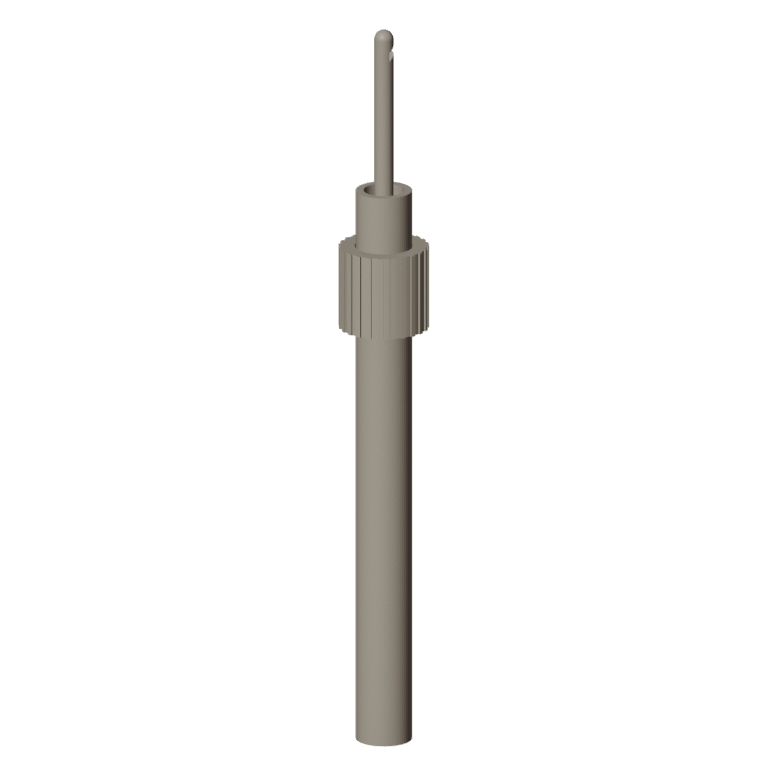
Instead of brass and bought hooks, print the parts in PLA at 0.12 mm layers, 100 % infill for the members:
- the shield, 150 mm long with its slot and right-angled turns (/uploads/blueprints/shielded-crochet-hook-shield.stl)
- the knurled sleeve (/uploads/blueprints/shielded-crochet-hook-sleeve.stl)
- a member for your yarn: 3.5/4.5 mm for fine yarn (/uploads/blueprints/shielded-crochet-hook-member-3_5-4_5.stl), 5/6 mm for medium (/uploads/blueprints/shielded-crochet-hook-member-5_0-6_0.stl), 6.5/8 mm for bulky (/uploads/blueprints/shielded-crochet-hook-member-6_5-8_0.stl)
Every member has the same 10 mm core, so one shield takes them all. Print members standing upright, then join sleeve, slot and member with a 2 mm steel pin, as in step 6.
Àwọn ohun èlò fún ìgbésẹ̀ yìí:
 Okùn PLA1 ẹyọ
Àwọn irinṣẹ́ tí a nílò:
 Ẹ̀rọ ìtẹ̀ 3D oníwàyà (FDM)
9
9
The patent drawing
The patent drawing
US 1,269,014 drawing sheet, public domain (expired patent).
10
10
Test it
Test it
Pull the sleeve with the force meter to unstow the member; note the force. Lock each hook out, shake it hard ten times, and check it has not moved. Crochet a 20-stitch chain with each hook and time it.
Àwọn ohun èlò fún ìgbésẹ̀ yìí:
 Òwú1 ẹyọ
Àwọn irinṣẹ́ tí a nílò:
 Ẹ̀rọ Ìwọ̀n Agbára (Òṣùwọ̀n Ìsúnkì)
 Aago Ìdúró
11
11
A hook that rattles, will not lock or will not slide
A hook that rattles, will not lock or will not slide
Shielded double crochet hook troubleshooting.
Flow
Loading...
12
12
History and honest limits
History and honest limits
**Warren H. Stansbery** of Grand Haven, Michigan, filed US 1,269,014 on 27 February 1917; it was patented 11 June 1918. His sleeve has a knurled surface, convenient for grasping in crocheting; he showed a screw, a headed connector and a straight pin through the slot, and wrote that the straight pin "is the way that the device has been actually constructed."
**Honest limits.** He gives no sizes; ours are examples, and a dowel with two bought hooks stands in for his one-piece member. Your forces and times are the result.
Àwọn ohun-èlò
8- 1 ẹyọÀyè
- 2 ẹyọÀyè
- 1 ẹyọÀyè
- 1 ẹyọÀyè
- 1 ẹyọÀyè
- 1 ẹyọÀyè
Àwọn irinṣẹ́ tó nílò
16- Àyè
- Àyè
- Àyè
- Àyè
- 1 vendor sell this, none ship to you yetÀyè
- Àyè
- Àyè
Blueprint tó jọra
Àwọn blueprint wọ̀nyí pín ìmọ̀ — ọ̀nà, ohun-èlò tàbí ìlànà
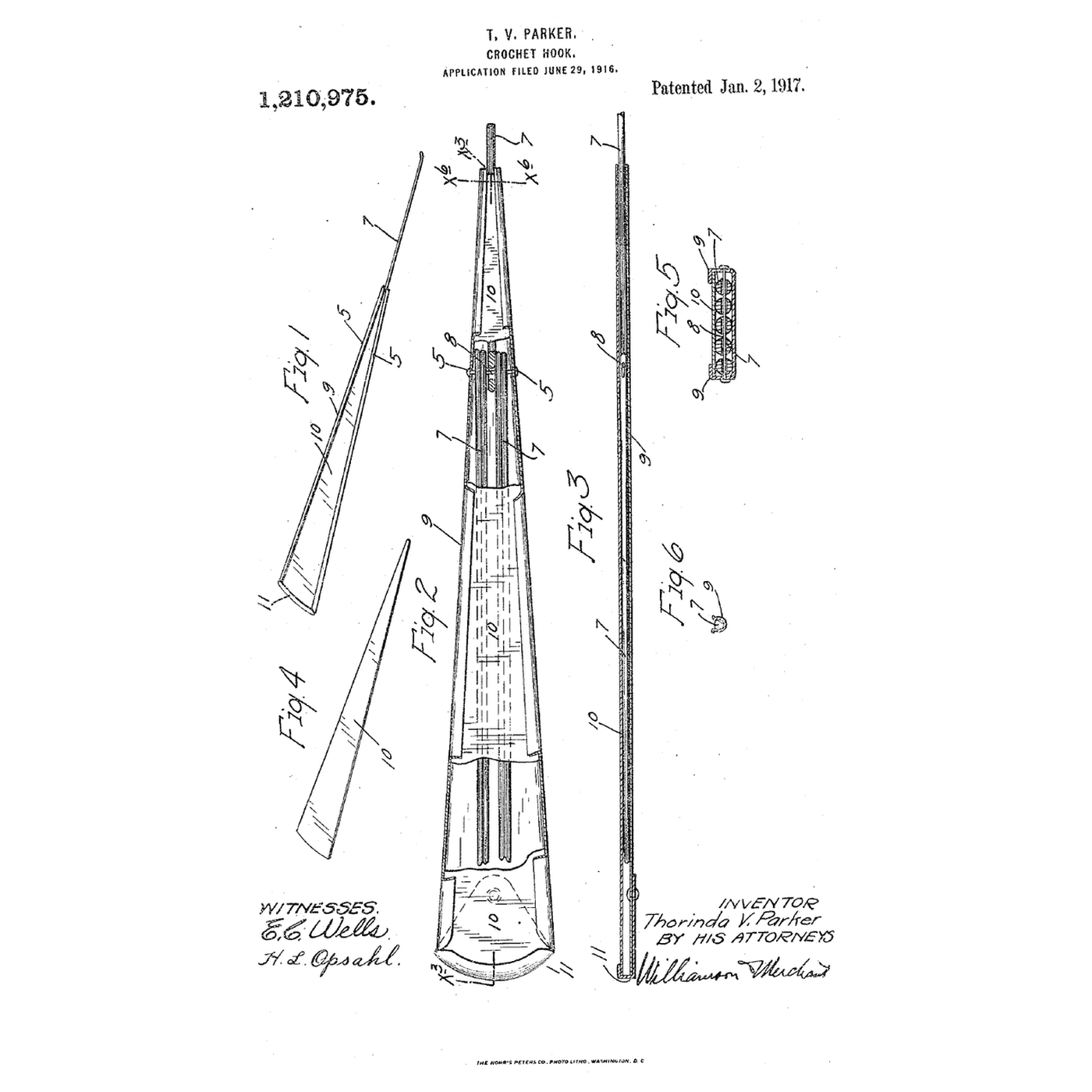
The Hook-Case Crochet Set: Hooks of Every Size Swing From One Rivet in Their Own Case
láti ọwọ́ Martin
Àwọn Irinṣẹ́ Irin
15
0
0
0
0
0
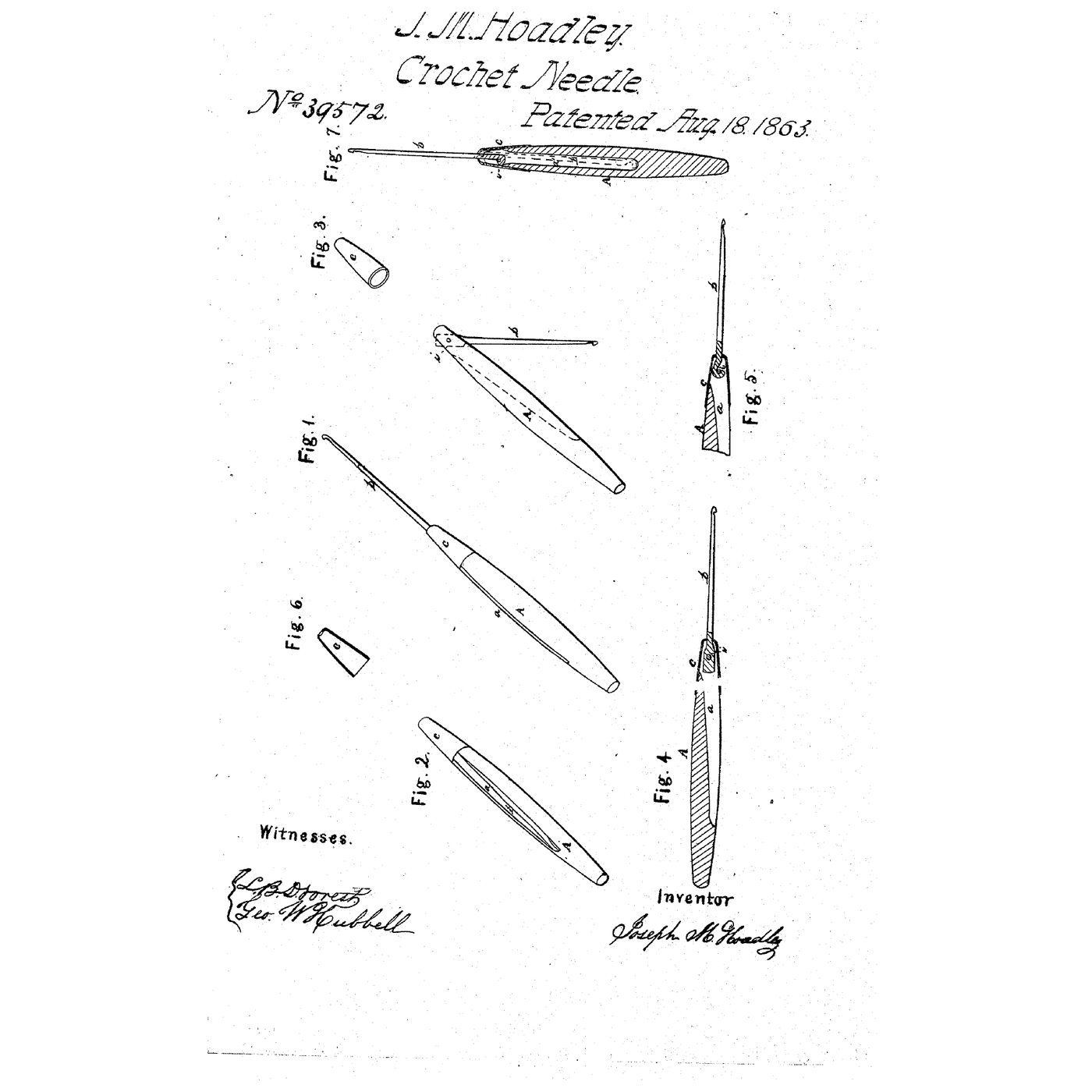
The Folding Crochet Needle: A Hook That Shuts Into Its Handle
láti ọwọ́ Tex
Iṣẹ́ Igi
19
0
0
0
0
0
Crochet — The Chain Stitch and Single Crochet Foundation
láti ọwọ́ Tex
Aṣọ àti Awọ
38
0
0
0
2
0
CC0 Àgbègbè Gbogbogbò
Blueprint yìí ti jáde lábẹ́ CC0. O lè ṣe àdàkọ, yí padà, pín, àti lò láìsí ìyọ̀ǹda.
Ṣàtìlẹ́yìn Olùṣẹ́dá nípa rírà àwọn ọjà nipasẹ̀ Blueprint wọn Ẹ̀san Olùṣẹ́dá tí àwọn Olùtajà gbé kalẹ̀, tàbí ṣẹ̀dá àtúnṣe tuntun ti Blueprint yìí kí o sì fi sínú Blueprint rẹ gẹ́gẹ́ bí ìsopọ̀ láti pín owó-wíwọlé.