IṢẸ́ ỌNÀ
ẸWÀ ÀTI ÌLERA
IṢẸ́ ỌWỌ́
ÀṢÀ ÀTI ÌTÀN
ÌṢERÉ
ÀYÍKÁ
OÚNJẸ ÀTI OHUN MÍMU
REVERSE ENGINEERING
SÁYẸ́ǸSÌ
ERÉ ÌDÁRAYÁ
ÌMỌ̀-Ẹ̀RỌ
ÀWỌN OHUN WÍWỌ̀


The Spiral Dough Mixer: Turn It Over, Press It Against the End
Kneading bread dough by hand takes time and a strong pair of arms. A crank and a shaped blade can do the folding and pressing instead.
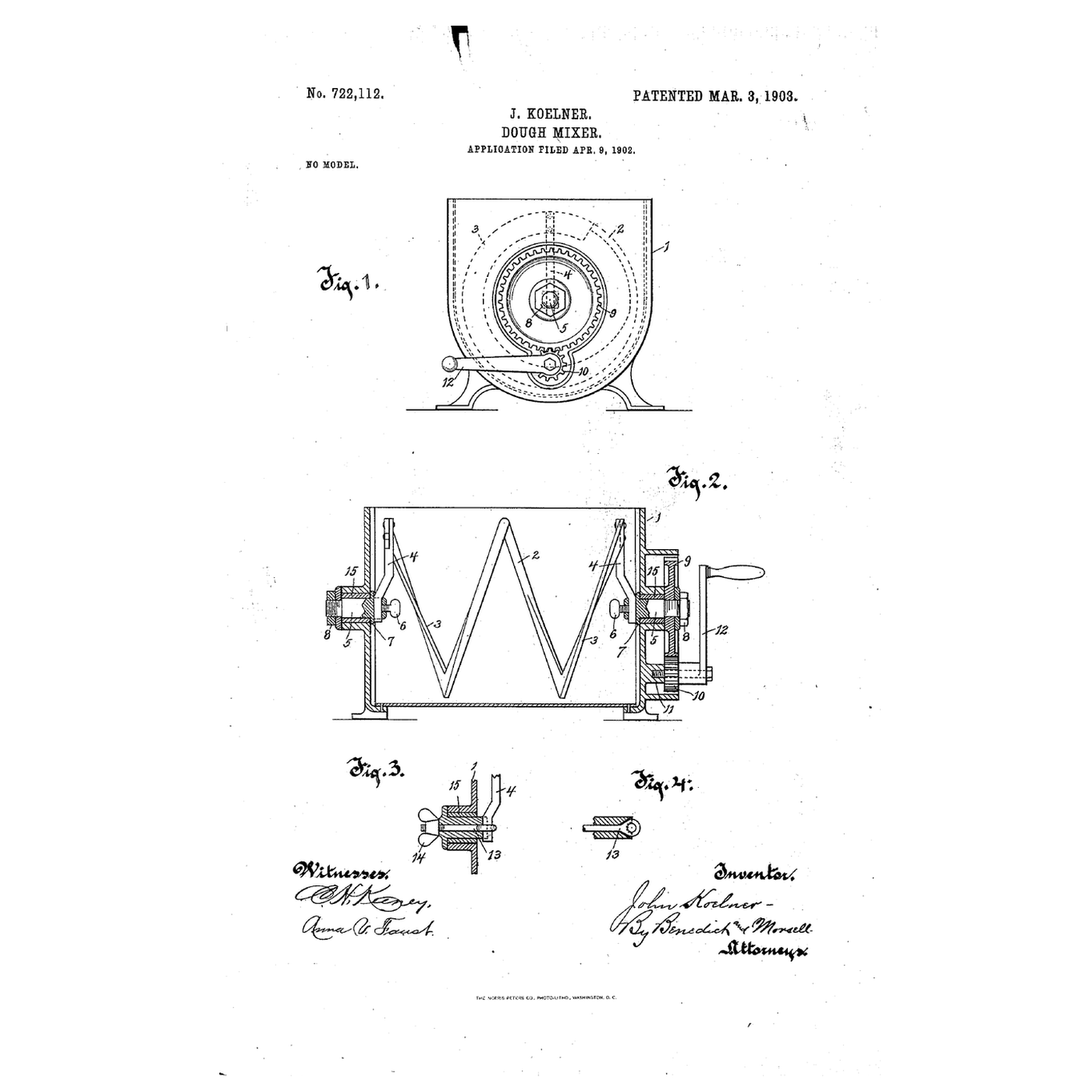
John Koelner of Louisville, Kentucky, received US 722,112, dated 3 March 1903, for a dough-mixer in which a steel spiral of about two full turns, round in the middle and flattened at its ends, is cranked round in a trough with a half-round bottom. The spiral lifts out for cleaning.
This rung works out how often the spiral presses the dough against the trough's ends, then bends a spiral from stainless steel wire and mixes a bread dough with it.
Àárín
About 3 hours
Ìlànà
1
1
Presses per minute
Presses per minute
Ń ṣí ìwé Jupyter…
2
2
A turning spiral carries
A turning spiral carries
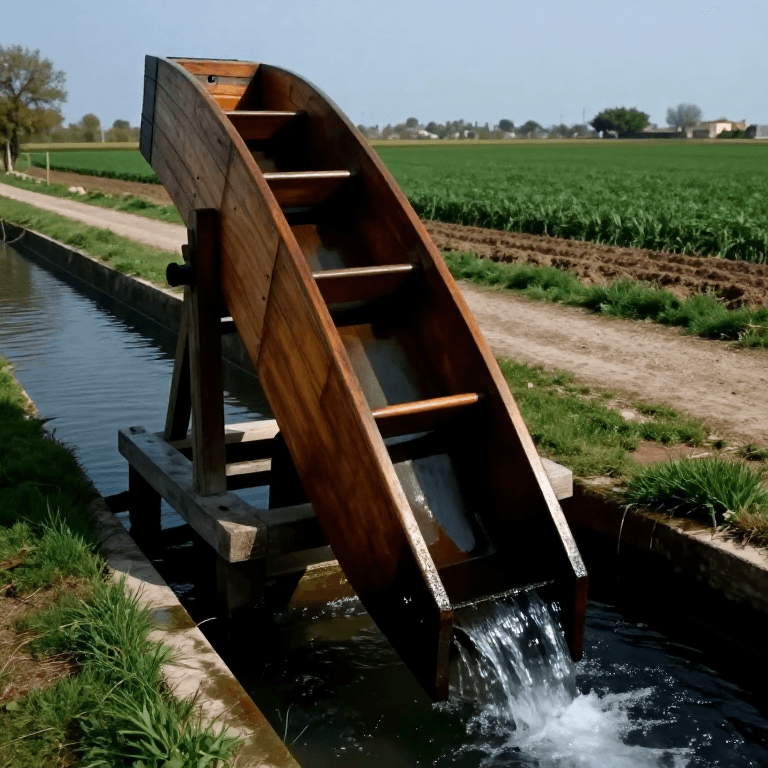
The embedded blueprint turns a spiral to carry water along and up. Koelner's spiral carries dough along the trough and presses it against the end.
3
3
Read US 722,112
Read US 722,112
"My invention relates to improvements in dough-mixers, whereby a construction is provided that is peculiarly well adapted for mixing dough successfully by movements that involve kneading and pressing the dough, and is so constructed that the parts can be readily removed, cleaned, and replaced properly in the mixer".
"It will be understood that when used dough is placed in the receptacle, and by the rotation of the spiral mixer the dough will be turned over and kneaded primarily by the medial round smooth portion 2 and by it and the blade-like parts 3 will be moved toward the end of the receptacle and will be pressed and kneaded against the end of the receptacle until the mass there falls back into the central portion of the receptacle, when the process will be again repeated until the dough shall have been thoroughly and sufficiently mixed."
4
4
Bend a spiral and mix a bread dough
Bend a spiral and mix a bread dough
Wrap stiff stainless steel wire two full turns round a jar a little narrower than the food container. Stretch the coil until it is as long as the container, less 4 cm. At each end, bend the wire in to the centre line as an arm, then out along the centre line as a short axle. Leave one axle long and bend it into a crank. Hammer the last quarter-turn at each end flat.
Drill a hole in the middle of each end of the container, halfway up, for the axles. Spring the spiral in and check it turns without scraping.
Put in 500 g of bread flour, 7 g of instant yeast, 10 g of salt and 330 mL of water. Crank steadily and count the turns for ten minutes. Stretch a small piece: when it thins to a see-through sheet without tearing, it is kneaded. Compare with the same dough kneaded by hand.
Àwọn ohun èlò fún ìgbésẹ̀ yìí:
 Okùn irin aláìjẹrùn1 ẹyọ
 Àpótí ìpamọ́ oúnjẹ tí afẹ́fẹ́ kò wọ̀1 ẹyọ
 Ìyẹ̀fun búrẹ́dì500 g
 Ìwúkàrà kíákíá7 g
 Iyọ̀10 g
 Omi330 ml
Àwọn irinṣẹ́ tí a nílò:
 Ẹ̀rọ ìpò ìyẹ̀fun
 Ẹ̀mú imú gígùn
 Ìdìmú Tábìlì
 Òòlù
Òòlù Ẹ̀rọ Ìlùkòkò Aláìlókùn
 Àkójọ Orí Ìlùkòkò
 Ìdíwọ̀n
 Òṣùwọ̀n Díjítà Ilé Ìdáná
 Aago Ìdúró
5
5
A mixer that jams, scrapes or leaves the dough unkneaded
A mixer that jams, scrapes or leaves the dough unkneaded
Spiral mixer troubleshooting.
Flow
Loading...
6
6
History and honest limits
History and honest limits
**John Koelner** of Louisville, Kentucky, filed US 722,112 on 9 April 1902; it is dated 3 March 1903. His crank turned the spiral through a pinion and a cog-wheel on one hub, and thumb-screws let the spiral be taken out for cleaning.
**Honest limits.** The notebook treats the dough as moving a fixed share of the pitch per turn; real dough sticks, stretches and slips. Sizes, speeds and slip are examples. Your turn count and the stretch test are the measurement.
Àwọn ohun-èlò
6- 1 ẹyọÀyè
- 500 gÀyè
- Àyè
- 10 gÀyè
- 330 mlÀyè
Àwọn irinṣẹ́ tó nílò
9- Àyè
- Àyè
- 1 vendor sell this, none ship to you yetÀyè
- Àyè
- Àyè
Blueprint tó jọra
Àwọn blueprint wọ̀nyí pín ìmọ̀ — ọ̀nà, ohun-èlò tàbí ìlànà



CC0 Àgbègbè Gbogbogbò
Blueprint yìí ti jáde lábẹ́ CC0. O lè ṣe àdàkọ, yí padà, pín, àti lò láìsí ìyọ̀ǹda.
Ṣàtìlẹ́yìn Olùṣẹ́dá nípa rírà àwọn ọjà nipasẹ̀ Blueprint wọn Ẹ̀san Olùṣẹ́dá tí àwọn Olùtajà gbé kalẹ̀, tàbí ṣẹ̀dá àtúnṣe tuntun ti Blueprint yìí kí o sì fi sínú Blueprint rẹ gẹ́gẹ́ bí ìsopọ̀ láti pín owó-wíwọlé.