IṢẸ́ ỌNÀ
ẸWÀ ÀTI ÌLERA
IṢẸ́ ỌWỌ́
ÀṢÀ ÀTI ÌTÀN
ÌṢERÉ
ÀYÍKÁ
OÚNJẸ ÀTI OHUN MÍMU
REVERSE ENGINEERING
SÁYẸ́ǸSÌ
ERÉ ÌDÁRAYÁ
ÌMỌ̀-Ẹ̀RỌ
ÀWỌN OHUN WÍWỌ̀


The Spring-Jaw Bodkin: A Grip That Holds Through Every Gather
A bodkin leads a cord, elastic or ribbon through a hem or casing. As the casing gathers up, the pull grows, and a bodkin that lets go leaves the cord lost inside.
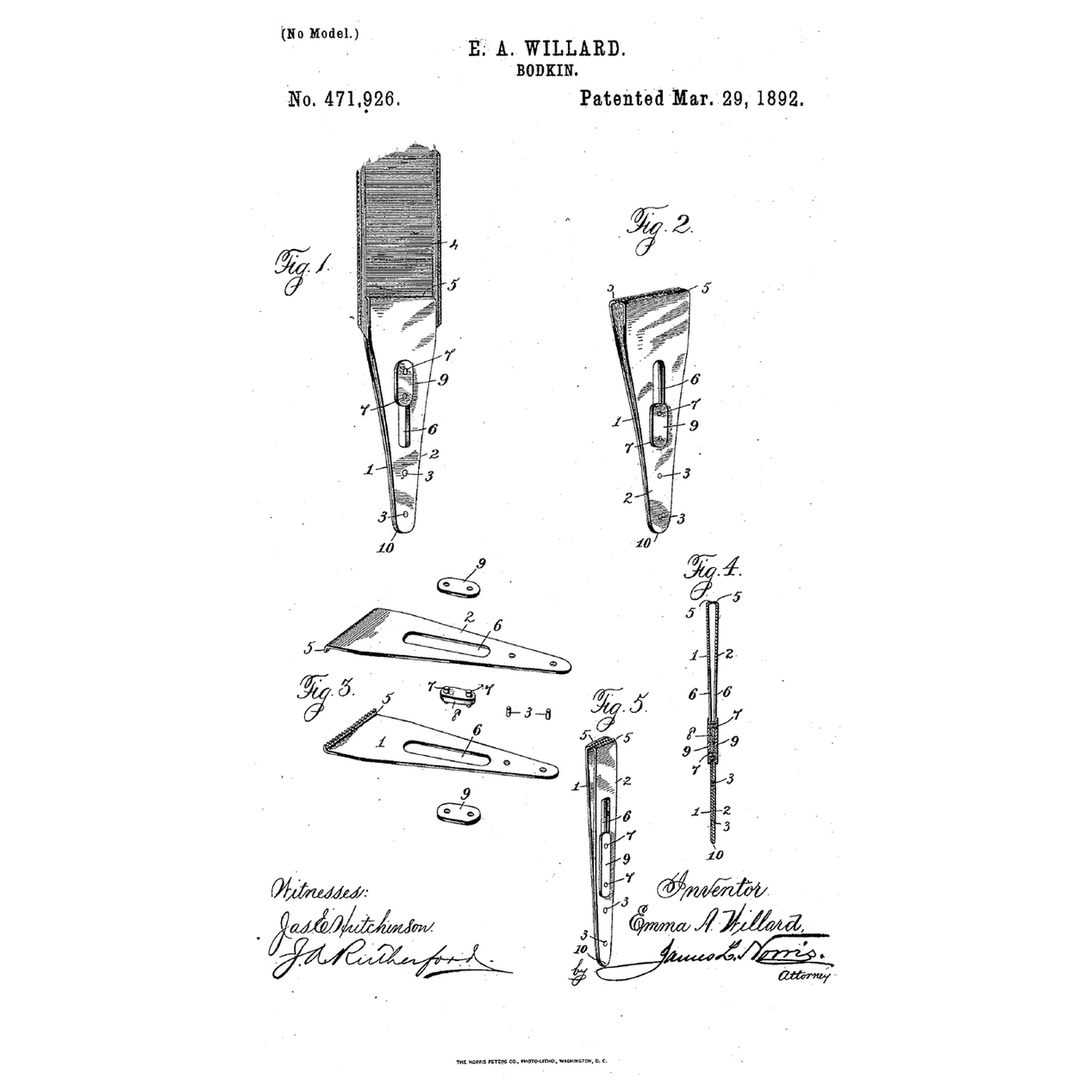
Emma A. Willard of Greenwich, Connecticut, received US 471,926, dated 29 March 1892 (filed 13 October 1891), for a bodkin "having at one extremity a pair of jaws for gripping a cord, tape, or ribbon": two flat elastic plates riveted at the blunt end, spring jaws with toothed flanges, and a slide to close them.
This rung computes how the pull grows with gathers and how hard the jaws must grip, then threads elastic through a casing and measures the pull.
Olùbẹ̀rẹ̀
About 1 hour
Ìlànà
1
1
Gathers, pull and grip
Gathers, pull and grip
Ń ṣí ìwé Jupyter…
2
2
Why the pull grows so fast
Why the pull grows so fast
The embedded blueprint shows friction compounding round a post; every gather in a casing is a small turn round a post.
3
3
Read US 471,926
Read US 471,926
"This invention has for its object to provide a new and improved bodkin of that type having at one extremity a pair of jaws for gripping a cord, tape, or ribbon which is to be inserted, laced, or similarly applied to fancy work or other articles."
Two "flat elastic plates" are riveted together at the penetrating end; the rest of them "constitute a pair of spring-jaws, which by their inherent elasticity spring apart to their open position". Their ends are turned into flanges, "preferably toothed or serrated to afford a more secure gripping action", and a slide moves "in such manner as to release the jaws or to close them upon the cord, tape, or ribbon."
The plates "gradually converge to a blunt penetrating extremity", and are "made of such thin and elastic material as to afford little or no obstruction to the convenient use of the instrument".
4
4
Thread a casing and measure the pull
Thread a casing and measure the pull
Sew a casing along one edge of a strip of cotton fabric by folding it over and stitching, leaving the ends open. Grip a length of elastic cord in the bodkin, tie the far end of the elastic to the force meter, and draw it through.
Read the pull with the casing flat, then gathered up to half its length, then as tight as it will go. Compare how the pull grows with the notebook. Try a ribbon and a round cord, and note which the jaws lose first.
Àwọn ohun èlò fún ìgbésẹ̀ yìí:
 Aṣọ òwú (fúyẹ́)1 ẹyọ
 Okùn rọ́bà1 ẹyọ
 Tééṣì grosgrain1 ẹyọ
 Òwú ìránṣọ1 ẹyọ
Àwọn irinṣẹ́ tí a nílò:
 Bodkin
 Abẹ́rẹ́ ìránṣọ
 Ẹ̀rọ Ìwọ̀n Agbára (Òṣùwọ̀n Ìsúnkì)
 Ìkẹ́rẹ́ aṣọ
5
5
A bodkin that lets go or sticks
A bodkin that lets go or sticks
Bodkin troubleshooting.
Flow
Loading...
6
6
History and honest limits
History and honest limits
**Emma A. Willard** of Greenwich, Fairfield County, Connecticut, filed US 471,926 on 13 October 1891; it is dated 29 March 1892. She contrasts it with bodkins whose jaws telescope into the body and need a separate lock.
**Honest limits.** The capstan rule assumes each gather is a clean bend with one friction coefficient; real casings are softer and uneven. Friction and wrap are examples. Your force readings are the measurement.
Àwọn ohun-èlò
4- 1 ẹyọÀyè
- 1 ẹyọÀyè
- 1 ẹyọÀyè
- 1 ẹyọÀyè
Àwọn irinṣẹ́ tó nílò
4- Àyè
- Àyè
Blueprint tó jọra
Àwọn blueprint wọ̀nyí pín ìmọ̀ — ọ̀nà, ohun-èlò tàbí ìlànà
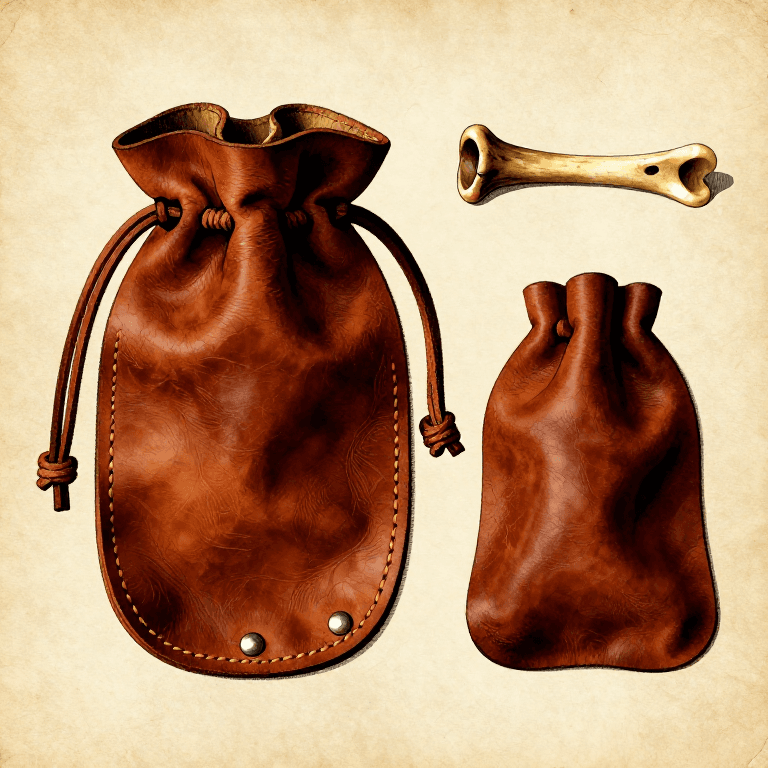

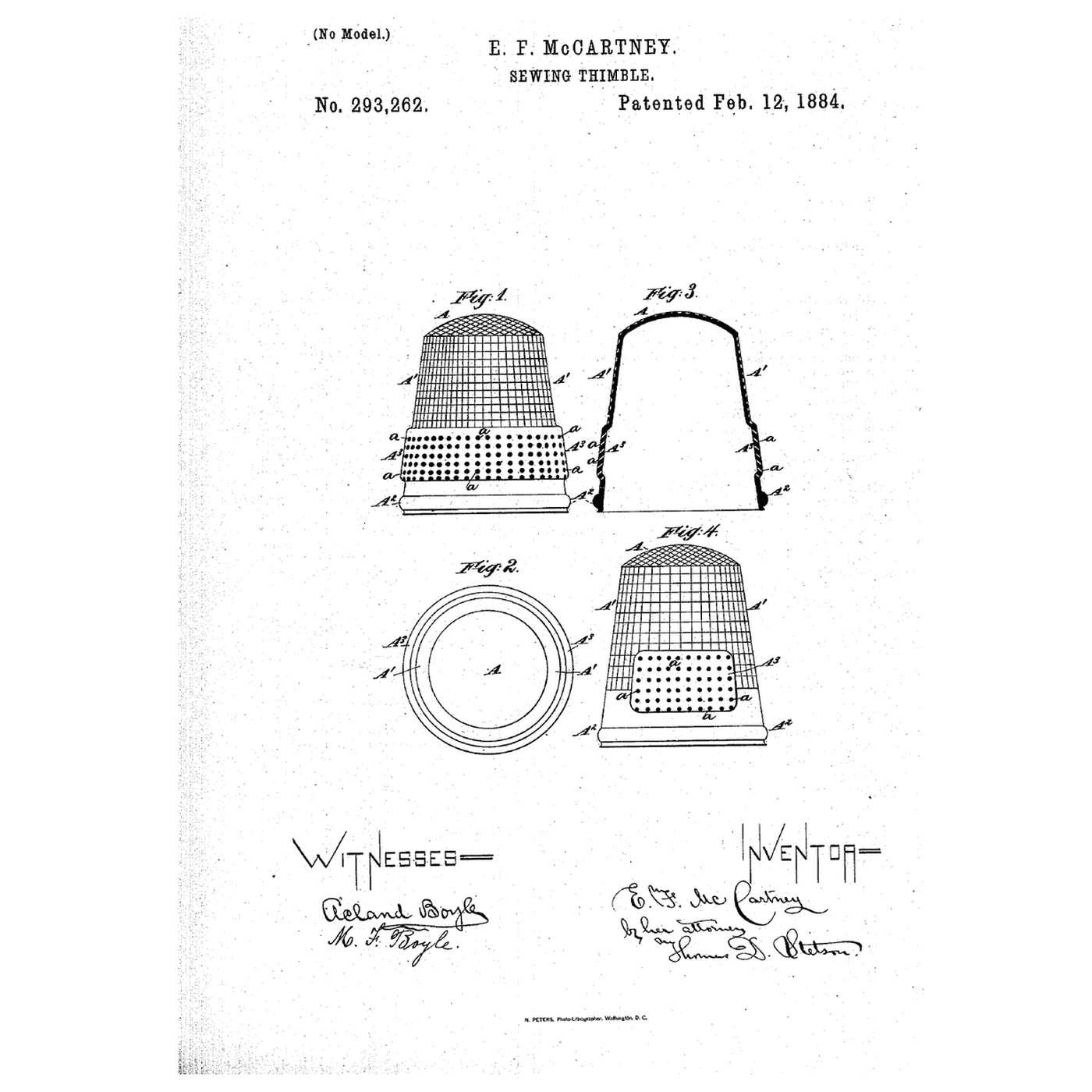

CC0 Àgbègbè Gbogbogbò
Blueprint yìí ti jáde lábẹ́ CC0. O lè ṣe àdàkọ, yí padà, pín, àti lò láìsí ìyọ̀ǹda.
Ṣàtìlẹ́yìn Olùṣẹ́dá nípa rírà àwọn ọjà nipasẹ̀ Blueprint wọn Ẹ̀san Olùṣẹ́dá tí àwọn Olùtajà gbé kalẹ̀, tàbí ṣẹ̀dá àtúnṣe tuntun ti Blueprint yìí kí o sì fi sínú Blueprint rẹ gẹ́gẹ́ bí ìsopọ̀ láti pín owó-wíwọlé.