IṢẸ́ ỌNÀ
ẸWÀ ÀTI ÌLERA
IṢẸ́ ỌWỌ́
ÀṢÀ ÀTI ÌTÀN
ÌṢERÉ
ÀYÍKÁ
OÚNJẸ ÀTI OHUN MÍMU
REVERSE ENGINEERING
SÁYẸ́ǸSÌ
ERÉ ÌDÁRAYÁ
ÌMỌ̀-Ẹ̀RỌ
ÀWỌN OHUN WÍWỌ̀


The Squeeze-Bottle Inkstand: Press the Rubber, Fill the Cup
An open inkwell dries out, lets the pen go too deep, and spills if it is packed for a journey.
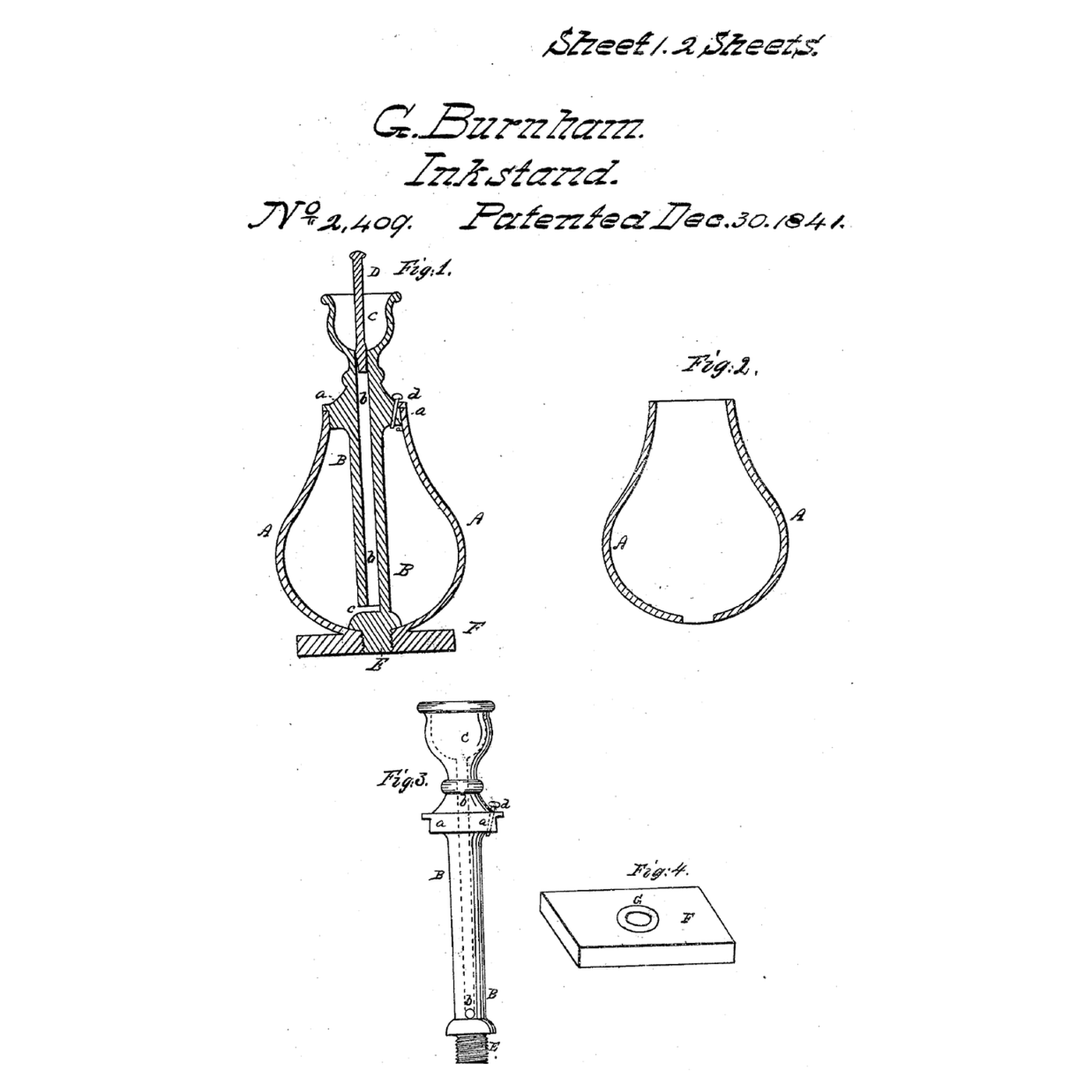
George Burnham of Philadelphia received US 2,409, dated 30 December 1841, for inkstands whose body is "a vessel or bottle of caoutchouc or india-rubber": a tubular shaft passes through the bottle and ends in a cup, and "by pressing the bottle, the required quantity of ink may be forced up into the cup C and retained there by means of the stopper; and by removing this stopper it will instantly descend into the bottle." With the stopper in, the inkstand "may be put into a trunk, and packed among clothes with perfect safety."
This rung works out the squeeze needed, then builds the inkstand from a rubber bulb, a tube and a cup, and weighs its ink against an open well for a week.
Olùbẹ̀rẹ̀
About 2 hours, then a week of weighing
Ìlànà
1
1
Squeeze pressure and volume
Squeeze pressure and volume
Ń ṣí ìwé Jupyter…
2
2
The ink it holds
The ink it holds
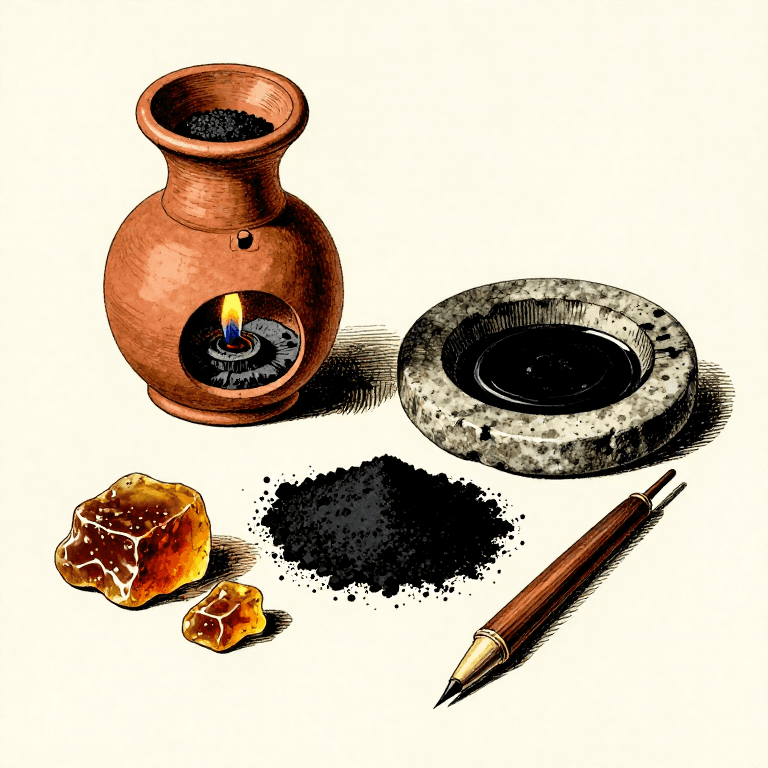
The embedded blueprint makes carbon ink, which thickens as its water evaporates. Burnham's rubber bottle keeps all but the cupful out of the air.
3
3
Read US 2,409
Read US 2,409
"A, A, is a common india rubber bottle, which composes the body or reservoir, of the inkstand, and which is shown separately in Fig. 2. Through this bottle passes a shaft of metal, wood, ivory, horn, or other suitable substance, which is tubular through the greater part of its length, and has at its upper end a cup into which the ink contained in the bottle may be forced whenever it may be required."
"It will be seen that by this arrangement the ink will be effectually preserved from evaporation, and from exposure to the air, excepting in the small quantity contained in the cup; its depth in this may be readily regulated, so that there shall not be any danger of dipping the pen too deeply in it."
4
4
Build the inkstand and test it
Build the inkstand and test it
**Shaft.** Cut 12 cm of 3/8" brass tube. Drill a 3 mm hole through its wall 1 cm from one end: the side opening the ink enters by.
**Bottle.** Push the drilled end of the tube down through the neck of the rubber bulb until it nearly touches the bottom, and seal the neck round the tube with epoxy. Drill a hardwood block, set the bulb in it as a foot, and glue it.
**Cup.** Epoxy a PVC reducer from the fittings assortment on the tube's top as the cup. Cut a cork to plug the tube's upper end inside the cup.
**Test.** With the cork out, squeeze the bulb, dip the tube end in ink and let the bulb draw it in; repeat until full. Squeeze until the cup holds ink, then put the cork in: the ink stays. Pull the cork: it drops back. Turn the stand on its side for a minute with the cork in and check for leaks. Then weigh it and an open jar of ink every day for a week.
Àwọn ohun èlò fún ìgbésẹ̀ yìí:
 Àpò rọ́bà 60 ml1 ẹyọ
 Ọ̀pá idẹ tí ìwọ̀n àyíká òde rẹ̀ jẹ́ 9,5 mm0.12 mítà
 Àkójọpọ̀ Ìsopọ̀ Páìpù PVC1 ẹyọ
 Àwọn kọ́ọ̀kì1 ẹyọ
 Resini epoxy5 ml
 Ìṣù Igi Líle1 ẹyọ
 Tintà ìkọ̀wé60 ml
 Ìgò Gílásì1 ẹyọ
Àwọn irinṣẹ́ tí a nílò:
 Ayùn Irin
 Ẹ̀rọ Ìlùkòkò Aláìlókùn
 Àkójọ Orí Ìlùkòkò
 Àwọn Ìfá (Ìfá Ọwọ́)
 Ọ̀bẹ Iṣẹ́ Ọwọ́
 Òṣùwọ̀n Díjítà Ilé Ìdáná
 Ìdíwọ̀n
 Ìdìpọ̀ kálámù ìkọ̀wé ẹlẹ́wà
5
5
An inkstand that leaks, will not rise or will not fall back
An inkstand that leaks, will not rise or will not fall back
Squeeze-bottle inkstand troubleshooting.
Flow
Loading...
6
6
History and honest limits
History and honest limits
**George Burnham** of Philadelphia received US 2,409, dated 30 December 1841, for the construction of inkstands. His shaft screwed into a foot through a hole in the bottle's bottom, a sliding cover could close the cup for travelling, a small cock could replace the stopper, and an air hole in the shaft's enlarged neck helped filling. His claim is the elastic bottle with the tubular shaft and cup.
**Honest limits.** A rubber bulb, brass tube and PVC reducer stand in for his rubber bottle, shaft and cup, and epoxy for his tight fit. The notebook takes ink as dense as water; its sizes are examples. Your weighings are the result.
Àwọn ohun-èlò
8- 1 ẹyọÀyè
- Àyè
- Àyè
- 1 ẹyọÀyè
- 5 mlÀyè
- 1 ẹyọÀyè
- 60 mlÀyè
- 1 ẹyọÀyè
Àwọn irinṣẹ́ tó nílò
8- Àyè
- 1 vendor sell this, none ship to you yetÀyè
- Àyè
Blueprint tó jọra
Àwọn blueprint wọ̀nyí pín ìmọ̀ — ọ̀nà, ohun-èlò tàbí ìlànà

CC0 Àgbègbè Gbogbogbò
Blueprint yìí ti jáde lábẹ́ CC0. O lè ṣe àdàkọ, yí padà, pín, àti lò láìsí ìyọ̀ǹda.
Ṣàtìlẹ́yìn Olùṣẹ́dá nípa rírà àwọn ọjà nipasẹ̀ Blueprint wọn Ẹ̀san Olùṣẹ́dá tí àwọn Olùtajà gbé kalẹ̀, tàbí ṣẹ̀dá àtúnṣe tuntun ti Blueprint yìí kí o sì fi sínú Blueprint rẹ gẹ́gẹ́ bí ìsopọ̀ láti pín owó-wíwọlé.