IṢẸ́ ỌNÀ
ẸWÀ ÀTI ÌLERA
IṢẸ́ ỌWỌ́
ÀṢÀ ÀTI ÌTÀN
ÌṢERÉ
ÀYÍKÁ
OÚNJẸ ÀTI OHUN MÍMU
REVERSE ENGINEERING
SÁYẸ́ǸSÌ
ERÉ ÌDÁRAYÁ
ÌMỌ̀-Ẹ̀RỌ
ÀWỌN OHUN WÍWỌ̀
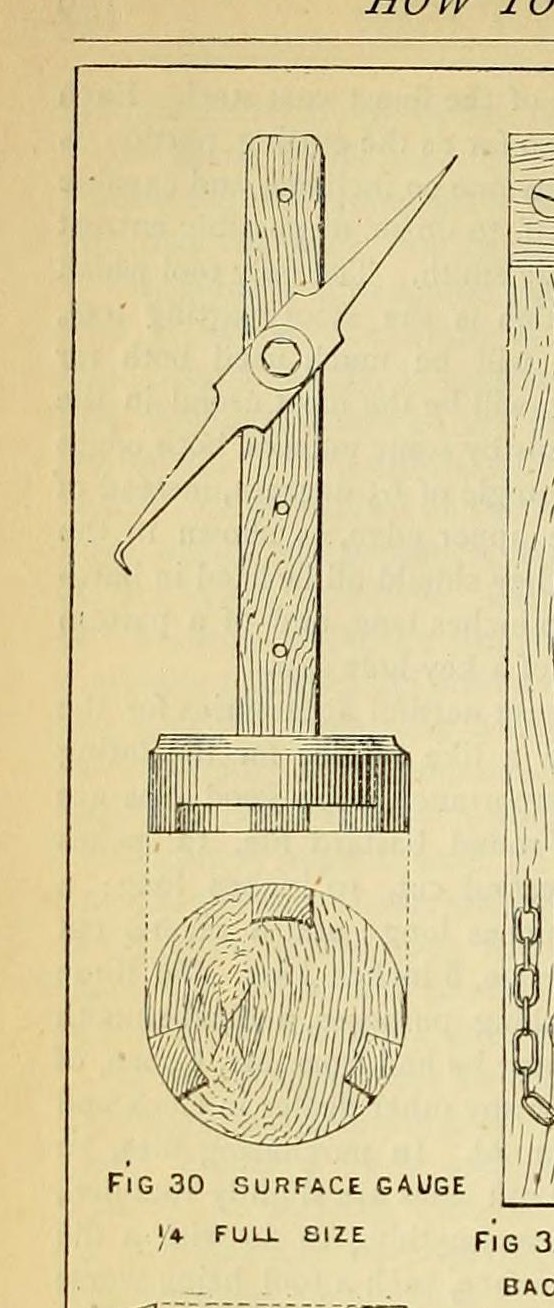


Double-Ended Scriber from a Worn Saw File: Annealed in Lime, Filed Round in a Grooved Block, Points Hardened (Thompson, Amateur Work)
The marking scriber Richard Thompson made for his surface gauge in Amateur Work: 1/8 in. steel or a worn-out saw file, drilled in the middle, pointed at both ends with one end bent, annealed by burying it red-hot in lime, filed round while turned in a grooved hardwood block, and the points hardened.
Olùbẹ̀rẹ̀
Two hours
Ìlànà
1
1
Read Thompson
Read Thompson
"A worn-out saw file will answer very well, with a hole drilled through the centre to fit the bolt and pointed at each end, one of which is bent."
2
2
Rough the shape
Rough the shape
Forge a flat piece of steel about 1/8 in. (3 mm) thick, or a worn-out saw file, roughly to shape: pointed at both ends, one end bent into a short hook (his fig. 30).
Àwọn ohun èlò fún ìgbésẹ̀ yìí:
 Pátákó pẹ̀tẹ́lẹ̀ ti irin ohun èlò1 ẹyọ
Àwọn irinṣẹ́ tí a nílò:
 Ìléru alágbẹ̀dẹ
 Ìdí Alágbẹ̀dẹ
 Òòlù
 Ẹmú alágbẹ̀dẹ
3
3
Anneal in lime
Anneal in lime
Heat it gently to a dull red and bury it in lime to cool slowly: it is then easy to file.
Àwọn ohun èlò fún ìgbésẹ̀ yìí:
 Ẹ̀fun Pípa (Calcium Hydroxide)1 ẹyọ
Àwọn irinṣẹ́ tí a nílò:
Ìléru alágbẹ̀dẹẸmú alágbẹ̀dẹ4
4
Drill and flatten
Drill and flatten
Drill a hole through the middle to fit the mounting bolt and file the flat part to an even thickness for about 1/2 in. each side of the hole.
Àwọn irinṣẹ́ tí a nílò:
 Ẹ̀rọ Ìlùkòkò Onídúró
 Ìdìmú Tábìlì
 Àwọn Ìfá (Ìfá Ọwọ́)
5
5
File it round
File it round
Cut a groove along the end of a hardwood block about 3 x 2 x 1/2 in., held end up in the vice. Lay the scriber in the groove, turn it slowly toward you with the left hand and file it round with the right. File the points quite sharp.
Àwọn ohun èlò fún ìgbésẹ̀ yìí:
 Pátákó Igi Líle1 ẹyọ
Àwọn irinṣẹ́ tí a nílò:
 Ayùn Ọwọ́Ìdìmú TábìlìÀwọn Ìfá (Ìfá Ọwọ́)
6
6
Harden the points
Harden the points
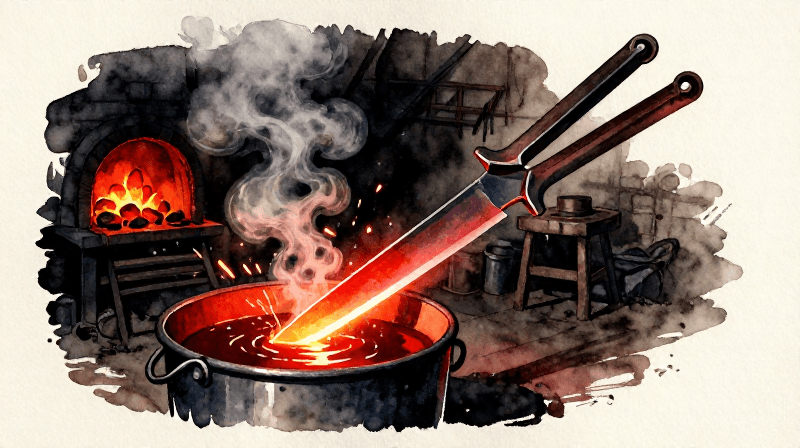
Harden the points (he gives no method; ours: heat the tips to a bright red and quench in water), then touch them up on an oilstone.
Àwọn irinṣẹ́ tí a nílò:
Ìléru alágbẹ̀dẹ Àpótí ìtutù
 Òkúta ìpọ́n
7
7
Troubleshooting
Troubleshooting
Scriber troubleshooting.
Flow
Loading...
8
8
History and honest limits
History and honest limits
From Richard Thompson, "How to Construct a Compound Microscope" III, **Amateur Work, Illustrated**, vol. III, p. 198 and fig. 30 (checked on the archive.org scan amateurworkillus03lond). He mounts the scriber on a mahogany surface gauge with three brass washers 3/4 in. across and 1/16 in. thick. The hardening method, metric figures and tools are ours.
Àwọn ohun-èlò
3- Àyè
- 1 ẹyọÀyè
Àwọn irinṣẹ́ tó nílò
10- Àyè
- Àyè
- Àyè
- Àyè
- Àyè
Ìtọ́nisọ́nà yìí ń ṣe

Blueprint tó jọra
Àwọn blueprint wọ̀nyí pín ìmọ̀ — ọ̀nà, ohun-èlò tàbí ìlànà
CC0 Àgbègbè Gbogbogbò
Blueprint yìí ti jáde lábẹ́ CC0. O lè ṣe àdàkọ, yí padà, pín, àti lò láìsí ìyọ̀ǹda.
Ṣàtìlẹ́yìn Olùṣẹ́dá nípa rírà àwọn ọjà nipasẹ̀ Blueprint wọn Ẹ̀san Olùṣẹ́dá tí àwọn Olùtajà gbé kalẹ̀, tàbí ṣẹ̀dá àtúnṣe tuntun ti Blueprint yìí kí o sì fi sínú Blueprint rẹ gẹ́gẹ́ bí ìsopọ̀ láti pín owó-wíwọlé.