IṢẸ́ ỌNÀ
ẸWÀ ÀTI ÌLERA
IṢẸ́ ỌWỌ́
ÀṢÀ ÀTI ÌTÀN
ÌṢERÉ
ÀYÍKÁ
OÚNJẸ ÀTI OHUN MÍMU
REVERSE ENGINEERING
SÁYẸ́ǸSÌ
ERÉ ÌDÁRAYÁ
ÌMỌ̀-Ẹ̀RỌ
ÀWỌN OHUN WÍWỌ̀
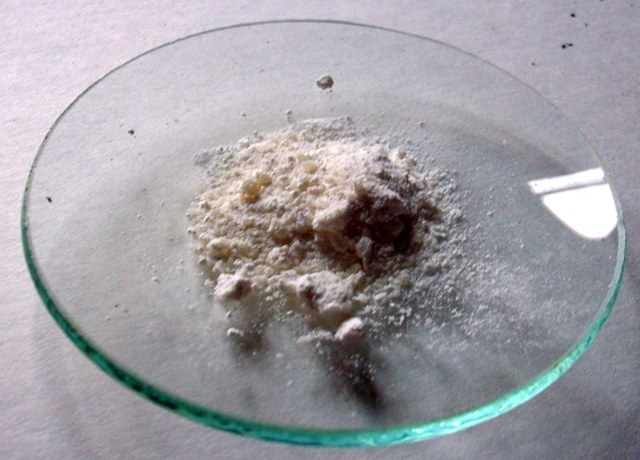


Tin Oxide: Tin Burnt in an Open Iron Pot
Tin oxide is made by burning tin in air: melted tin in an open pot slowly turns to a white powder. Andrew Ure (1839) describes the enamel makers' way, with a lead-tin alloy in a flat iron pot, the powder raked aside as it forms, then ground and washed fine. Done with pure tin it gives the milky white oxide used in glazes, opal glass and polishing.
The picture: tin(IV) oxide powder on a watch glass.
Àárín
A day
Ìlànà
1
1
Melt the tin in an open pot
Melt the tin in an open pot
Melt the tin in a flat cast-iron pot over a charcoal fire. Leave the pot open to the air.
Àwọn ohun èlò fún ìgbésẹ̀ yìí:
 Ìdì tin1 kg
 Èédú1 as required
Àwọn irinṣẹ́ tí a nílò:
 Òǹwọ̀n ìdọ́gba
 Ìkòkò ìyọ́ ti irin ìdà
 Ààrò Èédú
 Ẹ̀mú
 Ìbọ̀wọ́ Tí Ń Fara Da Ooru
2
2
Burn it, rake the powder aside
Burn it, rake the powder aside
Raise the heat towards a dull red and keep stirring the surface. Rake the white crust to the sides as it forms, as Ure describes, and add tin as it is used up. Keep the heat as low as will do: Ure warns that too strong a fire fuses the powder and makes it hard to grind.
Àwọn irinṣẹ́ tí a nílò:
Ìkòkò ìyọ́ ti irin ìdà Ọkọ́-ìgé irin
 Ṣíbí oníhòÌbọ̀wọ́ Tí Ń Fara Da Ooru
3
3
Pick out the metal
Pick out the metal
Let the powder cool. Sift it and pick out any beads of tin; Ure: no metal may be left in the oxide. Melt the beads back in.
Àwọn irinṣẹ́ tí a nílò:
 Ohun Ìsẹ́ Kékeré
 Gílásì Ààbò Fún Ìfọ́n Kẹ́míkà
4
4
Grind and wash
Grind and wash
Grind the powder fine with water. Stir it up in a bucket of water, let the coarse part settle for a moment and pour off the milky water; let the fine part settle out of that, as Ure washed his. Dry it in a dish and store it closed.
Àwọn ohun èlò fún ìgbésẹ̀ yìí:
 Omi10 lítà
Àwọn irinṣẹ́ tí a nílò:
 Odó àti Ọmọ Odó
 Ọmọ ọlọ
 Bàkẹ́ẹ̀tì
 Àwo Ìgbẹ
 Ìgò Gílásì
5
5
Tin to oxide
Tin to oxide
Ń ṣí ìwé Jupyter…
6
6
Limits
Limits
Burning tin in air is how tin oxide is made (Wikipedia); the pot, raking, low heat and washing are Ure's practice for the lead-tin calx of enamel makers, used here with pure tin by our choice. Tin oxidises more slowly than Ure's lead-rich alloy, so allow time.
Ìtọ́nisọ́nà yìí ń ṣe
CC0 Àgbègbè Gbogbogbò
Blueprint yìí ti jáde lábẹ́ CC0. O lè ṣe àdàkọ, yí padà, pín, àti lò láìsí ìyọ̀ǹda.
Ṣàtìlẹ́yìn Olùṣẹ́dá nípa rírà àwọn ọjà nipasẹ̀ Blueprint wọn Ẹ̀san Olùṣẹ́dá tí àwọn Olùtajà gbé kalẹ̀, tàbí ṣẹ̀dá àtúnṣe tuntun ti Blueprint yìí kí o sì fi sínú Blueprint rẹ gẹ́gẹ́ bí ìsopọ̀ láti pín owó-wíwọlé.