IṢẸ́ ỌNÀ
ẸWÀ ÀTI ÌLERA
IṢẸ́ ỌWỌ́
ÀṢÀ ÀTI ÌTÀN
ÌṢERÉ
ÀYÍKÁ
OÚNJẸ ÀTI OHUN MÍMU
REVERSE ENGINEERING
SÁYẸ́ǸSÌ
ERÉ ÌDÁRAYÁ
ÌMỌ̀-Ẹ̀RỌ
ÀWỌN OHUN WÍWỌ̀
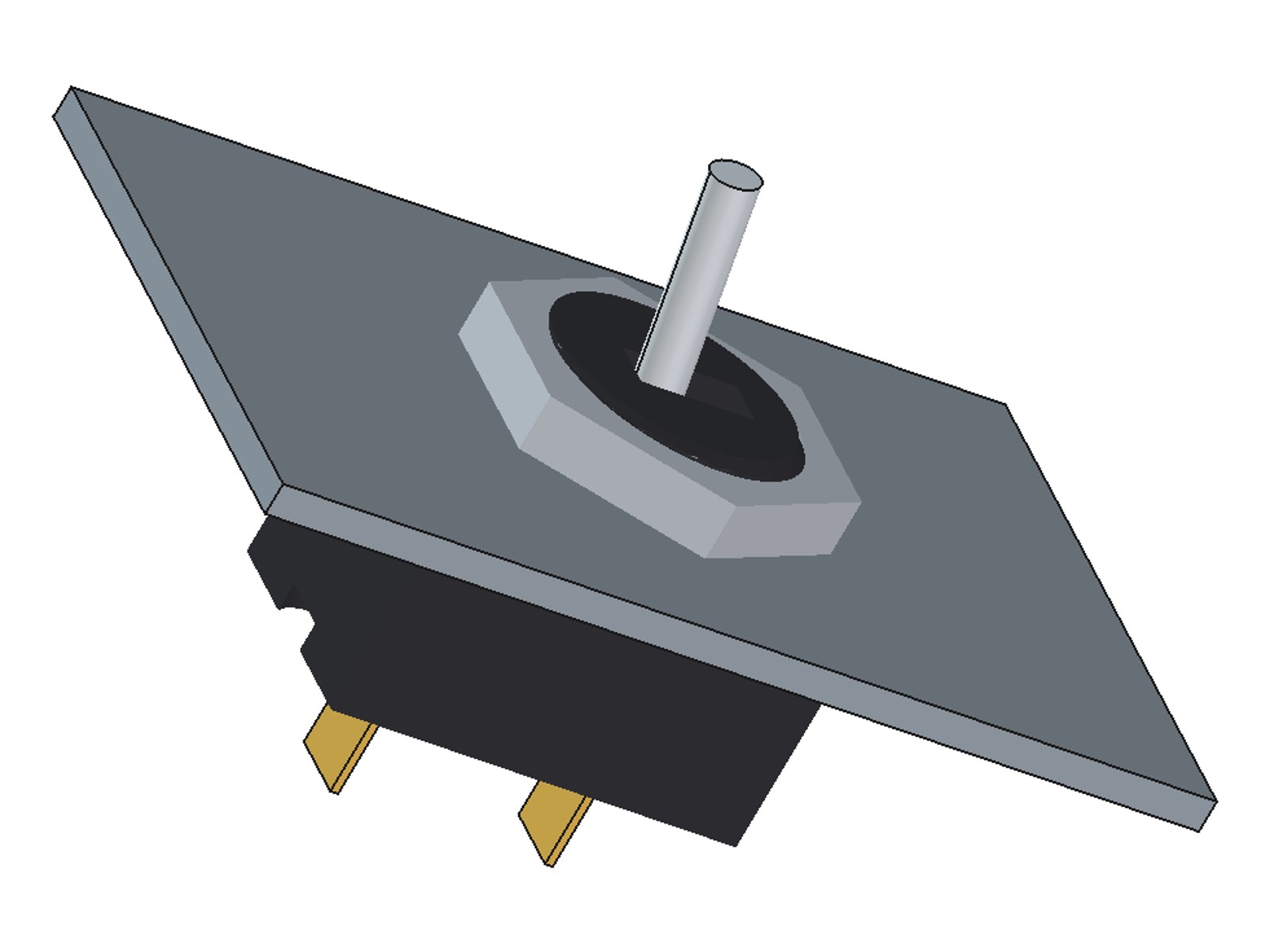


Toggle Switch for Low Voltage: a Spring-Loaded Ball Contact in a Printed Panel Body (after Batcheller, 1932)
An on-off panel toggle switch for low-voltage projects. A spring pushes a steel ball down onto two brass strips: tilt the lever one way and the ball drops into the gap between them and joins them; tilt it back and it rests in a small hole on one strip. Hugh Batcheller's 1932 design, with a printed body that bolts through a panel with a nut. Low voltage only.
Àárín
About 4 hours, mostly printing
Ìlànà
1
1
How a toggle switch works
How a toggle switch works
A toggle switch opened up to show its contacts (Ephraim Nowak). Ours uses a rolling steel ball as the moving contact.
2
2
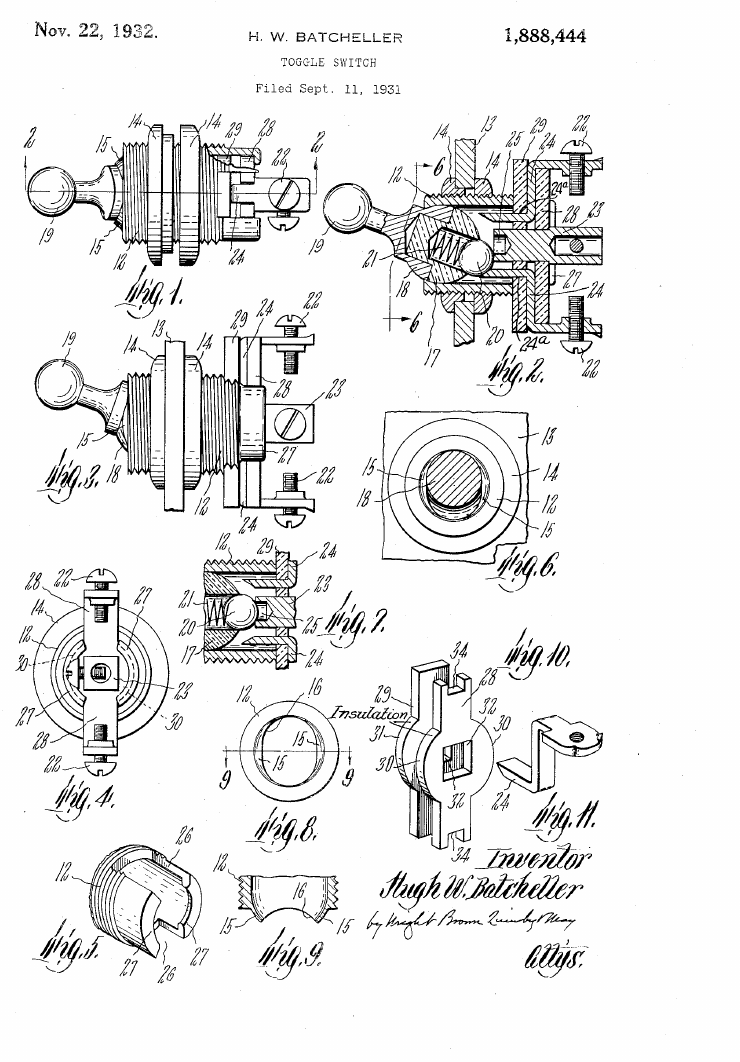
Batcheller's toggle switch, 1932
Batcheller's toggle switch, 1932
US 1,888,444: the hand piece turns on a ball seat in the threaded end of the casing, its handle in an oblong slot. A metal ball, pushed out by a spring, bridges two terminals when ON and touches only the inner one when OFF, where a detent holds it. The ball rolls as it moves, so it wears less in one spot.
3
3
Where the contact ball touches
Where the contact ball touches
Ń ṣí ìwé Jupyter…
4
4
Print the body
Print the body
Neck up, no supports, PETG, 0.12 mm layers for the thread, 100 % infill. The ball seat is inside the neck.
Àwọn ohun èlò fún ìgbésẹ̀ yìí:
 Okùn PETG6 g
Àwọn irinṣẹ́ tí a nílò:
 Ẹ̀rọ ìtẹ̀ 3D oníwàyà (FDM)
5
5
Print the hand piece
Print the hand piece
Ball up, stem on the bed, 0.12 mm layers, 100 % infill.
Àwọn ohun èlò fún ìgbésẹ̀ yìí:
Okùn PETG2 gÀwọn irinṣẹ́ tí a nílò:
Ẹ̀rọ ìtẹ̀ 3D oníwàyà (FDM)6
6
Print the base
Print the base
Flat, pockets up. The two pockets take the brass terminals; the slots take their tails.
Àwọn ohun èlò fún ìgbésẹ̀ yìí:
Okùn PETG2 gÀwọn irinṣẹ́ tí a nílò:
Ẹ̀rọ ìtẹ̀ 3D oníwàyà (FDM)7
7
Print the panel nut
Print the panel nut
Flat, 0.12 mm layers. Try it on the neck: it should turn by hand.
Àwọn ohun èlò fún ìgbésẹ̀ yìí:
Okùn PETG1 gÀwọn irinṣẹ́ tí a nílò:
Ẹ̀rọ ìtẹ̀ 3D oníwàyà (FDM)8
8
Change the switch (optional)
Change the switch (optional)
The FreeCAD script that made the parts; change sizes and run: OUT=. freecadcmd build_all.py
build_all.pypython
Àwọn irinṣẹ́ tí a nílò:
 Òṣùwọ̀n Kálípà Díjítà Ìnṣì 6
9
9
Print the terminal template
Print the terminal template
Print at 100 % and check the 50 x 10 mm box. Glue it to the brass sheet.
10
10
Cut the brass terminals
Cut the brass terminals
Cut the two strips from 0.5 mm brass (15.1 x 5 and 11.1 x 5 mm), file the edges smooth, drill the 2 mm detent hole in the long one and bend both tails 90 degrees on the dashed lines.
Àwọn ohun èlò fún ìgbésẹ̀ yìí:
 Pẹlẹbẹ Bronse1 piece (0.5 mm, 20 x 30 mm)
Àwọn irinṣẹ́ tí a nílò:
 Ìlàǹkàn irin
 Ìfá Irin
 Àkójọ Orí Ìlùkòkò
 Ẹmú Ẹnu Pẹrẹsẹ
11
11
Assemble
Assemble
Cut 22 mm of 3 mm rod and press it into the hand piece's top hole: the lever. Push the hand piece up into the body so the lever comes out of the slot. Lay each strip in the pocket it fits (the long one with the hole in the long pocket), tails through the slots. Turn the body over, drop a spring and then the 4 mm ball into the stem's bore, put the base on (it fits only one way round) and fix it with 2 x M3 x 12. Solder a wire to each tail.
Àwọn ohun èlò fún ìgbésẹ̀ yìí:
 Ọ̀pá irin tí kò ń yá1 piece (3 mm x 22 mm)
 Àkójọ Ìsúnkì Ìtẹ̀1 piece (about 4 mm diameter, 10 mm long)
 Àwọn bearing bọ́ọ̀lù irin1 piece (4 mm)
 Ìṣọ Onípọ̀n Orí Sokẹ́ẹ̀tì2 piece (M3 x 12)
 Okun waya ìsopọ̀0.3 m
 Wáyà Sọ́ldà1 g
Àwọn irinṣẹ́ tí a nílò:
 Ayùn Irin
 Ìdìpọ̀ kọ́kọ́rọ́ igun mẹ́fà
 Irin ìsúdì
12
12
Fit and test it
Fit and test it
Drill a 16.5 mm hole in the panel (up to 2 mm thick), put the neck through and screw on the nut. With a multimeter: ON shows about 0 ohm between the two wires, OFF shows open.
Àwọn irinṣẹ́ tí a nílò:
Àkójọ Orí Ìlùkòkò Òǹwọ̀n iná mànàmáná onírúurú
13
13
Troubleshooting
Troubleshooting
Switch problems and fixes.
Flow
Loading...
14
14
History and honest limits
History and honest limits
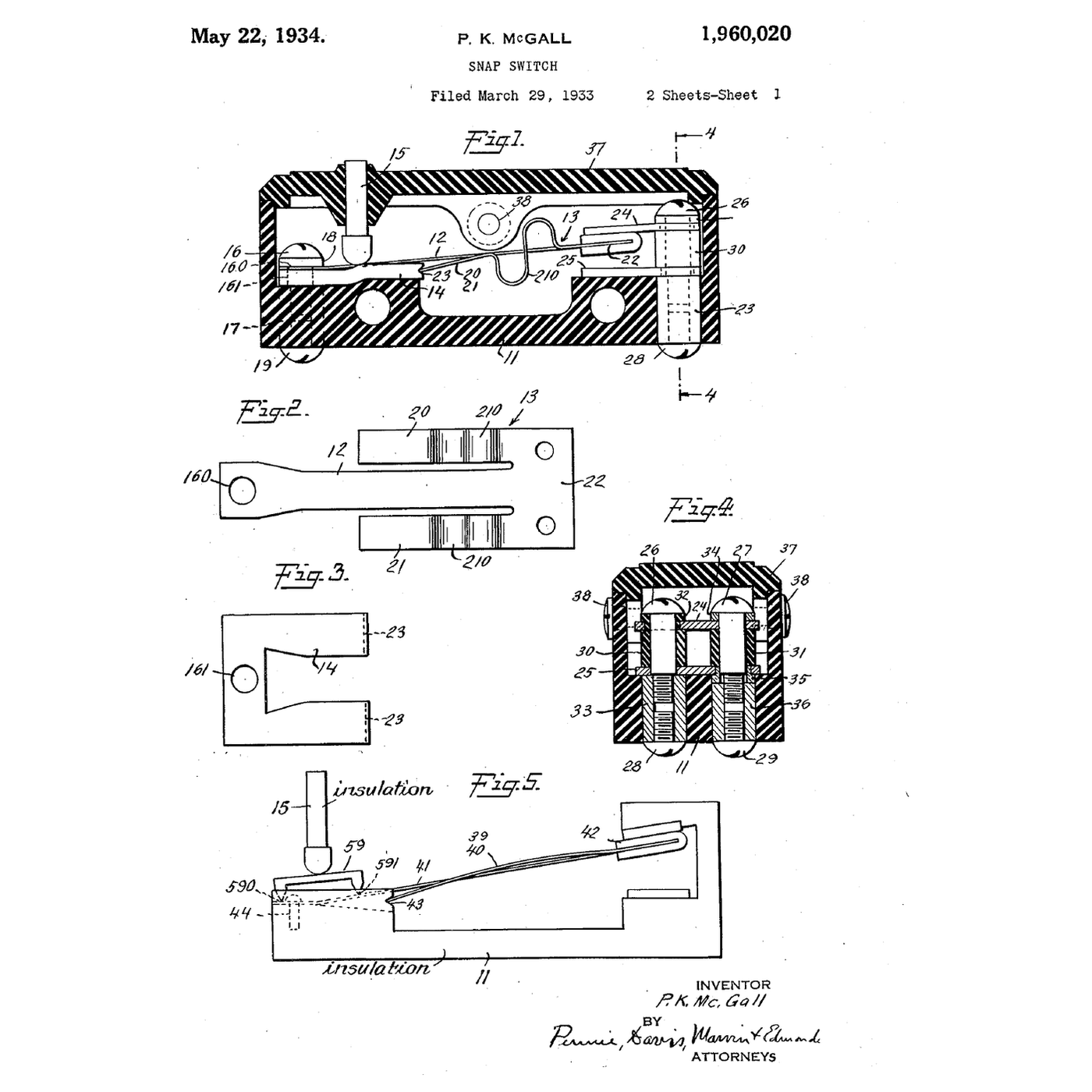
Hugh W. Batcheller, Worcester, Mass.: US 1,888,444, "Toggle Switch", filed 11 Sept 1931, granted 22 Nov 1932. His casing was a metal tube with crimped ears holding insulators; ours is printed. Ours: every size and the printed parts. Use it for low voltage only (batteries, 5-12 V supplies): never for mains. Its current rating has not been tested. Not built or tested by us yet.
Àwọn ohun-èlò
8- 11 gÀyè
- 1 piece (0.5 mm, 20 x 30 mm)Àyè
- 1 piece (3 mm x 22 mm)Àyè
- 1 piece (about 4 mm diameter, 10 mm long)Àyè
- 1 piece (4 mm)Àyè
- 2 piece (M3 x 12)Àyè
- 0.3 mÀyè
- 1 gÀyè
Àwọn irinṣẹ́ tó nílò
10- Àyè
- Àyè
- Àyè
- 2 vendors sell this, none ship to you yetÀyè
Àwọn fáìlì àpẹrẹ
5Ìtọ́nisọ́nà yìí ń ṣe

Blueprint tó jọra
Àwọn blueprint wọ̀nyí pín ìmọ̀ — ọ̀nà, ohun-èlò tàbí ìlànà

CC0 Àgbègbè Gbogbogbò
Blueprint yìí ti jáde lábẹ́ CC0. O lè ṣe àdàkọ, yí padà, pín, àti lò láìsí ìyọ̀ǹda.
Ṣàtìlẹ́yìn Olùṣẹ́dá nípa rírà àwọn ọjà nipasẹ̀ Blueprint wọn Ẹ̀san Olùṣẹ́dá tí àwọn Olùtajà gbé kalẹ̀, tàbí ṣẹ̀dá àtúnṣe tuntun ti Blueprint yìí kí o sì fi sínú Blueprint rẹ gẹ́gẹ́ bí ìsopọ̀ láti pín owó-wíwọlé.