IṢẸ́ ỌNÀ
ẸWÀ ÀTI ÌLERA
IṢẸ́ ỌWỌ́
ÀṢÀ ÀTI ÌTÀN
ÌṢERÉ
ÀYÍKÁ
OÚNJẸ ÀTI OHUN MÍMU
REVERSE ENGINEERING
SÁYẸ́ǸSÌ
ERÉ ÌDÁRAYÁ
ÌMỌ̀-Ẹ̀RỌ
ÀWỌN OHUN WÍWỌ̀
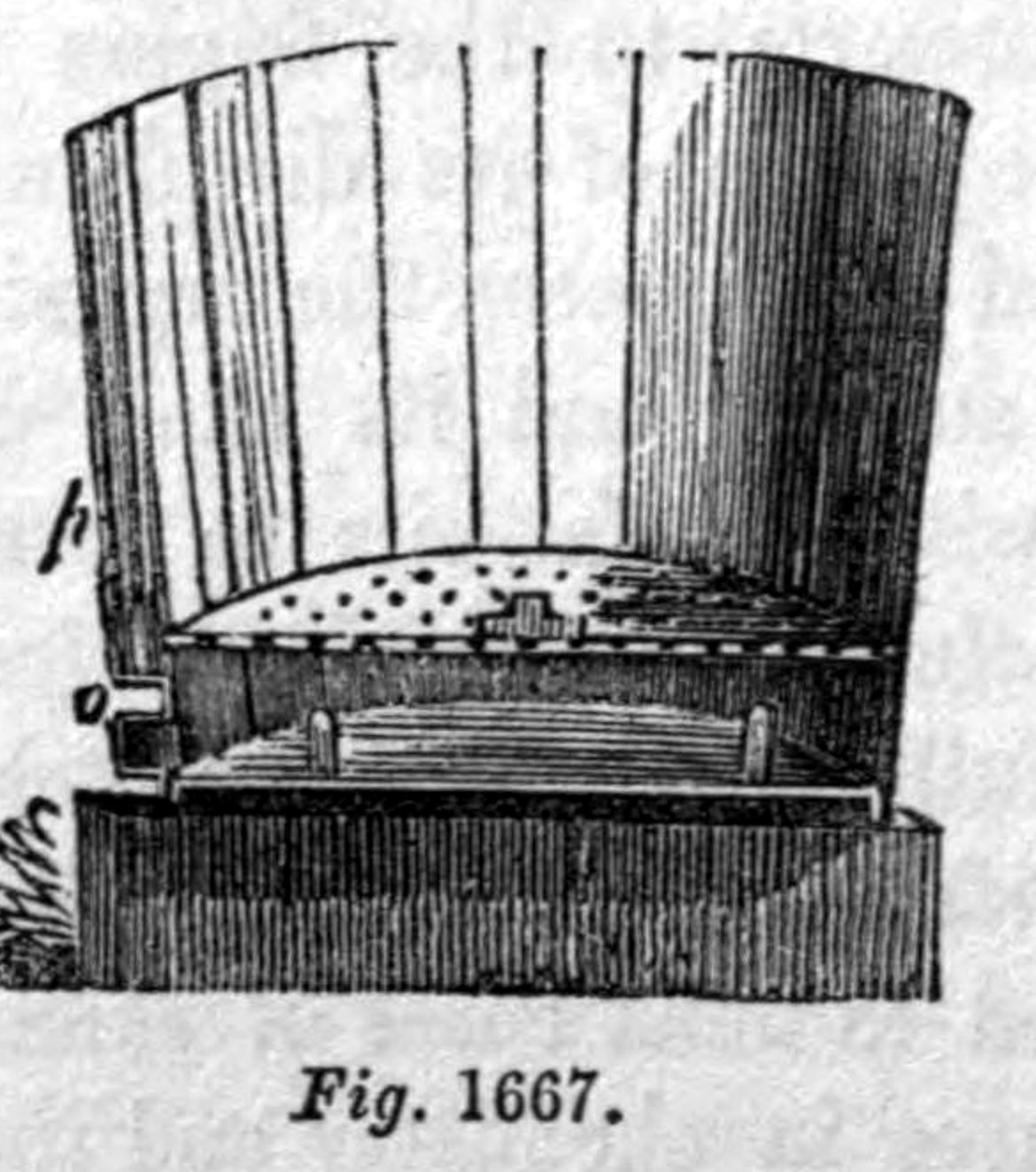


Potash and Pearl-Ash From Wood Ash: Leaching Tun, Evaporation, Calcining and Recrystallising (Tomlinson, 1854)
How 19th-century potash was made, from Tomlinson's Cyclopaedia of Useful Arts (1854): wood ash leached in a tun with a straw-covered false bottom, the lye boiled to dryness and calcined to crude potash or white pearl-ash, then purified by dissolving in its weight of cold water, letting the less soluble salts settle, and crystallising the carbonate of potash.
Àárín
About 1 week
Ìlànà
1
1
Crude potash content
Crude potash content
Ń ṣí ìwé Jupyter…
2
2
Read the Cyclopaedia of Useful Arts
Read the Cyclopaedia of Useful Arts
"Plants which grow near the sea mostly contain soda; inland plants potash. The ashes of the latter are lixiviated with water in a large cask or tun."
3
3
Build the leaching tun
Build the leaching tun
Fit a large cask with a false perforated bottom covered with straw, a plugged hole (o) between it and the real bottom, and a pipe (p) from the top down through the false bottom to let the air escape (Fig. 1667).
Àwọn ohun èlò fún ìgbésẹ̀ yìí:
 Kóríko gbígbẹ1 ẹyọ
Àwọn irinṣẹ́ tí a nílò:
 Garawa igi
 Ìlù ọwọ́ pẹ̀lú orí
 Ayùn Ọwọ́
4
4
Leach
Leach
Fill with ashes of inland plants (wood ash), add water, and after some hours draw off the liquid; add more water until all the soluble matter is out. Pour the weakest solutions onto fresh ash instead of water.
Àwọn ohun èlò fún ìgbésẹ̀ yìí:
 Wood Ash1 ẹyọ
Àwọn irinṣẹ́ tí a nílò:
Garawa igi Bàkẹ́ẹ̀tì Lítà 20
5
5
Evaporate and calcine
Evaporate and calcine
Boil the leys to dryness and heat the residue to redness to burn off the brown organic matter: this is crude potash, or pearl-ash when white and pearly.
Àwọn irinṣẹ́ tí a nílò:
 Ìkòkò Ńlá
 Ìléru alágbẹ̀dẹ
 Ìkòkò ìyọ́
6
6
Purify
Purify
Treat the crude potash with its own weight of cold water and leave it several days, stirring now and then; the less soluble sulphate and chloride stay behind. Syphon off the liquor, boil it fast until small crystals appear, take it off the fire and stir as it cools so only small crystals form. Drain them on a filtering bed, wash with a little pure carbonate of potash, and dry at a stove.
Àwọn irinṣẹ́ tí a nílò:
 Òǹwọ̀n ìdọ́gbaBàkẹ́ẹ̀tì Lítà 20Ìkòkò Ńlá
 Aṣọ Òwú
7
7
Troubleshooting
Troubleshooting
Potash troubleshooting.
Flow
Loading...
8
8
History and honest limits
History and honest limits
From Charles Tomlinson (ed.), **Cyclopaedia of Useful Arts** (London, 1854), vol. II, "Potassium" (checked on the archive.org scan cyclopdiaofuse02tomlrich, pp. 434-435). He gives no quantities for the leaching; the tools are ours.
Ìtọ́nisọ́nà yìí ń ṣe

Blueprint tó jọra
Àwọn blueprint wọ̀nyí pín ìmọ̀ — ọ̀nà, ohun-èlò tàbí ìlànà

CC0 Àgbègbè Gbogbogbò
Blueprint yìí ti jáde lábẹ́ CC0. O lè ṣe àdàkọ, yí padà, pín, àti lò láìsí ìyọ̀ǹda.
Ṣàtìlẹ́yìn Olùṣẹ́dá nípa rírà àwọn ọjà nipasẹ̀ Blueprint wọn Ẹ̀san Olùṣẹ́dá tí àwọn Olùtajà gbé kalẹ̀, tàbí ṣẹ̀dá àtúnṣe tuntun ti Blueprint yìí kí o sì fi sínú Blueprint rẹ gẹ́gẹ́ bí ìsopọ̀ láti pín owó-wíwọlé.