IṢẸ́ ỌNÀ
ẸWÀ ÀTI ÌLERA
IṢẸ́ ỌWỌ́
ÀṢÀ ÀTI ÌTÀN
ÌṢERÉ
ÀYÍKÁ
OÚNJẸ ÀTI OHUN MÍMU
REVERSE ENGINEERING
SÁYẸ́ǸSÌ
ERÉ ÌDÁRAYÁ
ÌMỌ̀-Ẹ̀RỌ
ÀWỌN OHUN WÍWỌ̀
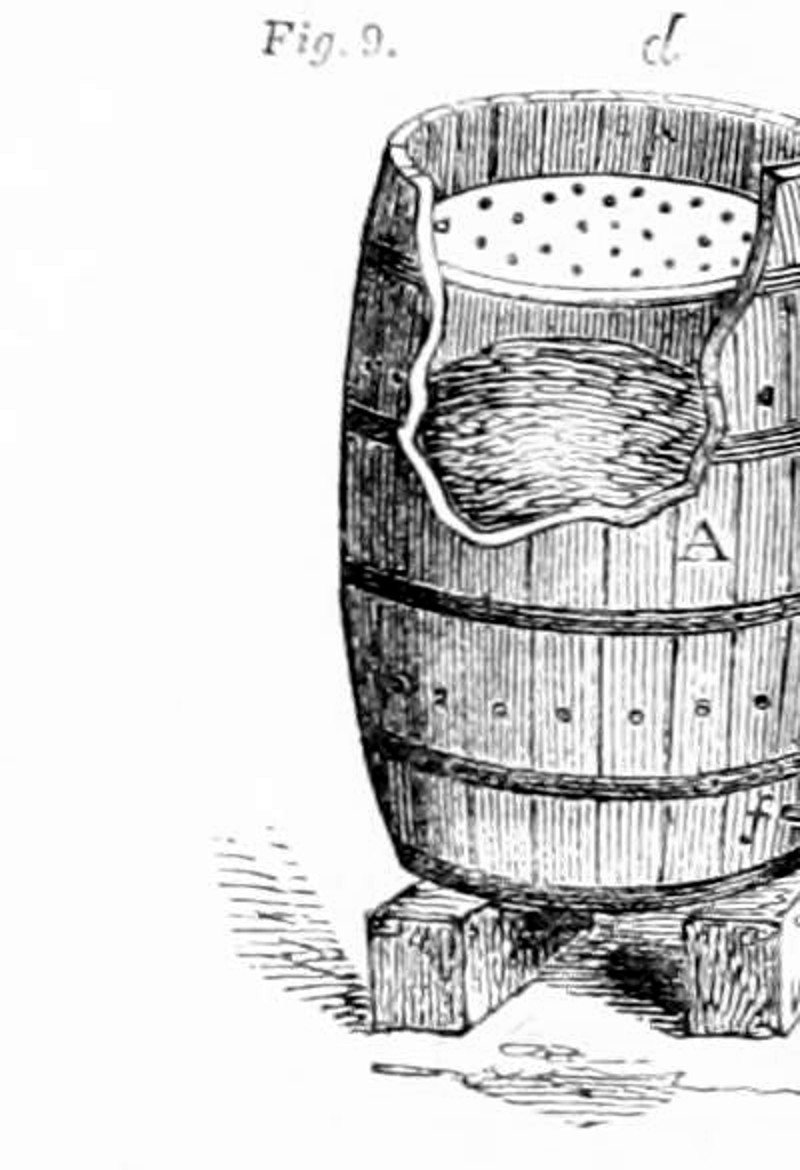


Quick Vinegar: Dilute Spirit Trickled Through Beech Shavings in Ventilated Oak Casks (Tomlinson, 1854)
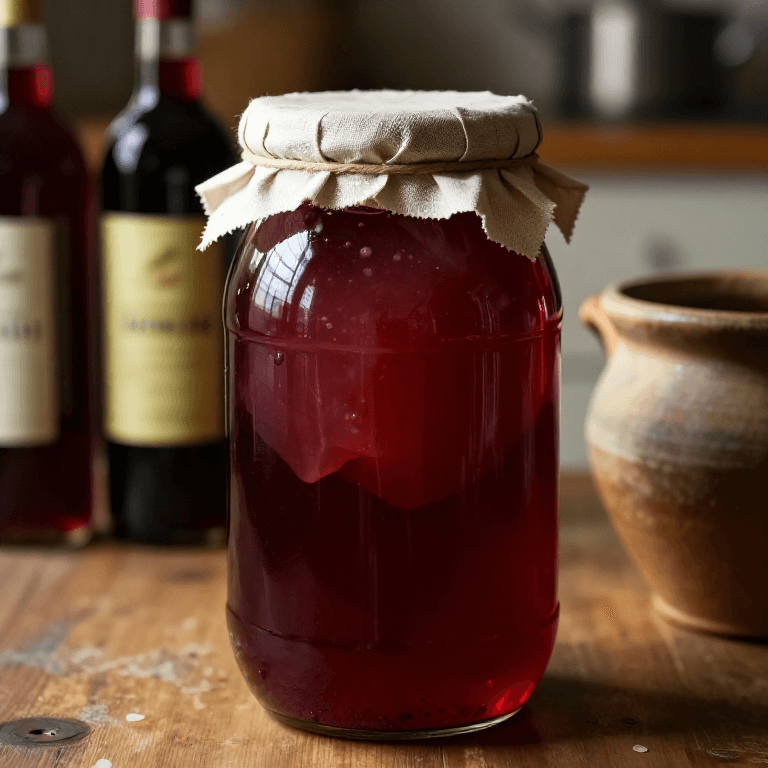
The 'quick method' of the 1850s, from Tomlinson's Cyclopaedia of Useful Arts: a warm mixture of spirit, vinegar and water poured again and again over curled beech shavings in tall oak casks with air holes near the bottom, so the vinegar bacteria on the shavings turn the alcohol to acetic acid in days instead of months.
Àárín
A few days
Ìlànà
1
1
Mixtures and temperatures
Mixtures and temperatures
Ń ṣí ìwé Jupyter…
2
2
Read the Cyclopaedia of Useful Arts
Read the Cyclopaedia of Useful Arts
"Vinegar is manufactured by one of two distinct methods called the slow and the quick method."
3
3
Prepare the casks
Prepare the casks
Use oak casks 5 to 7 ft high and 2-1/2 to 3 ft across, a little narrower at the bottom. About a foot from the bottom, just above the syphon, bore air holes about an inch wide sloping downward so air enters but liquor does not escape. Fit a cover with a centre hole 2 or 3 in square. Set them on frames or brick piers high enough to draw off the liquor.
Àwọn ohun èlò fún ìgbésẹ̀ yìí:
 Àgbá igi1 ẹyọ
Àwọn irinṣẹ́ tí a nílò:
 Ìlù ọwọ́ pẹ̀lú orí
 Ayùn Ọwọ́
4
4
Fill with beech shavings
Fill with beech shavings
Scald curled beech shavings repeatedly with hot water to remove soluble matter, dry them, soak them in hot vinegar, and fill the cask. (Or fit an inner beech hoop about 6 in below the mouth carrying a perforated shelf, with cotton wicks knotted on top drawn through the holes, the edges packed with tow, and the shavings below; Fig. 9.)
Àwọn ohun èlò fún ìgbésẹ̀ yìí:
 Ìfá igi beech1 ẹyọ
 Ọtí kíkan1 ẹyọ
 Ohun Èlò Òwú Fìtílà1 ẹyọ
 Okùn ọ̀gbọ̀ kúkúrú1 ẹyọ
Àwọn irinṣẹ́ tí a nílò:
 Ìkòkò Ńlá
5
5
Run the mixture
Run the mixture
Mix 20 quarts alcohol, 40 vinegar and 120 water (or 15-1/2, 20 and 137), heating the water to 100-104 F first so the mixture is about 86-90 F. Pour 2-1/2 to 5 quarts on every half hour with the cover on and the centre hole open. When all has run through, draw it off, add a few quarts of alcohol and pass it through again; then less alcohol and a third time. It is then strong vinegar.
Àwọn ohun èlò fún ìgbésẹ̀ yìí:
 Ọtí tí a pọn1 ẹyọỌtí kíkan1 ẹyọ
Àwọn irinṣẹ́ tí a nílò:
 Ẹ̀rọ Ìwọ̀n Ooru Ìdáná
 Bàkẹ́ẹ̀tì Lítà 20Ìkòkò Ńlá
6
6
Keep it working
Keep it working
Keep the room about 77 F; the cask inside runs 95-100 F and must not fall below 95 F. Cover the casks with paper or linen jackets, leaving the air holes open. Never more than 10 % alcohol; stay between 72 and 113 F. For fruit or malt vinegar the liquor must be clear.
Àwọn ohun èlò fún ìgbésẹ̀ yìí:
 Aṣọ Òwú1 ẹyọ
Àwọn irinṣẹ́ tí a nílò:
Ẹ̀rọ Ìwọ̀n Ooru Ìdáná7
7
Troubleshooting
Troubleshooting
Quick vinegar troubleshooting.
Flow
Loading...
8
8
History and honest limits
History and honest limits
From Charles Tomlinson (ed.), **Cyclopaedia of Useful Arts** (1854), vol. I, "Acetic Acid" (checked on the archive.org scan cyclopaediaofuse01tomluoft, pp. 6-7). The Celsius figures and the tools are ours.
Àwọn ohun-èlò
7- 1 ẹyọÀyè
- 1 ẹyọÀyè
- 2 ẹyọÀyè
- 1 ẹyọÀyè
- 1 ẹyọÀyè
- 1 ẹyọÀyè
- 1 ẹyọÀyè
Ìtọ́nisọ́nà yìí ń ṣe

Blueprint tó jọra
Àwọn blueprint wọ̀nyí pín ìmọ̀ — ọ̀nà, ohun-èlò tàbí ìlànà

CC0 Àgbègbè Gbogbogbò
Blueprint yìí ti jáde lábẹ́ CC0. O lè ṣe àdàkọ, yí padà, pín, àti lò láìsí ìyọ̀ǹda.
Ṣàtìlẹ́yìn Olùṣẹ́dá nípa rírà àwọn ọjà nipasẹ̀ Blueprint wọn Ẹ̀san Olùṣẹ́dá tí àwọn Olùtajà gbé kalẹ̀, tàbí ṣẹ̀dá àtúnṣe tuntun ti Blueprint yìí kí o sì fi sínú Blueprint rẹ gẹ́gẹ́ bí ìsopọ̀ láti pín owó-wíwọlé.