IṢẸ́ ỌNÀ
ẸWÀ ÀTI ÌLERA
IṢẸ́ ỌWỌ́
ÀṢÀ ÀTI ÌTÀN
ÌṢERÉ
ÀYÍKÁ
OÚNJẸ ÀTI OHUN MÍMU
REVERSE ENGINEERING
SÁYẸ́ǸSÌ
ERÉ ÌDÁRAYÁ
ÌMỌ̀-Ẹ̀RỌ
ÀWỌN OHUN WÍWỌ̀
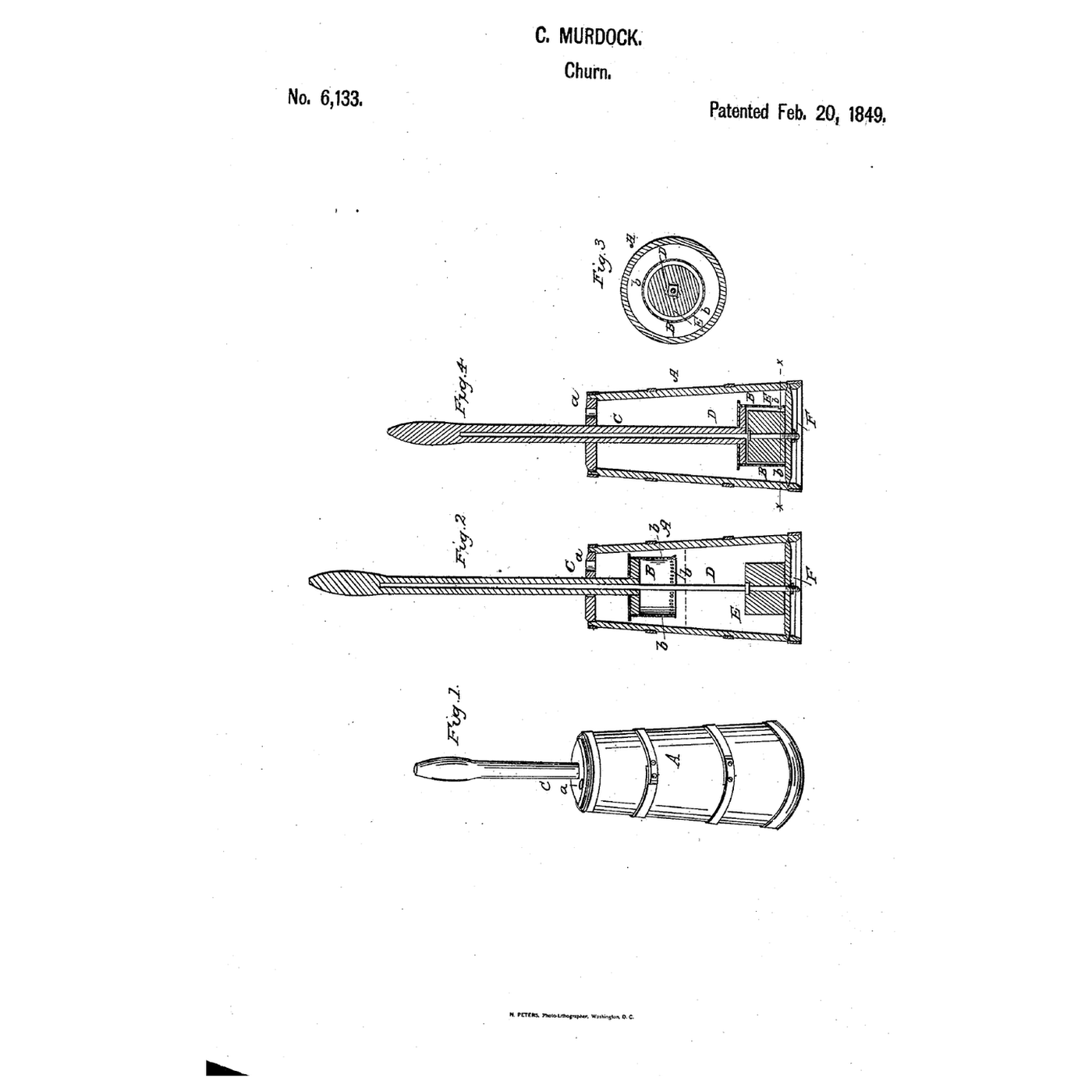

Trapped-Air Cylinder Dash Churn: A Hollow Dash That Squeezes Air Into the Cream
Murdock wanted the air carried down through the cream by the common up-and-down dash itself.
Charles Murdock of Baltimore, Maryland, received US 6,133, dated 20 February 1849, for "Murdock's Atmospheric Churn": a hollow cylindrical dash, perforated round its lower open end, on the common dash staff, which is bored to slide over a fixed central spindle. The spindle stands in a stationary cylindrical block, smaller than the dash, held to the churn's bottom by a nut. At each stroke the dash fills with air above the cream, carries it down, and when it meets the block the air "is compressed in the cylinder forced radially through the apertures."
This rung works out the air squeezed out each stroke, then prints the dash and block, fits them to a churn, and makes butter.
Olùbẹ̀rẹ̀
About 2 hours, plus printing
Ìlànà
1
1
Air per stroke
Air per stroke
Ń ṣí ìwé Jupyter…
2
2
An air pump in the churn before it
An air pump in the churn before it
The embedded blueprint puts a pump and a ring dasher in the churn. Murdock makes the dash itself the pump.
3
3
Read US 6,133
Read US 6,133
"The air, however, may be let into the cylinder through a valve in its top or side instead of open end which will do away with the necessity of raising the cylinder above the surface of the cream to receive air. The aperture in the staff must be a little larger than the spindle but must not extend through it nor be intersected by any lateral opening."
4
4
Print the dash and block
Print the dash and block
Print the dash open end up (/uploads/blueprints/trapped-air-cylinder-dash-churn-dash.stl): a 90 mm cylinder with sixteen small holes near its open edge and a socket for the staff. Print the block (/uploads/blueprints/trapped-air-cylinder-dash-churn-block.stl). Print in PETG at 0.2 mm layers, 30 % infill, 4 walls; wash before first use.
Àwọn ohun èlò fún ìgbésẹ̀ yìí:
 Okùn PETG1 ẹyọ
Àwọn irinṣẹ́ tí a nílò:
 Ẹ̀rọ ìtẹ̀ 3D oníwàyà (FDM)
5
5
Spindle and block
Spindle and block
Drill an 8 mm hole in the centre of a tall food-grade bucket's floor. Pass an M8 threaded rod up through it and the block, with a washer and nut under the floor and silicone round the hole, so the rod stands upright as the spindle.
Àwọn ohun èlò fún ìgbésẹ̀ yìí:
 Bàkẹ́ẹ̀tì Lítà 201 ẹyọ
 Ọ̀pá oníṣọ̀kan1 ẹyọ
 Nọ́ọ̀tì Onígun Mẹ́fà1 ẹyọ
 Wáṣà Pẹrẹsẹ1 ẹyọ
 Ìdílẹ̀ Silikoni1 ẹyọ
Àwọn irinṣẹ́ tí a nílò:
 Ẹ̀rọ Ìlùkòkò Aláìlókùn
 Àkójọ Orí Ìlùkòkò
 Kọ́kọ́rọ́ tí a lè ṣàtúnṣe
 Ayùn Irin
6
6
Staff and lid
Staff and lid
Bore a 25 mm hardwood dowel lengthwise, 10 mm, deep enough to slide over the spindle's full height but not through its top, and glue the dash on its foot. Drill the lid for the staff and fit a knob on top.
Àwọn ohun èlò fún ìgbésẹ̀ yìí:
 Àwọn dowel igi líle1 ẹyọ
 Ìṣù Igi Líle1 ẹyọ
 Ìdìpọ̀ Igi1 ẹyọ
Àwọn irinṣẹ́ tí a nílò:
Ẹ̀rọ Ìlùkòkò AláìlókùnÀkójọ Orí Ìlùkòkò Ayùn Ọwọ́
 Bébà Ìfá
7
7
The build in 3D
The build in 3D
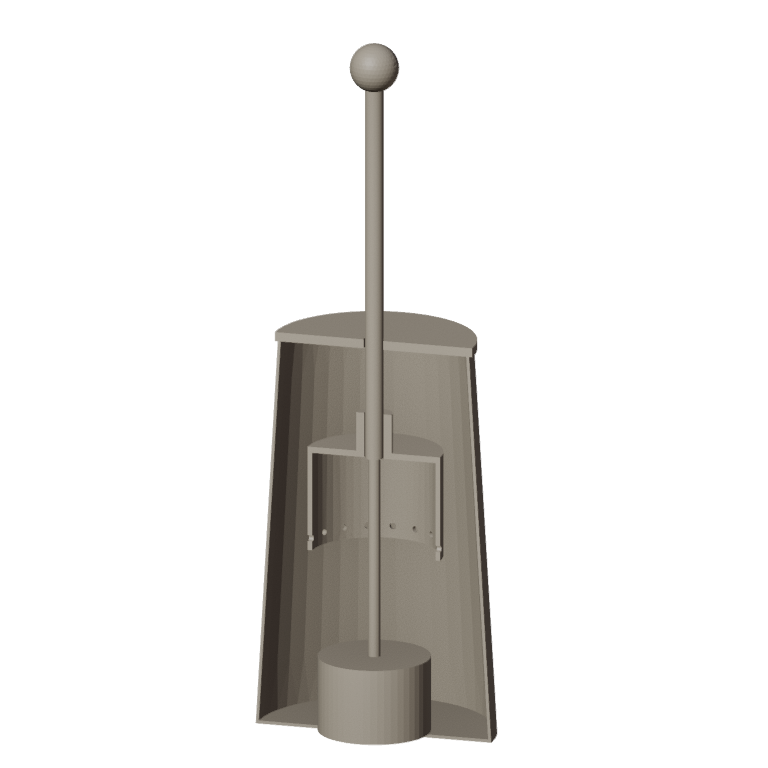
FreeCAD model of this build, not of the patent: the churn and dash cut away to show the hollow dash with its holes near the open end, the bored staff over the fixed spindle, and the stationary block it closes over.
8
8
Dash and make butter
Dash and make butter
Let the heavy cream stand until it reaches about 15 °C, checked with the thermometer. Pour in 1.5 litres. Work the staff up and down, lifting the dash above the cream each time to fill it with air; bubbles burst from the holes at the foot of each stroke. Time until the butter comes. Pour off the buttermilk, add cold water, churn a little and pour off again until it runs clear; work in a pinch of salt and weigh the butter.
Àwọn ohun èlò fún ìgbésẹ̀ yìí:
 Ọ̀rá wàrà tó nípọn1500 ml
 Iyọ̀ Òkun Rúkèrúdò1 ẹyọ
 Omi1 ẹyọ
Àwọn irinṣẹ́ tí a nílò:
 Ẹ̀rọ ìwọ̀n ooru oníhun tí ó dúró sí inú
 Aago Ìdúró
 Òṣùwọ̀n Díjítà Ilé Ìdáná
 Àwo ìdàpọ̀ ńlá ti irin tí kò ń yá
9
9
No bubbles, a staff that sticks
No bubbles, a staff that sticks
Trapped-air cylinder dash churn troubleshooting.
Flow
Loading...
10
10
History and honest limits
History and honest limits
**Charles Murdock** of Baltimore, Maryland, received US 6,133, dated 20 February 1849, signed 21 November 1848. The dash could be formed in the underside of the dash block, or as a cylinder fixed to the dash's periphery; in a stone churn the spindle's hole could be drilled and bushed. He claimed the combination of the hollow perforated cylinder dash and the central guide spindle and stationary block with the ordinary upright tub churn.
**Honest limits.** A bucket, threaded rod and printed parts stand in for his churn, spindle and dash. FDM prints hold food in their layer lines, so wash well and replace when worn. Your times and weights are the result.
Àwọn ohun-èlò
12- 1 ẹyọÀyè
- 1 ẹyọÀyè
- 1 ẹyọÀyè
- 1 ẹyọÀyè
- 1 ẹyọÀyè
- 1 ẹyọÀyè
- 1 ẹyọÀyè
- 1 ẹyọÀyè
- 1 ẹyọÀyè
- 1500 mlÀyè
- 1 ẹyọÀyè
- 1 ẹyọÀyè
Àwọn irinṣẹ́ tó nílò
11- 1 vendor sell this, none ship to you yetÀyè
- Àyè
- Àyè
- Àyè
- Àyè
Àwọn fáìlì àpẹrẹ
1Ìtọ́nisọ́nà yìí ń ṣe

Blueprint tó jọra
Àwọn blueprint wọ̀nyí pín ìmọ̀ — ọ̀nà, ohun-èlò tàbí ìlànà
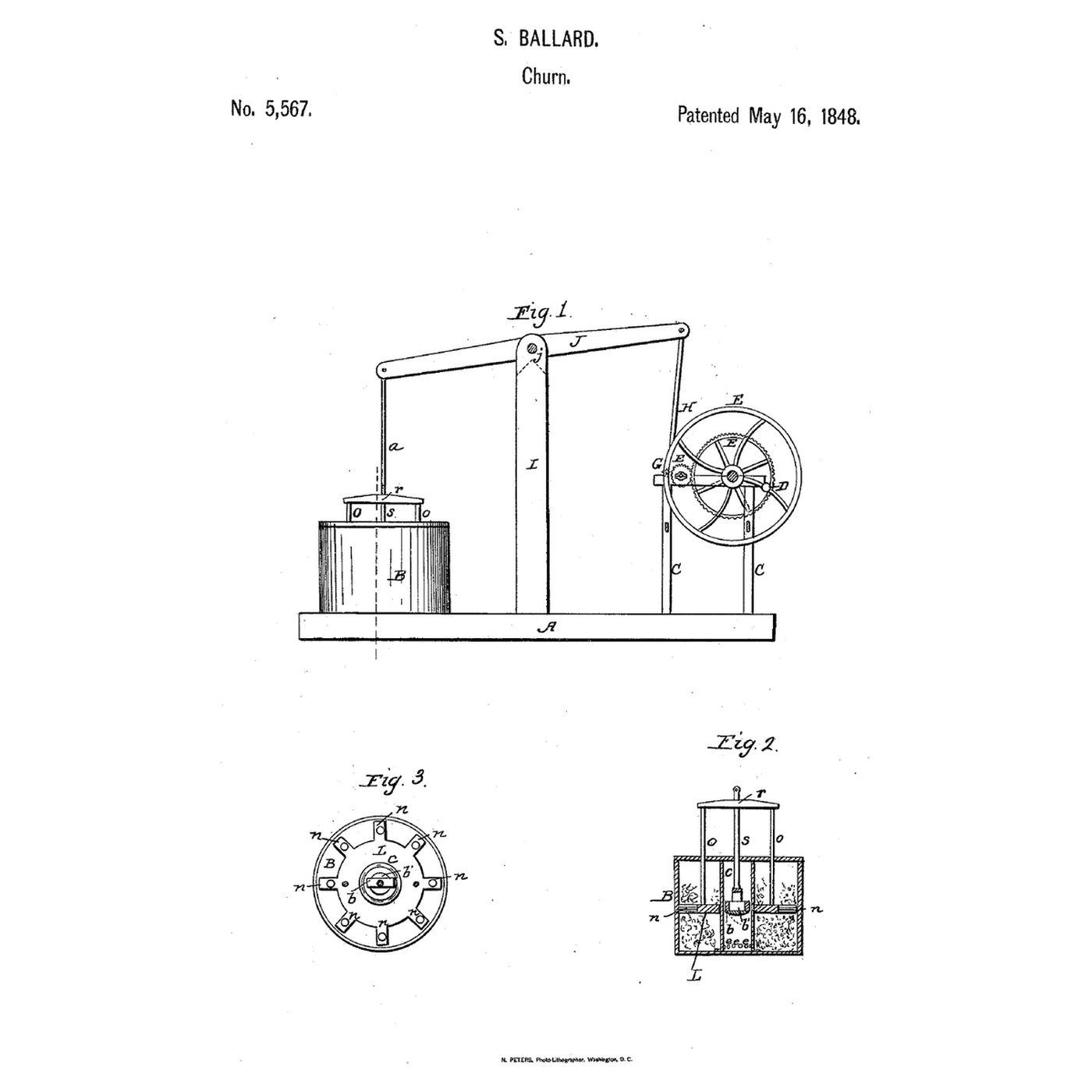
Air-Pump Annular Dasher Churn: A Pump in the Middle, a Ring Dasher Round It
láti ọwọ́ Martin
OÚNJẸ ÀTI OHUN MÍMU
21
0
0
0
0
0
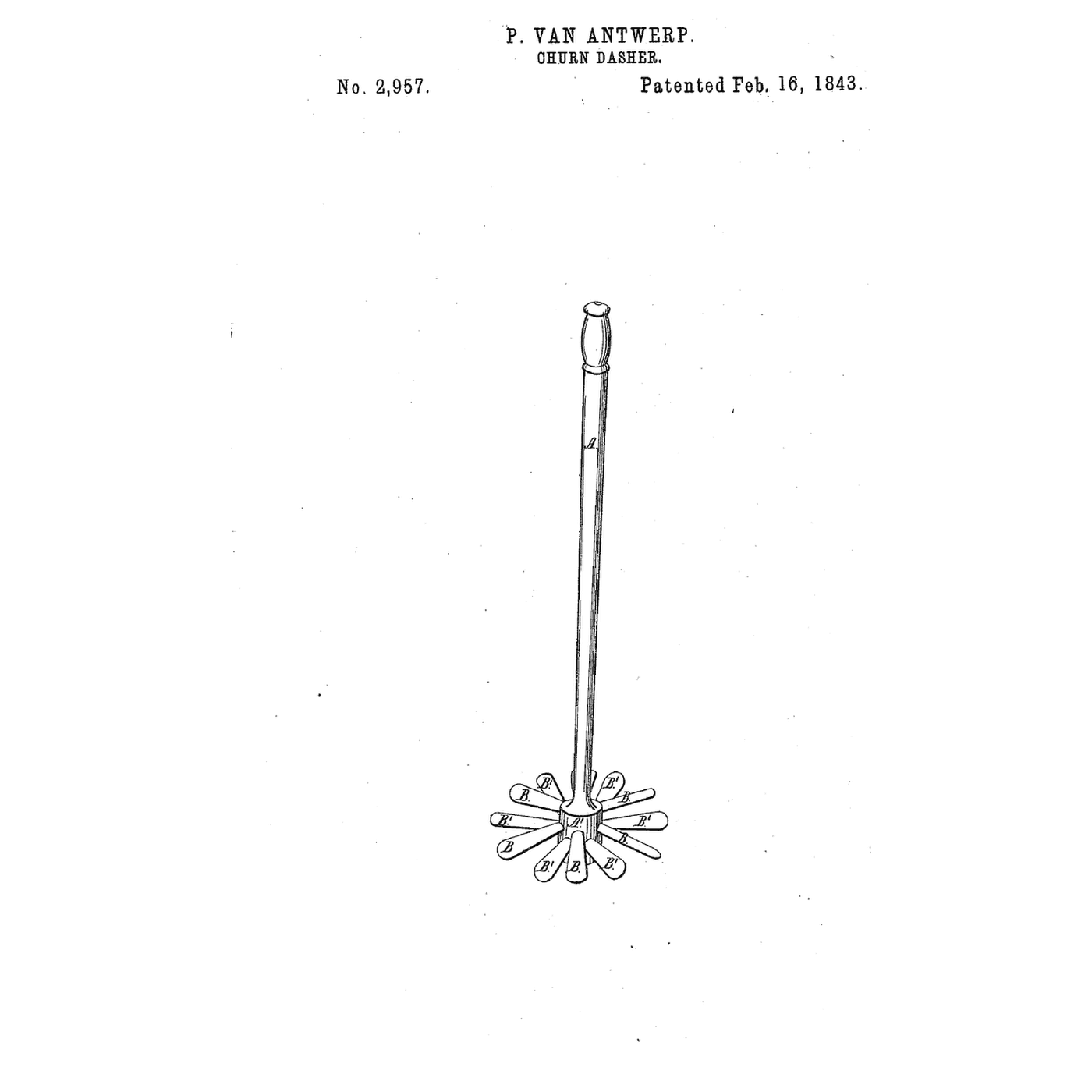
Reacting Churn Dasher: Two Rows of Oars Pitched Opposite Ways
láti ọwọ́ TheChef
OÚNJẸ ÀTI OHUN MÍMU
20
0
0
0
0
0
Hollow-Arm Air Churn: A Spinning Dasher That Breathes Air Into the Cream
láti ọwọ́ Emma
OÚNJẸ ÀTI OHUN MÍMU
14
0
0
0
0
0
CC0 Àgbègbè Gbogbogbò
Blueprint yìí ti jáde lábẹ́ CC0. O lè ṣe àdàkọ, yí padà, pín, àti lò láìsí ìyọ̀ǹda.
Ṣàtìlẹ́yìn Olùṣẹ́dá nípa rírà àwọn ọjà nipasẹ̀ Blueprint wọn Ẹ̀san Olùṣẹ́dá tí àwọn Olùtajà gbé kalẹ̀, tàbí ṣẹ̀dá àtúnṣe tuntun ti Blueprint yìí kí o sì fi sínú Blueprint rẹ gẹ́gẹ́ bí ìsopọ̀ láti pín owó-wíwọlé.