IṢẸ́ ỌNÀ
ẸWÀ ÀTI ÌLERA
IṢẸ́ ỌWỌ́
ÀṢÀ ÀTI ÌTÀN
ÌṢERÉ
ÀYÍKÁ
OÚNJẸ ÀTI OHUN MÍMU
REVERSE ENGINEERING
SÁYẸ́ǸSÌ
ERÉ ÌDÁRAYÁ
ÌMỌ̀-Ẹ̀RỌ
ÀWỌN OHUN WÍWỌ̀
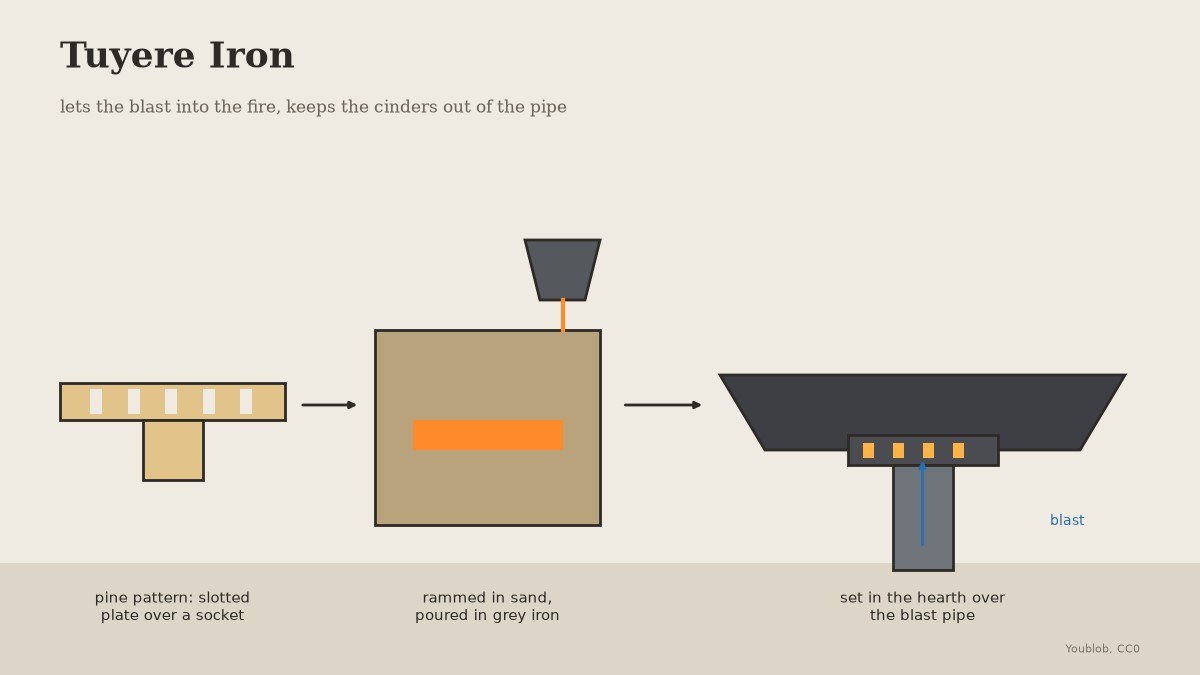


Tuyere Iron: a Slotted Grate Cast in Grey Iron
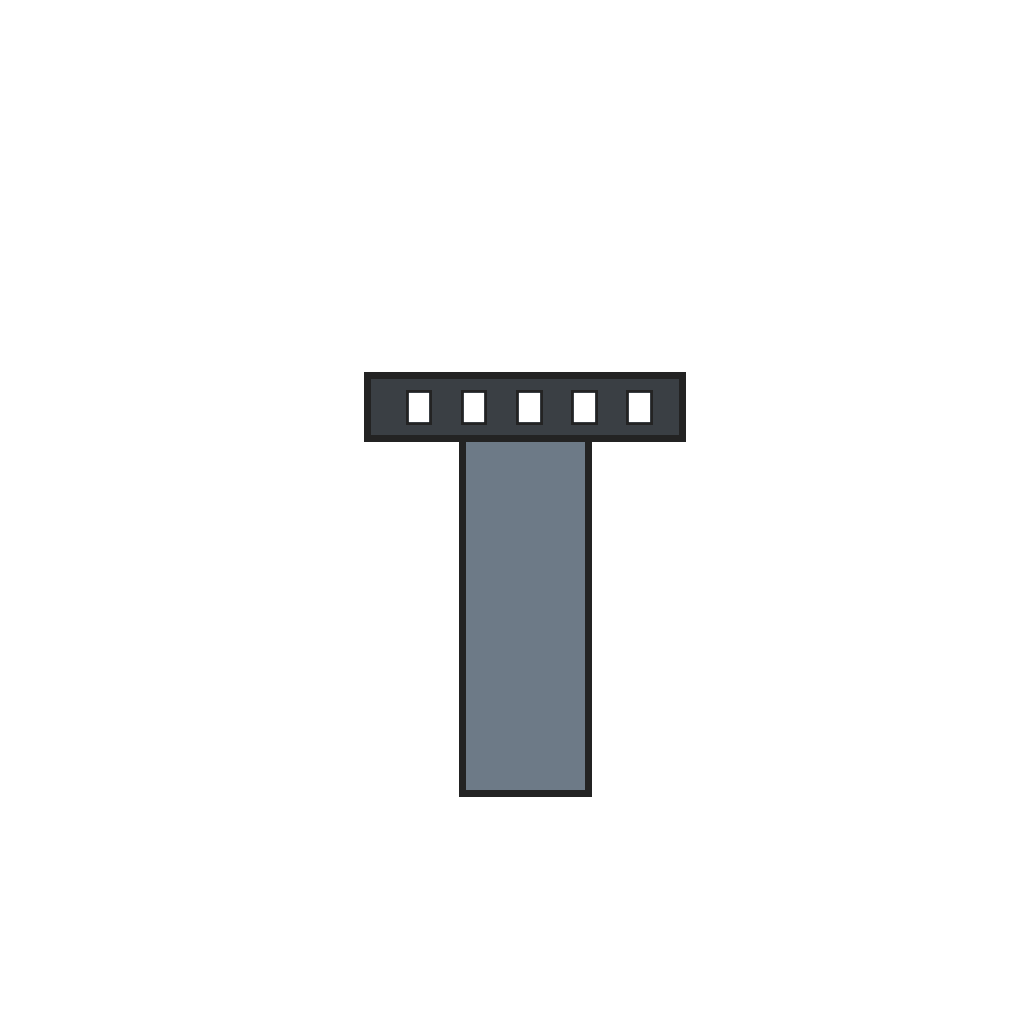
The tuyere is the opening in the bottom of the forge fire through which the blast is blown. Bacon (1919): its openings must let the blast through easily while keeping cinders from dropping into the blast pipe, and there should be a way to open the pipe below and clear out the cinders that still get through. This one is a slotted grate over a socket for the blast pipe, cast in grey iron. The design and sizes are ours.
The picture: our drawing.
Ilọsíwájú
2 days
Ìlànà
1
1
Make the pattern
Make the pattern
From pine, make a pattern of a square plate about 15 cm across and 2 cm thick with four or five narrow slots, and a short round socket under its centre to take the blast pipe. Taper every side slightly so it draws from the sand.
Àwọn irinṣẹ́ tí a nílò:
 Pákó igi pine
 Ayùn Kópìngì
 Ìdìpọ̀ àyà igi
 Ìdìpọ̀ Igi
 Òṣùwọ̀n Kálípà Díjítà Ìnṣì 6
2
2
Ram the mould
Ram the mould
Ram the pattern up in casting sand in the flask, draw it out, and cut a sprue and a runner to the cavity.
Àwọn irinṣẹ́ tí a nílò:
 Iyanrìn ìdàsílẹ̀
 Àpótí àwòṣe iyanrìn
 Ọkọ́ Ọwọ́
3
3
Melt the iron
Melt the iron
Melting pig iron in the cupola and tapping it into the ladle.
4
4
Pour
Pour
Pour the molten grey iron from the ladle into the sprue in one steady stream until the mould is full; about 4 kg with the sprue (our estimate). Let it cool in the sand.
Àwọn ohun èlò fún ìgbésẹ̀ yìí:
 Àwọn ìdì irin aláìwẹ̀mọ́4 kg
Àwọn irinṣẹ́ tí a nílò:
 Ṣíbí gígùn fún irin yíyọ́Àpótí àwòṣe iyanrìn
 Ìbọ̀wọ́ wẹ́lídìn
 Aṣọ Ìdílé Awọ
 Ààbò Ojú Gbogbo
5
5
Clean up
Clean up
Shake out the casting, cut off the sprue, grind the fins and brush off the sand. Check that every slot is clear.
Àwọn irinṣẹ́ tí a nílò:
 Ẹ̀rọ ìlọ̀ onígun
 Ìṣètò búrọ́ọ̀ṣì okùnÌbọ̀wọ́ wẹ́lídìnÀàbò Ojú Gbogbo
6
6
Set it in the forge
Set it in the forge
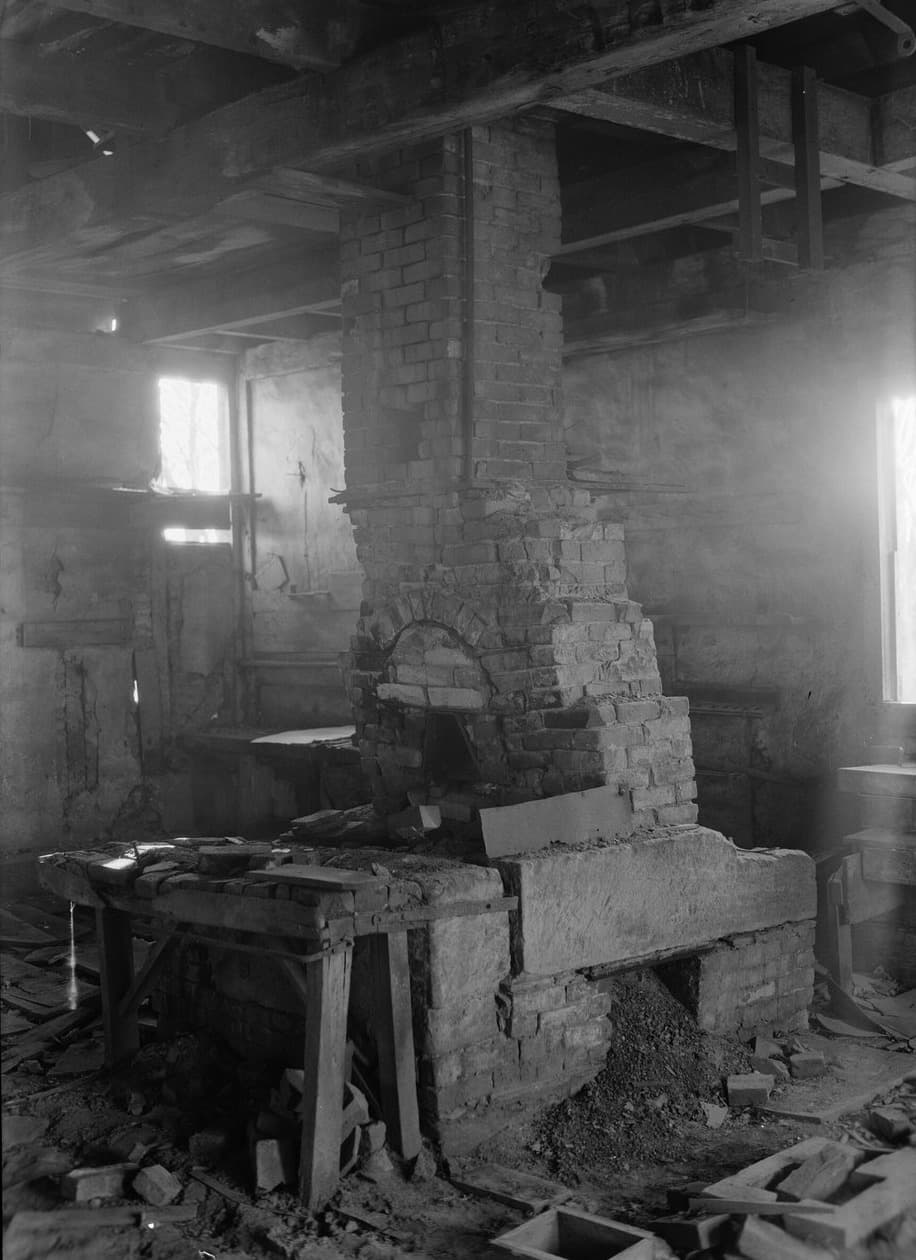
Set it in the hearth with the blast pipe in its socket and a way to open the pipe below for clearing cinders. Richardson's forge had its tuyere iron four inches below the hearth surface.
Àwọn irinṣẹ́ tí a nílò:
Òṣùwọ̀n Kálípà Díjítà Ìnṣì 6Àwọn ohun-èlò
1- Àyè
Àwọn irinṣẹ́ tó nílò
14- Àyè
- Àyè
- Àyè
- 1 vendor sell this, none ship to you yetÀyè
Ìtọ́nisọ́nà yìí ń ṣe
Blueprint tó jọra
Àwọn blueprint wọ̀nyí pín ìmọ̀ — ọ̀nà, ohun-èlò tàbí ìlànà


CC0 Àgbègbè Gbogbogbò
Blueprint yìí ti jáde lábẹ́ CC0. O lè ṣe àdàkọ, yí padà, pín, àti lò láìsí ìyọ̀ǹda.
Ṣàtìlẹ́yìn Olùṣẹ́dá nípa rírà àwọn ọjà nipasẹ̀ Blueprint wọn Ẹ̀san Olùṣẹ́dá tí àwọn Olùtajà gbé kalẹ̀, tàbí ṣẹ̀dá àtúnṣe tuntun ti Blueprint yìí kí o sì fi sínú Blueprint rẹ gẹ́gẹ́ bí ìsopọ̀ láti pín owó-wíwọlé.