IṢẸ́ ỌNÀ
ẸWÀ ÀTI ÌLERA
IṢẸ́ ỌWỌ́
ÀṢÀ ÀTI ÌTÀN
ÌṢERÉ
ÀYÍKÁ
OÚNJẸ ÀTI OHUN MÍMU
REVERSE ENGINEERING
SÁYẸ́ǸSÌ
ERÉ ÌDÁRAYÁ
ÌMỌ̀-Ẹ̀RỌ
ÀWỌN OHUN WÍWỌ̀
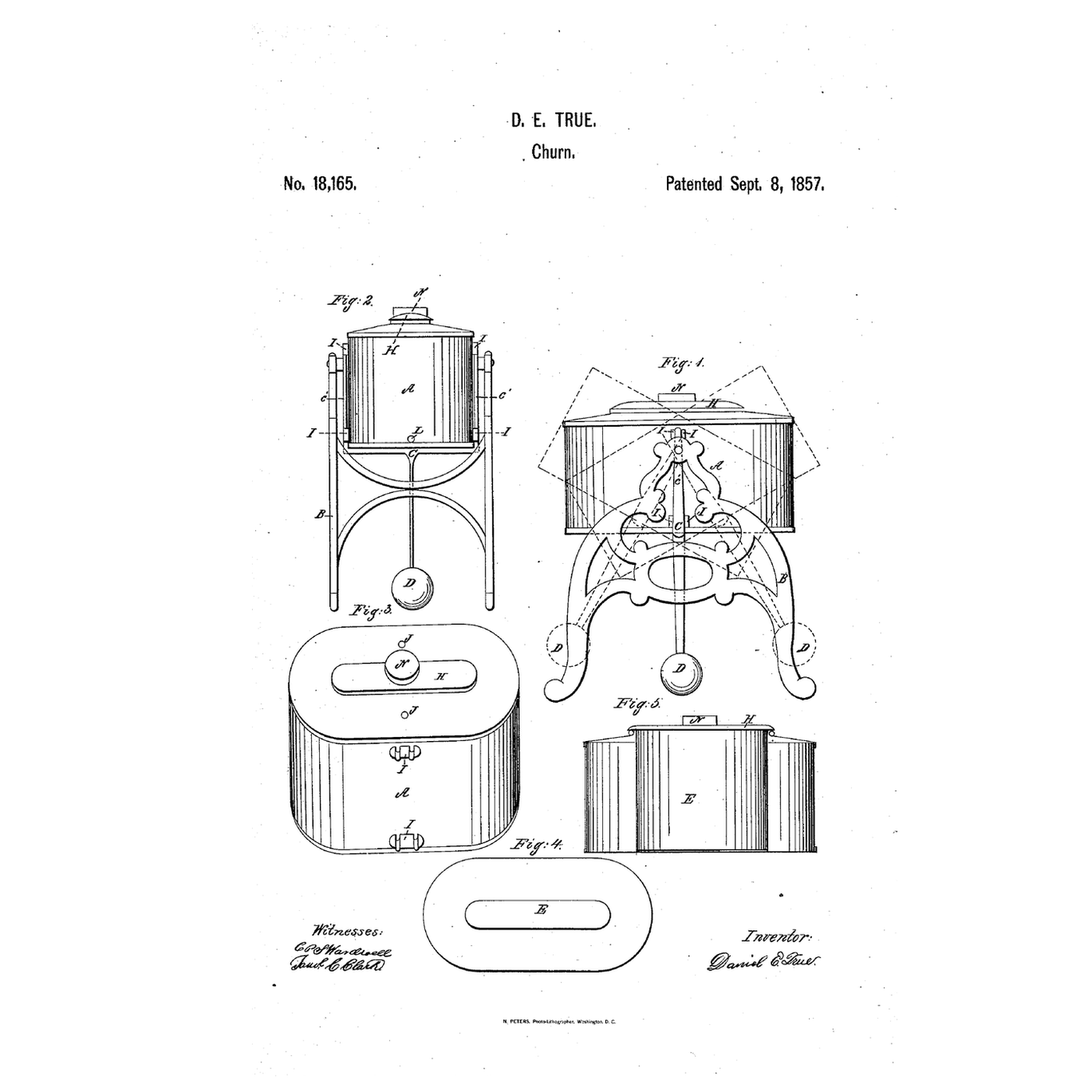

Two-Current Separator Rocking Churn: An Oval Cistern Split Round a Separator, the Currents Collide at Each Tip
Daniel E. True of Lake Village, New Hampshire, received US 18,165, dated 8 September 1857, for a rocking churn whose oval cistern has a "separator" of the same shape in its middle, so the cream flows in two currents that "come in direct collision from opposite directions, at each tip."
This rung prints the cistern and the separator lid, builds the swing seat and makes butter.
Olùbẹ̀rẹ̀
About 3 hours, plus printing
Ìlànà
1
1
His sizes at one third
His sizes at one third
Ń ṣí ìwé Jupyter…
2
2
A rocking churn he names
A rocking churn he names
True names McLaughlin's and Enoch Thomas's patents and does not claim their grates; he claims the separator.
3
3
Read US 18,165
Read US 18,165
"The operation being accomplished by oscillating the swing seat C, which gives to the cream cistern a successive tip motion, Fig. 1, red lines, thereby causing the cream to flow rapidly, being divided by the separator, into two separate currents in its passage, which come in contact at their terminus, alternately, whereby the cream receives a violent and peculiar action which causes a speedy union of the particles of butter into one mass."
4
4
Print the parts
Print the parts
Print the oval cistern (/uploads/blueprints/two-current-separator-rocking-churn-cistern.stl) and the lid with its separator (/uploads/blueprints/two-current-separator-rocking-churn-separator-lid.stl). The cistern needs a bed at least 210 mm long. Print in PETG at 0.2 mm layers, 30 % infill, 4 walls; wash before first use.
Àwọn ohun èlò fún ìgbésẹ̀ yìí:
 Okùn PETG1 ẹyọ
Àwọn irinṣẹ́ tí a nílò:
 Ẹ̀rọ ìtẹ̀ 3D oníwàyà (FDM)
5
5
Frame and swing seat
Frame and swing seat
Build a pine frame about 220 mm high and hang a pine seat between its uprights on a 10 mm rod, with two side strips that enter the cistern's guides. Hang a steel rod from the seat's middle with a stack of nuts as the pendulum weight.
Àwọn ohun èlò fún ìgbésẹ̀ yìí:
 Pákó igi pine1 ẹyọ
 Ọ̀pá Róbótó Irin Rírọ̀1 ẹyọ
 Nọ́ọ̀tì Onígun Mẹ́fà6 ẹyọ
 Ìsúrù igi #8 x 1"1 ẹyọ
Àwọn irinṣẹ́ tí a nílò:
 Ayùn Ọwọ́
 Ẹ̀rọ Ìlùkòkò Aláìlókùn
 Àkójọ Orí Ìlùkòkò
 Ìṣù àwọn ohun ìyí skurú
6
6
Corks
Corks
Plug the lid's two ventilators and the cistern's outlet with corks.
Àwọn ohun èlò fún ìgbésẹ̀ yìí:
 Àwọn kọ́ọ̀kì3 ẹyọ
7
7
The patent drawing
The patent drawing
US 18,165 drawing sheet, public domain (expired patent).
8
8
Rock and churn
Rock and churn
Let the heavy cream stand until it reaches about 15 °C, checked with the thermometer. Pour in 600 ml and fit the lid with its separator. Rock the seat end to end steadily; time until the butter comes. Draw off the buttermilk at the outlet. Pour off the buttermilk, add cold water, churn a little and pour off again until it runs clear; work in a pinch of salt and weigh the butter.
Àwọn ohun èlò fún ìgbésẹ̀ yìí:
 Ọ̀rá wàrà tó nípọn600 ml
 Iyọ̀ Òkun Rúkèrúdò1 ẹyọ
 Omi1 ẹyọ
Àwọn irinṣẹ́ tí a nílò:
 Ẹ̀rọ ìwọ̀n ooru oníhun tí ó dúró sí inú
 Aago Ìdúró
 Òṣùwọ̀n Díjítà Ilé Ìdáná
 Àwo ìdàpọ̀ ńlá ti irin tí kò ń yá
9
9
Troubleshooting
Troubleshooting
Two-current churn troubleshooting.
Flow
Loading...
10
10
History and honest limits
History and honest limits
**Daniel E. True** of Lake Village, Belknap County, New Hampshire, US 18,165, 8 September 1857. His frame was 2 feet high. He wrote that grate and perforated dashers were not new, naming Enoch Thomas's and John McLaughlin's patents, and claimed the separator in rocking churns. A printed cistern at one third of his size, pine and nuts stand in for his. FDM prints hold food in their layer lines, so wash well and replace when worn.
Àwọn ohun-èlò
9- 1 ẹyọÀyè
- 1 ẹyọÀyè
- Àyè
- 6 ẹyọÀyè
- 1 ẹyọÀyè
- 3 ẹyọÀyè
- 600 mlÀyè
- 1 ẹyọÀyè
- 1 ẹyọÀyè
Àwọn irinṣẹ́ tó nílò
9- Àyè
- 1 vendor sell this, none ship to you yetÀyè
- Àyè
Ìtọ́nisọ́nà yìí ń ṣe

Blueprint tó jọra
Àwọn blueprint wọ̀nyí pín ìmọ̀ — ọ̀nà, ohun-èlò tàbí ìlànà
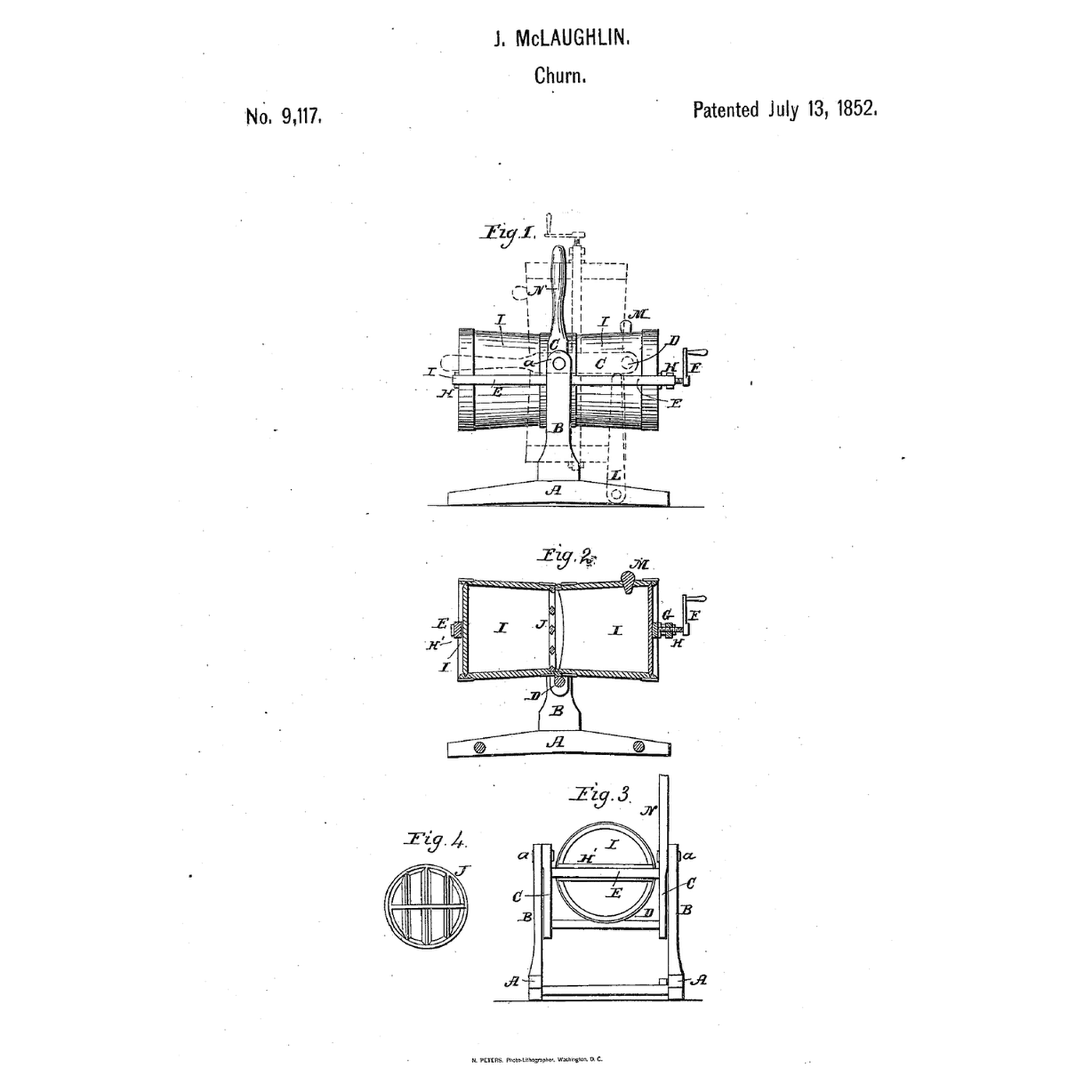
Rocking Two-Section Barrel Churn: Cream Falls Through a Grate as the Barrel Tips End Over End
láti ọwọ́ Karen
OÚNJẸ ÀTI OHUN MÍMU
18
0
0
0
0
0
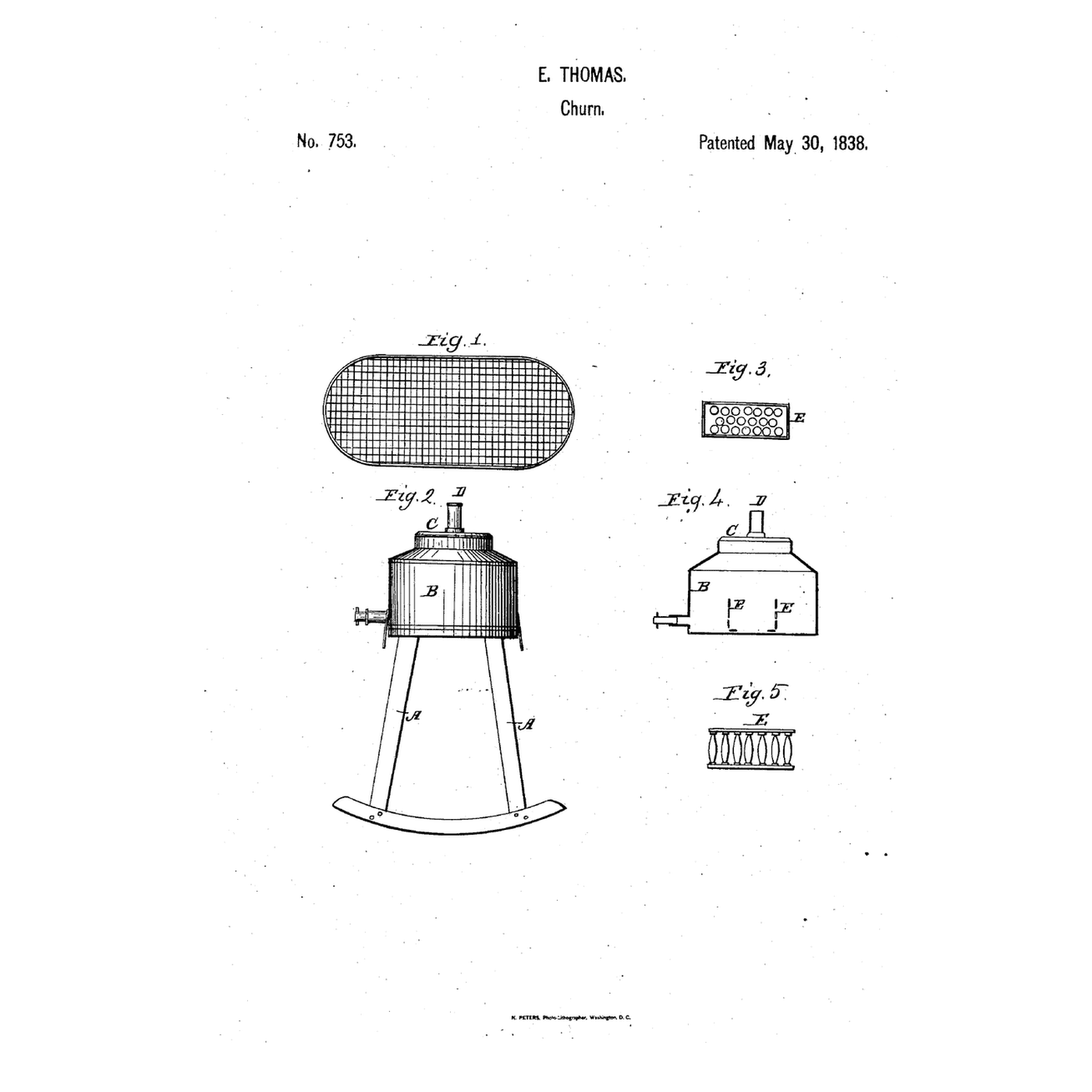
Rocking-Stool Churn: Rock the Churn, the Dashers Ride With It
láti ọwọ́ YourGrandma
OÚNJẸ ÀTI OHUN MÍMU
18
0
0
0
0
0

Churning Butter from Cream — The 5,000-Year-Old Fat Separation
láti ọwọ́ TheChef
IṢẸ́ ỌWỌ́
49
0
0
0
0
0
CC0 Àgbègbè Gbogbogbò
Blueprint yìí ti jáde lábẹ́ CC0. O lè ṣe àdàkọ, yí padà, pín, àti lò láìsí ìyọ̀ǹda.
Ṣàtìlẹ́yìn Olùṣẹ́dá nípa rírà àwọn ọjà nipasẹ̀ Blueprint wọn Ẹ̀san Olùṣẹ́dá tí àwọn Olùtajà gbé kalẹ̀, tàbí ṣẹ̀dá àtúnṣe tuntun ti Blueprint yìí kí o sì fi sínú Blueprint rẹ gẹ́gẹ́ bí ìsopọ̀ láti pín owó-wíwọlé.