IṢẸ́ ỌNÀ
ẸWÀ ÀTI ÌLERA
IṢẸ́ ỌWỌ́
ÀṢÀ ÀTI ÌTÀN
ÌṢERÉ
ÀYÍKÁ
OÚNJẸ ÀTI OHUN MÍMU
REVERSE ENGINEERING
SÁYẸ́ǸSÌ
ERÉ ÌDÁRAYÁ
ÌMỌ̀-Ẹ̀RỌ
ÀWỌN OHUN WÍWỌ̀
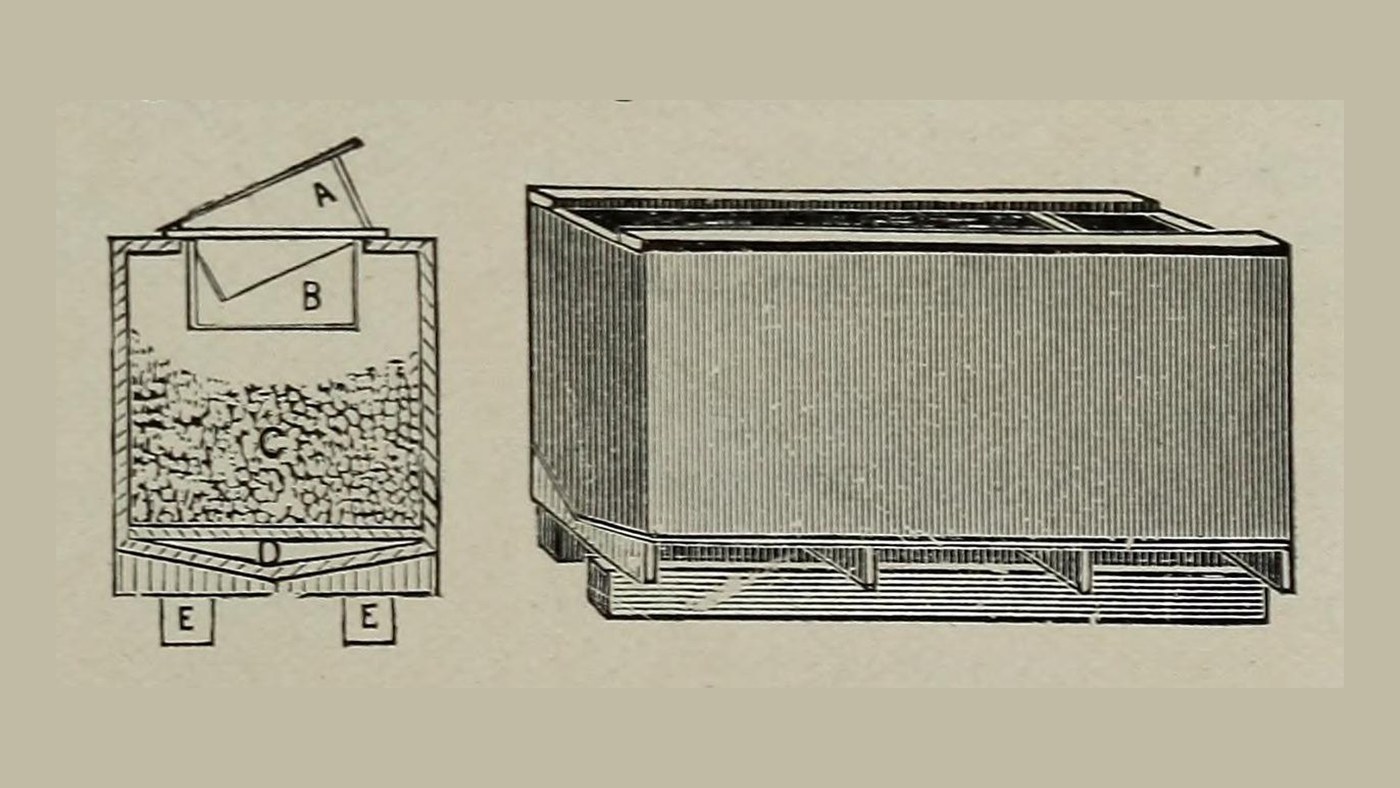


Uncapping Tray: McIntyre's Uncapping Box (A B C of Bee Culture, 1910)
A big wooden uncapping box from a California honey producer: 6 ft long, tin-lined, with a screen on cross strips to catch the cappings and a tin pipe at one end where the honey drains out, and an iron pivot on a cross piece to spin each comb while uncapping.
Its length lets the cappings be forked to the far end to drain for 4 or 5 days instead of piling under the knife.
Source: J. F. McIntyre in The A B C and X Y Z of Bee Culture (1910), pp. 183-184. Picture: the book's section and view.
Olùbẹ̀rẹ̀
Unknown
Ìlànà
1
1
Build the box
Build the box
Make a box 2 ft wide, 2 ft deep and 6 ft long outside of 7/8 in lumber dressed both sides, with the bottom 2 in lower in the middle than at the sides.
Àwọn ohun èlò fún ìgbésẹ̀ yìí:
 Páànù1 7/8 in lumber
Àwọn irinṣẹ́ tí a nílò:
 Ayùn Ọwọ́
 Òòlù
 Ìṣọ Irin
2
2
Line it and fit the pipe
Line it and fit the pipe
Line the bottom with tin to keep it from leaking, and fit a tin pipe at one end for the honey to run out.
Àwọn ohun èlò fún ìgbésẹ̀ yìí:
 Pátákó irin funfun1 ẹyọ
Àwọn irinṣẹ́ tí a nílò:
 Ìlàǹkàn irinÒòlù
3
3
Lay the screen
Lay the screen
Lay eleven pieces of wood 1 x 1 x 22 in across the bottom about 6 in apart and lay the screen on them, leaving room below for the honey to run to the pipe end.
Àwọn ohun èlò fún ìgbésẹ̀ yìí:
Páànù11 1 x 1 x 22 in Aṣọ ajọ okùn onírin híhun1 ẹyọ
Àwọn irinṣẹ́ tí a nílò:
Ayùn Ọwọ́4
4
Narrow the top and fit the pivot
Narrow the top and fit the pivot
Nail two pieces 7/8 x 3 x 72 in on the top edges, one each side, to narrow the top to the inside length of a Langstroth hive. Fix one piece 7/8 x 3 x 22 1/4 in across the top about 14 in from one end, with an iron pivot sticking up through it 1 1/2 in high to rest the combs on.
Àwọn ohun èlò fún ìgbésẹ̀ yìí:
Páànù3 two 7/8 x 3 x 72 in, one 7/8 x 3 x 22 1/4 in Àwọn ọ̀pá irin1 pivot 1 1/2 in highÌṣọ Irin1 ẹyọ
Àwọn irinṣẹ́ tí a nílò:
Ayùn Ọwọ́Òòlù5
5
Set it up and use it
Set it up and use it
Stand the box with its bottom 7 in from the floor so the honey can run into a strainer below; the top is then about 32 in high (make it shallower, or stand on a plank, for a shorter person). Set one end of a comb on the pivot, uncap one side, whirl it round and uncap the other, then stand the comb in the end of the box.
Àwọn irinṣẹ́ tí a nílò:
ÒòlùÀwọn ohun-èlò
5- 3 two 7/8 x 3 x 72 in, one 7/8 x 3 x 22 1/4 inÀyè
- 1 ẹyọÀyè
- Àyè
- 1 pivot 1 1/2 in highÀyè
- 1 ẹyọÀyè
Ìtọ́nisọ́nà yìí ń ṣe

CC0 Àgbègbè Gbogbogbò
Blueprint yìí ti jáde lábẹ́ CC0. O lè ṣe àdàkọ, yí padà, pín, àti lò láìsí ìyọ̀ǹda.
Ṣàtìlẹ́yìn Olùṣẹ́dá nípa rírà àwọn ọjà nipasẹ̀ Blueprint wọn Ẹ̀san Olùṣẹ́dá tí àwọn Olùtajà gbé kalẹ̀, tàbí ṣẹ̀dá àtúnṣe tuntun ti Blueprint yìí kí o sì fi sínú Blueprint rẹ gẹ́gẹ́ bí ìsopọ̀ láti pín owó-wíwọlé.