IṢẸ́ ỌNÀ
ẸWÀ ÀTI ÌLERA
IṢẸ́ ỌWỌ́
ÀṢÀ ÀTI ÌTÀN
ÌṢERÉ
ÀYÍKÁ
OÚNJẸ ÀTI OHUN MÍMU
REVERSE ENGINEERING
SÁYẸ́ǸSÌ
ERÉ ÌDÁRAYÁ
ÌMỌ̀-Ẹ̀RỌ
ÀWỌN OHUN WÍWỌ̀
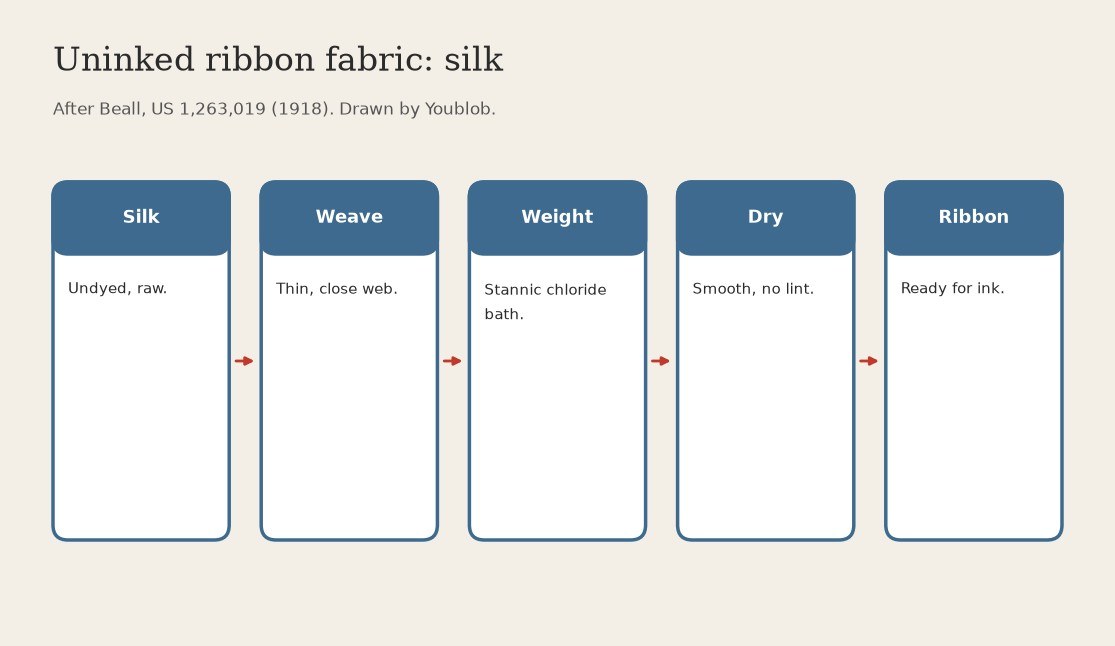


Uninked Ribbon Fabric: Undyed Raw Silk Weighted in Stannic Chloride (Beall, US 1,263,019, 1918)
Silk makes the thinnest, lint-free typewriter ribbon and the sharpest type. Beall used undyed raw silk, which soaks up more ink than dyed silk, and weighted it in a tin solution so the light ribbon gains body, wears longer and runs through the guides without wrinkling.
Result: a thin, close silk ribbon fabric, ready for inking.
Source: Beall, US 1,263,019 (1918). Not given: weave count, width, strength of the tin solution, soaking time. Picture drawn by Youblob.
Àárín
1 day
Ìlànà
1
1
Weave undyed raw silk thin and close
Weave undyed raw silk thin and close
Weave pure undyed raw silk into a thin, close web at ribbon width. Weave count and width: not given.
Àwọn ohun èlò fún ìgbésẹ̀ yìí:
 Òwú síliki1 as required
Àwọn irinṣẹ́ tí a nílò:
 Ẹ̀rọ ìhun
2
2
Weight it in a tin solution
Weight it in a tin solution
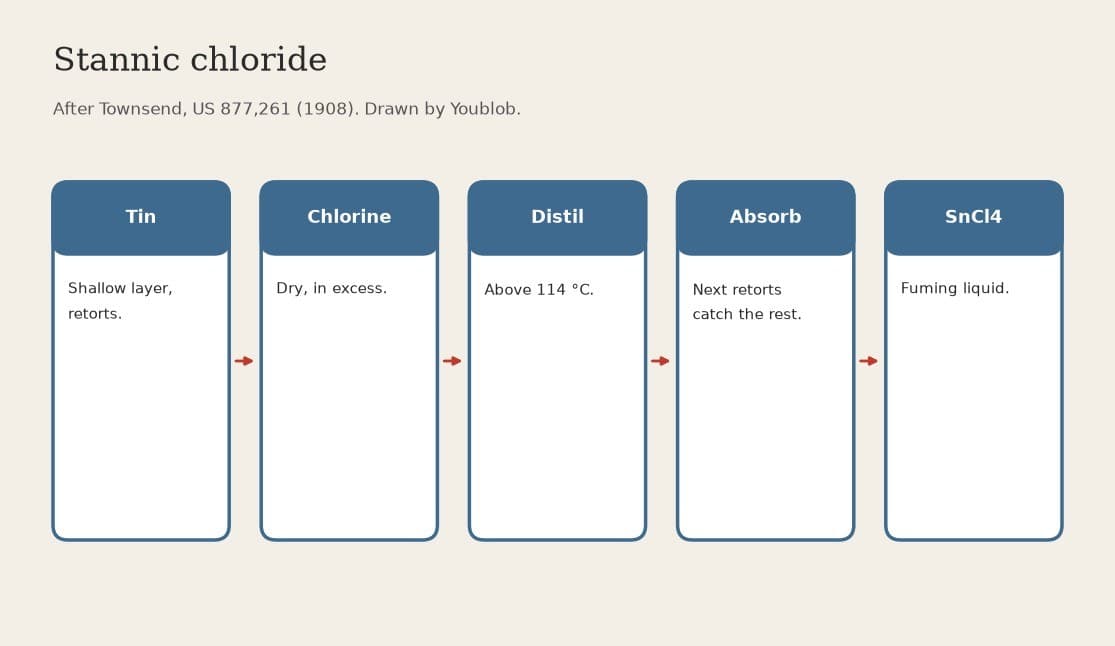
Immerse the woven ribbon in a solution of stannic chloride. It adds weight and wear, at a slight cost in ink taken up. Beall allows doing this to the silk before weaving. Strength and time: not given.
Àwọn ohun èlò fún ìgbésẹ̀ yìí:
 Stannic chloride1 as required
Àwọn irinṣẹ́ tí a nílò:
 Omi
 Àwo pẹlẹbẹ fún gbígbẹ
3
3
Dry it smooth
Dry it smooth
Dry the ribbon flat: both faces should be smooth and free from lint. It is then ready to be impregnated with ribbon ink.
Àwọn irinṣẹ́ tí a nílò:
Àwo pẹlẹbẹ fún gbígbẹÀwọn ohun-èlò
2- 1 as requiredÀyè
- 1 as requiredÀyè
Ìtọ́nisọ́nà yìí ń ṣe
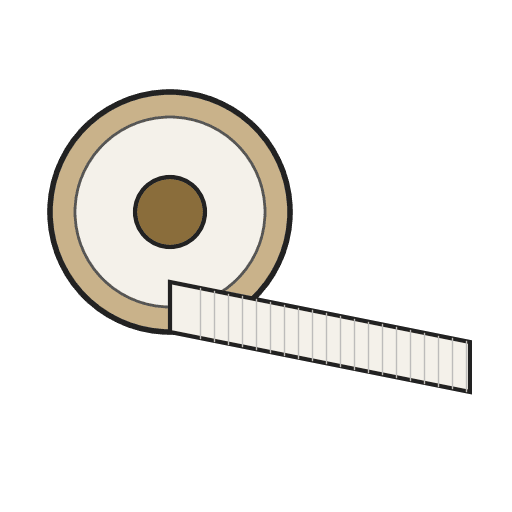
Blueprint tó jọra
Àwọn blueprint wọ̀nyí pín ìmọ̀ — ọ̀nà, ohun-èlò tàbí ìlànà

CC0 Àgbègbè Gbogbogbò
Blueprint yìí ti jáde lábẹ́ CC0. O lè ṣe àdàkọ, yí padà, pín, àti lò láìsí ìyọ̀ǹda.
Ṣàtìlẹ́yìn Olùṣẹ́dá nípa rírà àwọn ọjà nipasẹ̀ Blueprint wọn Ẹ̀san Olùṣẹ́dá tí àwọn Olùtajà gbé kalẹ̀, tàbí ṣẹ̀dá àtúnṣe tuntun ti Blueprint yìí kí o sì fi sínú Blueprint rẹ gẹ́gẹ́ bí ìsopọ̀ láti pín owó-wíwọlé.