IṢẸ́ ỌNÀ
ẸWÀ ÀTI ÌLERA
IṢẸ́ ỌWỌ́
ÀṢÀ ÀTI ÌTÀN
ÌṢERÉ
ÀYÍKÁ
OÚNJẸ ÀTI OHUN MÍMU
REVERSE ENGINEERING
SÁYẸ́ǸSÌ
ERÉ ÌDÁRAYÁ
ÌMỌ̀-Ẹ̀RỌ
ÀWỌN OHUN WÍWỌ̀
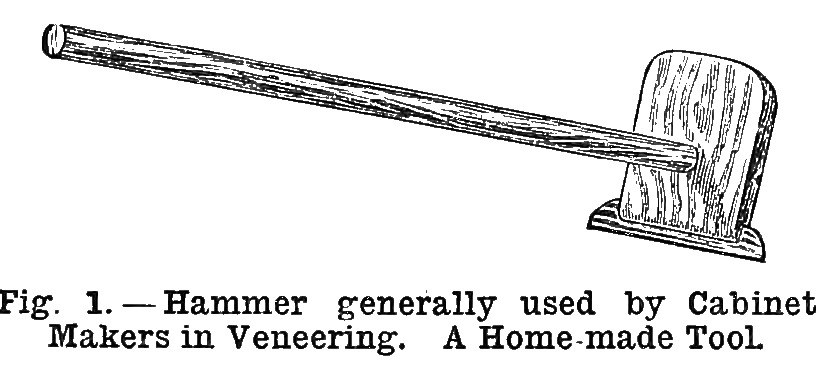


Veneer Hammer: an Iron Strip Set in a Wooden Head (Work, 1889)
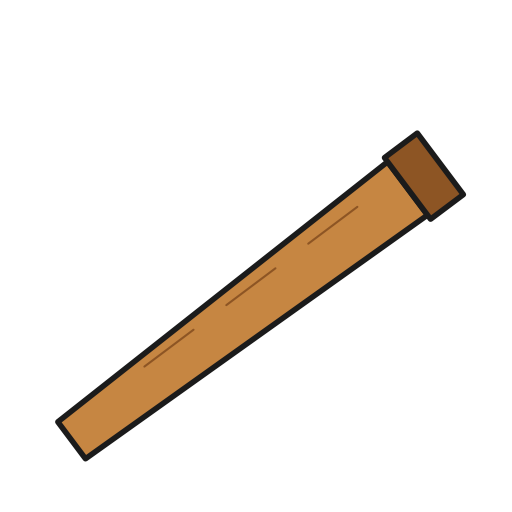
The veneering hammer does not strike: it is drawn over glued veneer like a squeegee, pressing it down. David Adamson (1889) says it is hardly worth buying, as anyone can make one: a strip of iron 3 to 6 inches long set in a wooden head with a handle, its edge projecting, straight, and smoothly rounded.
Shape and size do not matter much; it must be strong, the iron thick enough not to bend, and the edge smooth.
Source: D. Adamson, 'Practical Veneering', Work, 5 October 1889, p. 453. Picture: his Fig. 1.
Olùbẹ̀rẹ̀
Unknown
Ìlànà
1
1
Read Adamson
Read Adamson
"A strip of iron of, say, from 3 in. to 6 in. long and of any convenient width is firmly fixed between two pieces of wood, or in a groove cut in one piece to form the head. In this a handle is inserted. The precise shape and size of any part are quite immaterial, the principal points to be observed being strength and convenience."
2
2
Cut the iron strip
Cut the iron strip
Cut a strip of iron 3 to 6 in. long and of any convenient width, thick enough not to bend when the hammer is pressed hard. Its thickness is not given (unknown). Ours: cut from iron plate with a hacksaw.
Àwọn ohun èlò fún ìgbésẹ̀ yìí:
 Pẹpẹ irin1 strip 3-6 in.
Àwọn irinṣẹ́ tí a nílò:
 Ayùn Irin
 Ìwọ̀n tí a kò mọ̀
3
3
Make the head
Make the head
Cut a groove in a block of wood and fix the strip firmly in it, with its edge projecting beyond the wood (or fix it between two pieces of wood). Fit a handle into the head. The wood, and how the strip and handle are fixed, are not given (unknown). Ours: a hardwood block, the groove sawn.
Àwọn ohun èlò fún ìgbésẹ̀ yìí:
 Ìṣù Igi Líle1 head
 Èkù Ohun-èlò1 ẹyọ
 Asopọ̀ tí a kò mọ̀1 ẹyọ
Àwọn irinṣẹ́ tí a nílò:
 Ayùn ẹlẹ́yìn irin
4
4
Round the edge
Round the edge
File the projecting iron edge straight, smooth and rounded so it passes freely over the veneer, and slightly round off its lower corners so they do not damage the veneer. The smoother the edge, the easier the tool is to use.
Àwọn irinṣẹ́ tí a nílò:
 Àwọn Ìfá (Ìfá Ọwọ́)
Àwọn ohun-èlò
4- 1 strip 3-6 in.Àyè
- 1 headÀyè
- 1 ẹyọÀyè
- 1 ẹyọÀyè
Àwọn irinṣẹ́ tó nílò
4- Àyè
Ìtọ́nisọ́nà yìí ń ṣe

CC0 Àgbègbè Gbogbogbò
Blueprint yìí ti jáde lábẹ́ CC0. O lè ṣe àdàkọ, yí padà, pín, àti lò láìsí ìyọ̀ǹda.
Ṣàtìlẹ́yìn Olùṣẹ́dá nípa rírà àwọn ọjà nipasẹ̀ Blueprint wọn Ẹ̀san Olùṣẹ́dá tí àwọn Olùtajà gbé kalẹ̀, tàbí ṣẹ̀dá àtúnṣe tuntun ti Blueprint yìí kí o sì fi sínú Blueprint rẹ gẹ́gẹ́ bí ìsopọ̀ láti pín owó-wíwọlé.