IṢẸ́ ỌNÀ
ẸWÀ ÀTI ÌLERA
IṢẸ́ ỌWỌ́
ÀṢÀ ÀTI ÌTÀN
ÌṢERÉ
ÀYÍKÁ
OÚNJẸ ÀTI OHUN MÍMU
REVERSE ENGINEERING
SÁYẸ́ǸSÌ
ERÉ ÌDÁRAYÁ
ÌMỌ̀-Ẹ̀RỌ
ÀWỌN OHUN WÍWỌ̀
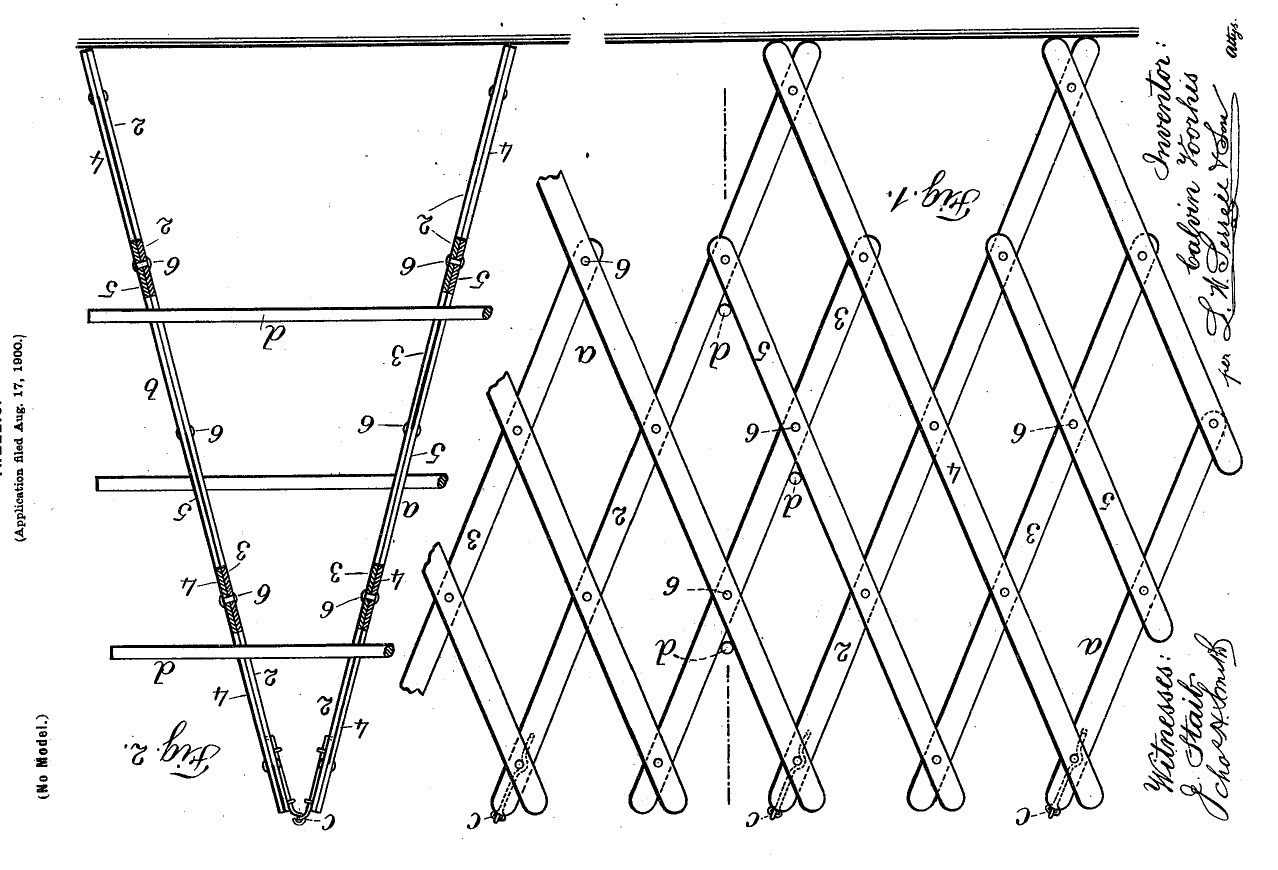


Folding Garden Trellis: Two Lazy-Tongs Sections Standing as an Inverted V (Voorhis, 1901)
Calvin Voorhis of Cranford, New Jersey, received US 666,945, dated 29 January 1901, for a trellis that needs no stakes. Two lazy-tongs sections of thin wooden strips, hooked together along the top, stand on the ground as an inverted V over the row. Spread it low and long for peas, close it up and high for tomatoes, and fold it flat to store for the winter.
All sizes are ours.
Olùbẹ̀rẹ̀
About 4 hours
Ìlànà
1
1
Strip lengths
Strip lengths
Ń ṣí ìwé Jupyter…
2
2
Read US 666,945
Read US 666,945
"The trellis is self-supporting, requiring only to rest upon the ground, and each portion of the growth of the vines receives its proper share of sunlight, air, and support."
3
3
Cut and drill the strips
Cut and drill the strips
Cut thin wooden strips: long ones 600 mm and short ones 300 mm (ours), enough for two sections of the length you want. Drill each long strip at both ends and the middle, and each short strip at both ends, all at the same spacing.
Àwọn ohun èlò fún ìgbésẹ̀ yìí:
 Tẹ́ẹ́rẹ́ igi líle1 ẹyọ
Àwọn irinṣẹ́ tí a nílò:
 Okùn Ìdíwọ̀n
 Gègé
 Ayùn Ọwọ́
 Ìlù ọwọ́
 Bébà Ìfá
4
4
Rivet the lazy-tongs
Rivet the lazy-tongs
Lay out each section as his Fig. 1: long strips 2 running one way alternating with short strips 3, crossed by long strips 4 and short strips 5 running the other way. Rivet them where they cross (his pins 6), not too tight, so the section opens and closes like lazy tongs.
Àwọn ohun èlò fún ìgbésẹ̀ yìí:
 Ìṣó bàbà1 ẹyọ
Àwọn irinṣẹ́ tí a nílò:
 Òòlù olórí bọ́ọ̀lù
 Igi Àmì Àárín
5
5
Join the two sections
Join the two sections
Screw hook-and-eye fastenings into the inner faces of the two sections' top ends at intervals, his hooks c, so the two sections meet at the top and stand apart at the bottom in an inverted V.
Àwọn ohun èlò fún ìgbésẹ̀ yìí:
 Ìkọ̀ àti ojú1 ẹyọ
Àwọn irinṣẹ́ tí a nílò:
Ìlù ọwọ́6
6
Set it over the row
Set it over the row
Stand the trellis over the plants, spread low for peas or closed up high for tomatoes. Lay short dowel sticks d across between the sections, resting in the notches where the strips cross; the vines climb through the openings and over the sticks.
Àwọn ohun èlò fún ìgbésẹ̀ yìí:
 Àwọn dowel igi líle1 ẹyọ
Àwọn irinṣẹ́ tí a nílò:
Ayùn Ọwọ́7
7
Troubleshooting
Troubleshooting
Trellis troubleshooting.
Flow
Loading...
8
8
History and honest limits
History and honest limits
**Calvin Voorhis** of Cranford, New Jersey, US 666,945, dated 29 January 1901, filed 17 August 1900. He claimed "a trellis for plants composed of two lazy-tongs sections, each consisting of alternate and oppositely-placed short and long strips pivotally connected", joined at the top and with transverse sticks resting in the openings. He gives no sizes; the wood, all sizes, the rivets and the dowel sticks are ours.
Àwọn ohun-èlò
4- 1 ẹyọÀyè
- 1 ẹyọÀyè
- 1 ẹyọÀyè
- 1 ẹyọÀyè
Ìtọ́nisọ́nà yìí ń ṣe
Blueprint tó jọra
Àwọn blueprint wọ̀nyí pín ìmọ̀ — ọ̀nà, ohun-èlò tàbí ìlànà
CC0 Àgbègbè Gbogbogbò
Blueprint yìí ti jáde lábẹ́ CC0. O lè ṣe àdàkọ, yí padà, pín, àti lò láìsí ìyọ̀ǹda.
Ṣàtìlẹ́yìn Olùṣẹ́dá nípa rírà àwọn ọjà nipasẹ̀ Blueprint wọn Ẹ̀san Olùṣẹ́dá tí àwọn Olùtajà gbé kalẹ̀, tàbí ṣẹ̀dá àtúnṣe tuntun ti Blueprint yìí kí o sì fi sínú Blueprint rẹ gẹ́gẹ́ bí ìsopọ̀ láti pín owó-wíwọlé.