IṢẸ́ ỌNÀ
ẸWÀ ÀTI ÌLERA
IṢẸ́ ỌWỌ́
ÀṢÀ ÀTI ÌTÀN
ÌṢERÉ
ÀYÍKÁ
OÚNJẸ ÀTI OHUN MÍMU
REVERSE ENGINEERING
SÁYẸ́ǸSÌ
ERÉ ÌDÁRAYÁ
ÌMỌ̀-Ẹ̀RỌ
ÀWỌN OHUN WÍWỌ̀
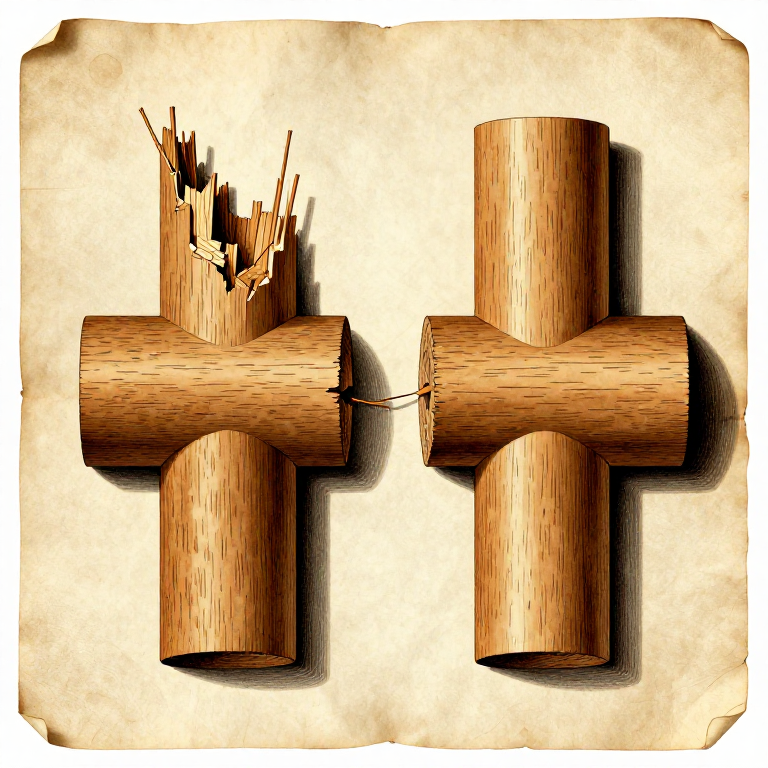


What a Glue Joint Is: Why a Good One Breaks Everywhere Except the Glue
A properly glued wood joint is stronger than the wood beside it. Break one and the fracture runs through the timber, not along the glue line — there are wood fibres stuck to both faces.
That single test tells you everything. If a joint fails cleanly at the glue line, leaving two bare surfaces, the glue never bonded — and the cause is almost always surface preparation, the wrong adhesive, or a starved joint, in that order.
264 published blueprints on Youblob use clamps and 193 use an adhesive. Not one explained how to make the joint hold. This is the first of eight rungs.
Olùbẹ̀rẹ̀
2 hours
Ìlànà
1
1
Adhesion and cohesion are two different failures
Adhesion and cohesion are two different failures
ADHESION is the glue sticking to the material. COHESION is the glue sticking to itself. A joint can fail either way and the break tells you which.
Glue left on both faces after a break means the glue tore internally — a cohesive failure, so the adhesive was too weak or not fully cured. Bare surfaces with the glue all on one side, or none at all, means an adhesive failure: it never gripped, and that is a preparation problem.
Wood fibres on both faces means neither failed — the WOOD did, which is the result you want. Break a test joint deliberately before committing to a real one; it is five minutes and it answers a question guessing cannot.
Àwọn ohun èlò fún ìgbésẹ̀ yìí:
 Pátákó Igi Rírọ̀ Gbígbẹ2 ẹyọ
 Ìdìpọ̀ Igi PVA1 ẹyọ
Àwọn irinṣẹ́ tí a nílò:
 Ìdìmú onídàbí C
 Lúpù Ìgbéga
2
2
Most wood glue needs a thin film, not a thick one
Most wood glue needs a thin film, not a thick one
PVA and hide glue are strongest as a very thin layer between two surfaces that are already touching. They have almost no gap-filling ability: a thick glue line is weaker than a thin one, not stronger.
So the strength comes from the FIT. Two faces that meet cleanly along their whole area, with a film you can barely see, give a joint stronger than the timber. Two faces with a visible gap filled with glue give a joint that will fail at the gap.
Epoxy and polyurethane are the exceptions and that is exactly what they are for — the adhesive rung covers when the gap is unavoidable and a gap-filling glue is the right answer rather than an excuse.
Àwọn ohun èlò fún ìgbésẹ̀ yìí:
Pátákó Igi Rírọ̀ Gbígbẹ2 ẹyọÌdìpọ̀ Igi PVA1 ẹyọ Ẹpọ́ksì Ẹ̀yà Méjì1 ẹyọ
Àwọn irinṣẹ́ tí a nílò:
 Búrọ́ọ̀ṣì ìdìpọ̀
 Etí tààrà
3
3
End grain drinks glue, and it is the weakest joint there is
End grain drinks glue, and it is the weakest joint there is
Wood fibres are tubes. Cut across them and you have thousands of open straws that wick the glue away from the surface, leaving the joint starved — and even when fed properly, an end-grain butt joint is a fraction of the strength of a long-grain one.
The fix is SIZING: brush on a thin coat of diluted glue, let it soak in and go tacky, then glue normally. The straws are already full, so the second coat stays where it is needed.
But the real answer is usually to change the joint. A mortise and tenon, a dovetail or a spline converts an end-grain connection into long-grain contact — which is precisely why those joints exist, and why the published joinery blueprints are shaped the way they are.
Àwọn ohun èlò fún ìgbésẹ̀ yìí:
 Pátákó Igi Líle2 ẹyọÌdìpọ̀ Igi PVA1 ẹyọ
Àwọn irinṣẹ́ tí a nílò:
Búrọ́ọ̀ṣì ìdìpọ̀Lúpù Ìgbéga4
4
Test the joint by breaking it
Test the joint by breaking it
Glue two offcuts of the same timber with the same adhesive, clamp as you intend to, leave it as long as you intend to, then put it in the vice and break it.
Look at the broken faces. Wood on both sides means your whole process is sound and you can proceed with confidence. Bare glue line means something in the process is wrong and you have found out on a scrap rather than on the work.
Do this whenever anything changes — a new glue, an unfamiliar timber, a cold workshop, a joint you have not made before. It is the only direct evidence available, and every other check in this batch is a proxy for it.
Àwọn ohun èlò fún ìgbésẹ̀ yìí:
Pátákó Igi Líle2 ẹyọÌdìpọ̀ Igi PVA1 ẹyọÀwọn irinṣẹ́ tí a nílò:
 Ìdìmú tábìlì iṣẹ́ tí ó wúwoLúpù ÌgbégaÌdìmú onídàbí C
Àwọn ohun-èlò
4- Àyè
- 4 ẹyọÀyè
- 1 ẹyọÀyè
- 2 ẹyọÀyè
Blueprint tó jọra
Àwọn blueprint wọ̀nyí pín ìmọ̀ — ọ̀nà, ohun-èlò tàbí ìlànà


CC0 Àgbègbè Gbogbogbò
Blueprint yìí ti jáde lábẹ́ CC0. O lè ṣe àdàkọ, yí padà, pín, àti lò láìsí ìyọ̀ǹda.
Ṣàtìlẹ́yìn Olùṣẹ́dá nípa rírà àwọn ọjà nipasẹ̀ Blueprint wọn Ẹ̀san Olùṣẹ́dá tí àwọn Olùtajà gbé kalẹ̀, tàbí ṣẹ̀dá àtúnṣe tuntun ti Blueprint yìí kí o sì fi sínú Blueprint rẹ gẹ́gẹ́ bí ìsopọ̀ láti pín owó-wíwọlé.