IṢẸ́ ỌNÀ
ẸWÀ ÀTI ÌLERA
IṢẸ́ ỌWỌ́
ÀṢÀ ÀTI ÌTÀN
ÌṢERÉ
ÀYÍKÁ
OÚNJẸ ÀTI OHUN MÍMU
REVERSE ENGINEERING
SÁYẸ́ǸSÌ
ERÉ ÌDÁRAYÁ
ÌMỌ̀-Ẹ̀RỌ
ÀWỌN OHUN WÍWỌ̀
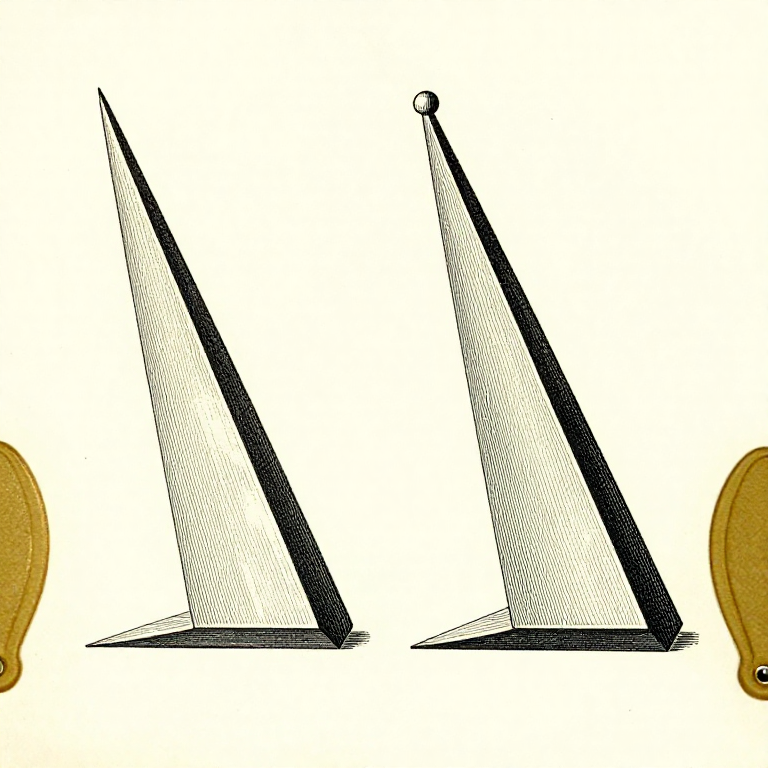


What Sharp Actually Is: Two Surfaces Meeting at a Line
An edge is not a thing. It is the LINE where two polished surfaces meet, and it has no width at all when it is perfect. Everything about sharpening follows from that one sentence, and most of the confusion around it comes from not having heard it.
A dull edge is not worn away — it is ROUNDED. Where two flat surfaces used to meet at a line there is now a tiny cylinder, a few micrometres across, and that cylinder pushes fibres aside instead of parting them. Sharpening does not add anything; it removes metal from both surfaces until they meet again.
Twenty-two edge tools are published on Youblob — bronze chisels, stone adzes, Viking sickles, a drawknife — and not one of them works for long without this. It is the same problem on every one.
Olùbẹ̀rẹ̀
2 hours
Ìlànà
1
1
Look at a dull edge and see the line of light
Look at a dull edge and see the line of light
Hold a blunt blade edge-up under a bright lamp and look straight down at the edge. Tilt it slowly.
A dull edge catches the light and shows as a thin bright line, because the rounded tip is a surface and surfaces reflect. A truly sharp edge has no surface to catch the light and simply disappears — you cannot see it at all.
That is the only sharpness test you always have with you, it takes two seconds, and it is more reliable than dragging a thumb across the edge. Bright spots along an otherwise invisible edge are nicks; a bright line along its whole length means the whole edge is round.
Àwọn irinṣẹ́ tí a nílò:
 Ìdìpọ̀ chisel - bevel-edge
 Lúpù Ìgbéga
2
2
Sharpening removes metal — it does not restore anything
Sharpening removes metal — it does not restore anything
Draw across the bevel of a blunt chisel with a permanent marker, then take a few strokes on a stone and look at what the marker shows.
Where the ink is gone, the stone touched. Where it remains, it did not. This is the most useful diagnostic in sharpening and it costs nothing: it tells you exactly where your strokes are landing, which is almost never where you assume.
It also makes the principle concrete. You are not reviving an edge, you are grinding the whole bevel back until it meets the flat side again. A chisel gets shorter over its life, and that is correct.
Àwọn irinṣẹ́ tí a nílò:
Ìdìpọ̀ chisel - bevel-edge Òkúta Ìpọ́n
 Ààmì Tí Kò Ní Parẹ́
3
3
The angle is a compromise, not a preference
The angle is a compromise, not a preference
Ń ṣí ìwé Jupyter…
Àwọn irinṣẹ́ tí a nílò:
 Ẹ̀rọ Ìṣirò
4
4
Sharp is a property of the steel, not only the grinding
Sharp is a property of the steel, not only the grinding
A blade too soft will not hold the edge you put on it; one too hard will chip rather than dull. Both feel like a sharpening failure and neither is.
If an edge goes from sharp to useless within a few cuts with no visible damage, the steel is too soft — it is deforming, rolling over. If it comes back from the stone perfect and then shows tiny bright nicks, it is too hard or too thin for the work. The heat-treatment blueprint published here is where that is set.
This matters for the bronze and stone tools in the catalogue too. A bronze chisel cannot hold a razor angle — it work-hardens at the edge and then deforms — so it is sharpened blunter on purpose, and that is not a compromise but the correct angle for that metal.
Àwọn irinṣẹ́ tí a nílò:
Ìdìpọ̀ chisel - bevel-edgeLúpù Ìgbéga Pátákó Igi Rírọ̀ Gbígbẹ
Àwọn irinṣẹ́ tó nílò
6- Àyè
- Àyè
- Àyè
Blueprint tó jọra
Àwọn blueprint wọ̀nyí pín ìmọ̀ — ọ̀nà, ohun-èlò tàbí ìlànà

CC0 Àgbègbè Gbogbogbò
Blueprint yìí ti jáde lábẹ́ CC0. O lè ṣe àdàkọ, yí padà, pín, àti lò láìsí ìyọ̀ǹda.
Ṣàtìlẹ́yìn Olùṣẹ́dá nípa rírà àwọn ọjà nipasẹ̀ Blueprint wọn Ẹ̀san Olùṣẹ́dá tí àwọn Olùtajà gbé kalẹ̀, tàbí ṣẹ̀dá àtúnṣe tuntun ti Blueprint yìí kí o sì fi sínú Blueprint rẹ gẹ́gẹ́ bí ìsopọ̀ láti pín owó-wíwọlé.