IṢẸ́ ỌNÀ
ẸWÀ ÀTI ÌLERA
IṢẸ́ ỌWỌ́
ÀṢÀ ÀTI ÌTÀN
ÌṢERÉ
ÀYÍKÁ
OÚNJẸ ÀTI OHUN MÍMU
REVERSE ENGINEERING
SÁYẸ́ǸSÌ
ERÉ ÌDÁRAYÁ
ÌMỌ̀-Ẹ̀RỌ
ÀWỌN OHUN WÍWỌ̀
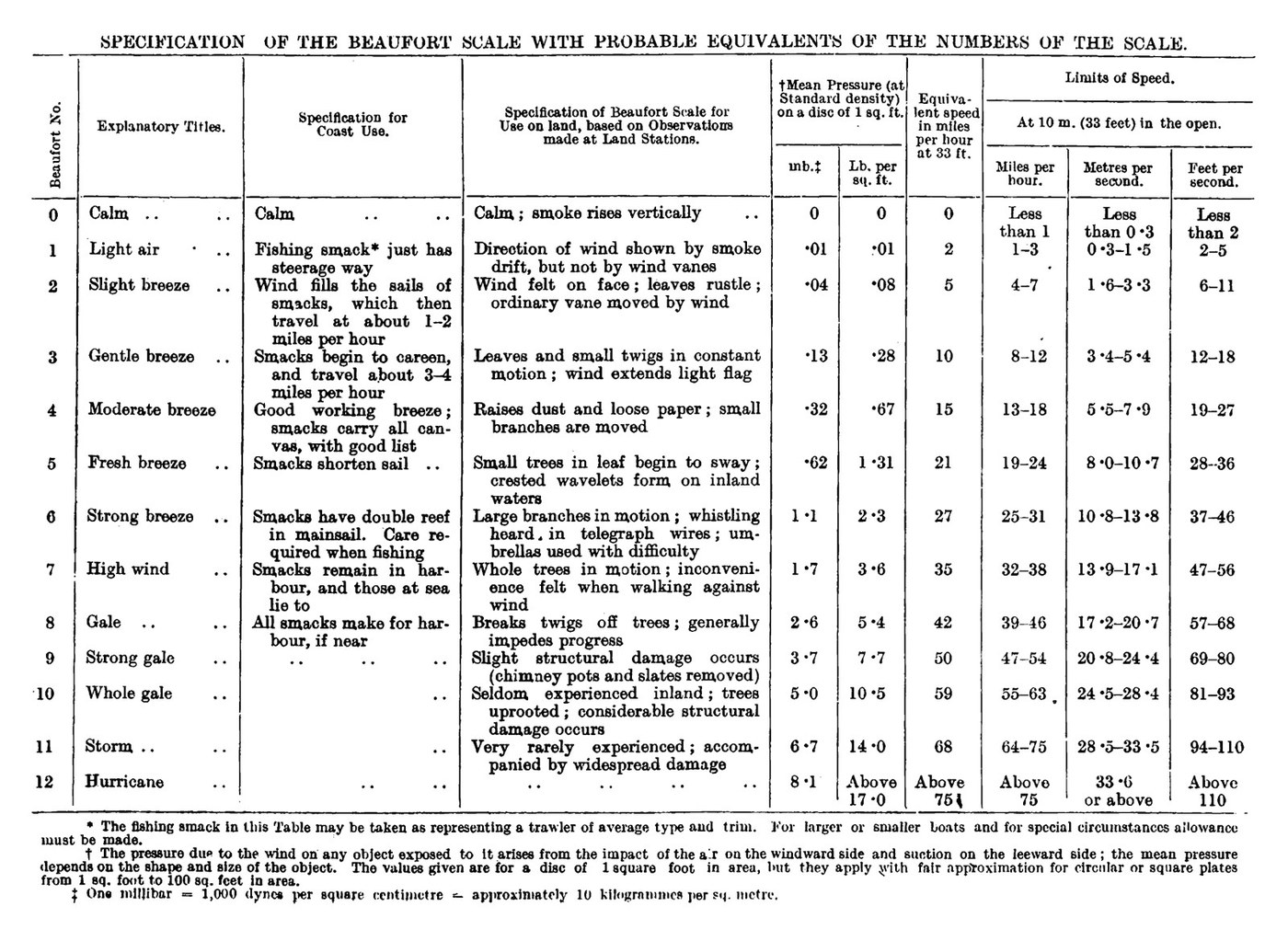


Wind Speed by Eye on the Beaufort Scale (1925 Table)
Without an instrument, judge the wind by what it does: smoke, leaves, twigs, branches, whole trees. Match it to a Beaufort number and the notebook gives the speed in miles per hour and metres per second.
Result: the wind force 0-12 and its probable speed at 10 m above open ground.
Source: Australian Meteorological Observer's Handbook (1925), pp. 45-46, after the Meteorological Office report of 1906. Picture: the table itself.
Olùbẹ̀rẹ̀
15 minutes
Ìlànà
1
1
Stand in the open
Stand in the open
Go to an exposed spot, or one with trees and similar objects in view on which the wind's effect can be seen. The table's speeds are for 10 m (33 ft) above open, level, grassy ground.
Àwọn irinṣẹ́ tí a nílò:
 Afẹ́fẹ́ àyíká ayé - Ayé
2
2
Match what you see
Match what you see
Read the land descriptions in the notebook (smoke rises vertically, leaves rustle, small trees sway...) and pick the number that fits. Estimates by eye cannot be very precise.
Àwọn irinṣẹ́ tí a nílò:
Afẹ́fẹ́ àyíká ayé - Ayé3
3
Look up the speed
Look up the speed
Ń ṣí ìwé Jupyter…
Àwọn irinṣẹ́ tí a nílò:
Afẹ́fẹ́ àyíká ayé - AyéBlueprint tó jọra
Àwọn blueprint wọ̀nyí pín ìmọ̀ — ọ̀nà, ohun-èlò tàbí ìlànà
CC0 Àgbègbè Gbogbogbò
Blueprint yìí ti jáde lábẹ́ CC0. O lè ṣe àdàkọ, yí padà, pín, àti lò láìsí ìyọ̀ǹda.
Ṣàtìlẹ́yìn Olùṣẹ́dá nípa rírà àwọn ọjà nipasẹ̀ Blueprint wọn Ẹ̀san Olùṣẹ́dá tí àwọn Olùtajà gbé kalẹ̀, tàbí ṣẹ̀dá àtúnṣe tuntun ti Blueprint yìí kí o sì fi sínú Blueprint rẹ gẹ́gẹ́ bí ìsopọ̀ láti pín owó-wíwọlé.