IṢẸ́ ỌNÀ
ẸWÀ ÀTI ÌLERA
IṢẸ́ ỌWỌ́
ÀṢÀ ÀTI ÌTÀN
ÌṢERÉ
ÀYÍKÁ
OÚNJẸ ÀTI OHUN MÍMU
REVERSE ENGINEERING
SÁYẸ́ǸSÌ
ERÉ ÌDÁRAYÁ
ÌMỌ̀-Ẹ̀RỌ
ÀWỌN OHUN WÍWỌ̀
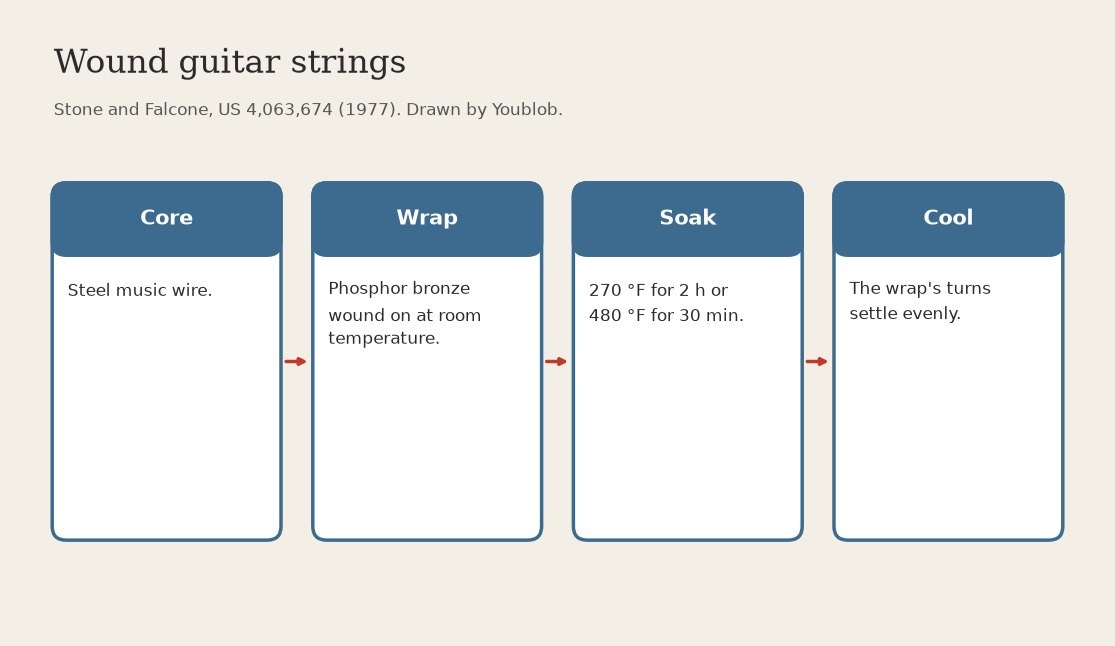


Guitar Strings: Bronze Wound on Steel, Then Heat-Soaked (Stone and Falcone 1977)
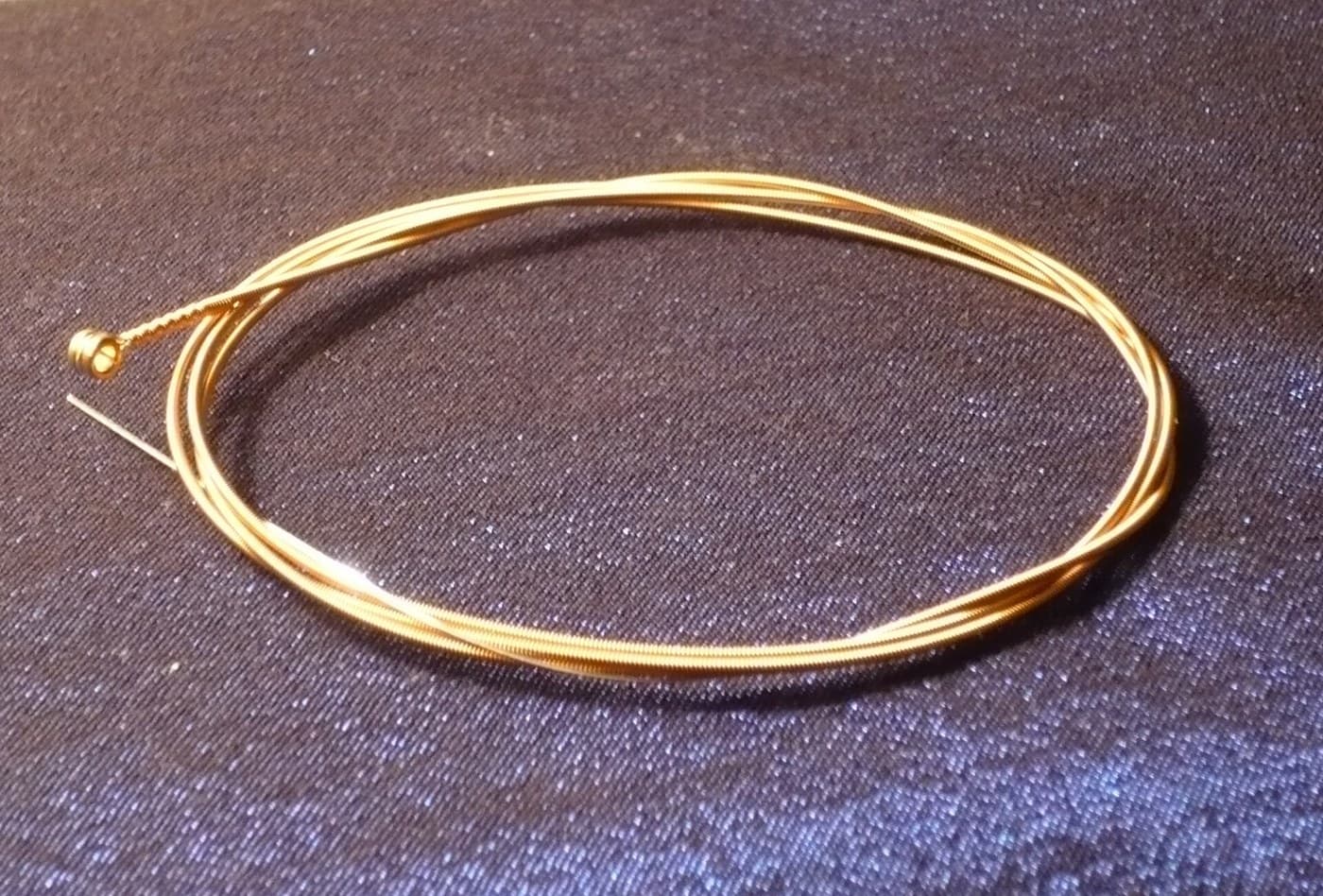
A wound string is a steel core with another wire wrapped round it. Stone and Falcone believed the wrap keeps stresses from the winding and slowly unwinds as the string is played, so the tone goes dead. Their fix: after winding, heat-soak the string, at least 2 hours at 270 °F or 30 minutes at 480 °F for a bronze wrap, then let it cool.
Source: W. N. Stone and A. S. Falcone (National Musical String Co.), US 4,063,674 (1977). Unknown: where phosphor bronze wire comes from, and the gauges. The winding, which the patent calls conventional, is ours, after Landtroop and Dykstra, US 6,256,872 (2001). These are linked to unknown heads. The plain strings of the set are steel music wire; that, the oven and the nitrogen are ours. Picture drawn by Youblob.
Ilọsíwájú
1 day
Ìlànà
1
1
Cut the core and plain strings
Cut the core and plain strings
Cut steel music wire for the cores of the wound strings and for the plain strings of the set. Unknown: the gauges and lengths, and the ball ends.
Àwọn ohun èlò fún ìgbésẹ̀ yìí:
 Okùn Irin Orin 0.032 inch1 as required
Àwọn irinṣẹ́ tí a nílò:
 Ẹ̀mú ìgé okùn oníkọ̀rọ̀
 Ìwọ̀n tí a kò mọ̀
2
2
Wind the bronze wrap at room temperature
Wind the bronze wrap at room temperature
Wrap phosphor bronze wire helically round each core at room temperature. The patent prefers a wrap that expands more with heat than the core. The patent says only 'in a conventional manner'. Ours, after Landtroop and Dykstra, US 6,256,872 (2001): hook the core's ball end on the motor-driven headstock spindle, grip the other end in the tailstock chuck and stretch it with the tailstock tension cylinder; fix the end of the cover wire at the ball end, then spin the core while a carriage travels toward the tailstock, paying the cover wire out under tension from its spool; cut it off at the end.
Àwọn ohun èlò fún ìgbésẹ̀ yìí:
 Wáyà idẹ fọ́sfọ́rù1 as required
Àwọn irinṣẹ́ tí a nílò:
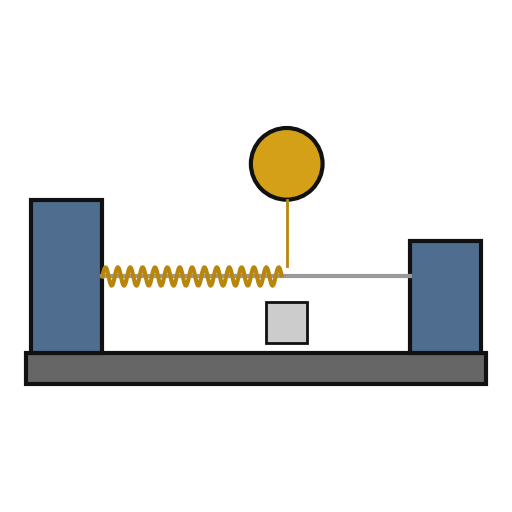 Ẹ̀rọ ìwé okùn ohun-èlò orinÌwọ̀n tí a kò mọ̀
 Gíláàsì ààbò
3
3
Heat-soak the wound strings
Heat-soak the wound strings
Heat the wound strings for a bronze wrap at 270-480 °F (132-249 °C): at least 2 hours at 270 °F or at least 30 minutes at 480 °F, shorter the hotter. If the wire tarnishes in hot air, do it without air, in nitrogen or carbon dioxide. The wrap's turns settle into more even spacing.
Àwọn irinṣẹ́ tí a nílò:
 Ààrò
 Ẹ̀rọ Ìwọ̀n Ooru Yàrá Ìwádìí
 Sílíńdà Gáàsì Nàìtírójìn
4
4
Cool and set up the set
Cool and set up the set
Let the strings cool back to room temperature. Make up the set with the plain steel strings.
Àwọn irinṣẹ́ tí a nílò:
Ẹ̀mú ìgé okùn oníkọ̀rọ̀Àwọn ohun-èlò
2- 1 as requiredÀyè
- 1 as requiredÀyè
Àwọn irinṣẹ́ tó nílò
7- Àyè
- Àyè
Ìtọ́nisọ́nà yìí ń ṣe

Blueprint tó jọra
Àwọn blueprint wọ̀nyí pín ìmọ̀ — ọ̀nà, ohun-èlò tàbí ìlànà

CC0 Àgbègbè Gbogbogbò
Blueprint yìí ti jáde lábẹ́ CC0. O lè ṣe àdàkọ, yí padà, pín, àti lò láìsí ìyọ̀ǹda.
Ṣàtìlẹ́yìn Olùṣẹ́dá nípa rírà àwọn ọjà nipasẹ̀ Blueprint wọn Ẹ̀san Olùṣẹ́dá tí àwọn Olùtajà gbé kalẹ̀, tàbí ṣẹ̀dá àtúnṣe tuntun ti Blueprint yìí kí o sì fi sínú Blueprint rẹ gẹ́gẹ́ bí ìsopọ̀ láti pín owó-wíwọlé.