IṢẸ́ ỌNÀ
ẸWÀ ÀTI ÌLERA
IṢẸ́ ỌWỌ́
ÀṢÀ ÀTI ÌTÀN
ÌṢERÉ
ÀYÍKÁ
OÚNJẸ ÀTI OHUN MÍMU
REVERSE ENGINEERING
SÁYẸ́ǸSÌ
ERÉ ÌDÁRAYÁ
ÌMỌ̀-Ẹ̀RỌ
ÀWỌN OHUN WÍWỌ̀
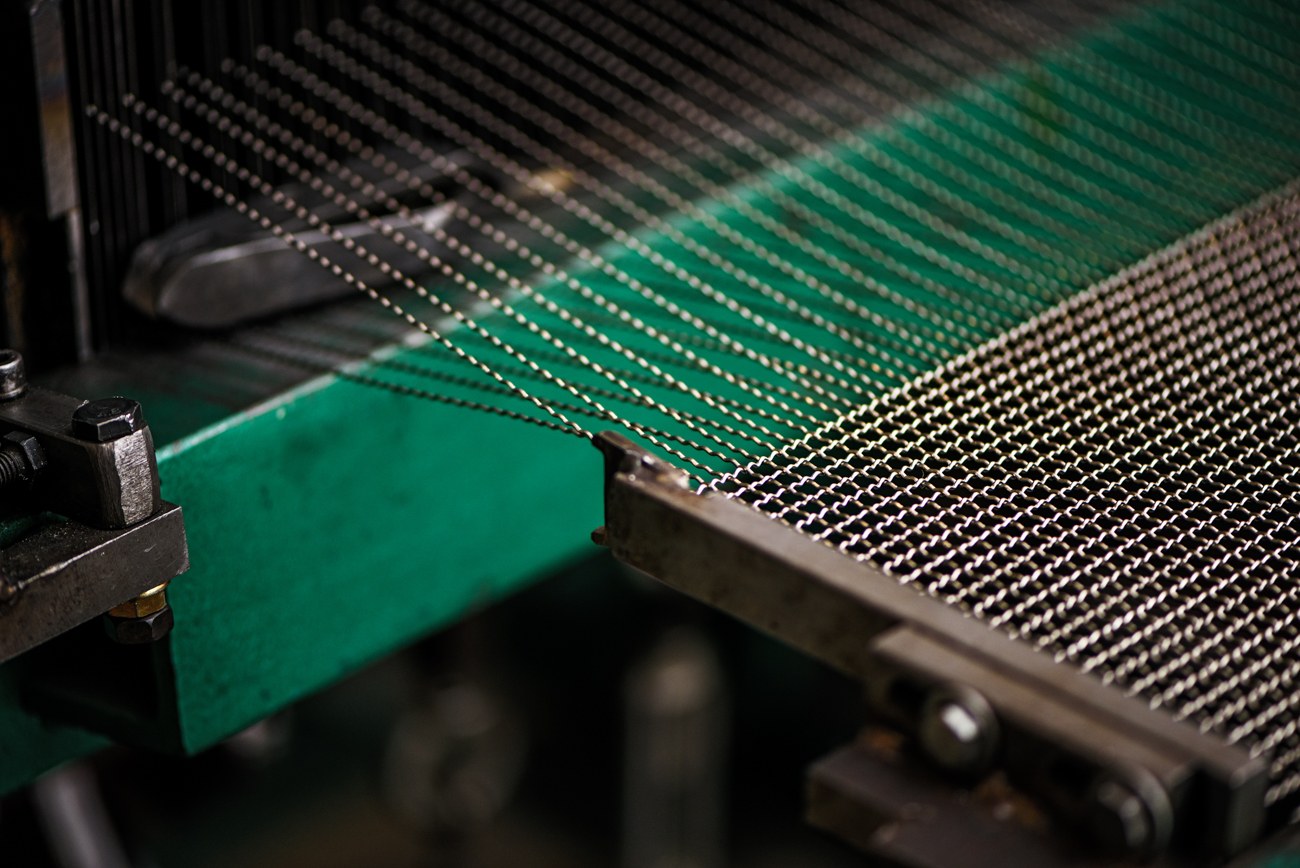


Woven Wire Cloth on a Wire Loom
Wire mesh, or wire gauze, is cloth woven from metal wire on a loom much like a textile loom. Warp wires run the length of the cloth; a shuttle, or in later looms sliding carriers, takes the weft wire across through the shed, and the lathe (beater) knocks it up to the fell of the cloth, twice in hand weaving. Fine wire is soft and easily kinked, so the shed is kept low to avoid straining the warp. Mesh is named by its count, historically the number of openings per inch.
Ilọsíwájú
Factory process
Ìlànà
1
1
Warp the loom
Warp the loom
Set the warp wires side by side at the spacing for the mesh count.
Àwọn ohun èlò fún ìgbésẹ̀ yìí:
 Okùn irin aláìjẹrùn1 as required
Àwọn irinṣẹ́ tí a nílò:
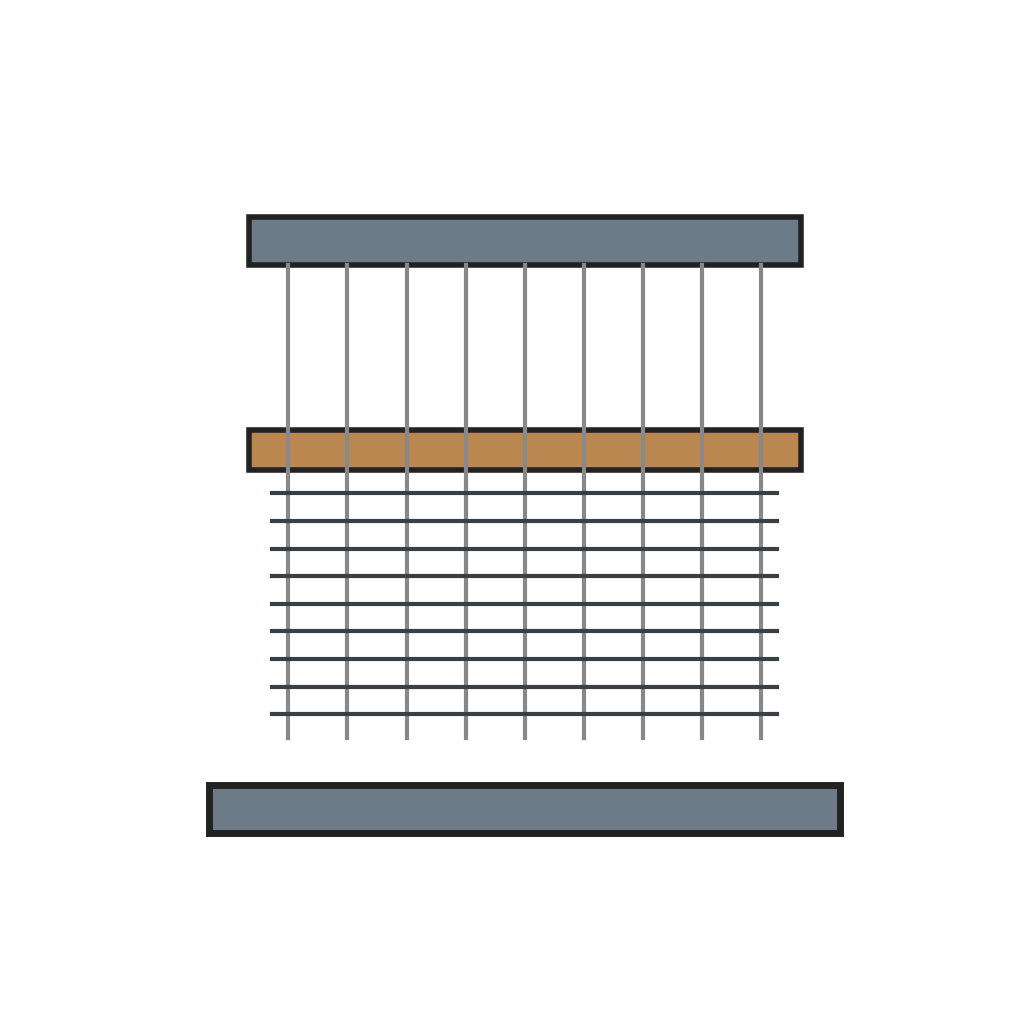 Òfì ìhun àwọ̀n wáyà
2
2
Open a low shed
Open a low shed
Lift and lower alternate warp wires to open a shed, kept low so the warp is not strained.
Àwọn irinṣẹ́ tí a nílò:
Òfì ìhun àwọ̀n wáyà3
3
Pass the weft
Pass the weft
Carry the weft wire across through the shed with the shuttle.
Àwọn irinṣẹ́ tí a nílò:
Òfì ìhun àwọ̀n wáyà4
4
Beat up
Beat up
Bring the lathe forward to beat the weft wire up to the fell; repeat shed, weft and beat for every wire.
Àwọn irinṣẹ́ tí a nílò:
Òfì ìhun àwọ̀n wáyàÀwọn ohun-èlò
1- 1 as requiredÀyè
Ìtọ́nisọ́nà yìí ń ṣe
Blueprint tó jọra
Àwọn blueprint wọ̀nyí pín ìmọ̀ — ọ̀nà, ohun-èlò tàbí ìlànà
CC0 Àgbègbè Gbogbogbò
Blueprint yìí ti jáde lábẹ́ CC0. O lè ṣe àdàkọ, yí padà, pín, àti lò láìsí ìyọ̀ǹda.
Ṣàtìlẹ́yìn Olùṣẹ́dá nípa rírà àwọn ọjà nipasẹ̀ Blueprint wọn Ẹ̀san Olùṣẹ́dá tí àwọn Olùtajà gbé kalẹ̀, tàbí ṣẹ̀dá àtúnṣe tuntun ti Blueprint yìí kí o sì fi sínú Blueprint rẹ gẹ́gẹ́ bí ìsopọ̀ láti pín owó-wíwọlé.