IṢẸ́ ỌNÀ
ẸWÀ ÀTI ÌLERA
IṢẸ́ ỌWỌ́
ÀṢÀ ÀTI ÌTÀN
ÌṢERÉ
ÀYÍKÁ
OÚNJẸ ÀTI OHUN MÍMU
REVERSE ENGINEERING
SÁYẸ́ǸSÌ
ERÉ ÌDÁRAYÁ
ÌMỌ̀-Ẹ̀RỌ
ÀWỌN OHUN WÍWỌ̀
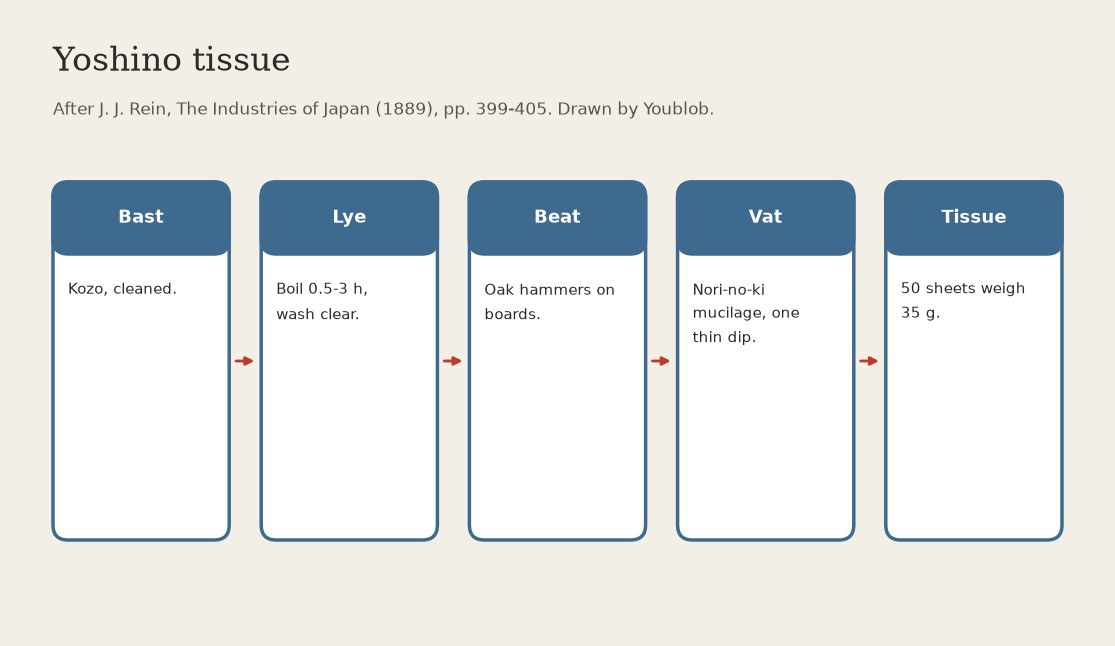


Yoshino Tissue: Kozo Paper So Thin Fifty Sheets Weigh 35 Grams (Nibu, after Rein 1889)
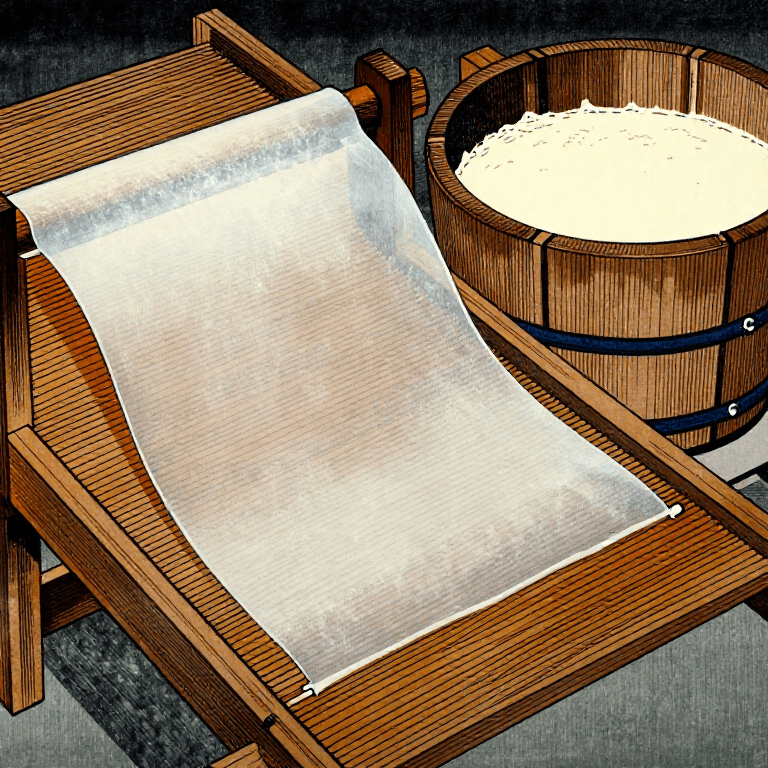
Yoshino-gami from Nibu in Yamato was the finest tissue of Japan: so thin that fifty sheets weigh 35 g, yet so strong that lacquer makers wrung thick lacquer through two or three layers and used them again. Light, tough tissue like this is what covers model wings.
Result: kozo tissue, sheets 48 x 25.5 cm, 50 sheets 35 g (about 5.7 g per square metre).
Source: J. J. Rein, The Industries of Japan (1889), pp. 399-405. Not given: amounts per vat, lye strength, beating time. Picture drawn by Youblob.
Ilọsíwájú
3 days
Ìlànà
1
1
Clean the bast
Clean the bast
Take kozo bast freed of the dark outer skin and green parts, and cut out knot-holes and faulty spots.
Àwọn ohun èlò fún ìgbésẹ̀ yìí:
 Èèpo kozo1 as required
2
2
Boil in ash lye
Boil in ash lye
Boil the bast in an iron kettle with lye made from ashes, half an hour to three hours, until it is soft and crushes between the fingers.
Àwọn irinṣẹ́ tí a nílò:
 Omi eérú igi
 Kẹ́tù Irin
3
3
Wash clear
Wash clear
Wash the soft bast in a tub of fresh water, changing it four or five times until the water stays clear.
Àwọn ohun èlò fún ìgbésẹ̀ yìí:
 Omi1 as required
Àwọn irinṣẹ́ tí a nílò:
 Àwokòtò igi
4
4
Beat to pulp
Beat to pulp
Lay the wet bast on a thick hardwood board and beat it with oak hammers of 1 to 2 lb, stirring and mixing in water often, until it is an even fibrous pulp. If the fibres are not yet apart, boil it again in plain water.
Àwọn irinṣẹ́ tí a nílò:
 Pátákó Igi Pẹrẹsẹ
 Òòlù IgiKẹ́tù Irin
5
5
Charge the vat
Charge the vat
Put the pulp in the vat with water. Press out Nori-no-ki (Hydrangea paniculata) bark in water and add the slippery mucilage; it keeps the fibres floating apart. Ours: press the bark out in a linen bag.
Àwọn ohun èlò fún ìgbésẹ̀ yìí:
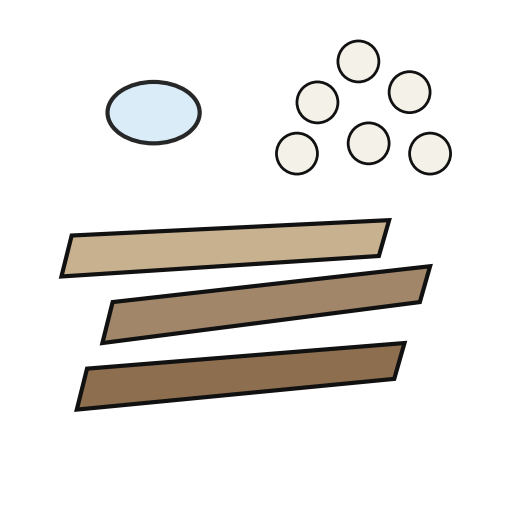 Èèpo nori-no-ki (Hydrangea paniculata)1 as requiredOmi1 as required
Àwọn irinṣẹ́ tí a nílò:
 Ọpọ́n igi ńlá
 Àpò ọ̀gbọ̀
6
6
Scoop one thin layer
Scoop one thin layer
Dip a mould of fine bamboo sticks bound with silk thread and let the stuff flow toward you, so the fibres lie parallel. Fill it once only: a second, crossed filling makes a thicker paper.
Àwọn irinṣẹ́ tí a nílò:
 SugetaỌpọ́n igi ńlá
7
7
Pile and dry on boards
Pile and dry on boards
Pile the wet sheets on a mat with bamboo splints between them. When dry enough, brush each onto a smooth board and stand it slantwise in the sun; the dry sheet comes off by itself.
Àwọn irinṣẹ́ tí a nílò:
 Ení òpe
 Búrọ́ọ̀ṣì fífẹ̀Pátákó Igi Pẹrẹsẹ
8
8
Check the tissue
Check the tissue
Sheets 48 x 25.5 cm; fifty of them should weigh about 35 g. The tissue is yellowish, silky and strong enough to be wrung without tearing.
Àwọn ohun-èlò
3- 1 as requiredÀyè
- 2 as requiredÀyè
- 1 as requiredÀyè
Ìtọ́nisọ́nà yìí ń ṣe
Blueprint tó jọra
Àwọn blueprint wọ̀nyí pín ìmọ̀ — ọ̀nà, ohun-èlò tàbí ìlànà

CC0 Àgbègbè Gbogbogbò
Blueprint yìí ti jáde lábẹ́ CC0. O lè ṣe àdàkọ, yí padà, pín, àti lò láìsí ìyọ̀ǹda.
Ṣàtìlẹ́yìn Olùṣẹ́dá nípa rírà àwọn ọjà nipasẹ̀ Blueprint wọn Ẹ̀san Olùṣẹ́dá tí àwọn Olùtajà gbé kalẹ̀, tàbí ṣẹ̀dá àtúnṣe tuntun ti Blueprint yìí kí o sì fi sínú Blueprint rẹ gẹ́gẹ́ bí ìsopọ̀ láti pín owó-wíwọlé.