IṢẸ́ ỌNÀ
ẸWÀ ÀTI ÌLERA
IṢẸ́ ỌWỌ́
ÀṢÀ ÀTI ÌTÀN
ÌṢERÉ
ÀYÍKÁ
OÚNJẸ ÀTI OHUN MÍMU
REVERSE ENGINEERING
SÁYẸ́ǸSÌ
ERÉ ÌDÁRAYÁ
ÌMỌ̀-Ẹ̀RỌ
ÀWỌN OHUN WÍWỌ̀
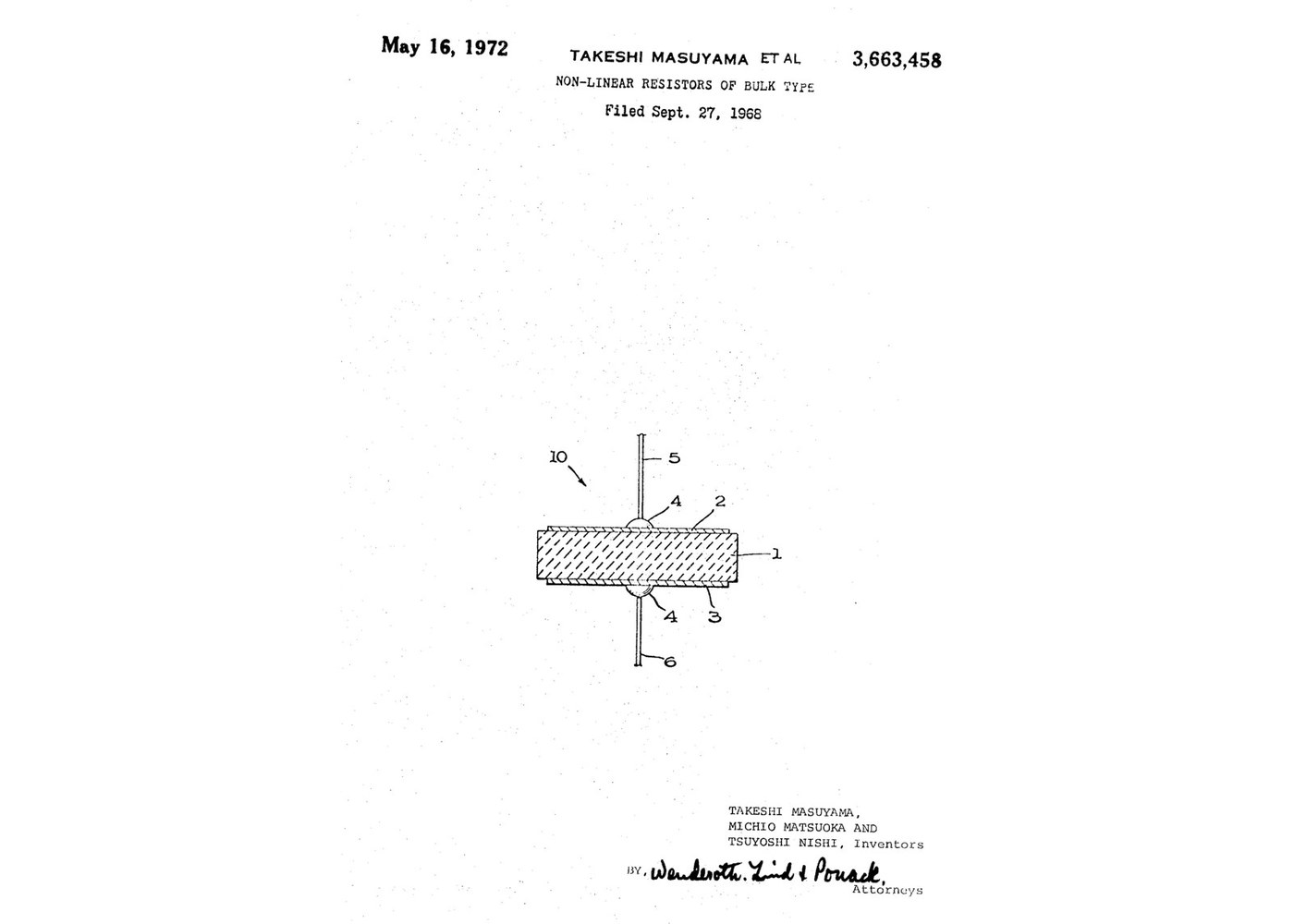


Metal Oxide Varistor: Zinc Oxide, 0.5 % Bismuth Oxide, 0.5 % Boric Oxide, 1350 °C (Masuyama 1972, Ex. 2)
Masuyama, Matsuoka and Nishi found that adding a second oxide to zinc oxide and bismuth oxide changes the varistor a great deal. This is their Example 2 with boric oxide: 99 % zinc oxide, 0.5 % bismuth oxide and 0.5 % boric oxide by moles, sintered at 1350 °C. The disc measured a C-value of 6.5 at 1 mA and a nonlinearity exponent n of 5.7.
Source: T. Masuyama, M. Matsuoka and T. Nishi (Matsushita), US 3,663,458 (1972), Example 2. Unknown: what the silver paint is. The spraying is ours, after US Army Corps of Engineers EM 1110-2-3401 (1999). The 10 g batch is our arithmetic. Picture: the patent's drawing.
Ilọsíwájú
1 day
Ìlànà
1
1
Weigh 99 : 0.5 : 0.5 and wet-mill 5 hours
Weigh 99 : 0.5 : 0.5 and wet-mill 5 hours
Mix zinc oxide, bismuth oxide and boric oxide 99 : 0.5 : 0.5 by moles. Ours, for 10 g: 9.678 g zinc oxide, 0.28 g bismuth oxide, 0.042 g boric oxide (our arithmetic). Mill wet for 5 hours, then dry. Unknown: the milling liquid.
Àwọn ohun èlò fún ìgbésẹ̀ yìí:
 Lulú Sínkì Ọ́ksídì9.678 g
 Bismuth oxide0.28 g
 Oxide bórọ́ọ̀nù0.042 g
Àwọn irinṣẹ́ tí a nílò:
 Òǹwọ̀n ìdọ́gba
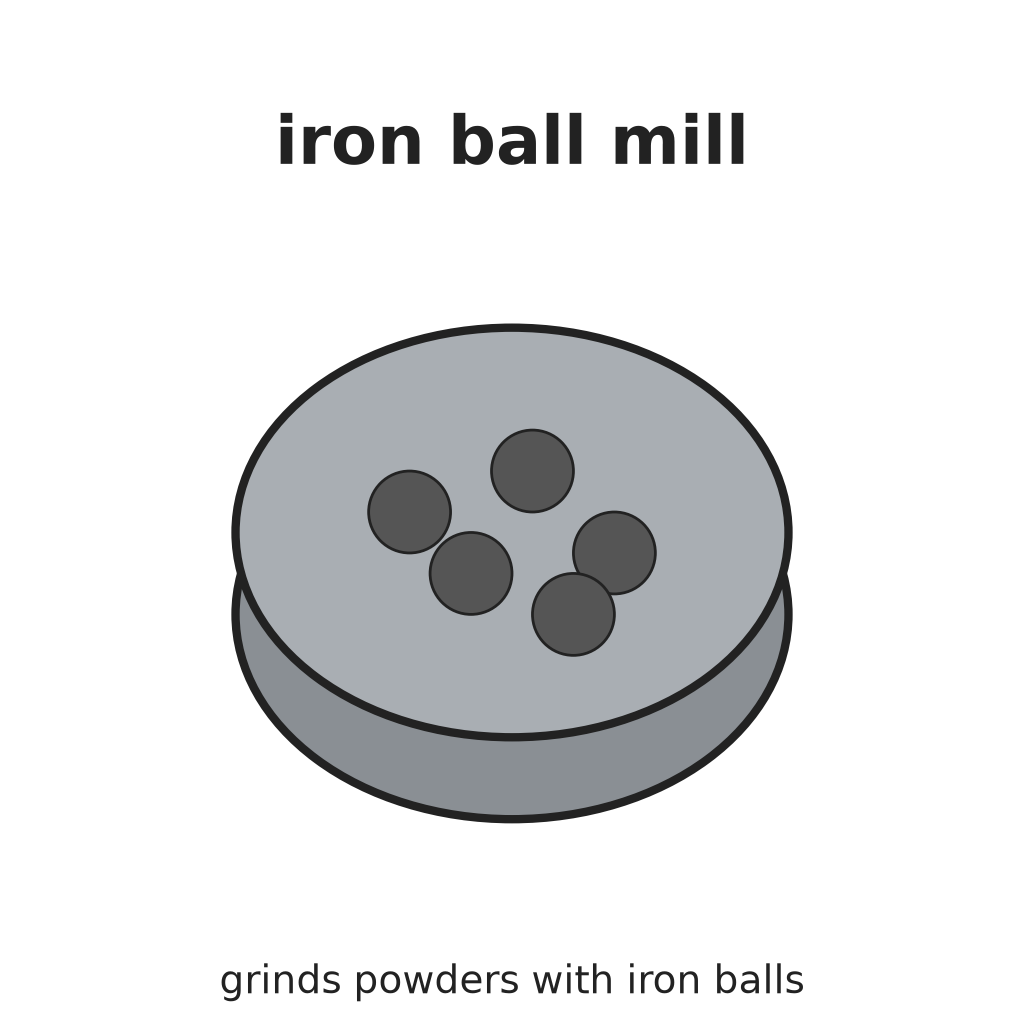 Ẹ̀rọ Lílọ Bọ́ọ̀lù Irin
 Ààrò ìgbẹ̀
2
2
Press discs 13 mm by 2.5 mm
Press discs 13 mm by 2.5 mm
Press the powder in a mould into discs 13 mm across and 2.5 mm thick at 340 kg/cm², as in Example 1.
Àwọn irinṣẹ́ tí a nílò:
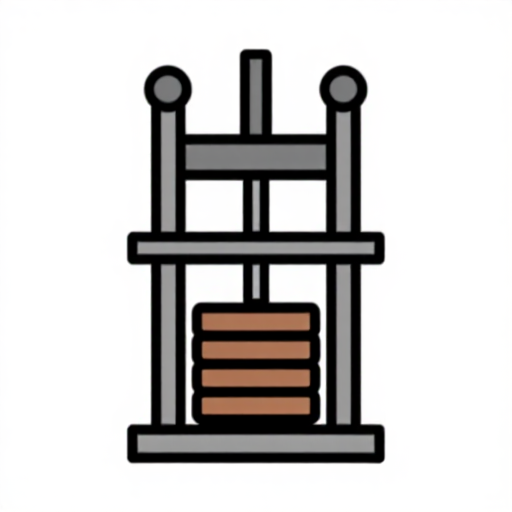 Ẹ̀rọ ìtẹ̀ háídírọ́líìkì
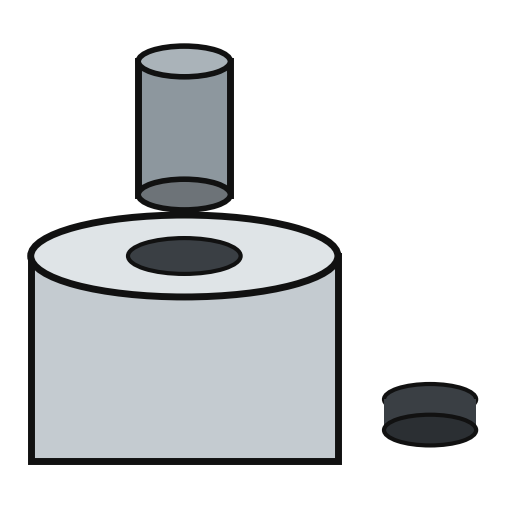 Mọ́ọ̀dù títẹ díìsì
 Kálípà Fáníà
3
3
Sinter 1 hour at 1350 °C and furnace-cool
Sinter 1 hour at 1350 °C and furnace-cool
Sinter the discs in air for 1 hour at 1350 °C, then let them cool in the furnace to room temperature (about 15-30 °C).
Àwọn irinṣẹ́ tí a nílò:
 Ààrò muffle
4
4
Lap to 10 mm by 1.5 mm
Lap to 10 mm by 1.5 mm
Lap both faces with 600-mesh silicon carbide. The finished disc is 10 mm across and 1.5 mm thick.
Àwọn irinṣẹ́ tí a nílò:
 Ọkà kaboidi silikoniKálípà Fáníà
5
5
Spray aluminium electrodes and attach leads
Spray aluminium electrodes and attach leads
Spray a metallised film of aluminium on both faces. Attach a lead wire to each with conductive silver paint. Ours, after US Army Corps of Engineers EM 1110-2-3401 (1999): wire-arc spray the aluminium from two 3.2 mm wires melted by an 18-40 V DC arc and atomised by compressed air, 15-20 cm from the disc and never at less than 45°, in at least two coats at right angles of 50-75 µm each. Unknown: the paint.
Àwọn ohun èlò fún ìgbésẹ̀ yìí:
 Ìṣù aluminiọ̀mù1 as 3.2 mm spray wire
 Kùn fàdákà tí ń gba iná mànàmáná1 as required
 Okùn Bàbà2 ẹyọ
Àwọn irinṣẹ́ tí a nílò:
Kálípà Fáníà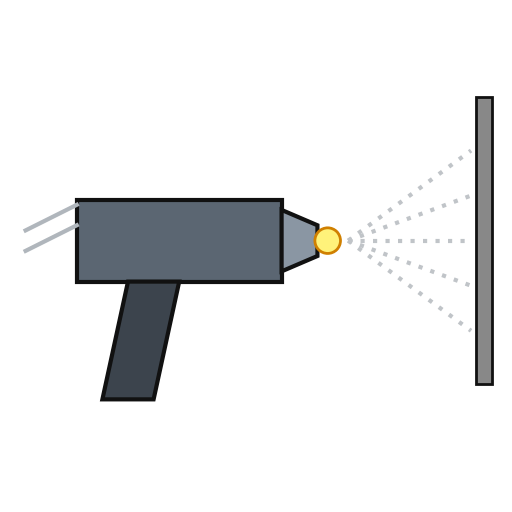 Ìbọn ìfọ́nká iná-ọ̀run wáyà
 Ohun ìtẹ̀ afẹ́fẹ́ ti iléeṣẹ́
Àwọn ohun-èlò
6- 9.678 gÀyè
- 0.28 gÀyè
- 0.042 gÀyè
- 1 as 3.2 mm spray wireÀyè
- 1 as requiredÀyè
- 2 ẹyọÀyè
Ìtọ́nisọ́nà yìí ń ṣe

Blueprint tó jọra
Àwọn blueprint wọ̀nyí pín ìmọ̀ — ọ̀nà, ohun-èlò tàbí ìlànà

CC0 Àgbègbè Gbogbogbò
Blueprint yìí ti jáde lábẹ́ CC0. O lè ṣe àdàkọ, yí padà, pín, àti lò láìsí ìyọ̀ǹda.
Ṣàtìlẹ́yìn Olùṣẹ́dá nípa rírà àwọn ọjà nipasẹ̀ Blueprint wọn Ẹ̀san Olùṣẹ́dá tí àwọn Olùtajà gbé kalẹ̀, tàbí ṣẹ̀dá àtúnṣe tuntun ti Blueprint yìí kí o sì fi sínú Blueprint rẹ gẹ́gẹ́ bí ìsopọ̀ láti pín owó-wíwọlé.