Ọjà NFT
Ọkọ̀ àti Àwọn Ọkọ̀
Ẹ̀kọ́ Ẹ̀dá
Àwọn Ìwé
Kẹ́míkà
Àwọn Ohun Ìní Ìṣirò
Ẹ̀rọ Ìtanná
Àwọn Ètò Agbára
Àwọn Ohun Ìdìmọ́
Ilé àti Ìgbé Ayé
Hydraulics àti Pneumatics
Ilé-iṣẹ́ àti Ìṣelọ́pọ̀
Ọmọdé àti Ọmọ Ọwọ́
Ohun Èlò Yàrá
Àwọn Ẹ̀rọ
Àwọn Ohun Ìlò Ìṣelọ́pọ̀
Àwọn Ẹ̀yà Ẹ̀rọ
Ìwọ̀n àti Ìṣàtúnṣe
Ìta àti Ọgbà
Àwọn Ẹranko Ilé àti Ẹranko
Àwọn Ohun Èlò Àìsèdíẹ̀
Ohun Èlò Ààbò
Àwọn Ohun Èlò Ilé Ìtajà
Àwọn Irinṣẹ́ àti Ohun Àfikún
Àwọn Irinṣẹ́
Ohun Àmúṣe Idánilẹ́kọ̀ọ́
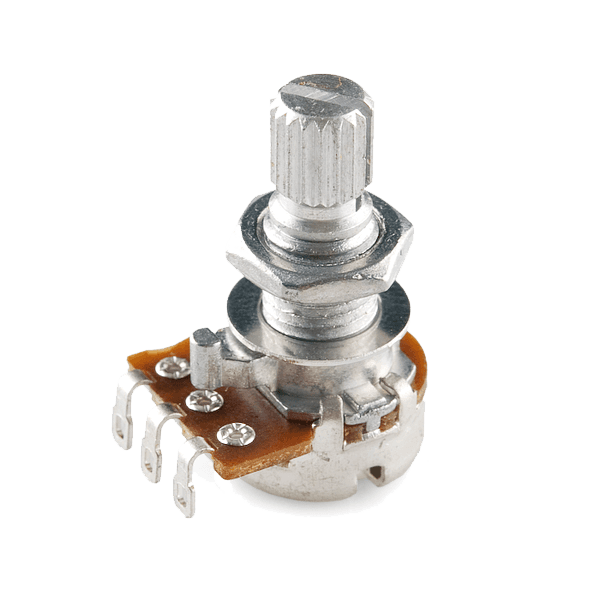
Rotary Potentiometer - 4.7k Ohm, Linear
An adjustable potentiometer can open up many interesting user interfaces. Turn the pot and the resistance changes. Connect VCC to an outer pin, GND to the other, and the center pin will have a voltage that varies from 0 to VCC depending on the rotation of the pot. Hook the center pin to an ADC on a microcontroller and get a variable input from the user!
This pot has a 1/4" mounting diameter and has a 4.7K linear taper.
Documents:
- Datasheet
- How potentiometers work
Ẹni tí ó tà
Ìdá Ẹlẹ́dà: 10%
Àwọn ẹlẹ́dà Ìtọ́nisọ́nà ń jèrè ìdá yìí nígbà tí àwọn oníbàárà bá rà nípasẹ̀ Ìtọ́nisọ́nà wọn
$1
27 wà ní ilé-ìtajà
Rotary Potentiometer - 4.7k Ohm, Linear—
$1
Ń gbé àwọn ìtọ́nisọ́nà wọlé...