

ART
BEAUTY & WELLNESS
CRAFT
CULTURE & HISTORY
ENTERTAINMENT
ENVIRONMENT
FOOD & DRINKS
GREEN FUTURE
REVERSE ENGINEERING
SCIENCES
SPORTS
TECHNOLOGY
WEARABLES
Cochineal Harvest from Prickly Pear — From Insect to Carmine Pigment
English
Florecita

Created by

Florecita

22. April 2026MX
0
0
0
0
0

Cochineal Harvest from Prickly Pear — From Insect to Carmine Pigment

Guide for harvesting cochineal (Dactylopius coccus) from prickly pear (Opuntia ficus-indica) in Mexico. This insect produces carminic acid, which generates an intense red pigment used since pre-Hispanic times by the Aztecs and Mixtecs. Covers insect identification, harvest, drying and storage of raw pigment.

Intermediate
3-4 hours

Instructions

1

Identifying Cochineal on the Prickly Pear Cactus

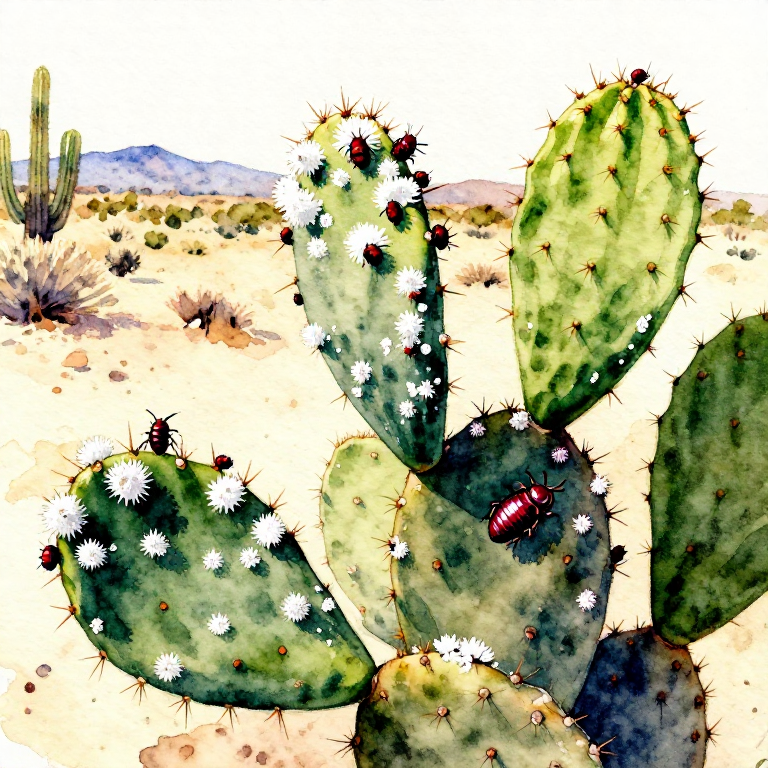
The cochineal (Dactylopius coccus) appears as white cottony patches on the pads of the prickly pear cactus. Beneath the white covering (protective wax) is an oval insect 3-5 mm long, dark reddish in color. The female is the one that produces the carmine pigment — the males are smaller and have wings.
2

Distinguishing True Cochineal from Wild Cochineal

The true cochineal (Dactylopius coccus) produces much more carminic acid than the wild variety (Dactylopius opuntiae). The true cochineal has a more abundant white wax covering and a larger body. When crushed between the fingers, the true cochineal produces an intense crimson red. The wild variety gives a duller red.
3

Choosing the Right Harvest Time

Cochineal is harvested when the females are mature and full of carminic acid, approximately 90 days after infestation. In Oaxaca, Mexico, 3-4 harvests per year are possible. Harvest in the early morning when the insects are less active. Avoid rainy days — humidity dilutes the pigment.
4

Preparing Harvest Tools

Use a deer-tail brush, a wooden spatula, or a soft paintbrush. A collection vessel (a tray or deep plate) is needed. The traditional Mixtec brush is made from deer tail hair tied to a stick — it is soft enough not to damage the cactus pad.

Tools needed:

Soft Brush (deer-tail or similar)Soft Brush (deer-tail or similar)
Collection TrayCollection Tray
5

Sweeping the Insects off the Cactus Pad

Hold the tray beneath the cactus pad. With the brush, gently sweep the surface of the pad from top to bottom. The insects fall with their white wax covering into the tray. Do not scrape hard — damaging the pad reduces future production.

Materials for this step:

Cochineal Insects on Nopal CactusCochineal Insects on Nopal Cactus1 patch
6

Leaving Young Insects for Reproduction

Do not remove all the cochineal. Leave approximately 20-30% of the smaller (younger) insects on the pad so they can reproduce and maintain the colony. A well-managed pad produces cochineal continuously for years.
7

Cleaning the Harvest

Remove wax residue, nopal fragments, and dirt from the harvest. Separate the insects from debris using a fine mesh or by gently blowing. Cleaning improves the quality of the final pigment.

Tools needed:

Fine Mesh SieveFine Mesh Sieve
8

Killing the Insects

The insects are killed by one of three methods: (1) immersion in hot water at 65-70 degrees Celsius for 1 minute, (2) exposure to steam for 5 minutes, or (3) direct sun drying. The hot water method produces the most intense pigment because it fixes the carminic acid before it degrades.

Materials for this step:

Hot Water (65-70°C)Hot Water (65-70°C)2 liters

Tools needed:

Cooking PotCooking Pot
9

Draining the Insects

After immersion in hot water, drain the insects in a strainer. The water turns red — save it, as it can be used as ink or mordant. The drained insects now look like dark reddish grains, the size of peppercorns.

Tools needed:

Mesh StrainerMesh Strainer
10

Sun Drying

Spread the insects in a thin layer on a tray or mat in direct sunlight. Turn every 2-3 hours to dry evenly. Drying takes 3-5 days in dry weather. The dried insects shrink to one-third of their fresh weight.

Tools needed:

Drying TrayDrying Tray
11

Verifying the Drying

Dried cochineal is hard, lightweight, and crunches when pressed. When ground between the fingers, it produces an intense red powder. If it still feels moist or soft inside, continue drying. Insufficiently dried cochineal will rot and lose its pigment.
12

Storing the Dried Cochineal

Store dried cochineal in glass jars with airtight lids, in a dark, dry place. Protect from moisture and direct sunlight. Properly stored, dried cochineal retains its dyeing power for years. One kilogram of dried cochineal produces approximately 50 grams of pure carminic acid.

Materials for this step:

Glass Storage JarGlass Storage Jar2 pieces
13

Weighing and Recording the Harvest

Weigh the dried cochineal. From a plot of 100 well-infested nopal pads, approximately 200-300 grams of dried cochineal is obtained. Record the date, quantity, killing method, and drying conditions. On the market, dried cochineal from Oaxaca is among the most valued in the world.

Tools needed:

Kitchen ScaleKitchen Scale

Materials

3

Tools Required

7

CC0 Public Domain

This blueprint is released under CC0. You are free to copy, modify, distribute, and use this work for any purpose, without asking permission.

Support the Maker by purchasing products through their Blueprint where they earn a Maker Commission set by Vendors, or create a new iteration of this Blueprint and include it as a connection in your own Blueprint to share revenue.

Discussion

(0)

Log in to join the discussion

Loading comments...