
From Alpaca Fiber to Yarn — Washing, Carding, and Spinning
Instructions
Choosing the Fleece
Choosing the Fleece
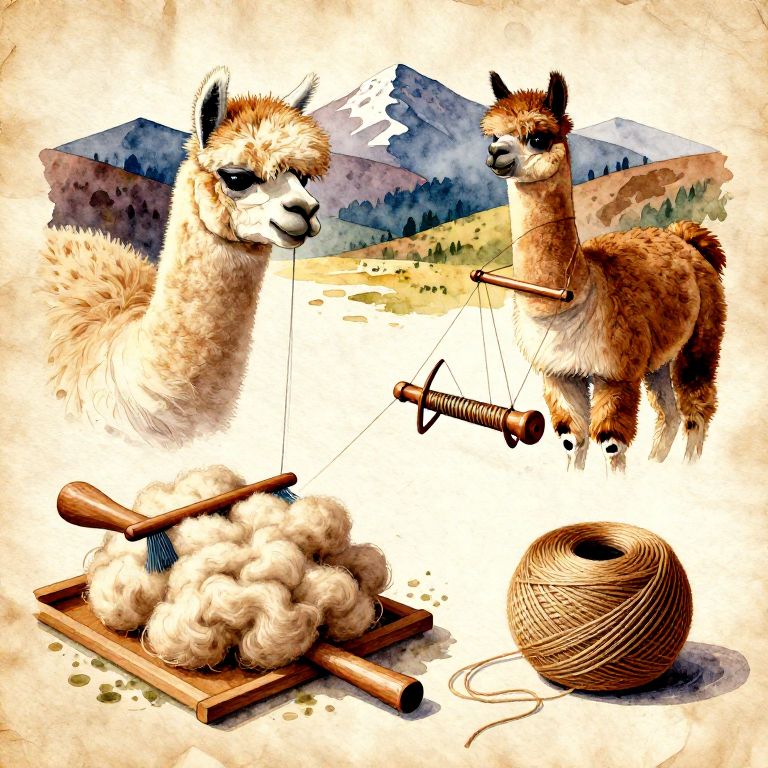
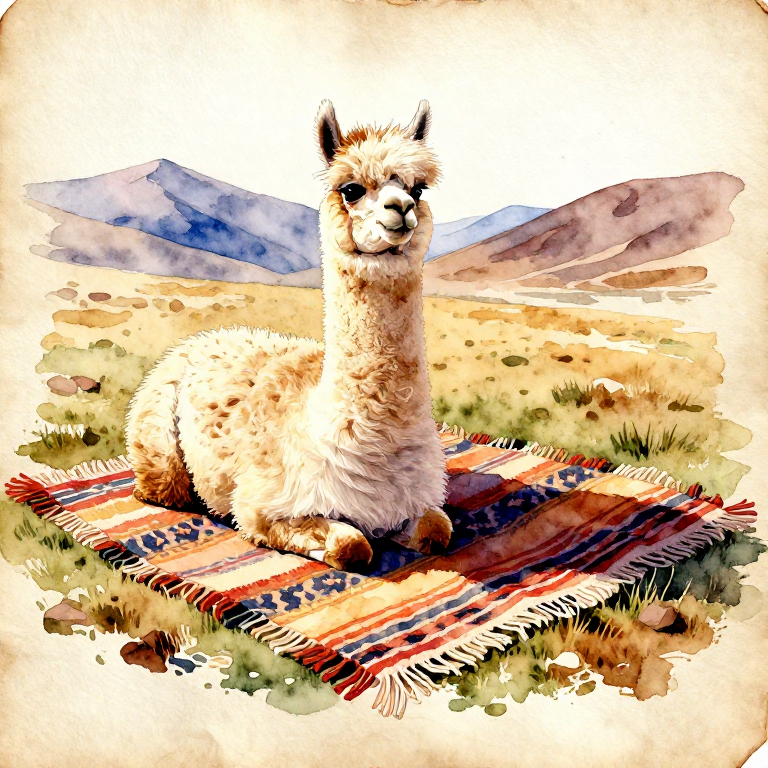
Select a raw alpaca fleece. Alpaca produces more than 22 natural colors — white, cream, beige, light brown, dark brown, silver gray, charcoal gray, and black. Each color can be spun without dyeing. A fleece weighs between 1.5 and 3 kg.
Materials for this step:
 Lã de Alpaca (Velo Cru)1 skein
Skirting the Fleece
Skirting the Fleece
Spread the fleece on a clean surface. Remove the edges — wool from the belly, legs, and dirty or matted parts. The best quality fiber comes from the fleece (back and sides).
Separating by Quality
Separating by Quality
Separate the fiber into groups: fine fiber from the fleece (for soft yarn), medium fiber from the flanks (resistant yarn), and coarse fiber from the neck (for rugs or felting). Alpaca fiber ranges from 18 to 30 microns depending on the body area.
First Washing
First Washing
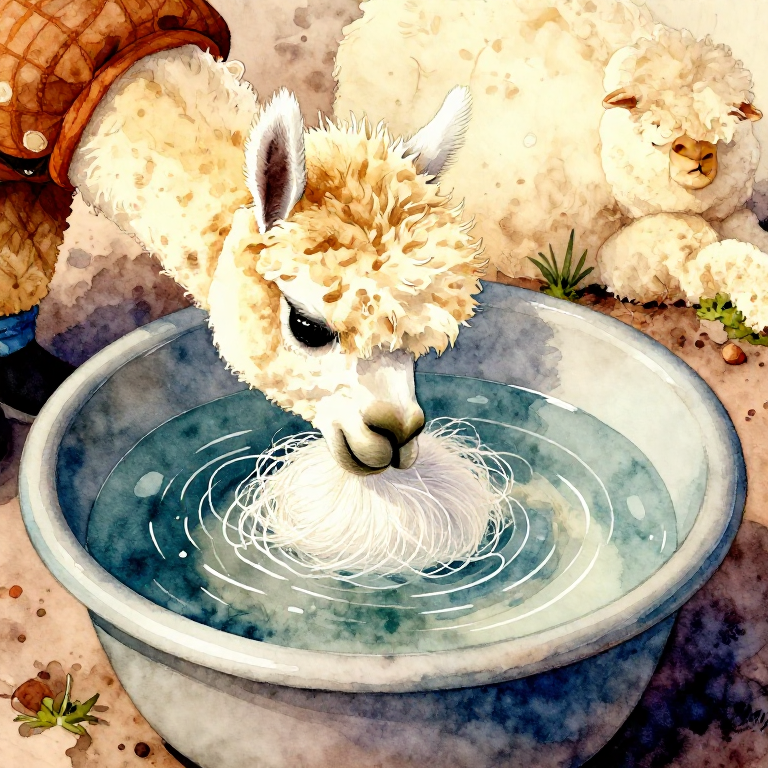
Soak the fiber in warm water (30-35°C). Alpaca has no lanolin, so it doesn't need strong soap or very hot water. Let it soak for 20 minutes — do not agitate, as the fiber may felt.
Materials for this step:
 Água15 liters
Gentle Washing
Gentle Washing
If there is stubborn dirt, do a second washing with a drop of neutral soap in warm water. Soak gently — never scrub. The absence of lanolin makes cleaning much faster than sheep's wool.
Rinsing
Rinsing
Rinse the fiber in progressively cooler water until the water runs clean. Two passes are usually sufficient. Drain gently without wringing.
Drying the Fiber
Drying the Fiber
Spread the washed fiber on a net or towel in the shade with good ventilation. Turn it over from time to time. Alpaca fiber dries faster than sheep's wool because it doesn't retain grease.
Opening the Locks
Opening the Locks
Take each dry lock and gently pull it apart with your fingers to open the fiber structure. Remove any remaining plant debris. Work through the entire batch — this greatly facilitates carding.
Loading the Carder
Loading the Carder
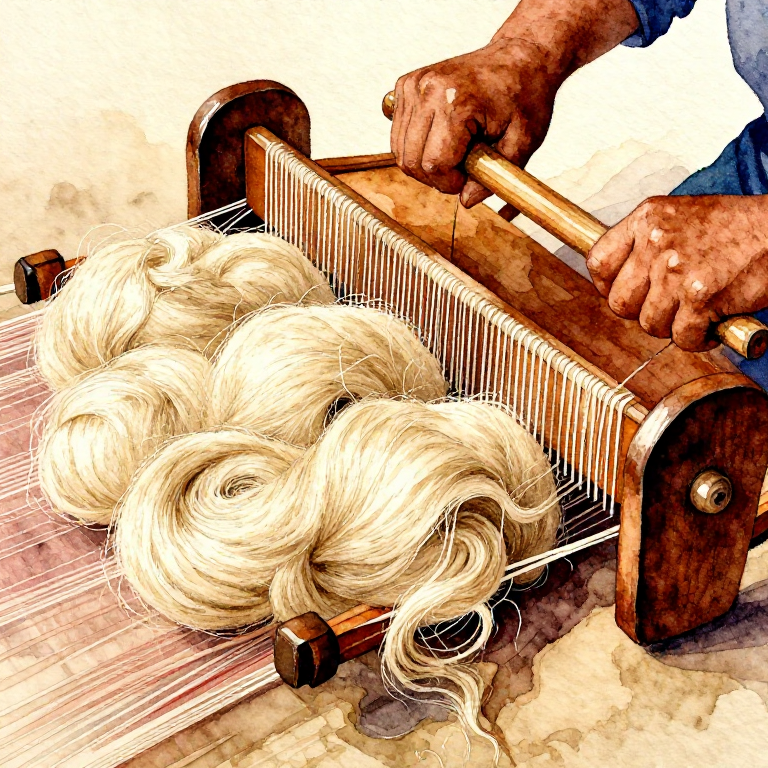
Place a carder on your knee with the teeth facing up. Spread a thin layer of alpaca fiber over the teeth. Don't overload — a thin layer cards much better.
Tools needed:
 Cardas Manuais (Par)
Carding the Fiber
Carding the Fiber
Pass the second carder over the first with gentle, long movements, transferring fiber between the two. Repeat 5-6 times until all fibers are aligned in the same direction. Alpaca fiber is more slippery than sheep's wool — slow movements work better.
Forming Rolags
Forming Rolags
Roll the carded fiber off the carder forming a loose cylinder — the rolag. Alpaca fiber has less elastic memory than sheep's wool, so the rolags will be looser. This is normal.
Preparing the Drop Spindle
Preparing the Drop Spindle
Tie a leader yarn (60 cm of any existing yarn) to the spindle shaft, below the whorl. Pass it over the edge of the whorl and to the tip. This leader yarn allows you to attach the new fiber.
Tools needed:
 Fuso de Queda
Joining Fiber to the Leader Yarn
Joining Fiber to the Leader Yarn
Pull a thin tuft of fiber from the tip of the rolag and overlap it onto the leader yarn. Alpaca fiber is more slippery — make a larger overlap (8-10 cm) to ensure good grip when twist enters.
Spinning on the Drop Spindle
Spinning on the Drop Spindle
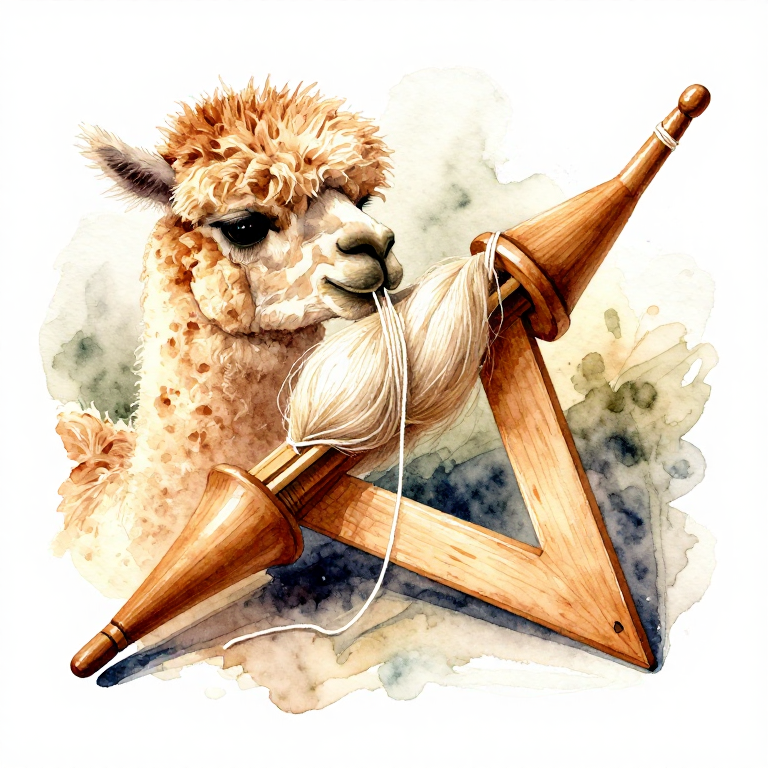
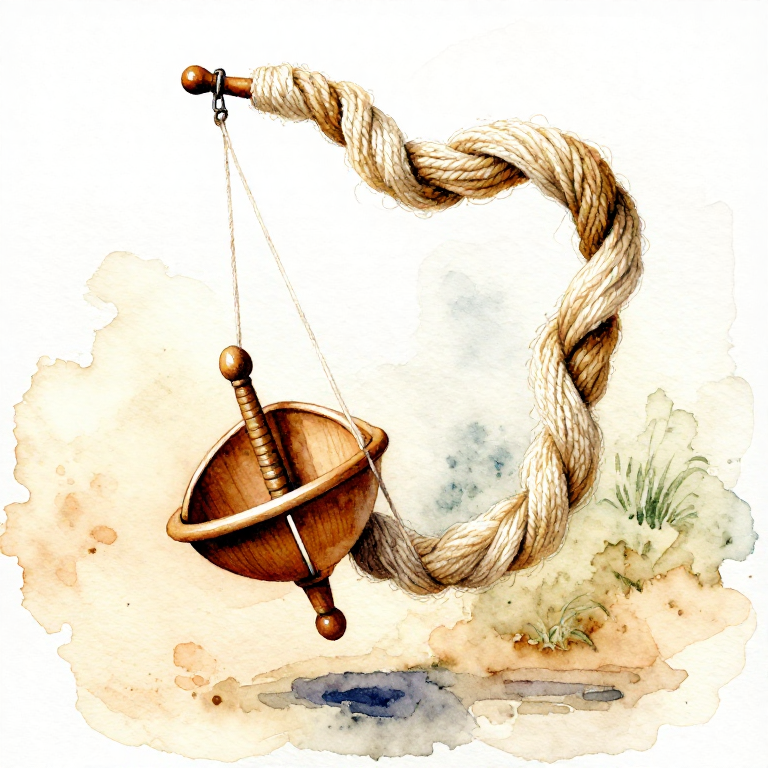
Flick the spindle shaft to spin it clockwise. Let it hang freely — the weight of the whorl maintains the spin. The twist travels up the yarn and enters the drafted fiber above the pinch point.
Draft, Twist, Wind
Draft, Twist, Wind
When the spindle slows, stop it between your knees. Draft more fiber from the rolag, release the pinch point to let the twist in, then wind the finished yarn onto the shaft. Alpaca fiber needs slightly more twist than sheep's wool because it is more slippery.
Plying Two Yarns
Plying Two Yarns
When you have two spindles full of single yarn, wind them into two balls. Hold both yarns together and spin the spindle in the opposite direction to spinning. The two single yarns twist together forming a 2-ply plied yarn, stronger and more balanced.
Setting the Twist
Setting the Twist
Soak the plied yarn in warm water for 20 minutes. Squeeze gently — never wring. Hang with a light weight on the end to dry under slight tension. This sets the twist permanently.
Materials for this step:
Água5 litersWinding into a Skein
Winding into a Skein
When dry, wind the yarn around your forearm or a chair to form a skein. Tie at two points to prevent tangling. Your alpaca yarn is ready — for weaving, knitting, or taking for natural dyeing.
Tools Required
2- Placeholder
- Placeholder
CC0 Public Domain
This blueprint is released under CC0. You are free to copy, modify, distribute, and use this work for any purpose, without asking permission.
Support the Maker by purchasing products through their Blueprint where they earn a Maker Commission set by Vendors, or create a new iteration of this Blueprint and include it as a connection in your own Blueprint to share revenue.