
From Llama Fiber to Yarn — Separation, Washing and Spinning
Instructions
Choosing Llama Fleece
Choosing Llama Fleece
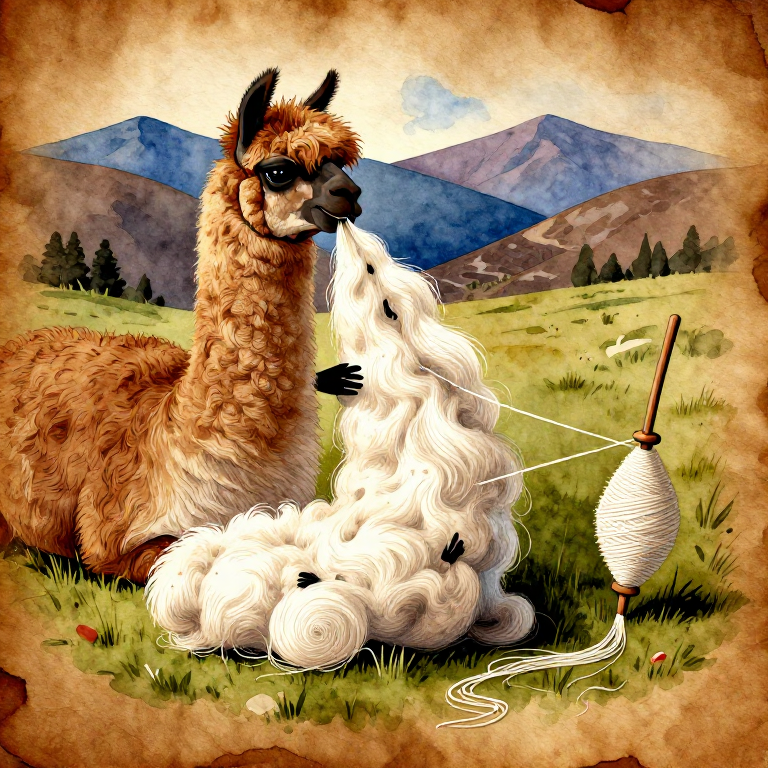
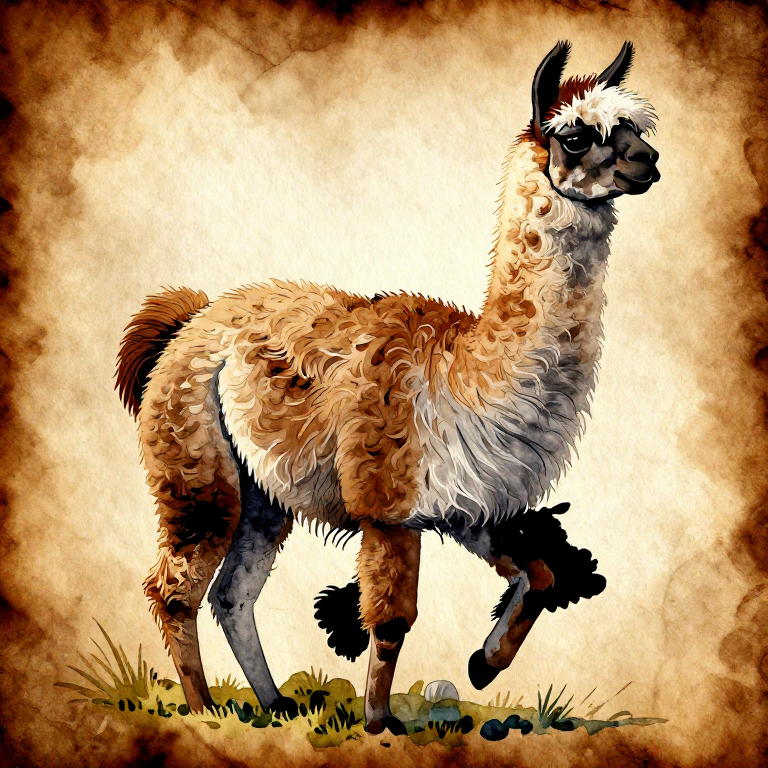
Select raw llama fleece. Natural colours range from white, brown, grey and black, but are less varied than alpaca. A llama fleece weighs between 2 and 4 kg, but only part will be usable fiber — the rest is coarse outer hair.
Materials for this step:
 Lã de Lhama (Velo Cru)1 skein
Skirting the Fleece
Skirting the Fleece
Spread the fleece and remove dirty edges, belly and leg fiber. The highest quality fiber is in the blanket — back and flanks.
Identifying the Two Layers
Identifying the Two Layers
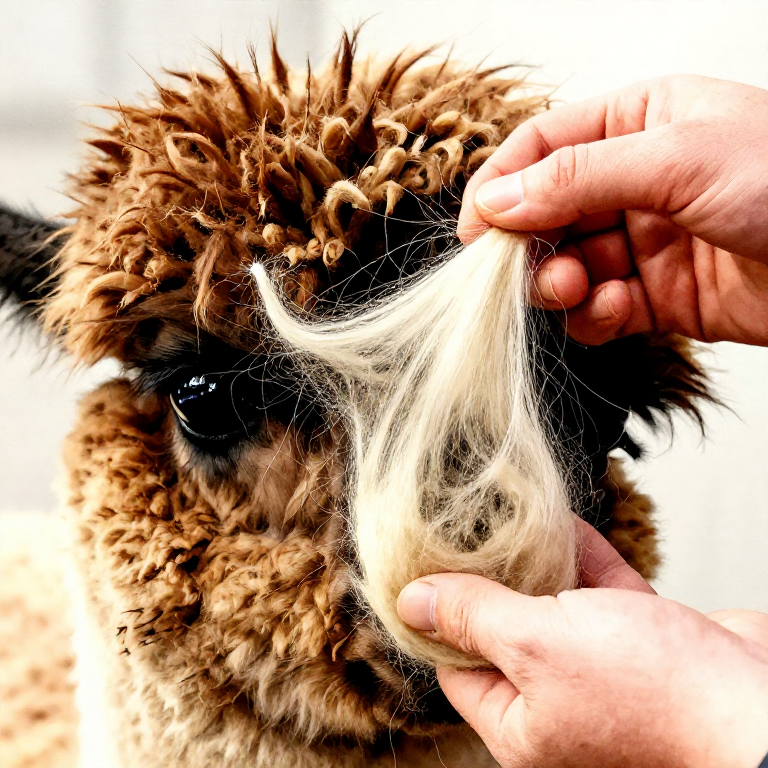
The llama has a double coat. Observe a lock: the coarse, smooth and long hairs are the guard hair (outer coat). Between them is the down — fine, crimped and soft fiber. You need to separate the two.
Separating the Guard Hair (Dehairing)
Separating the Guard Hair (Dehairing)
Take each lock and manually pull the coarse hairs away from the down. This process is called dehairing and is time-consuming but essential — guard hair in the yarn makes it rough and spiky. Andean peoples have done this by hand for millennia.
Washing the Down
Washing the Down
Soak the separated down in warm water (30-35°C). Like alpaca, llama has little or no lanolin. Soak for 20 minutes without agitation. A gentle wash is usually sufficient.
Materials for this step:
 Água15 liters
Rinsing and Drying
Rinsing and Drying
Rinse in progressively cooler water. Drain without wringing. Spread on a net or towel in the shade to dry completely. Llama down dries quickly due to the absence of grease.
Final Guard Hair Check
Final Guard Hair Check
Once dry, run through the fiber one last time and remove any remaining coarse hairs. The quality of the final yarn depends directly on the quality of this separation.
Opening the Locks
Opening the Locks
Gently pull each lock of dry down to open up the fiber structure and remove debris. Llama down is slightly shorter than alpaca — work carefully.
Carding the Down
Carding the Down
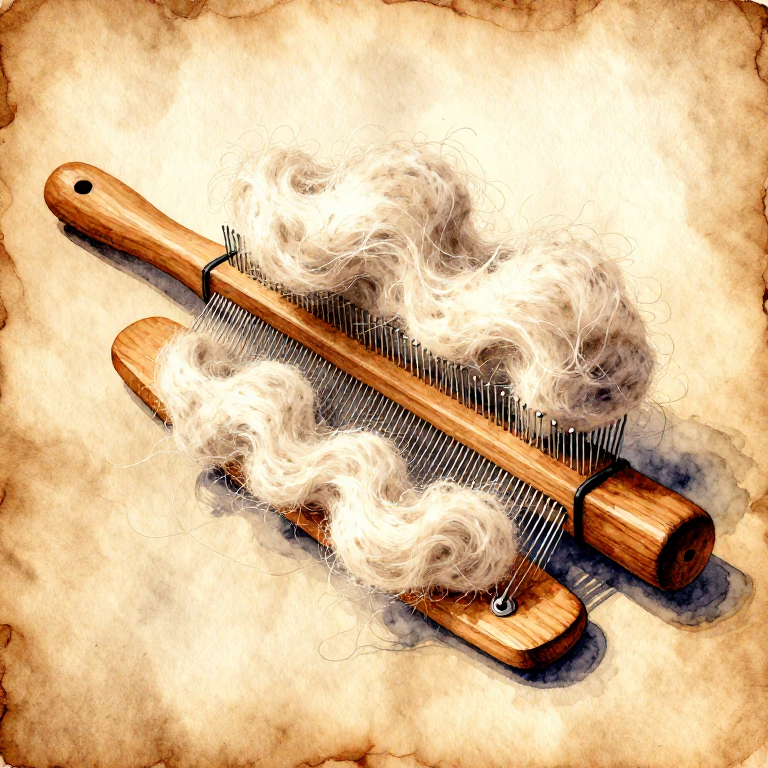
Load a thin layer of down onto the carder and pass the second carder with gentle motions. Llama fiber is shorter, so card with fewer passes — 4 to 5 are enough. Do not force.
Tools needed:
 Cardas Manuais (Par)
Forming Rolags
Forming Rolags
Roll the carded fiber off the carder into loose cylinders. Llama down rolags are shorter and denser than alpaca ones. Reserve them in a basket.
Preparing the Drop Spindle
Preparing the Drop Spindle
Tie the leader yarn to the spindle shaft. For short llama down, a lighter spindle works better — excess weight can break the fiber during spinning.
Tools needed:
 Fuso de Queda
Joining Fiber to Leader Yarn
Joining Fiber to Leader Yarn
Overlap a tuft of down onto the leader yarn with generous overlap (10 cm). Short fiber needs more contact area to adhere well when twist enters.
Spinning with Short Draws
Spinning with Short Draws
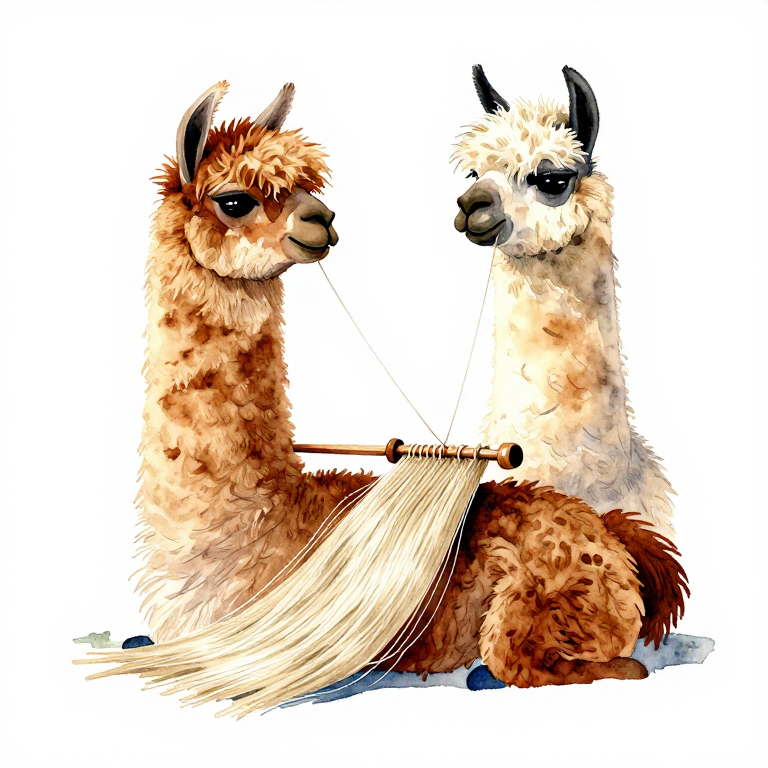
Rotate the spindle and draw out the fiber in short increments (5-8 cm at a time). Llama down is shorter than alpaca or sheep — long draws break the fiber. More twist compensates for the short fiber.
Continuing to Spin
Continuing to Spin
Continue the rhythm: draw little fiber, let twist enter, wind onto the shaft. Llama yarn has a slightly more irregular appearance than alpaca — this is normal and gives character to the yarn.
Plying Two Yarns
Plying Two Yarns
Spin two spindles of single yarn and ply them together in the opposite direction. Two-ply plied yarn is much stronger and hides irregularities of the single yarn.
Setting the Twist
Setting the Twist
Soak the plied yarn in warm water for 20 minutes, gently squeeze and hang with light weight to dry under tension. This permanently sets the twist.
Materials for this step:
Água5 litersWinding into Skeins
Winding into Skeins
Wind the dry yarn into skein, tying at two points. Llama down yarn is warm, light and ideal for blankets, hats and scarves.
Keeping the Guard Hair
Keeping the Guard Hair
Do not discard the separated guard hair — it is excellent for making sturdy ropes, rug textiles, or stuffing. Andean peoples make use of every part of the llama fleece.
Tools Required
2- Placeholder
- Placeholder
CC0 Public Domain
This blueprint is released under CC0. You are free to copy, modify, distribute, and use this work for any purpose, without asking permission.
Support the Maker by purchasing products through their Blueprint where they earn a Maker Commission set by Vendors, or create a new iteration of this Blueprint and include it as a connection in your own Blueprint to share revenue.