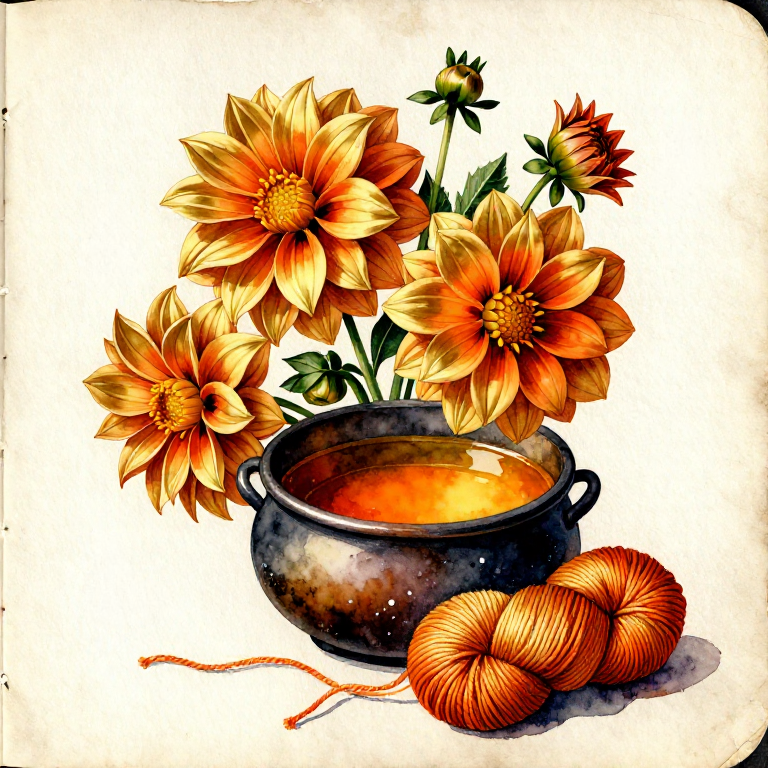


Dyeing Orange-Gold with Dahlia — The Aztec Flower That Conquered European Gardens
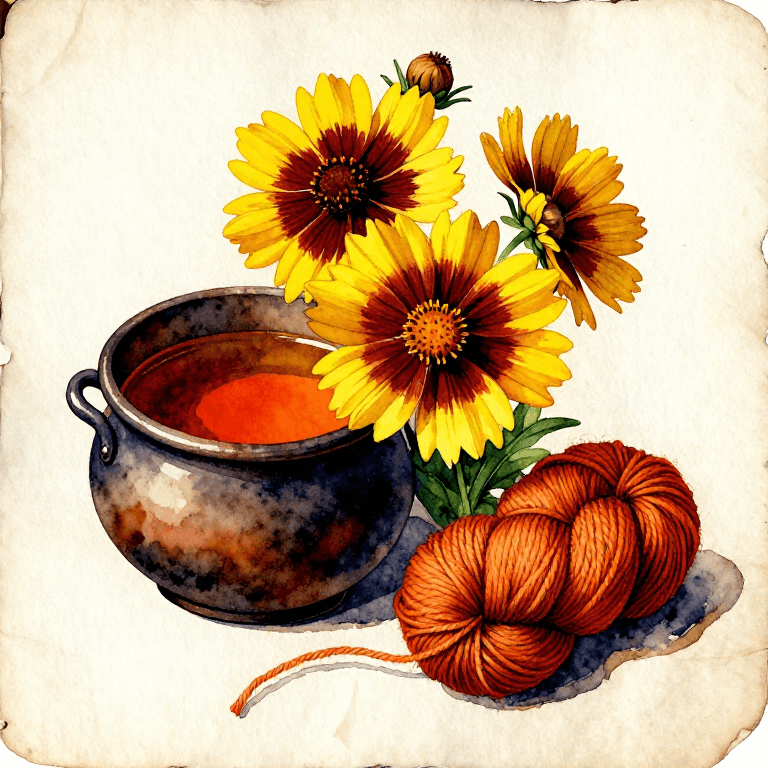
Dahlias (Dahlia species) are tuberous plants native to the highlands of Mexico and Central America, where the Aztecs cultivated them both as food (the tubers) and as ornamentals. Spanish conquistadors brought dahlias to Europe in the late 18th century, where they became one of the most popular garden flowers. The flower petals — particularly from orange, red, and dark-coloured varieties — contain flavonoid and chalcone pigments that produce warm orange-gold to burnt orange shades on alum-mordanted wool.
The Aztec name for dahlia was 'acocotli' and the plant was grown in the famous floating gardens (chinampas) of Tenochtitlan. While the Aztecs primarily valued dahlias for their hollow stems (used as water pipes) and edible tubers, Mesoamerican dyers used the petals for colouring textiles and body paint. The dye potential of dahlias was rediscovered by European natural dyers in the 20th century.
For the natural dyer, dahlias are an excellent garden dye source. The plants are prolific bloomers — a single dahlia bush produces dozens of flowers over the growing season. Orange and dark red varieties give the strongest colour. Yellow and white varieties produce very pale results. The dye process is simple and beginner-friendly, and the colour — a warm, autumnal orange-gold — is appealing and distinctive.
Instructions
Gather and weigh the dahlia flower heads
Gather and weigh the dahlia flower heads
Use 300-400% WOF of fresh dahlia petals. For 100 g of wool, gather 300-400 g of fresh flower heads. Use orange, dark red, or rust-coloured varieties for strongest dye. Remove the green calyx and stem — use only the coloured petals. Pick flowers at peak bloom. Deadheaded flowers that are beginning to wilt also work well. Frozen petals are effective — freeze surplus flowers during the growing season for dyeing later.
Materials for this step:
 Dahlia Flower Petals (Fresh)350 g
Tools needed:
 Digital Kitchen Scale
Soak the petals in warm water for one hour
Soak the petals in warm water for one hour
Place the dahlia petals in a dye pot with 4 litres of warm water and soak for at least one hour. The water will turn a warm orange-gold as the flavonoid pigments dissolve. Fresh petals release colour quickly. The colour of the dye bath will closely match the colour of the petals — orange dahlias give orange dye, dark red dahlias give deeper, more russet tones.
Tools needed:
 Stock Pot
Simmer at 75-80°C for 30 minutes
Simmer at 75-80°C for 30 minutes
Bring the pot to a gentle simmer (75-80°C) and hold for 30 minutes. Stir occasionally. Do not boil — moderate temperatures preserve the clarity of the orange-gold tones. The liquid will deepen to a warm, rich orange. The petals will darken and lose their colour as pigment transfers to the water.
Tools needed:
 Cooking Thermometer (0-200°C)
 Wooden Stirring Spoon
Strain out the petals
Strain out the petals
Strain the dye liquor through a fine mesh strainer into a clean pot. Press the spent petals to extract all remaining orange liquid. Petal fragments can stick to wool fibres — strain thoroughly. The strained liquor should be a clear, warm orange-gold.
Tools needed:
 Fine Mesh Strainer
Dye alum-mordanted wool at 75-80°C for 45 minutes
Dye alum-mordanted wool at 75-80°C for 45 minutes
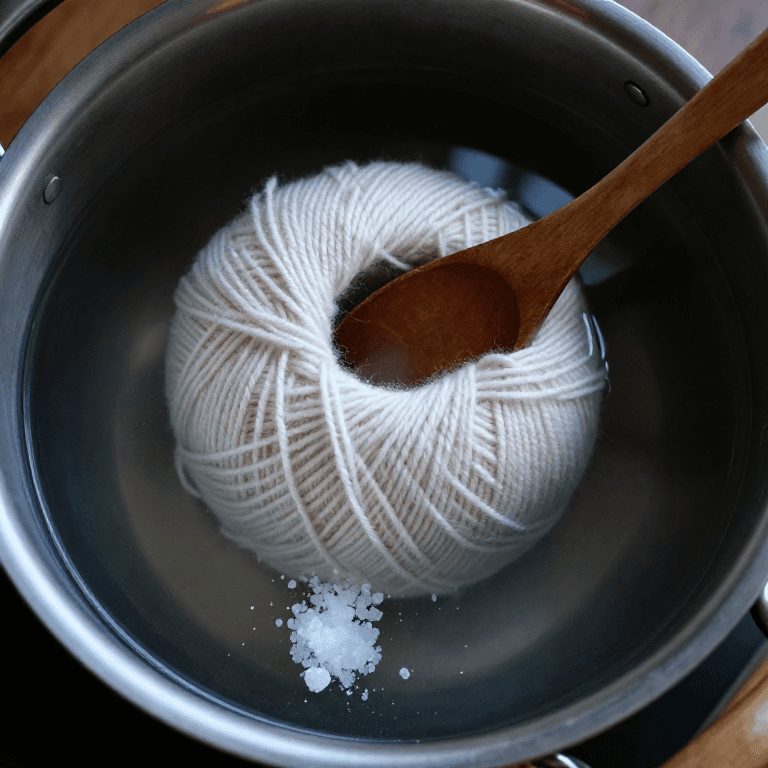
Pre-wet the alum-mordanted wool in lukewarm water for 15 minutes, squeeze gently, and lower it into the dahlia dye bath at room temperature. Slowly raise to 75-80°C over 15 minutes, then hold for 45 minutes. Turn gently every 10 minutes. The wool will develop a warm orange-gold to burnt orange — an autumnal shade that reflects the colours of the dahlia season. Alum mordanting produces the brightest, most vivid tones.
Materials for this step:
 Wool Yarn Skein (Undyed)100 g
 Alum (Potassium Alum)10 g
Cool overnight, rinse, and dry
Cool overnight, rinse, and dry
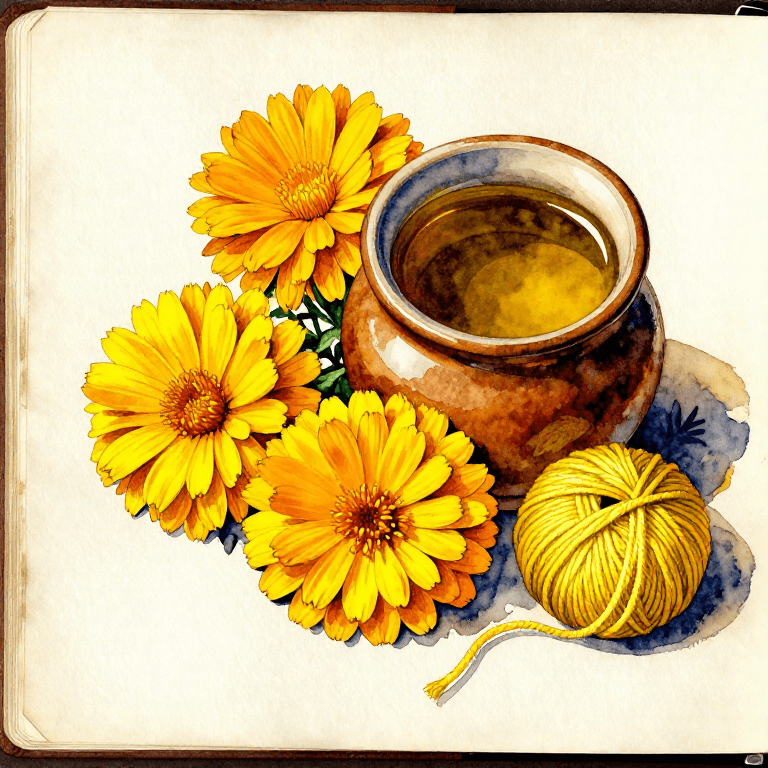
Turn off the heat and let the wool cool in the dye bath overnight. Remove, squeeze gently, and rinse in lukewarm water until the runoff is clear. The final colour is a warm orange-gold — the colour of autumn dahlia gardens. Lightfastness is moderate — similar to most flower dyes. The colour will gradually soften toward warmer gold tones with prolonged sunlight exposure. Washfastness is fair with alum mordanting. Dry in shade.
Materials
3- Placeholder
- Placeholder
- Placeholder
Tools Required
5- Placeholder
- Placeholder
- Placeholder
- Placeholder
Connected Blueprint Materials
Related Blueprints
These blueprints share knowledge with this one — techniques, materials, or principles that connect them in the learning graph.
CC0 Public Domain
This blueprint is released under CC0. You are free to copy, modify, distribute, and use this work for any purpose, without asking permission.
Support the Maker by purchasing products through their Blueprint where they earn a Maker Commission set by Vendors, or create a new iteration of this Blueprint and include it as a connection in your own Blueprint to share revenue.