

ART
BEAUTY & WELLNESS
CRAFT
CULTURE & HISTORY
ENTERTAINMENT
ENVIRONMENT
FOOD & DRINKS
GREEN FUTURE
REVERSE ENGINEERING
SCIENCES
SPORTS
TECHNOLOGY
WEARABLES
Cinnamon Bark Cutting and Processing — Ceylon Cinnamon in Sri Lanka
English
AyubowanKiri

Created by

AyubowanKiri

23. April 2026LK
2
0
0
0
0

Cinnamon Bark Cutting and Processing — Ceylon Cinnamon in Sri Lanka

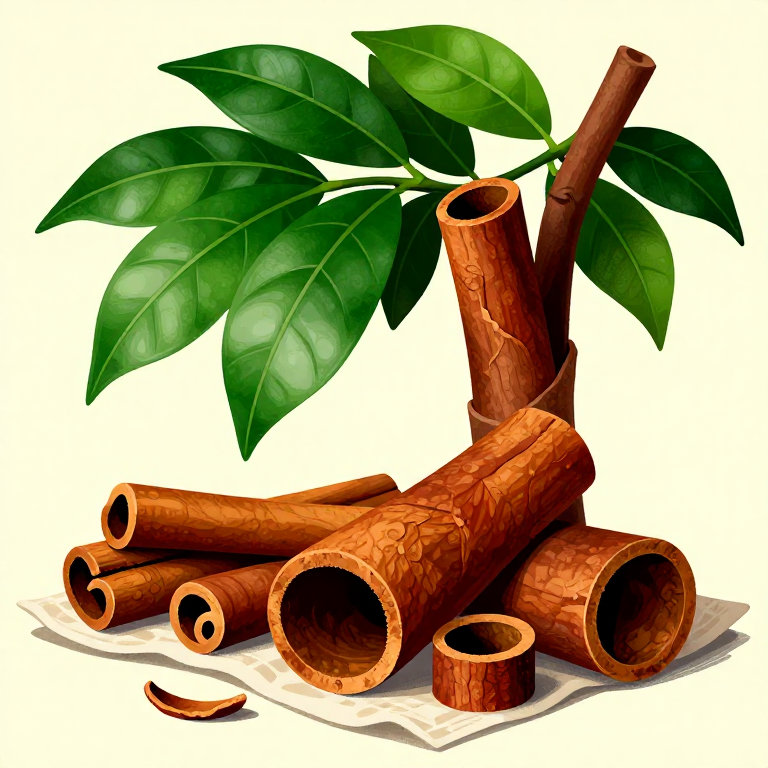
This document describes the complete process of cutting Ceylon cinnamon (Cinnamomum verum) bark and forming quills in Sri Lanka. Sri Lanka supplies 80-90% of the world's true cinnamon production, and compared to cassia (C. cassia), it has thinner bark, a lighter color, and a sweeter taste. This guide covers all steps including selecting mature cinnamon shoots from coppiced trees, scraping outer bark, removing inner bark, rolling quills, sun drying, and grading by size. The bark is harvested during the rainy season (May-October) when the sap flows...

Advanced
6-8 hours per session

Instructions

1

Understanding the difference between Ceylon cinnamon and cassia

Ceylon cinnamon (Cinnamomum verum) and cassia (Cinnamomum cassia) are two different plant species. Ceylon cinnamon bark is thin, light brown in color, and has a sweet and delicate flavor. Cassia bark is thick, dark brown in color, and has a strong and pungent flavor. The most important difference is the coumarin content: cassia has high coumarin levels (up to 1%), while Ceylon cinnamon has very minimal amounts (0.004%). Ceylon cinnamon essential oil contains 50-63% cinnamaldehyde.
2

Understanding cinnamon cultivation and the coppicing method

Cinnamon bark is not harvested from wild trees. Instead, the coppicing method is used: the tree is cut at 10-15 cm above ground level, and new shoots grow from the stump. These shoots grow to 2-3 meters tall and 3-5 cm in diameter within 2-3 years. A single stump can produce 5-10 shoots, and a tree can be repeatedly harvested for decades.
3

Determining the harvesting time

Cinnamon bark is harvested during the rainy season in Sri Lanka (May-October). During this period, the sap flows freely, making the bark easy to peel from the stems. Peeling bark during the dry season is difficult. When the shoot bark turns brown and the diameter reaches 3-5 cm, it indicates maturity. The shoot should be flexible and not break easily.
4

Selecting and cutting mature shoots

Select shoots that are 2-3 years old, 2-3 meters tall, and 3-5 cm in diameter. Cut the shoot at ground level or close to the stump with a sharp pruning knife or small hand saw. The cut must be clean and smooth — ragged cuts damage the stump. Cut several shoots at a time and place them in the shade — the next step must be done quickly before the bark dries out.

Tools needed:

Sharp Pruning KnifeSharp Pruning Knife
Small Hand SawSmall Hand Saw
5

Removing leaves and branches

Remove all leaves, small branches, and side shoots from the cut shoot. Only the main stem should remain. Discard the leaves and fine twigs as they are unnecessary. Smooth the nodes (knots) on the shoot with a knife — nodes obstruct bark peeling.

Tools needed:

Sharp Pruning KnifeSharp Pruning Knife
6

Scraping the outer bark

Scrape off the outer bark layer of the shoot using a brass rod or a special cinnamon knife. The outer bark is the rough, dark brown layer, and when removed, the cinnamon layer underneath (light brown-amber) becomes visible. Scrape around the entire shoot. This step determines the quality of the quills — remaining outer bark affects the taste and appearance of the quills.

Tools needed:

Cinnamon Scraping Knife (Brass Rod)Cinnamon Scraping Knife (Brass Rod)
Sharp Pruning KnifeSharp Pruning Knife
7

Making longitudinal cuts along the stem

After scraping the outer bark, make two scoring lines along the length of the inner bark on two opposite sides of the stem. These cuts should only penetrate the thickness of the bark — do not cut into the wood. Then make ring cuts around the bark at both the top and bottom ends of the shoot. This allows the bark to be peeled off in strips.

Tools needed:

Sharp Cinnamon KnifeSharp Cinnamon Knife
8

Peeling the inner bark strips

This step requires skilled cinnamon workers (kurundu workers). Using the rounded end of the brass rod, gently lift the bark along the longitudinal cuts. As the bark separates from the wood, slowly roll it — sudden pulling causes the bark to break. Try to peel off complete bark strips. Long, unbroken strips are essential for making high-grade quills. A worker can process approximately 100-200 shoots per day.

Tools needed:

Cinnamon Scraping Knife (Brass Rod)Cinnamon Scraping Knife (Brass Rod)
9

Rolling quills and telescoping

The peeled bark strips naturally curl into a quill shape — this is due to the tension difference between the inner and outer surfaces of the bark. Smaller quills are inserted into larger quills (telescoping) to create compound quills. This is the traditional method for making standard 107 cm (42 inch) long quills. Properly telescoped quills have uniform diameter and length.
10

Shade drying

Place the rolled quills in a well-ventilated shaded area to dry. Arrange quills parallel, not touching each other, on elevated drying racks. Shade drying takes 4-5 days. During this process, the quills curl further and tighten, and the color turns to a light brown-golden hue. Direct sunlight degrades the color and essential oil content of the quills.

Tools needed:

Drying Rack (Well-Ventilated)Drying Rack (Well-Ventilated)
11

Brief sun drying

After shade drying, place the quills in sunlight for a short period (2-3 hours). This removes remaining moisture and brings the quills to their final stable state. Prolonged sunlight causes the essential oils to evaporate, leading to quality degradation. The moisture content of dried quills should be less than 10-12%.
12

Grading

Quills are graded by diameter. Standard Sri Lankan grades: Alba (less than 6 mm — highest quality, most expensive), C-5 Special (less than 16 mm), C-5 (less than 16 mm, slightly darker), C-4 (16-17 mm), M-5 Mexican (less than 19 mm), H-1, H-2, H-3 (remaining grades). The Alba grade represents the thinnest quills with the most delicate flavor.

Tools needed:

Caliper (for measuring quill diameter)Caliper (for measuring quill diameter)
13

Trimming and packing

Trim the quills to standard length (107 cm or 42 inches). Separate broken quill fragments as quillings — these fall into a lower grade. Also collect the scraped outer bark fragments (featherings) separately. Sort quills by grade and pack into bales. Each bale typically weighs 45 kilograms (100 pounds).

Materials for this step:

Hessian Wrapping ClothHessian Wrapping Cloth1 piece
Twine for BundlingTwine for Bundling5 meters

Tools needed:

Sharp Trimming KnifeSharp Trimming Knife
Kitchen ScaleKitchen Scale
14

Storage

Store cinnamon quills in a dry, cool, dark storage area. Relative humidity should be below 60% — high humidity causes mold growth. Do not store with other strongly scented spices — cinnamon absorbs odors. Properly stored quills maintain their quality for 2-3 years. Whole quills last much longer than ground cinnamon.

Materials for this step:

Airtight Storage ContainerAirtight Storage Container1 piece

Materials

3

Tools Required

8

CC0 Public Domain

This blueprint is released under CC0. You are free to copy, modify, distribute, and use this work for any purpose, without asking permission.

Support the Maker by purchasing products through their Blueprint where they earn a Maker Commission set by Vendors, or create a new iteration of this Blueprint and include it as a connection in your own Blueprint to share revenue.

Discussion

(0)

Log in to join the discussion

Loading comments...