
Lokta Bark Collection — Nepalese Handmade Paper Plant
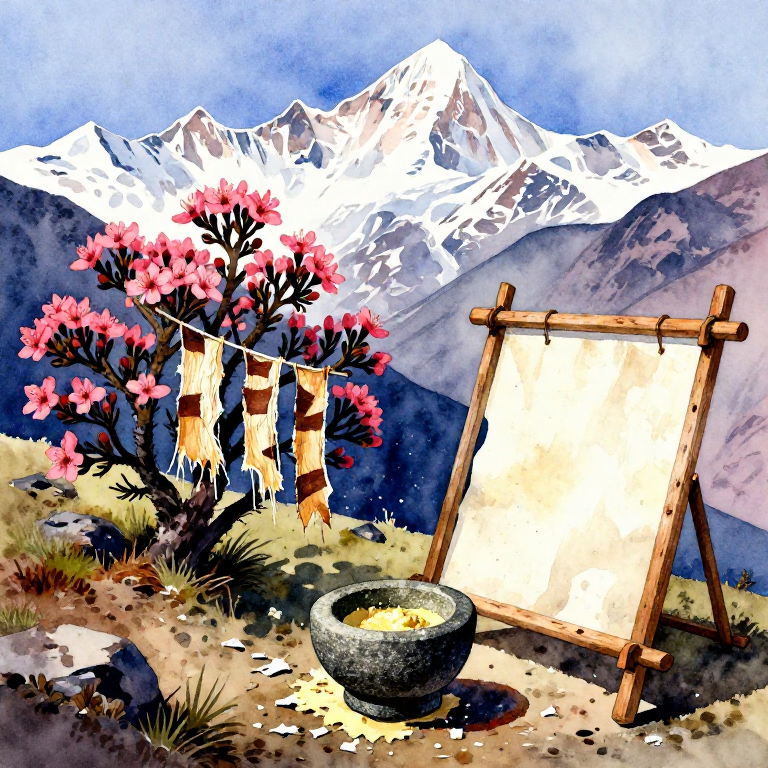
Complete guide to collecting bark from the lokta (Daphne bholua / D. papyracea) shrub found in the Himalayan region of Nepal to produce world-renowned Nepalese handmade paper. The lokta plant is found at elevations of 1600-4000 meters above sea level, and paper made from its inner bast fiber carries a history of over 1000 years. This guide covers lokta plant identification, sustainable collection methods (without uprooting roots, cutting 20-30 cm above ground — the plant regenerates in 4-6 years), bark separation, drying, soaking in water for 24-48 hours,
Instructions
Introduction to the lokta plant
Introduction to the lokta plant
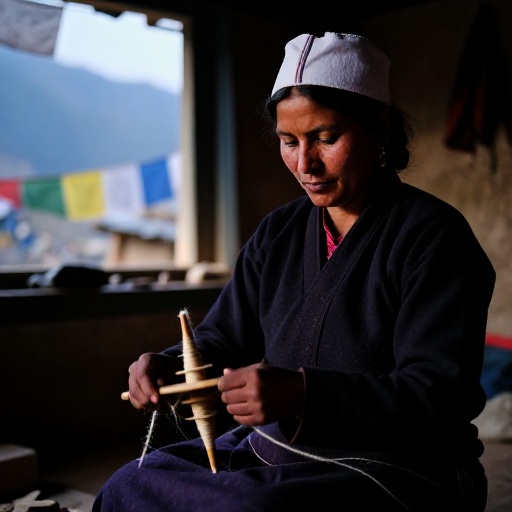
Lokta (Daphne bholua and Daphne papyracea) is a shrub found at elevations of 1600-4000 meters in the Himalayan region of Nepal. The plant grows 1-4 meters tall and its inner bark (bast fiber) is used to make world-famous Nepali handmade paper. The history of Nepali lokta paper is over 1000 years old — it has been used for religious scriptures, government documents, and artistic paper. Daphne bholua is called "lokta" in Nepali, and D. papyracea is also called "lokta" — paper is made from both species.
Identifying harvestable plants
Identifying harvestable plants
Proper time for collection
Proper time for collection
The best time to collect Lokta bark is from late autumn (October-November) to the beginning of spring (February-March) — that is, before new branches sprout. During this time, the sap of the plant flows less and the bark separates easily. It is not appropriate to collect during the rainy season (June-September) — the bark becomes wet, transportation becomes difficult, and drying is also hard. Collection should be done on dry days.
Sustainable cutting method
Sustainable cutting method
Tools needed:
 Sharp Sickle (Hansiya)
 Pruning Shears
Separating the bark
Separating the bark
Tools needed:
 Utility Knife
Drying the raw bark
Drying the raw bark
Tools needed:
 Drying Rack
Soaking in water
Soaking in water
Soak dried (or fresh) inner bark in clean water for 24-48 hours. This softens the bark fibers and makes it easier to boil in the next step. Use a large container with enough water to completely submerge the bark. Change the water after 24 hours — dust and other impurities will come out in the first water. The soaked bark should be soft, flexible, and easy to break by hand.
Materials for this step:
 Distilled Water (1 Liter)50 liters
Tools needed:
 Large Soaking Vessel
Preparing the ash water
Preparing the ash water
Materials for this step:
 Wood Ash2 kg
Tools needed:
 Mixing Bucket
Boiling in ash water
Boiling in ash water
Materials for this step:
 Firewood5 kg
Tools needed:
 Large Boiling Drum
 Long Stirring Stick
Beating — making pulp
Beating — making pulp
Tools needed:
 Flat Stone Slab
Spreading on the sanglo frame — making paper
Spreading on the sanglo frame — making paper
Materials for this step:
Tools needed:
 Sanglo (Wooden Frame with Cloth Screen)
Drying in the sun
Drying in the sun
Tools needed:
Sanglo (Wooden Frame with Cloth Screen)Quality inspection
Quality inspection
Storage and Use
Storage and Use
Store the prepared lokta paper by stacking it on a flat surface in a dry, moisture-free location. Keep it in a place where direct sunlight does not fall — prolonged exposure to sunlight can cause the paper to turn yellow. Clean paper or cloth can be placed between the sheets of lokta paper. Uses of lokta paper: government certificates, religious texts, artistic prints, envelopes, gift wrapping, lampshades, and book binding. Handmade lokta paper from Nepal is sold at high prices in the international market — especially in Japan, Europe, and America.
Tools needed:
 Flat Storage Shelf
Materials
5- 50 litersPlaceholder
- 2 kgPlaceholder
Tools Required
12- Placeholder
- Placeholder
- Placeholder
- Placeholder
- Placeholder
- Placeholder
- Placeholder
- Placeholder
- Placeholder
- Placeholder
- Placeholder
CC0 Public Domain
This blueprint is released under CC0. You are free to copy, modify, distribute, and use this work for any purpose, without asking permission.
Support the Maker by purchasing products through their Blueprint where they earn a Maker Commission set by Vendors, or create a new iteration of this Blueprint and include it as a connection in your own Blueprint to share revenue.